

RV power gets easier once you match the kit to your roof space, battery bank, and daily draw. Some setups suit weekend trips and battery maintenance, while others are built for steady off-grid living, heavier appliances, or a more hands-off charging routine. The list below keeps those differences clear so you can sort out which option fits your rig without guessing.
Quick Look At The Shortlist

Renogy 400W 12V Solar Power System
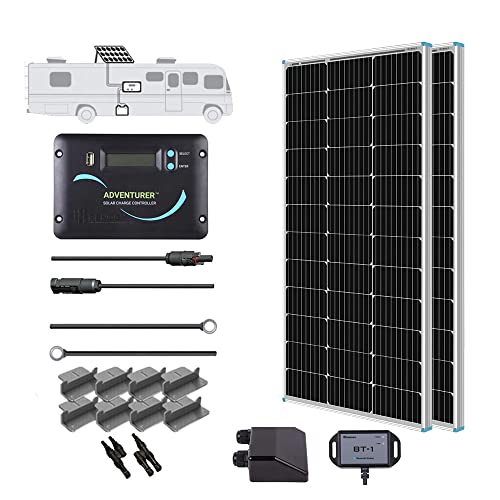
Renogy 200W 12V N-Type RV Solar Panel Kit

SUNER POWER 30W 12V Solar Battery Charger Maintainer

ECO-WORTHY 400 Watt 12 Volt Premium Solar Panel Kit

Jackery HomePower 3600 Plus Portable Power Station

ECO-Worthy 1.6KWH Complete Solar Panel Kit 400W 12V

ECO-Worthy 7.168KWH 800W Solar Panel Kit for RV Off Grid

ZOUPW 220 Watt Solar Panel Kit for 12V/24V Battery

Renogy Premium 400 Watt 12 Volt Solar Kit
More Details On Our Top Picks
Four 100W panels give this kit a serious footprint, and the 40A MPPT controller helps the system make better use of available sun than a basic PWM unit. MPPT means maximum power point tracking, a smarter charge method that can squeeze more usable energy from changing light conditions.
That matters on a moving rig or a campsite with partial shade, where panel output rarely stays steady for long. The Bluetooth module also makes routine checks easier from your phone, which is handy when the controller sits in a harder-to-reach cabinet.
Strong Points
- Four-panel layout suits larger roof spaces and heavier daily draws.
- MPPT charging gives you a more efficient match for variable sunlight.
- Bluetooth support helps you check system status without climbing around the rig.
- Mounting brackets and tray cables make the install feel more complete.
Things To Consider
- The full set takes more roof space than a 200W kit like Renogy B015DEY2TM.
- Owners with tight storage bays may need a neater routing plan for the cables.
- The larger parts list means setup can feel more involved than a battery maintainer.
Feature Snapshot
Who It Suits Best
You want a fuller solar setup for a larger RV, cabin, or off-grid trailer and you care about controller efficiency more than a bare-bones starter kit.
Where A Sibling Pick Shines
Renogy B015DEY2TM fits smaller roof plans better, especially for weekend rigs that only need lighter charging support.
This is the smaller-footprint Renogy option in the group, and that makes it easier to place on modest RV roofs or less complex trailer builds. The Adventurer 30A LCD PWM controller keeps the package approachable, which suits first-time solar setups better than a more advanced multi-panel system.
PWM, or pulse width modulation, is a simpler charging style that can be a sensible fit for straightforward 12V battery maintenance. You give up some charging flexibility compared with the MPPT-based Renogy 400W kits, but the trade-off is a cleaner start for compact rigs.
What We Like
- Smaller 200W layout works well on tighter roofs.
- LCD controller gives you an easy-read charging view.
- Mounting brackets help keep the install organized.
- Good fit for trailers, boats, and camper batteries.
Softer Spots
- 200W output suits lighter loads more than a high-demand coach.
- PWM control is less flexible than an MPPT controller.
- Large battery banks may outgrow this setup sooner.
Quick Facts
Built With In Mind
You want a compact RV solar kit for light travel, weekend use, or a smaller battery setup that does not need a lot of roof real estate.
Another Choice May Suit
Renogy B07CTKT56Y makes more sense for long-stay RV living, because its 400W layout and MPPT controller offer more headroom.
Not every RV setup needs roof-dominating panels, and this 30W maintainer is built for quieter jobs like keeping a stored battery from drifting down over time. The adjustable mount bracket gives you placement flexibility on a trailer, boat, or parked RV with a small flat surface.
The built-in MPPT controller is the useful part here, because it keeps the charging side more responsive than a basic trickle setup. In plain terms, it helps the panel do more with modest sunlight, which is exactly where a compact maintainer earns its keep.
Upsides
- Small footprint suits tight storage spots and parked rigs.
- MPPT support makes the panel more capable than a plain maintainer.
- Adjustable bracket helps with angled placement.
- Handy for seasonal vehicles that sit between trips.
Points To Note
- 30W output is for upkeep, not high daily energy use.
- You will want to keep the panel clean for steady exposure.
- It makes less sense for a family RV with multiple heavy draws.
Details At A Glance
Whose Shelf It Belongs On
You keep a stored RV, boat, or trailer and want a simple maintenance panel for one battery rather than a roof system for daily living.
Swap It Out When
Renogy B015DEY2TM is the better fit for smaller mobile setups that still need a full panel-and-controller kit for active travel use.
Compared with the Renogy 400W kit, this ECO-WORTHY package covers the same broad power class but leans into a slightly different presentation and update path. Four 100W panels, a 40A MPPT controller, Bluetooth support, and Z brackets make it feel ready for an RV roof that needs a fuller solar plan.
The useful part is the mix of control and install hardware. You get the higher-efficiency charge style that suits changing sun, plus phone-based monitoring that helps during a long park stay or a travel day with intermittent clouds.
Highlights
- 400W output gives you room for bigger battery use.
- MPPT charging is a strong match for shifting sunlight.
- Bluetooth support helps with day-to-day charge checks.
- Z brackets and panel count suit a planned rooftop layout.
- Works well for RVs, campers, boats, and small cabins.
Room For Improvement
- The larger setup needs more roof planning than a 200W kit.
- More parts usually mean more time during installation.
- Cabin or vehicle owners may need to think through cable routing.
Core Details
Right Fit For
You want a 400W RV solar kit with Bluetooth monitoring and a hardware set that supports a more permanent roof install.
Look Elsewhere When
Renogy B015DEY2TM suits smaller rigs better, especially when roof space is tight and your power needs stay modest.
This shifts away from a roof-mounted kit and into a portable power station with solar panels, so the setup feels more like a central power hub for an RV or home backup plan. The 3600W AC output and 3584Wh LFP battery make it useful for heavier appliance use, while expandability up to 21kWh gives you a path to scale later.
That kind of capacity is a different conversation from the smaller Renogy and SUNER POWER options. It suits travelers who want a cleaner all-in-one block of power, though the trade-off is less of a rooftop-first mindset and more of a space-claiming portable unit.
Reasons To Buy
- High AC output supports more demanding RV appliances.
- LFP battery chemistry is a strong fit for repeat cycling.
- Expandable design gives you room to grow the system.
- Solar panels are bundled, which simplifies the starting point.
Areas To Watch
- Portable station format takes up more interior or storage space.
- It is a different fit from roof-based solar kits.
- Heavier use cases may call for careful planning around placement.
Feature Rundown
The Right Fit
You want a portable power station with serious output and a solar pairing, especially for RV backup, home emergency planning, or mixed-use travel.
Where A Sibling Pick Shines
ECO-WORTHY B0BPY72B9R is better suited to a roof-mounted RV solar layout, especially when you want the system to stay integrated on the vehicle.
This one moves beyond panels alone and bundles the pieces you need for a more complete off-grid setup, including two 12V 100Ah lithium batteries and an upgraded 2000W inverter. That makes it a stronger fit for people who want an RV system that can store power and then turn it into usable household-style AC output.
For a road trip rig, that blend can feel much more self-contained than a plain panel kit. The honest trade-off is size and complexity, because batteries, inverter, controller, and Bluetooth module mean more planning than the simpler 200W and 400W panel sets.
Best Bits
- Complete bundle reduces the need to piece systems together.
- Lithium batteries add meaningful stored energy.
- 2000W inverter supports a broader range of RV loads.
- MPPT controller helps the solar side behave more efficiently.
- Good fit for users who want an integrated package.
Softer Spots
- More components mean more installation and space planning.
- The full system suits committed off-grid use more than casual weekend camping.
- Battery-heavy setups need careful storage and mounting choices.
Spec Overview
Made For
You want an integrated RV off-grid system with storage, conversion, and solar collection already bundled together.
A Better Fit Elsewhere
Renogy B07CTKT56Y is the cleaner pick for someone who already owns batteries and only needs a stronger panel-and-controller package.
Once you move into 800W territory, the conversation changes from backup support to sustained off-grid living. Four 195W panels, a 3000W UPS inverter charger, two 12.8V 280Ah lithium batteries, and a 60A MPPT controller make this system feel built for long stays and higher electrical demand.
UPS here means uninterruptible power supply, so the inverter charger is meant to keep power flowing more smoothly as sources change. That is a meaningful feature for an RV that runs more like a tiny house on wheels, though the size and cost of the overall package are naturally heavier than the 400W class kits.
Standout Traits
- 800W solar input gives you serious charging headroom.
- Large lithium battery bank supports longer off-grid stays.
- 3000W inverter charger fits demanding appliance use.
- UPS function helps smooth the shift between power sources.
- Bluetooth support helps with routine system checks.
Small Caveats
- The scale suits larger rigs more than compact campers.
- Installation takes more planning than the simpler kits here.
- Storage space and mounting weight matter a lot at this level.
Technical Sheet
Who Should Grab It
You spend long stretches off-grid and want a large solar-and-storage package that can support a busy RV electrical routine.
Reach For A Different Pick When
ECO-WORTHY B0BN5ZWPK2 makes more sense for travelers who want a complete but smaller 400W system with less size commitment.
Two 110W monocrystalline panels make this kit a tidy middle ground between the smaller maintenance setup and the 400W roof systems. The 12V and 24V battery compatibility gives it wider use across RV, marine, and boat charging plans, which matters when your gear mix changes from one vehicle to another.
The 30A LCD PWM controller keeps things straightforward, and the high-efficiency panel rating is the attention-grabbing part of the listing. The trade-off is that PWM is still the simpler charging style, so you are paying for cleaner panel performance rather than a more advanced controller.
Positives
- 220W total output fits moderate charging needs.
- Works with both 12V and 24V battery banks.
- Monocrystalline panels suit space-conscious installs.
- Controller is easy to understand for basic setups.
Honest Caveats
- It does not reach the capacity of the 400W kits here.
- PWM control is simpler than MPPT-based alternatives.
- Marine or rooftop installs still need careful mounting attention.
At A Glance
Perfect Match For
You want a straightforward 220W kit that can move between an RV, marine setup, or rooftop battery bank without much fuss.
Another Choice May Suit
Renogy B07CTKT56Y fits owners who need more charging headroom and are ready for a more complete 400W rooftop system.
This updated Renogy package keeps the useful 400W formula but trims it into a cleaner “new version” setup for RVs, cabins, and similar off-grid spaces. You still get four 100W monocrystalline panels, a 40A MPPT controller, Bluetooth, Z brackets, cables, and an adaptor kit, so the package feels organized rather than pieced together.
Compared with the earlier Renogy 400W kit, this one reads like the same practical idea with a fresher build list. That makes it a good match for someone who wants a full rooftop solar array with familiar Renogy hardware and a more current bundle layout.
Bright Spots
- 400W output handles larger RV energy needs well.
- MPPT controller suits uneven sunlight and changing conditions.
- Bluetooth support makes routine monitoring easier.
- Included cables and adaptor kit help complete the install.
- Works for RV cabins and other off-grid uses.
Worth Noting
- It still needs the roof space that a 400W kit demands.
- More components mean more time planning the install path.
- Owners with smaller rigs may find it more system than they need.
Feature Card
Who Will Love This
You want a current-feeling 400W RV solar package from Renogy and like the idea of a more complete install bundle.
Where Another Pick Fits Better
Renogy B015DEY2TM is a smarter match for smaller roofs and lighter charging demands, especially on shorter trips.
How To Choose The Right Solar Kits For Rv
Start With Your Real Power Use
The right kit starts with the gear you actually run on travel days, not the gear you hope to run someday. A small battery maintainer like SUNER POWER B07XY1CV5F fits storage support, while a 400W setup such as Renogy B07CTKT56Y or ECO-WORTHY B0BPY72B9R has more room for lights, fans, and light appliance use. Bigger systems make sense once you know your daily draw is steady enough to justify the added roof space and install time.
Panel count matters, but it only makes sense beside battery size and inverter capacity. ECO-Worthy B0FH4TMXSY pairs 800W of solar with a large lithium bank and a 3000W inverter charger, which suits longer stays far better than a compact 200W kit. That extra capacity is useful only when your rig can actually store and use the power.
Match Controller Type To Your Routine
MPPT controllers are the smarter fit for changing sunlight, partial shade, and larger panel arrays. That is why the Renogy and ECO-WORTHY 400W kits feel stronger for serious RV use than the simpler PWM-based Renogy B015DEY2TM or ZOUPW B0FX9RW11B. PWM can still work well for lighter setups, but it is the more basic charging path.
Bluetooth is worth paying attention to, too. It helps when the controller is tucked into a cabinet or when you prefer a quick status check without opening up the system. For a long trip, that small convenience can matter more than it sounds on paper.
Think About Roof Space And Installation Load
Roof size changes everything. A 200W kit is easier to place on a compact trailer or modest RV, while a 400W or 800W array needs careful spacing, cable routing, and a realistic plan for vents, ladders, and roof clutter. Bigger kits are not automatically better, they just ask more from the vehicle.
The cleanest setup often comes from the kit that fits your layout without forcing awkward compromises. That usually means fewer extra adapters, enough mounting hardware in the box, and a controller you can actually access later.
Things Worth Knowing First
Mistakes Worth Dodging
Many RV setups go wrong because the panel wattage looks right but the rest of the system does not keep up. A large solar array still falls short when the battery bank is too small or the inverter cannot handle the load.
Another common slip is ignoring roof layout. Vents, skylights, and antenna gear can turn a “big enough” kit into a cramped install very quickly.
The Case For Spending Up
Higher-tier kits usually charge more because they include more panels, stronger controllers, battery storage, or inverter hardware. That is why ECO-Worthy B0BN5ZWPK2 and B0FH4TMXSY sit in a different lane from the smaller maintainer and 200W options.
The upgrade pays off when you spend long stretches away from hookups, run more appliances, or want a system that feels closer to a built-in power station. For short weekend use, the extra capacity can be more than you need.
Frequently Asked Questions
What size solar kit works for a small RV?
A 200W kit is a practical starting point for smaller rigs with modest power needs. Renogy B015DEY2TM fits that lane well.
Is MPPT worth choosing over PWM?
MPPT is the better fit for larger or more variable solar setups because it handles changing light more intelligently. PWM is still fine for simpler battery maintenance jobs.
Do you need Bluetooth monitoring?
You do not need it, but it makes system checks easier when the controller is tucked away. That convenience stands out on longer trips.
Is a portable power station the same as an RV solar kit?
No, a portable power station is a separate style of system that stores energy in a single unit. Jackery B0FMXCPWBN suits that format better than a roof-mounted panel kit.
What matters more, panel wattage or battery capacity?
Both matter, because panels collect power and batteries store it. Large systems like ECO-Worthy B0FH4TMXSY make sense only when the storage side is ready too.
Closing Thoughts
Your best match depends on how you travel and how much power you actually use. Compact kits suit simple charging and short trips, while the larger Renogy and ECO-WORTHY bundles make more sense for longer stays and more demanding rigs. A portable station like Jackery B0FMXCPWBN changes the setup entirely, which can be a plus for some RV routines. Once you line up roof space, storage needs, and controller type, the right choice gets a lot clearer.
