

Solar battery packs make more sense when your day stretches beyond a wall outlet. You might be packing for a campground, handling a long travel day, or keeping a phone alive through an outage, and the right pack changes how much worry you carry. Capacity, charging speed, built-in cables, and torch features all matter, but so does how easy the pack feels in a bag. The shortlist below keeps the focus on practical use, not showroom talk.
The Shortlist At A Glance
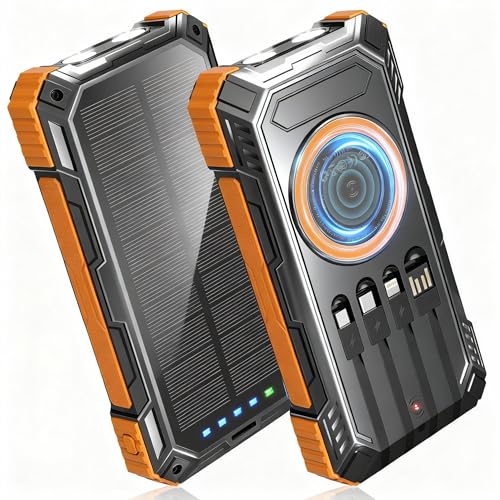
BLASOUL Solar Power Bank 49800mAh Wireless Charger

BLAVOR Solar Power Bank with Hand Crank 20000mAh

Anker SOLIX C200 DC Power Bank Station 192Wh

Solar Charger Power Bank 49800mAh Wireless Charger

Miady 2-Pack Portable Charger Slim 10000mAh

YELOMIN 38800mAh Solar Power Bank USB-C

SOARAISE Solar Power Bank 48000mAh Wireless Charger
More Details On Our Top Picks
BLASOUL leans into convenience first, with built-in cables and wireless charging taking some clutter out of a packed travel bag. That matters on a camping weekend or a work trip, since you can leave a few extra cords at home and still keep phones, tablets, and small gear moving.
The 49800mAh capacity gives it the kind of reserve that suits long days away from an outlet, though the trade-off is a bigger body in your pack. You may find it especially sensible for road trips where one charger needs to handle more than one person’s device without much fuss.
What We Like
- Built-in cables reduce cable hunting in a bag or glove box.
- Wireless charging keeps quick top-ups simple for compatible phones.
- 22.5W output suits everyday phone charging with less waiting.
- USB-C in and out adds flexible recharge and device support.
- Large capacity fits longer off-grid stays more comfortably than smaller packs.
Things To Consider
- The larger battery size usually means more weight and bulk.
- Built-in cable setups can be tidy, but you still need to keep them stored carefully.
- Wireless charging is handy, though it is usually slower than a wired connection.
Feature Snapshot
Who It Suits Best
Camping families and road-trippers who want fewer loose accessories will get the most from this one.
A Better Fit Elsewhere
Miady 2-Pack Portable Charger Slim 10000mAh suits lighter travelers who care more about split-up carry than a single high-capacity pack.
BLAVOR feels more survival-minded than the first pick, thanks to the hand crank and camping light. That combination makes sense for storm kits, cabin trips, or a trunk setup where you want more than just a battery and a cable bundle.
Its 20000mAh size is easier to carry than the biggest packs here, so you do give up some reserve power. In most backpacks, though, that trade looks reasonable because the body stays more manageable and the extra utility tools earn their space.
Strong Points
- Hand crank support adds a useful backup option in remote settings.
- Camping light increases usefulness beyond phone charging alone.
- Built-in cables simplify storage and cut down on forgotten accessories.
- 20000mAh capacity strikes a sensible middle ground for portable carry.
Room For Improvement
- The crank feature is a backup tool, not a fast daily charging method.
- Integrated accessories can be harder to replace than loose cables.
- The shell still needs space in a pack, so tiny day bags may feel crowded.
Core Details
Made For
You’ll appreciate this most in emergency kits, cabin storage, and outdoor bags that need a little extra utility.
Swap It Out When
BLASOUL Solar Power Bank 49800mAh Wireless Charger suits travelers who want a larger reserve and care more about capacity than backup gadgets.
This Anker setup shifts from pocket-sized backup into true portable power station territory. The 192Wh battery, LiFePO4 battery chemistry, and included 60W solar panel point toward longer stays, base camp use, or a home backup shelf where you want more than phone-only support.
LiFePO4, a lithium iron phosphate battery type, is known for stable charging cycles and long service life in many power stations, and that gives this model a different feel from the smaller packs above. The trade-off is obvious, though, since this sits in a heavier, more dedicated category that suits storage and travel vans better than a simple daypack.
Highlights
- 192Wh capacity gives you a more serious buffer for multi-device use.
- Included 60W panel supports a fuller solar setup from day one.
- DC power station format works well for outdoor gear and emergency planning.
- LiFePO4 battery chemistry is a strong fit for long-cycle, repeat use.
Points To Note
- This is much less portable than the pocket-style packs in this list.
- DC-focused design suits certain gear better than others, so compatibility matters.
- Storage space and transport planning matter more here than with the smaller picks.
Details At A Glance
Best Suited To
Travelers with campers, vans, or a home emergency shelf will get the most out of this higher-capacity setup.
Look Elsewhere When
YELOMIN 38800mAh Solar Power Bank suits you better for lighter carry and simpler phone-first charging.
YOLOSKS goes after the same high-capacity lane as BLASOUL, but it leans harder into port variety. Six outputs and two inputs are the headline here, which makes it a tidy fit for households, shared travel bags, or any setup where several devices seem to need a turn at once.
The 22.5W QC 3.0 rating helps the charger keep pace with daily phone use, and QC 3.0 means Quick Charge 3.0, a fast-charging standard for supported devices. The catch is that a feature-heavy shell can feel busy rather than simple, so you get flexibility at the cost of a less minimalist carry.
Upsides
- Six outputs suit families or groups with several devices at once.
- Two inputs make recharging options more flexible during travel.
- Wireless charging keeps short top-ups simple for compatible phones.
- Built-in cables reduce the need to pack extras separately.
- Large capacity works well for long weekends away from outlets.
Softer Spots
- All those connections can make the body feel more complex than a basic pack.
- Wireless and multi-port designs usually ask for a bit more attention during storage.
- Like other large-capacity packs, this one is not the lightest choice in a day bag.
Quick Facts
Who Should Grab It
Households that pack several phones and accessories for road trips will find this layout especially helpful.
Reach For A Different Pick When
BLASOUL Solar Power Bank 49800mAh Wireless Charger is the cleaner match for you if fewer ports and simpler handling matter more.
Miady takes a different path from the bulkier solar-style entries, because this one is about slim carry and two-pack convenience. For travel, backpacks, and shared use between home and office, that split format can feel as handy as a spare charger tucked into the side pocket.
Each pack sits in the 10000mAh class, so the goal here is topping up phones rather than carrying a giant power reserve. You may find that more practical for everyday commuting, especially since the compact shape makes storage and rotation easier than juggling one oversized pack.
Best Bits
- Two-pack format gives you a spare unit for another bag or person.
- Slim shape fits nicely into backpacks, desk drawers, and carry-ons.
- Dual USB and three outputs support more than one device at a time.
- Flight-safe 37Wh labeling suits common travel planning needs.
- Small size makes it easy to keep one unit charged and ready.
Small Caveats
- 10000mAh is modest compared with the larger packs in this roundup.
- You give up solar features and camping extras in exchange for lighter carry.
- Two separate units mean you need to keep track of both.
Feature Rundown
Right Fit For
Frequent flyers, commuters, and anyone carrying a lighter bag will get the cleanest fit from this set.
Another Choice May Suit
SOARAISE Solar Power Bank 48000mAh Wireless Charger suits travel-heavy users who want a much larger solar-focused backup.
YELOMIN sits in the middle of the pack, not the biggest and not the simplest, which is why it feels easy to slot into regular use. USB-C fast charging, a 38800mAh reserve, and dual LED flashlights give it a practical mix for camping bins, glove compartments, and emergency drawers.
The three-output layout keeps it flexible without pushing the design into the more crowded feel of YOLOSKS. That balance works well for shoppers who want a solar battery pack that still feels straightforward on a normal day.
Reasons To Buy
- USB-C fast charging helps modern devices and the pack itself stay convenient.
- Dual LED flashlights add helpful utility for campsites and dark hallways.
- 38800mAh capacity gives a healthy middle ground for backup power.
- Three outputs support charging more than one item at once.
Areas To Watch
- The flashlight feature adds usefulness, but it also adds one more thing to manage.
- Large-capacity packs need more storage room than compact day-use chargers.
- For very light travel, this may feel more than you need.
Core Details
Whose Shelf It Belongs On
Households that want one pack for camping season and one drawer-ready backup will get the best fit here.
Where A Sibling Pick Shines
Miady 2-Pack Portable Charger Slim 10000mAh suits lighter daily carry better if you do not need the larger reserve.
SOARAISE stands out for one clear reason, the four-panel solar layout aims to pull in more sunlight than a single-panel style pack. That makes it feel especially suited to long outdoor days, where direct solar charging matters more than polished desk use.
The 48000mAh capacity and wireless charging give it the same broad usefulness you see in BLASOUL and YOLOSKS, but the solar-panel array pushes it toward more outdoors-first ownership. The trade-off is size and complexity, so this is a stronger match for campers than for light commuters.
Positives
- Four solar panels create a more solar-focused setup than single-panel packs.
- 48000mAh capacity supports longer stays away from a wall socket.
- Wireless charging keeps quick top-offs simpler for compatible phones.
- Built-in cables reduce the need to carry extra cord clutter.
Honest Caveats
- The multi-panel build makes the pack feel more specialized than slim travel options.
- Solar charging still depends on light conditions, so placement matters in the field.
- Bigger panels and larger capacity usually mean more storage demand in your bag or car.
Technical Sheet
The Right Fit
Campers, hikers, and outdoor travelers who want solar-first utility will get the most from this model.
Where Another Pick Suits Better
YELOMIN 38800mAh Solar Power Bank USB-C is the easier daily carry choice for people who want less bulk.
How To Choose The Right Solar Battery Packs
Capacity And Carry Weight
Battery capacity, measured in milliamp hours or mAh, tells you how much reserve the pack can hold. Bigger numbers usually suit camping, road trips, and shared use, while smaller packs are easier to slide into a daily bag.
The trade-off is simple, more reserve usually means more bulk. A 10000mAh two-pack feels very different from a 49800mAh unit, so match the size to the way you actually move through the day.
Ports, Cables, And Charging Speed
Built-in cables cut clutter, and that matters in a car seat, tent, or carry-on pocket. USB-C, wireless charging, and multiple output ports help a pack fit more phones and accessories without a cable hunt.
Charging speed matters too, because 20W or 22.5W usually supports quicker phone top-ups than basic low-output models. The catch is that more outputs and special features can make the pack feel busier, so you trade simplicity for flexibility.
Solar Features And Backup Tools
Solar panels help in the sun, but they work best as part of a broader charging plan, not as the only plan. Packs with hand cranks, flashlights, or camping lights add utility for emergencies and outdoor stays, which is useful when you are far from a wall outlet.
Those extras also add size and cost, so they make the most sense for cabin life, storm kits, and long outdoor weekends. For everyday commuting, a simpler battery pack usually feels easier to live with.
Who Needs The Bigger Step Up
Higher-tier models usually bring larger battery reserves, more ports, sturdier materials, or a full power-station setup. That upgrade makes sense for van travel, group camping, or anyone supporting several devices over a long stretch.
For lighter travel, the extra hardware may feel like overkill. A smaller, slimmer pack often wins on convenience even when the larger unit looks more impressive on paper.
Things Worth Knowing First
Common Shopping Slip Ups
Many people focus on capacity and forget weight, which can turn a good pack into a nuisance in a day bag. Port count matters too, because a powerful pack still feels limiting when it cannot handle the devices you carry.
Another common miss is treating solar input as a complete charging plan. Sun helps, but wall charging and sensible storage still matter for regular ownership.
The Upgrade Payoff
More money usually buys more battery reserve, more charging flexibility, or a better suited solar setup. In this category, that can mean a faster recharge path, a power-station format, or a tougher layout for repeated outdoor use.
Spending up makes sense when you travel often, camp often, or keep gear ready for outages. For occasional phone backup, a simpler pack usually gives you the cleaner fit.
Frequently Asked Questions
What Makes A Solar Battery Pack Different From A Regular Power Bank?
A solar battery pack adds solar input or solar-style backup features on top of normal battery storage. That gives you more flexibility during outdoor trips or emergencies.
How Much Capacity Do You Need?
Smaller packs around 10000mAh fit short daily use and lighter carry. Larger packs around 38800mAh to 49800mAh suit longer trips and multiple devices.
Are Built-In Cables Worth It?
Built-in cables reduce clutter and help you avoid forgetting an accessory at home. They work best for travel bags and glove boxes.
Does Wireless Charging Change Everyday Use?
Wireless charging makes quick top-ups simpler for compatible phones. Wired charging still tends to be the more direct option for many setups.
Which Pick Fits Outdoor Travel Best?
SOARAISE Solar Power Bank 48000mAh Wireless Charger suits solar-focused outdoor use very well. Anker SOLIX C200 DC Power Bank Station 192Wh fits larger off-grid plans better.
Closing Thoughts
Your best match depends on how you move, not on the biggest number on the page. For light carry, the Miady 2-Pack keeps things simple, while BLASOUL and YOLOSKS make more sense for longer trips with more devices. Outdoor-first setups like BLAVOR and SOARAISE add useful backup features, and Anker steps into a much larger power-station lane. Choose the pack that fits your routine, and it should feel helpful instead of bulky.
