

A few years ago, “smart panel” basically meant a breaker box you hoped wouldn’t trip. Today, the category has quietly expanded into a whole ecosystem: whole-home surge protectors, app-controlled energy meters, DIN-rail monitoring, and portable power stations that pair with home circuits. The right pick depends on whether you want to see your consumption, stop a spike at the panel, or keep the lights on when the grid blinks.
The Leading Options At A Glance
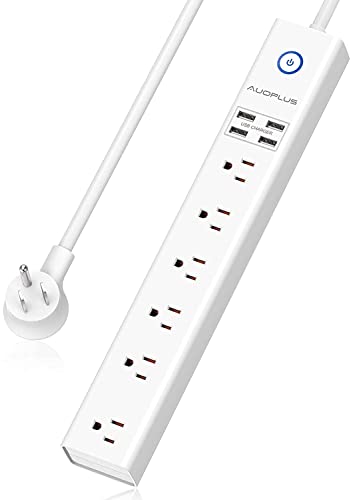
AUOPLUS Power Strip 10Ft with USB

Eaton Tripp Lite TLP76MSG Surge Protector

Eaton CHSPT2ULTRA Whole-Home Surge Protector
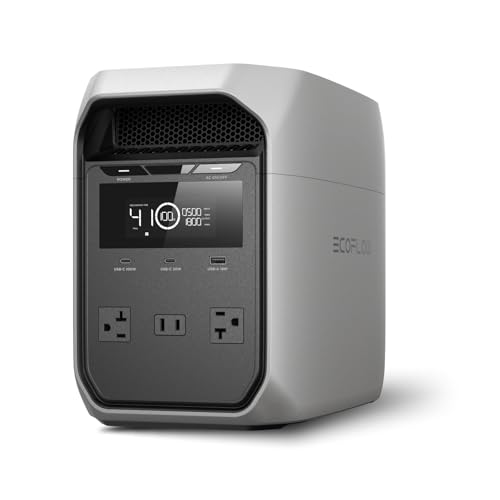
EcoFlow DELTA 3 Classic 1024Wh 1800W

EcoFlow DELTA Pro 3 4096Wh 4000W

Shelly Pro 3EM 120A 3-Phase Energy Meter

Shelly Pro EM 50A Contactor Control Meter

Shelly EM Gen3 Smart Energy Meter

EcoFlow DELTA Pro 3600Wh 120V/3600W

EcoFlow DELTA 2 Max 2048Wh 2400W LiFePO4
Taking A Closer Look At The Options
The AUOPLUS strip sits in that comfortable middle ground: more outlets than the budget 4-port models, USB ports built in, and a 10 ft. cord that reaches across a desk or behind a media center without strain. A flat plug keeps furniture flush to the wall, and the housing is wall-mountable with keyhole slots on the back.
Surge protection (a “joule” rating measures how much energy the strip can absorb before it gives up) handles common spikes, and a built-in breaker cuts power if the total draw climbs too high. For a home office, dorm room, or shared family command center, the practical appeal is real: laptops, phones, lamps, and a monitor all share one tidy hub.
Real-World Strengths
- Six outlets plus four USB ports remove the need for a separate wall charger.
- Ten-foot cord and flat plug make it friendly to tight, hidden setups.
- Wall-mountable design is useful for workbenches and media walls.
- Overload protection trips the strip instead of the wall circuit, which is easier to reset.
Worth Noting
- The USB ports share power, so charging four tablets at once slows each one down.
- Wide-spaced outlets are great for chunky plugs, but a fully loaded strip can still feel tight.
Right Fit For
Anyone running a multi-device home office or dorm corner who values USB ports in the same brick as the outlets.
Reach For A Different Pick When
The Eaton Tripp Lite TLP76MSG suits you better, since its per-outlet switches let you kill phantom loads one plug at a time.
Where the AUOPLUS strip is about adding ports, the Tripp Lite TLP76MSG is about control. Each of the seven outlets has its own switch, so a printer, a lamp, and a charger don’t all share the same fate when you tap one button. Eco-mode switches cut phantom draw (the small amount of power electronics consume even when “off”) from devices that idle in standby.
It’s a basic surge protector dressed in thoughtful detail. The white housing blends into home office decor, and the long cord tucks behind a desk. If you find yourself unplugging wall warts just to silence LED glow, the individual switches do that work for you.
Useful Highlights
- Per-outlet switches reduce standby waste and let you reset a single device without unplugging.
- Seven outlets handle a full desk’s worth of gear.
- Diagnostic LEDs confirm surge protection is still active.
Some Limits To Know
- No USB ports, so phone and tablet charging still need a wall brick.
- The housing is bulkier than minimalist strips, which matters under low-clearance furniture.
Who Should Grab It
Remote workers and energy-conscious households who want to switch off individual loads without crawling under the desk.
Skip It When
The AUOPLUS Power Strip 10Ft is a smarter call, since it integrates USB charging into the same panel for cable-lighter setups.
Moving up the seriousness scale, the Eaton CHSPT2ULTRA installs at the breaker box itself. It is a Type 2 SPD (Surge Protective Device, the hardware that clamps voltage spikes before they reach your circuits) rated for 120/240V service. The idea is to stop large surges at the panel so they never touch a single appliance.
This is the pick for someone thinking about home electrical protection as a system. Quick-connect modules make it easier for an electrician to wire, and an LED tells you the unit is still healthy. Indoor or outdoor enclosures are supported, and it works regardless of breaker box brand.
Features That Help
- Whole-home protection sits ahead of every circuit, including ones that don’t have a power strip.
- 108kA per phase surge capacity handles lightning-adjacent events without flinching.
- Universal fit means it pairs with any common load center.
- LED status indication gives a quick visual read on protection health.
Practical Considerations
- Installation almost always requires a licensed electrician, which adds to overall project cost.
- No app connectivity, so you won’t get alerts on your phone when the unit takes a hit.
Key Specs
Whose Shelf It Belongs On
Homeowners in lightning-prone or utility-flaky regions who want panel-level protection, not just plug strips.
Not Your Match When
Shelly Pro 3EM fits better, since it adds Wi-Fi energy monitoring on top of protection, which is more useful for energy tracking than surge clamping alone.
The DELTA 3 Classic is the friendly entry into EcoFlow’s portable lineup. 1024Wh is enough capacity to keep a refrigerator cold for hours, charge laptops dozens of times, or run a small microwave to reheat dinner. 1800W of AC output covers most household appliances short of a central air conditioner.
Where it shines is recharge speed. AC input refills the battery quickly, so a short plug-in window between uses gets you back near full. For apartment dwellers without rooftop solar, that quick top-up matters more than raw capacity.
Everyday Advantages
- 1800W continuous handles common kitchen and workshop loads.
- Fast AC charging minimizes downtime between uses.
- Portable form factor is manageable for one person to move around.
- Expandable ecosystem lets you add batteries or solar panels later.
Trade Offs
- 1024Wh runs out faster than whole-home options during multi-day outages.
- It is a power station, not a transfer switch, so critical circuits still need manual setup.
Best Suited To
Suburban households wanting a grab-and-go backup for the fridge, router, and a few lamps during short outages.
Look Elsewhere When
The EcoFlow DELTA Pro 3 fits better, since its 4096Wh capacity and 120V/240V support cover multi-day whole-home scenarios.
Step up to the DELTA Pro 3 and you step into whole-home territory. 4096Wh of LFP capacity (lithium iron phosphate, a battery chemistry known for thermal stability and long cycle life) runs a 3-ton central air conditioner or a 1 HP water pump through EcoFlow’s X-Boost. Expandability reaches 48kWh with extra batteries, which is enough for several days off-grid.
This is the unit to consider for people who want serious resilience without committing to a permanent standby generator. 120V/240V split-phase output means it can back up actual household circuits, not just a handful of extension cords.
Real Benefits
- 4000W continuous output covers most household appliances in real use.
- LFP chemistry supports thousands of cycles, lowering the cost-per-year math.
- Expandable architecture grows with your energy needs.
- 120V/240V split-phase handles both standard and heavy-draw appliances.
Room For Improvement
- Weight and footprint are substantial; it stays in one place more than it travels.
- Real cost climbs quickly once you add extra batteries and a transfer switch.
Key Specs
Who Will Love This
Homeowners in outage-prone areas who want a quieter, fuel-free alternative to a standby generator.
A Better Fit Elsewhere
The EcoFlow DELTA Pro 3600Wh is a smarter pick for those who want similar capability at a more approachable footprint and price.
Shelly’s Pro 3EM is a DIN-rail-mounted energy meter, which means it clips into the same rail your breakers sit on. Three 120A current transformers (CTs, sensors that clamp around a wire to measure current without breaking the circuit) cover a three-phase service, and 1% accuracy gives you data you can actually plan around.
Both Wi-Fi and LAN are built in, so the meter talks to your home network without extra bridges. It also acts as a Bluetooth gateway, expanding the reach of nearby Shelly sensors. For pros and serious tinkerers, it is the kind of component that turns a breaker box into a measurable system.
Good Reasons To Consider
- Three-phase monitoring tracks whole-home or workshop loads precisely.
- Dual Wi-Fi and LAN keeps the device online even if one path fails.
- Two-way consumption data reveals solar export as well as import.
- Hub-free setup pairs with Alexa and Google Home directly.
Points To Keep In Mind
- Three-phase service is uncommon in U.S. residential settings, so most U.S. shoppers will use it for specific circuits rather than the whole home.
- Installation requires working inside the panel, which calls for caution and often a qualified electrician.
Made For
Pros and owners of three-phase properties or workshops who want circuit-level data with industrial accuracy.
Not Your Match When
The Shelly Pro EM 50A is the more practical alternative, since its single-phase, dual-channel setup fits typical U.S. homes more cleanly.
The Pro EM 50A is a single-phase, dual-channel meter with a useful twist: an integrated contactor control. A contactor is a heavy-duty switch that lets a small control signal turn a much larger load on or off, so the meter can both measure and command a circuit. That makes it equally useful for monitoring two loads or for automating one of them.
Two 50A current transformers ship in the box, ready to clamp around standard residential branch circuits. DIN-rail mounting keeps the install tidy next to other breakers, and the LAN port gives a wired option for reliability.
Strong Points
- Dual channels monitor two independent loads at once.
- Contactor control adds automation, not just measurement.
- Potential-free contacts integrate with a wide range of switching hardware.
- Bluetooth gateway functionality extends the Shelly ecosystem into the panel.
Possible Compromises
- Wiring the contactor side safely takes some electrical comfort; getting it wrong can damage devices.
- The 50A per channel limit rules out very large loads like full EV charging on a single channel.
Right Fit For
Smart-home enthusiasts who want to measure and automate a couple of high-draw circuits from a single DIN device.
Reach For A Different Pick When
The Shelly Pro 3EM fits better for three-phase properties, while the Shelly EM Gen3 is the easier behind-the-outlet option for simpler installs.
The EM Gen3 is the friendliest Shelly to install. The compact body fits behind a standard outlet or wall switch, and the included 50A clamp wraps around a single conductor. Owners commonly tuck it into a junction box to track an appliance or an entire circuit without mounting a new panel accessory.
An 8MB Shelly chip handles 10 days of on-device logging at 1-minute resolution, so the data keeps flowing even if Wi-Fi drops. For renters and DIYers, the absence of a hub is a real perk.
Strengths Worth Knowing
- Compact size slips behind outlets and switches in tight retrofit installs.
- On-device data logging keeps history intact through network hiccups.
- Single-clamp setup takes minutes, not hours.
- Wi-Fi direct, with no hub required.
Where It Is Less Suited
- Single-phase and 2-channel only, so complex multi-phase panels need a different Shelly unit.
- Routing wires and clamps into a tight outlet box takes patience in older homes.
Best Suited To
DIY retrofitters and apartment dwellers who want appliance-level data without opening the breaker box.
Another Choice May Suit
The Shelly Pro EM 50A is the stronger call, since it adds contactor control alongside measurement for those willing to work in the panel.
The first-generation DELTA Pro remains a strong value play. 3600Wh of LFP capacity expands up to 25kWh with extra batteries or smart generators, and 3600W of AC output can climb to 4500W with X-Boost. In most homes, that means running a fridge, lights, internet gear, and a microwave at the same time without sweating.
For someone who will use the station weekly, not just during emergencies, the older Pro strikes a sensible balance. It travels to the campsite, powers the tailgate, and sits ready in the garage for storm season.
Where It Excels
- Expandable up to 25kWh covers most home backup scenarios.
- 3600W handles the major kitchen and HVAC-supporting appliances.
- 120V pure sine output is gentle on sensitive electronics.
- Pairs with solar input for off-grid recharging.
Honest Caveats
- It is heavier and bulkier than the DELTA 2 Max, which is the trade-off for more capacity.
- 120V only, so 240V appliances need a workaround or a different station.
Made For
Owners who want one portable station for both home backup and weekend trips, and who like the option to scale up over time.
Swap It Out When
The EcoFlow DELTA Pro 3 is the better upgrade, since it adds 120V/240V split-phase support and more usable capacity for whole-home backup.
The DELTA 2 Max lives in the middle of EcoFlow’s lineup, and that is exactly its appeal. 2048Wh is enough for a day of fridge-and-router backup, and 2400W handles most kitchen appliances short of an oven. LFP chemistry means thousands of cycles before noticeable capacity loss, which matters if the station sees weekly use.
Charging speed is a quiet highlight. Combining up to 1000W of solar input with AC charging hits 80% in about 43 minutes. For cabins and remote work setups, that mix of speed and longevity is the practical draw.
The Upside
- LFP battery chemistry supports a long service life under frequent cycling.
- 2400W covers most household appliances in real use.
- Hybrid solar and AC charging speeds up refill windows.
- Expandable with extra batteries for larger backup needs.
Trade Offs
- It is portable, but at roughly 50 pounds, it is not a one-hand carry.
- 120V only, so true 240V appliances need a different model.
Quick Facts
Who Will Love This
Households that want one station for weekend adventures, occasional outages, and remote-work days without overbuying capacity.
A Better Fit Elsewhere
The EcoFlow DELTA Pro 3 is the upgrade path, since it adds 240V support and larger capacity for serious whole-home backup.
What To Weigh Before Choosing Smart Electrical Panels For Home
Match The Pick To The Job
A power strip, a panel surge protector, and a portable power station are not interchangeable. The AUOPLUS strip protects a desk; the Eaton CHSPT2ULTRA protects the whole house; the EcoFlow stations keep things running when the grid stops. Pick the layer of protection that matches the risk you actually face, then add the next layer only when the first feels routine.
Read The Numbers, Not The Hype
Joule ratings, watt-hour capacity, and X-Boost figures sound interchangeable, but they describe different things. Joule ratings tell you how much surge energy a protector can absorb; watt-hours tell you how long a battery can run; continuous watt ratings tell you which appliances you can actually plug in. Pair the numbers to your appliances, not the other way around.
Think About Installation And Expansion
DIN-rail meters like the Shelly Pro 3EM and Pro EM 50A work best when the breaker box has space and the owner is comfortable with panel work. Compact meters like the Shelly EM Gen3 fit a retrofit. Portable stations sit anywhere, but expect them to grow into a small ecosystem of extra batteries and solar panels once the first one proves useful.
Plan For Longevity
LFP battery chemistry is the standard in this category now, and it cycles far longer than older NMC packs. If the station will see weekly use, the cycle-life spec matters more than headline capacity. Lower-tier stations with shorter cycle counts become expensive fast when they need replacing.
What Smart Shopping Looks Like In This Category
Common Buying Slip Ups
The first mistake is buying a power strip and calling it a smart panel. A strip protects a few outlets; it doesn’t tell you what the home is using or stop a major surge. A second slip is overestimating capacity. Watt-hours sound large, but a 1500W space heater drains a 1000Wh station in under an hour. Finally, shoppers often ignore Wi-Fi and LAN options. A smart meter with Wi-Fi only is fragile in a metal panel enclosure, so a wired LAN port can save hours of troubleshooting.
Why Top Tier Costs More
Premium models like the EcoFlow DELTA Pro 3 and Shelly Pro 3EM charge more because they add capacity, accuracy, and ecosystem. Bigger batteries, higher continuous output, and LAN connectivity all show up on the bill, but they also widen what the device can do. For most households, the upgrade is worth it when the station runs more than emergency lights or when the meter is part of a permanent install.
Frequently Asked Questions
Do Smart Electrical Panels For Home Need An Electrician?
Whole-home surge protectors and DIN-rail meters almost always do, because they live near live bus bars inside the panel. Plug-in strips and portable power stations are the parts a homeowner can install without help.
How Long Can A Portable Power Station Run A Refrigerator?
A modern fridge draws 100 to 200W when running, and roughly a third of the time. A 2048Wh station like the EcoFlow DELTA 2 Max can run that fridge for many hours, while a 1024Wh unit like the DELTA 3 Classic covers a shorter window. The exact runtime depends on how often the compressor cycles.
Are Smart Energy Meters Worth It For Renters?
The Shelly EM Gen3 fits that profile well. It tucks behind an outlet or switch without altering the panel, and renters can take it along when they move. Whole-home meters and panel surge protectors are usually a better fit for owners who plan to stay put.
Can A Power Station Replace A Standby Generator?
For short and medium outages, yes, especially models like the EcoFlow DELTA Pro 3 with 120V/240V output. For multi-day outages in extreme climates, a fuel generator or a stacked battery ecosystem still has the edge. Most households end up with both: a station for daily use, and a generator for the worst-case week.
What Is The Difference Between Surge Protection And A Smart Meter?
Surge protection absorbs voltage spikes to keep devices safe. A smart meter measures energy use so you can see and optimize it. The Eaton CHSPT2ULTRA is the first kind; the Shelly Pro EM 50A is the second. The smartest setups combine both layers rather than choosing one.
Wrap Up
Start with the gap that bothers you most: a messy outlet situation, a panel that worries you in storms, a wish to see your energy use, or a need to ride out the next outage. The right smart electrical panel, surge protector, meter, or station falls out of that answer more often than it falls out of a spec sheet. Pick the layer that solves the immediate problem, leave room to add the next one, and the rest of the system tends to take care of itself.
