

Plugging into a pedestal at a crowded park is one of those small RV rituals that feels routine until it isn’t. A miswired outlet, a brownout, or a lightning strike can quietly fry a fridge board, an inverter, or a converter in seconds. The right RV surge protector stands between your rig and that mess, reading the campground power before it lets anything through.
I’ve pulled together ten RV surge protectors worth a look, ranging from full smart-monitoring units with Bluetooth alerts to simple plug-and-play adapters. The list covers 50-amp and 30-amp rigs, budgets, and the folks who want app notifications instead of squinting at a diagnostic chart.
A Closer Look At The Lineup

Power Watchdog PWD50EPO Smart RV Surge Protector (50A)

GEARit 50 Amp RV Surge Protector with Circuit Analyzer

GEARGO RV Surge Protector 50 Amp (15,000J)

Power Watchdog PWD50EPOW Smart RV Surge Protector (WiFi)
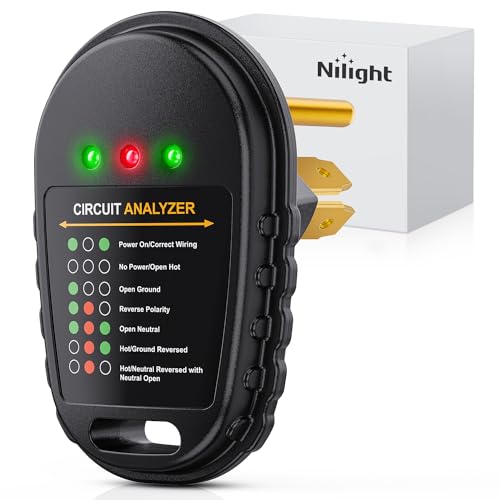
Nilight 30 Amp RV Circuit Tester with LED

GEARGO 3rd-Gen RV Surge Protector 50 Amp (18,000J)
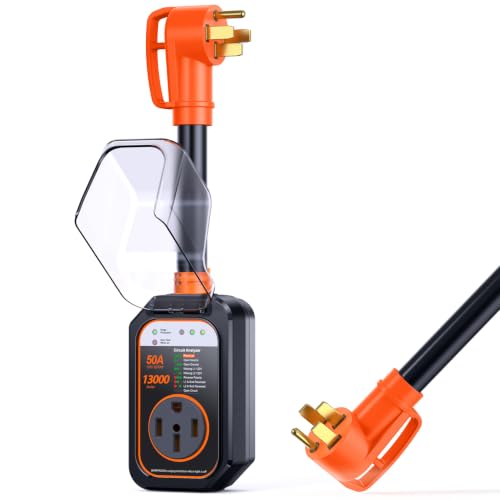
GEARGO RV Surge Protector 50 Amp Waterproof

EyGde 30 Amp to 15 Amp RV Adapter (4200J)

Power Watchdog PWD30EPO Smart RV Surge Protector (30A)

KIRFEIHT RV Surge Protector 30 Amp (18,000J)
The Details Behind The Selections
The Power Watchdog PWD50EPO sits at the top of the list because it does something most basic surge protectors don’t: it talks back. Built for 50-amp rigs, it pushes voltage and fault data straight to your phone through Bluetooth, so I can glance at the pedestal status without walking outside in the rain.
Underneath the smart features sits a robust 6,000-joule protection rating and an IP65 weather rating, meaning it shrugs off dust and low-pressure water jets. For a 50-amp motorhome that runs two A/C units and a residential fridge, that’s the kind of layered protection I want before anything reaches the transfer switch.
The Case For It
- Real-time Bluetooth monitoring cuts down on guesswork at the pedestal
- 6,000-joule rating absorbs substantial spike energy before it reaches appliances
- IP65 enclosure holds up to rain, road splash, and dusty storage bays
- Automatic shutoff when voltage drifts outside safe range protects sensitive electronics
- Compact plug form factor doesn’t add bulk to the cord locker
Things To Consider
- Bluetooth range can be limited in metal-sided rigs, so antenna placement matters
- App features require a compatible phone and occasional firmware refreshes
- Premium positioning means a higher outlay than basic non-smart units
Made For
Owners of 50-amp coaches who want app-based diagnostics and care about real-time fault alerts during storms or brownouts.
Where Another Pick Suits Better
Campers who don’t care about smart features and would rather save money should look at the GEARit 50 Amp RV Surge Protector with Circuit Analyzer instead.
The GEARit 50-amp unit covers the essentials without piling on extras I’d rarely touch. It carries a 4,100-joule rating and a built-in circuit analyzer, which is plenty for the average Class A or fifth wheel running standard residential loads on a 240V/12000W service.
The IP-rated waterproof housing makes it a sensible choice for outdoor pedestal duty. For someone stepping into RV surge protection for the first time, this strikes a friendly middle ground between the entry-level Nilight tester and the smarter Power Watchdog models.
Everyday Perks
- 4,100-joule absorption handles common campground spikes
- Integrated circuit analyzer flags miswired pedestals before you connect
- Outdoor waterproof build resists rain and morning dew
- 50A 14-50P/R plug configuration fits standard RV shore inlets
Worth Noting
- No wireless monitoring means walking outside to check status
- Indicator codes require a printed chart or quick lookup
Best Suited To
First-time RV surge protector shoppers with 50-amp rigs who want proven protection without smart features.
Consider Something Else When
Full-timers who want remote monitoring on the phone should reach for the Power Watchdog PWD50EPO Smart RV Surge Protector instead.
GEARGO’s 50-amp surge protector leans into the “tough as a tank” side of the category. The 15,000-joule rating sits well above the more common 4,000-joule class, and the IP68 enclosure means dust-tight sealing plus protection against prolonged water immersion.
High-joule ratings matter most in regions with frequent lightning or older campground wiring, where a single big spike could otherwise jump straight to the inverter. Compared to the GEARit unit above, this trades a lower price point for a meaningfully sturdier housing and protection ceiling.
Features That Help
- 15,000-joule rating absorbs serious surge energy
- IP68 sealing stands up to rain, mud, and puddle dunks
- Integrated circuit analyzer reads pedestal polarity and faults
- Bright orange shell stays visible on a crowded pedestal pad
Trade Offs
- Larger housing adds some weight to the shore cord
- Higher joule count alone doesn’t replace proper campground wiring checks
Who It Suits Best
Travelers who camp in storm-prone or coastal regions and want extra surge headroom on a 50-amp service.
Skip It When
30-amp trailer owners should look at the KIRFEIHT RV Surge Protector 30 Amp, which matches the protection class on their plug size.
The PWD50EPOW is the WiFi sibling to the Bluetooth PWD50EPO reviewed first, and it covers the same 50-amp, IP65 form factor with a slightly lower 4,600-joule rating. What it adds is the ability to monitor voltage from anywhere on a connected network, which is a real perk on long-stay sites.
I tend to recommend WiFi models for full-timers who can connect to a campground hotspot or their own hotspot device. Bluetooth alone, like on the earlier Power Watchdog, requires being within range, and that’s not always practical on a 40-foot coach.
What Earns Its Place
- WiFi connectivity lets me check pedestal status from inside the rig
- Auto shutoff triggers when voltage drops below 104V or climbs above 132V
- Power restores automatically after 90 seconds of stable conditions
- IP65 weatherproofing handles everyday outdoor exposure
Small Caveats
- WiFi connection depends on having a usable network nearby
- Setup takes longer than the Bluetooth-only Power Watchdog model
Right Fit For
Full-time RVers with reliable internet access who want remote monitoring tied to home automation or alerts.
A Better Fit Elsewhere
Weekend campers without WiFi will find the Power Watchdog PWD50EPO Bluetooth model easier to live with.
The Nilight 30-amp tester is the lightest, simplest entry on the list. It’s a NEMA TT-30P plug rated for 125V/3750W, with a flame-retardant ABS shell and pure-copper conductors underneath. There’s no joule rating worth quoting, which is why I frame it as a circuit tester rather than a heavy-duty surge suppressor.
For someone running a small travel trailer on weekends, that’s perfectly reasonable. The LED indicators flash patterns for common faults, so I can spot an open ground or reverse polarity before flipping the breaker on the pedestal.
A Strong Showing
- Compact size fits in a small storage bin or glove box
- ABS sheath resists heat and flame spread at the plug
- LED readouts give instant fault feedback without an app
Honest Caveats
- No published surge joule rating, so it’s primarily a tester
- 30A plug only, no fit for 50-amp rigs
Key Product Details
Perfect Match For
Occasional weekend campers with a 30-amp travel trailer who want quick fault detection before connecting.
Look Elsewhere When
Anyone running a 50-amp coach should grab the GEARit 50 Amp RV Surge Protector for proper joule coverage.
The third-generation GEARGO 50-amp unit pushes the joule ceiling up to 18,000, the highest figure in this lineup. That number represents the energy the protector can absorb before sacrificing itself, which matters most when campground wiring is questionable or a lightning cell rolls through.
It also ships with a waterproof cover for the plug head and a plug-and-play form factor. The orange shell is hard to lose on a busy pad, and the indicator light display keeps fault codes readable even in low light.
Key Advantages
- 18,000-joule rating leads the category for spike absorption
- Included waterproof cover adds plug-head protection in storage
- Circuit analyzer diagnoses pedestal faults before energizing the rig
- Plug-and-play design skips any hardwire step
Points To Keep In Mind
- Premium positioning places it above midrange picks on cost
- Higher joule rating means a slightly larger housing footprint
Quick Facts
Who Should Grab It
Owners of high-end 50-amp coaches in lightning-heavy regions who want top-tier joule coverage.
Swap It Out When
30-amp trailer owners get better match value from the KIRFEIHT RV Surge Protector 30 Amp.
GEARGO’s standard waterproof 50-amp model hits a 9,500-joule rating and slots into a mid-tier price slot. Compared to the 18,000-joule GEARGO unit above, this one trades peak surge headroom for a more accessible cost while keeping the waterproof shell.
The diagnostic chart helps decode the indicator pattern, which is useful for less technical owners who want to confirm correct pedestal wiring before powering up.
Benefits That Matter
- 9,500-joule rating covers typical campground fault scenarios
- Waterproof enclosure shrugs off heavy rain and morning condensation
- Diagnostic chart helps interpret LED codes without an app
Less-Strong Areas
- Lower joule ceiling than GEARGO’s 18,000-joule sibling
- No smart or wireless monitoring option
Built With In Mind
RVers who camp often in wet climates and want a dependable 50A plug-and-play protector at a moderate cost.
Another Choice May Suit
Tech-forward owners who prefer app alerts should consider the Power Watchdog PWD50EPO instead.
The EyGde adapter solves a different problem than most picks on this list. It lets a 30-amp trailer plug into a standard 15-amp household outlet, which is helpful for pre-cooling the fridge or running lights in the driveway before departure. It carries a patented 4,200-joule surge protector built into the adapter body.
The honest read is that this is an adapter first and surge protector second. It does not transform voltage or amp capacity, so high-draw appliances like rooftop A/C units shouldn’t be expected to run on a 15-amp source. For pre-trip fridge cooling and basic outlet testing, it earns its place in the bag.
What It Does Well
- Combines 30A-to-15A adapter with 4,200-joule surge protection
- Useful for pre-cooling fridges on standard household outlets
- Compact form factor stores easily in a basement compartment
Practical Considerations
- Does not boost amp capacity, so high loads remain off-limits
- Adapter shape can block adjacent household outlets on some wall plates
Whose Shelf It Belongs On
30A trailer owners who want a single tool for home plug-in, fault checking, and travel surge protection.
Not Your Match When
Owners running rooftop A/C from household current should stick with a true 30A pedestal protector like the KIRFEIHT RV Surge Protector 30 Amp.
For 30-amp trailers that want the same app-driven experience as the 50-amp Power Watchdog, the PWD30EPO delivers. It carries a 3,000-joule rating, an IP65 enclosure, and Bluetooth-based monitoring that pushes fault and voltage data to a paired phone.
Most travel trailers run a single A/C unit, a microwave, and a fridge on 30A service, and 3,000 joules is a sensible match for that load profile. Compared to the budget Nilight tester, this jumps into genuinely proactive fault protection territory.
Where It Excels
- Bluetooth alerts keep status visible from inside the trailer
- Auto shutoff guards against low and high voltage events
- IP65 weatherproofing holds up to typical outdoor pedestal exposure
- Plug form factor leaves the shore cord manageable in storage
Where It Is Less Suited
- 3,000-joule rating is modest compared to KIRFEIHT’s 30A option
- Bluetooth range limits usefulness in long trailers or metal buildings
Feature Snapshot
Who Will Love This
Travel trailer owners on 30A who want app alerts and auto shutoff without stepping outside during storms.
Reach For A Different Pick When
Full-time 30A RVers needing higher joule headroom should consider the KIRFEIHT RV Surge Protector 30 Amp.
KIRFEIHT closes the list with a 30-amp unit that punches well above its class: 18,000 joules of surge absorption in an IP68 waterproof housing, paired with an LED display and plug-and-play form factor. That’s protection headroom usually reserved for 50-amp coaches.
For hardworking trailers logging long stretches on unfamiliar pedestals, that rating brings real peace of mind. Compared to the Power Watchdog PWD30EPO, this trades smart connectivity for raw joule count and weather sealing.
What Helps Most
- 18,000-joule rating matches premium-tier 50A units
- IP68 enclosure handles rain, splashes, and puddle exposure
- LED display gives readable fault and voltage status
- Plug-and-play design needs no hardwiring
Factors To Consider
- No app or wireless monitoring option
- Higher joule rating arrives in a heavier, larger housing
Core Details
The Right Fit
Full-time or frequent-use 30A trailer owners who want the highest joule rating possible on their plug size.
Look Elsewhere When
30A owners who prefer phone alerts over LED readouts will find more to like in the Power Watchdog PWD30EPO.
Picking The Right RV Surge Protector For Your Rig
Amperage Match Matters First
The single most important specification is the amperage: 30A or 50A. A 30-amp rig uses a NEMA TT-30 plug, while a 50-amp rig uses a NEMA 14-50 plug. The two are not interchangeable, so confirm what your shore cord accepts before anything else. EyGde’s adapter solves one specific transition, but it’s not a replacement for a properly sized surge protector.
Joule Rating Is Your Safety Margin
The joule number reflects how much energy the protector can absorb before it wears out. For most weekend campers, 3,000 to 4,000 joules covers common campground spikes. Full-timers and storm-region travelers benefit from 9,000 to 18,000-joule units like the GEARGO 3rd-Gen 50A or the KIRFEIHT 30A, which provide extra headroom for severe events.
Smart Monitoring Versus Manual Reads
Smart units like the Power Watchdog PWD50EPO push voltage and fault data to a phone, which I find genuinely useful during overnight storms. Manual units use LED codes and printed charts instead. Both work; smart monitoring is a convenience layer, not a safety layer.
Weather Sealing For Outdoor Pedestals
A surge protector lives outside at the pedestal, so the IP rating matters. IP65 handles rain and dust, while IP68 covers prolonged water exposure. Campers in wet climates or storage situations should weight this heavily.
Practical Pointers Before You Buy
Common Shopping Slip Ups
The biggest mistake is buying the wrong amperage. A 30-amp trailer cannot use a 50-amp protector without an adapter, and the wrong adapter can create a misleading sense of safety. Another common slip is treating joule rating as the only number that matters, when plug compatibility, weather sealing, and circuit analysis often matter just as much in day-to-day use.
Where The Extra Money Goes
Higher-priced units bundle smart monitoring, bigger joule ratings, and tougher weather sealing into one package. The Power Watchdog PWD50EPOW, for example, adds WiFi capability over its Bluetooth sibling. That upgrade pays off for full-timers who want remote monitoring, while weekend campers often find the Bluetooth model or a non-smart 50A unit more than enough.
Frequently Asked Questions
What does a joule rating actually mean on an RV surge protector?
The joule rating measures how much energy the protector can absorb before it fails. Higher ratings mean more spike events handled before replacement, so a 15,000-joule unit outlasts a 4,000-joule unit when facing repeated surges.
Do I need a 30A or 50A surge protector?
Match the amperage to your shore cord plug. A 30-amp trailer uses a TT-30 plug, while a 50-amp motorhome or fifth wheel uses a 14-50 plug. Adapters exist but shouldn’t replace a properly sized primary protector.
Can a surge protector prevent all campground electrical damage?
No. Surge protectors guard against voltage spikes and wiring faults at the pedestal, but they cannot fix sustained undervoltage events or outright campground power failures. They’re a strong first line, not a guarantee against every failure mode.
How often should an RV surge protector be replaced?
Replacement depends on how many surges it absorbs. Smart units sometimes indicate end-of-life in the app. For non-smart units, owners commonly replace them after a major lightning event or every few seasons as a precaution.
Is a hardwired unit better than a plug-in model?
Hardwired surge protectors install inside the RV and protect the entire electrical system permanently. Plug-in models live at the pedestal and are easier to swap between rigs. Both work; the choice depends on whether you want a permanent install or portable flexibility.
Wrap Up
The right RV surge protector comes down to matching your shore plug, picking a joule rating that fits your travel style, and deciding whether smart alerts are worth the extra cost. For most RVers, the Power Watchdog PWD50EPO hits the sweet spot of smart monitoring and 50A protection. Those who camp less often can save money with a basic tester or mid-tier GEARit unit. Either way, plugging in without checking the pedestal first is a gamble not worth taking.
