

Swapping out a tired lead-acid bank for lithium is one of those upgrades that quietly reshapes how an RV actually feels to live in. The fridge stays colder overnight, the lights don’t dim when the furnace kicks on, and you stop counting amp-hours like a miser. I’ve spent time comparing what matters for weekend warriors versus full-timers, and the right battery comes down to capacity, cold-weather behavior, and how much monitoring you actually want.
The Shortlist At A Glance

VATRER POWER 12.8V 300Ah Self-Heating LiFePO4 Battery

Mosasaur 48V 100Ah LiFePO4 Golf Cart Battery

ECO-WORTHY 12V 314Ah LiFePO4 Lithium Battery Bluetooth
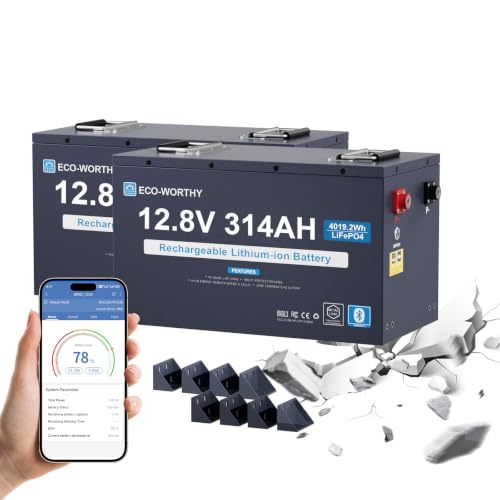
ECO-WORTHY EnergyRock 12V 280Ah 2 Pack LiFePO4 Battery

MARSENERGY 12V 100Ah LiFePO4 Battery BCI Group 24
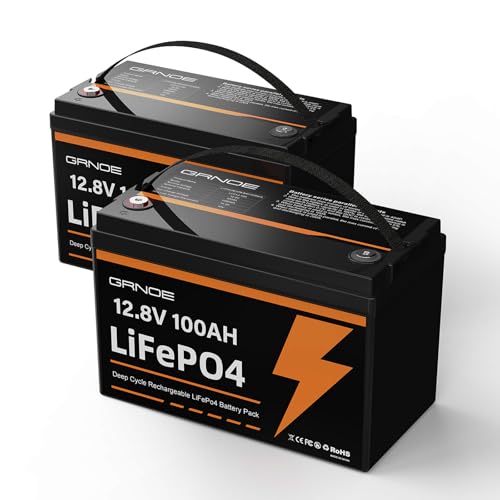
GRNOE 12V 100Ah LiFePO4 Lithium Battery Group 31 (2 Pack)
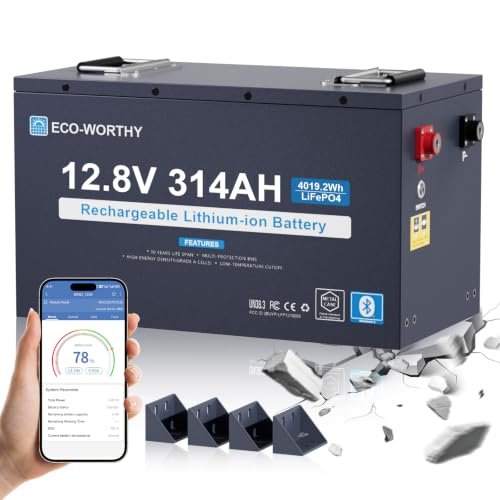
ECO-WORTHY 12V 280Ah Metal Case LiFePO4 Battery

Power Queen 12V 100Ah LiFePO4 Battery Group 31
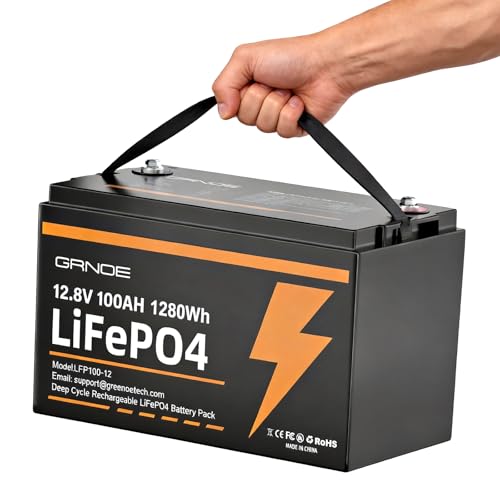
GRNOE 12V 100Ah LiFePO4 Battery Group 31

GRNOE 12V 300Ah LiFePO4 Battery
A Closer Look At Each Pick
Cold-weather camping has a way of exposing weak batteries, and VATRER POWER tackles that with a self-heating function built right into the 12.8V 300Ah LiFePO4 cell. For anyone who heads out in late fall or parks at elevation where overnight temps crash below freezing, that single upgrade is the headline feature. The BMS (Battery Management System, the small circuit board that protects the cells from overcharge, overdischarge, and shorts) watches the pack while you sleep.
The 300Ah capacity means roughly 3.84kWh of usable energy, which translates into running a typical RV fridge for several days without sun. I appreciate that it ships with app monitoring so you can check state of charge from the cab rather than crawling into the battery bay. Compared to the lighter 100Ah options later in this list, this one’s heftier, but the cold-weather resilience justifies it for shoulder-season travelers.
What Pays Off
- Integrated heating lets the pack charge safely below freezing, a real problem for plain LiFePO4 in winter
- 300Ah delivers multi-day runtime for typical RV fridges and lights without generator use
- App-based monitoring means you can check voltage from the cab
- Deep-cycle LiFePO4 chemistry (lithium iron phosphate, valued for thermal stability and long life) handles thousands of cycles for full-time RVers
Things To Consider
- Self-heating draws power from the pack itself, so very cold storage with no shore power can slowly drain capacity
- Heavier than a 100Ah unit, so weight-conscious van owners may want a smaller battery instead
Key Advantages
Built With In Mind
Four-season RVers and full-time travelers who camp below freezing and want one battery that handles winter charging automatically.
A Better Fit Elsewhere
Weekend warriors running a single 100Ah bank should look at the Power Queen 12V 100Ah Group 31 instead, since they likely won’t need the cold-weather heating or extra weight.
The Mosasaur 48V pack breaks from the 12V norm, and for good reason. It delivers 10.24kW of peak power through a built-in 200A BMS, which matters when you’re climbing steep grades with a cart or running a heavier RV inverter. The classic lead-acid case footprint makes it a drop-in upgrade for golf carts, but full-timers with big inverter loads find the same muscle useful.
At 77 lbs it’s substantially lighter than the four 12V batteries it replaces, and the included 18A charger takes the guesswork out of the install. The LCD touch screen and dual monitoring through the app means you don’t need to wire up a shunt (a device that measures live current draw) to know your real numbers, which I find refreshing for a 48V system.
Practical Pluses
- 10.24kW peak handles steep climbs and demanding inverters without voltage sag
- Drop-in lead-acid case sizing removes the guesswork from bay retrofits
- 200A BMS protects against overcurrent, heat, and short events
- App and LCD dual monitoring keeps state-of-charge visible at all times
Trade Offs
- 48V architecture means your existing 12V RV accessories need separate DC-DC conversion (a small charger that steps 48V down to 12V)
- Heavier than a single 12V 100Ah lithium, which may strain smaller battery trays
Right Fit For
Owners upgrading golf carts or large motorhomes who want high continuous output for inverter loads and don’t mind the 48V system change.
Swap It Out When
Standard RVers sticking with 12V accessories will find the ECO-WORTHY 12V 314Ah a more compatible match for their existing wiring.
ECO-WORTHY upgraded this 12V pack from 300Ah to 314Ah, a small bump that gives solar-heavy rigs a touch more runway. The 4019Wh rating places it firmly in serious off-grid territory, enough for a week of modest use or a weekend of full-tilt air conditioning. Low-temperature charging protection means it pauses when cells get too cold, which preserves longevity for shoulder-season travelers.
The LED indicator on top gives a quick glance of state of charge, and Bluetooth adds the deeper numbers for those who want them. Compared to the Mosasaur above, this stays in familiar 12V territory, so it pairs cleanly with standard RV converters and solar charge controllers (the device that regulates voltage and current from solar panels into the battery).
Standout Benefits
- 314Ah capacity rivals the larger VATRER POWER pack while keeping a 12V profile
- Low-temp charging protection prevents damage in cold conditions
- LED display gives fast visual readings without a phone
- 200A BMS handles serious inverter loads for AC and microwave use
Honest Caveats
- Bigger physical footprint than a Group 31 case, so measure your battery bay before committing
- Higher-capacity lithium tends to sit at a steeper spend than entry 100Ah units
Perfect Match For
Off-grid solar households and full-time RVers who want maximum amp-hours without leaving the 12V ecosystem.
Reach For A Different Pick When
Shoppers prioritizing winter charging should look at the VATRER POWER 12.8V 300Ah, since it actively heats instead of merely protecting.
The EnergyRock 2-pack arrives as matched units, which removes the cell-matching headache when you wire two batteries in parallel. With 3584Wh of max capacity, this duo can run a typical RV galley and entertainment setup through cloudy stretches without panic. The metal case, a step up from the older plastic enclosures, helps with thermal dissipation in hot battery compartments.
Bluetooth monitoring pairs with ECO-WORTHY’s app, and the 200A BMS handles sustained loads without tripping. For campers upgrading from a single 100Ah lead-acid, this represents a serious leap in usable energy. The two-pack framing suits anyone planning a 12V solar bank with room to grow.
Good Reasons To Consider
- Two matched batteries eliminate cell-mismatch worries in parallel installs
- Metal enclosure handles heat better than the older plastic versions
- 3584Wh combined rivals the 12V 314Ah single pack with redundancy
- Bluetooth gives per-pack state-of-charge visibility through the app
Points To Keep In Mind
- Two units take more physical space than one big block battery
- Parallel wiring adds a bit more install complexity for first-timers
Whose Shelf It Belongs On
DIYers building a 12V solar bank from scratch who want matched cells and the flexibility of a multi-battery layout.
Skip It When
Tight battery bay spaces call for the ECO-WORTHY 12V 280Ah Metal Case single unit, which fits where two packs won’t.
The MARSENERGY Group 24 unit speaks the same language as your old lead-acid battery. BCI Group 24 is a standardized battery case size (defined by the Battery Council International) used across many RV and marine applications, and that means this 100Ah lithium drops into existing trays without modification. The 100A BMS keeps things conservative, which suits smaller inverters and DC loads.
For weekend warriors running modest setups, this hits the sweet spot. You get lithium’s depth-of-discharge advantage, meaning you can use nearly all 100Ah rather than the half you’d safely pull from lead-acid, without the bulk of a 280Ah block. It’s a clean replacement part.
A Few Highlights
- Standard Group 24 footprint fits existing RV and marine battery trays
- 100A BMS handles typical fridge and lighting loads comfortably
- LiFePO4 chemistry means essentially full depth of discharge without damage
Points To Note
- Single 100Ah limits boondocking (camping without hookups) duration for high-draw appliances
- No built-in Bluetooth, so you’ll want an external shunt or voltmeter for accurate readings
Feature Snapshot
Who Will Love This
Weekend RVers replacing a single aging lead-acid and wanting a clean, no-fabrication swap to lithium chemistry.
Not Your Match When
Off-grid households wanting extended capacity should step up to the GRNOE 12V 300Ah, which triples the runtime.
GRNOE packages the Group 31 100Ah as a flexible building block. The smart play here is scalability: by combining units, you can reach up to 4P4S configurations, meaning four batteries in parallel (4P, multiplying capacity) and four in series (4S, multiplying voltage), for up to 20.48kWh and 48V systems. For a small house starting with one pack and adding capacity later, that flexibility is genuinely useful.
The 1280Wh per unit matches the single-pack offerings on this list, and the 100A BMS handles standard RV loads. Compared to the MARSENERGY Group 24 above, this is a slightly larger case but trades up for the modular promise. Owners commonly report that expansion adds complexity around cable sizing and BMS balancing, so plan ahead.
The Value In It
- Scales from a single 12V pack to a 4P4S high-voltage bank as needs grow
- Group 31 footprint fits common RV and marine trays
- Two-pack pricing undercuts buying singles individually
Some Limits To Know
- Heavier batteries ship one per box and may arrive on separate trucks
- Multi-pack configurations require careful cable and fuse sizing as capacity grows
Best Suited To
Solar installers who know they’ll expand the bank over time and want a clean path from one pack to a full off-grid array.
Consider Something Else When
Folks happy with a single fixed bank will save effort with the Power Queen 12V 100Ah Group 31, which arrives ready to mount without expansion planning.
Heat is the enemy of any battery compartment, and ECO-WORTHY wrapped this 280Ah pack in a heavy-duty metal enclosure specifically to manage it. The result is improved fire resistance and better thermal behavior in enclosed bays. For desert campers and southern travelers, that’s a real-world upgrade over plastic housings, which can soften or discolor in prolonged heat.
The 3584Wh max capacity delivers several days of typical RV loads, and Bluetooth plus low-temp cutoff keep things safe in shoulder seasons. The integrated low-voltage power switch is a small but appreciated touch for long-term storage. Compared to the EnergyRock 2-pack above, this single unit sacrifices some redundancy for a tidier install footprint.
The Good Stuff
- Metal enclosure resists heat and adds fire safety in hot compartments
- 3584Wh capacity rivals the larger 314Ah pack with similar runtime
- Built-in power switch simplifies storage and long-park disconnects
- 200A BMS handles larger inverter loads comfortably
Possible Compromises
- Metal case adds a few pounds over comparable plastic housings
- Single-unit design lacks the parallel redundancy of a 2-pack setup
Made For
Hot-climate RVers and off-grid households who want ruggedized fire protection in tight battery compartments.
Look Elsewhere When
Owners wanting matched parallel redundancy should consider the ECO-WORTHY EnergyRock 2-pack, which offers similar capacity in a split configuration.
Power Queen has been a familiar name in RV lithium for a while, and this Group 31 unit represents the simple, dependable end of the category. The standard Group 31 case is one size larger than Group 24, giving you a hair more capacity headroom in the same general form factor. The 100A BMS handles typical RV inverters without strain.
What’s nice about this pick is the long track record. Many RV owners have installed these over several years, and the company has iterated on the design. For someone who wants a no-surprise replacement rather than the newest release, that history carries weight. The trade-off is fewer premium features like self-heating or metal enclosures.
Strengths Worth Knowing
- Proven track record among long-time RVers gives confidence for new owners
- Group 31 case fits common RV trays with room to spare
- Up to 15000 deep cycles delivers years of typical seasonal use
Less Ideal Details
- No Bluetooth on this base model, so monitoring requires an external meter
- Single 100Ah limits runtime versus the higher-capacity ECO-WORTHY packs above
Who Should Grab It
RVers who prioritize proven reliability over cutting-edge features and want a drop-in lithium that just works.
Another Choice May Suit
Tech-forward owners wanting app connectivity may prefer the GRNOE 12V 100Ah Group 31, which includes Bluetooth in the same form factor.
At just 22.48 lbs, the GRNOE 12V 100Ah is roughly a third the weight of a comparable lead-acid, and that matters more than you’d think in a camper van or travel trailer where every pound affects payload and handling. The Group 31 case fits standard trays, and the dimensions (12.9 x 6.7 x 8.6 inches) drop into boxes designed for the form factor.
GRNOE specifies a 14.6V adapter requirement for full charging, which means a standard 12V lead-acid charger won’t top off the lithium chemistry properly. That’s a small install note worth knowing upfront. The cycle rating reaches up to 15000 deep cycles, and the company backs it with a multi-year warranty period.
A Few Strong Suits
- Lightweight design cuts roughly 60 lbs over lead-acid, freeing payload capacity
- Group 31 case drops into standard RV and marine battery boxes
- Up to 15000 deep cycles outlasts most RVers’ ownership horizon
- LiFePO4 stability reduces thermal-runaway risk in enclosed compartments
Worth Bearing In Mind
- Requires a 14.6V LiFePO4-specific charger to reach full capacity
- Batteries stored long periods need a top-off charge every two to three months
Quick Facts
Built With In Mind
Camper van owners and weight-conscious travelers building rigs where every pound affects fuel economy and handling balance.
A Better Fit Elsewhere
Owners prioritizing raw capacity over weight should look at the VATRER POWER 12.8V 300Ah, which triples energy storage in one box.
The GRNOE 12V 300Ah closes out the list as a solar-focused 56 lb block. The unit supports up to four in parallel and four in series for larger off-grid arrays, reaching as much as 1200Ah or 51.2V configurations. For cabin owners and serious boondockers, that scaling headroom matters when designing a system around roof-mounted panels.
The 3840Wh capacity sits between the ECO-WORTHY 314Ah and the VATRER POWER 300Ah in usable energy, but the 200A BMS allows continuous loads that smaller packs can’t sustain. Solar charging requires a compatible charge controller, not a generic SLA (sealed lead-acid) charger, which is standard practice for any lithium install. The 5-year warranty period is the longest in this roundup.
Key Advantages
- Scales to 1200Ah or 51.2V through series-parallel configurations for serious off-grid builds
- 200A BMS sustains heavier inverter draws without tripping
- 56 lb weight undercuts many competitors in the 300Ah class
- Extended warranty period outlasts typical battery lifespan expectations
Practical Considerations
- SLA or general-purpose chargers can damage the cells; requires LiFePO4-specific charging
- Multi-pack configurations require careful voltage-matching before connecting in series
Technical Highlights
The Right Fit
Off-grid cabin owners and solar-heavy RVers who plan to scale their battery bank over time and want headroom built into the design.
Where Another Pick Suits Better
Winter-first travelers should pick the VATRER POWER 12.8V 300Ah instead, since it actively heats the cells when temperatures drop below freezing.
What To Weigh Before Choosing RV Lithium Batteries
Capacity and case fit are the first filters. A Group 24 battery like the MARSENERGY 100Ah fits older trays with no fabrication, while larger 280Ah and 300Ah blocks demand measured bays. For most RVers running a fridge, lights, water pump, and occasional laptop charging, two 100Ah batteries in parallel cover weekend use without stress.
Cold-weather behavior matters more than spec sheets suggest. LiFePO4 cells refuse to charge below freezing, which damages them permanently. Self-heating batteries like the VATRER POWER sidestep this with internal warmers that precondition the pack, while low-temperature protection cuts off charging before harm occurs.
BMS rating sets the ceiling for sustained loads. A 100A BMS handles most RV inverters up to about 1200W, but heavy AC or microwave use wants 200A continuous. Check your inverter’s continuous draw before committing.
Bluetooth and app monitoring add real convenience. Glancing at your phone beats crawling into a battery bay, and most newer packs include it. For those without it, an external shunt and monitor fill the gap nicely.
Key Takeaways Across These Picks
Pitfalls Shoppers Hit
Buying a lithium battery with the wrong charger tops the list. Standard 12V lead-acid chargers don’t reach the 14.6V that LiFePO4 needs for a full charge, leaving you chronically under-filled. Matching your existing converter or upgrading to a lithium-compatible unit prevents early disappointment.
Forgetting to check physical dimensions ruins install day. Manufacturers spec case sizes loosely, and a “Group 31” battery can vary by an inch between brands. Measure your battery tray before ordering, especially for the larger 280Ah and 300Ah blocks.
Where The Extra Money Goes
Higher-capacity batteries buy you more usable amp-hours, but the jump from 100Ah to 300Ah triples your runtime in a single footprint. Self-heating and metal enclosures add safety margins for extreme climates, while Bluetooth monitoring gives visibility without external accessories. For full-timers and serious boondockers, those upgrades pay back in fewer headaches.
Frequently Asked Questions
How long do RV lithium batteries typically last?
Most quality LiFePO4 batteries deliver 4000 to 15000 deep cycles depending on usage depth, translating to roughly 10 years for part-time RVers and longer for weekend warriors.
Can I replace my lead-acid battery with lithium directly?
Group 24 and Group 31 lithium units fit standard trays directly, but you may need a lithium-compatible converter or charger to reach full capacity.
Do lithium batteries work in cold weather?
LiFePO4 cells discharge fine in cold but won’t charge safely below freezing without protection. Self-heating models handle this automatically; others need a low-temperature cutoff.
How many amp-hours do I need for boondocking?
Weekend campers usually manage with 100 to 200Ah, while full-time boondockers want 300Ah or more paired with solar to recharge daily.
Are Bluetooth and app monitoring worth it?
For anyone who can’t easily access the battery bay, app monitoring saves repeated trips. External shimers work too if the pack lacks built-in connectivity.
Closing Remarks
The right RV lithium battery comes down to how you camp. Weekend warriors get plenty from a single 100Ah drop-in, while four-season travelers and full-timers benefit from the cold-weather resilience and capacity of larger packs. Match the battery to your climate, your bay dimensions, and your typical load, and the upgrade pays back for years.
