

RV power gets messy fast once you need to run appliances, charge devices, and keep the lights steady from a 12V system. The right inverter or converter can make a campsite, garage setup, or off-grid rig feel a lot more workable, without turning your wiring into a headache. This roundup focuses on capacity, output type, outlets, remote controls, and the kinds of setups each item suits best. You’ll also see where each one asks for a trade-off, because every power setup has one.
The Shortlist At A Glance

TOPBULL 3000 Watt Power Inverter

BELTTT 2000W Pure Sine Wave Inverter

BELTTT 3000W Pure Sine Wave Inverter
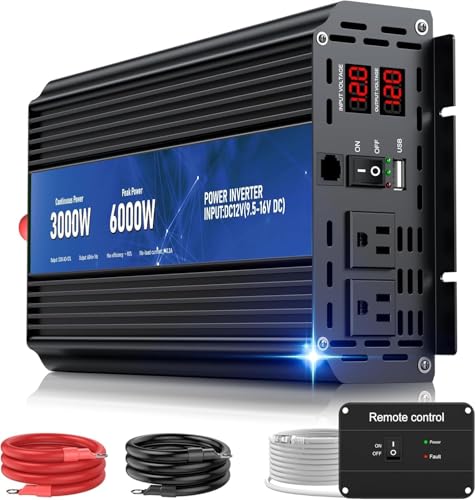
HONOURLIGHT 3000W Power Inverter

Cantonape 3000W Power Inverter

USSKYBOY WF-9855 55 Amp Deck Mount Charger/Converter

BELTTT 1000Watt Pure Sine Wave Inverter
More Details On Our Top Picks
The 3000W class makes this a practical fit for RV users who want a lot of headroom for everyday loads. The long remote reach stands out more than the usual compact control setup, especially in a van, trailer, or garage build where the inverter sits out of the way. You also get dual AC outlets, a USB port, LED display, dual smart fans, and the cables included, so the kit feels ready for a more involved install.
The honest read is that this kind of capacity asks for careful matching to your battery bank and appliance draw. Compared with the smaller BELTTT 1000Watt option, this TOPBULL pick suits heavier use and less compromise. It’s the kind of choice that feels made for people who want one unit to cover a broad range of household-style gear.
Strong Points
- 3000W output leaves room for larger RV loads.
- Remote control reach helps with tucked-away installs.
- LED display gives quick status checks at a glance.
- Dual smart fans should help with heat management during longer sessions.
- Included cables simplify the first installation step.
Things To Consider
- That much output usually asks for thicker wiring and a careful setup.
- The larger footprint can feel bulky in tight storage bays.
- Heavy-duty use may call for more attention to ventilation and cable routing.
Core Details
Who It Suits Best
RV owners with larger electrical loads and enough room for a more serious install get the most from this unit.
A Better Fit Elsewhere
BELTTT 1000Watt Pure Sine Wave Inverter suits lighter travel use and simpler power needs more comfortably.
A pure sine wave inverter sends out AC power that more closely resembles utility power, which matters for electronics that prefer steadier input. That makes this BELTTT model a sensible middle ground for solar rigs, RV cabinets, and truck setups where you want cleaner output without jumping to the larger 3000W class. The dual AC outlets, 20A socket, USB port, hardwire port, and remote controller give you plenty of connection options without a lot of clutter.
You may find this the sweet spot for mixed loads, especially in a compact rig where 2000W is enough but 3000W feels excessive. Compared with the TOPBULL unit, it leans more toward polished output than sheer reach. The trade-off is simple, since a midrange inverter still asks you to keep an eye on total watt draw.
What We Like
- Pure sine wave output suits sensitive electronics better than rougher alternatives.
- Dual AC outlets and a 20A socket add useful flexibility.
- Hardwire port works well for a more permanent install.
- Remote controller makes day-to-day use less awkward.
Minor Gripes
- Midrange output can still feel tight for multiple high-draw appliances.
- Hardwire installs usually call for a little more planning and clean cable runs.
Feature Snapshot
Who Will Love This
Travelers with sensitive gear and moderate power needs will appreciate the cleaner output and practical port mix.
Where A Sibling Pick Shines
BELTTT 3000W Pure Sine Wave Inverter suits larger rigs that need more breathing room for demanding appliances.
This one pushes farther than the 2000W BELTTT unit, so it suits RV systems that need more breathing room for appliances, tools, and charging at the same time. The dual AC outlets, 20A socket, USB port, hardwire port, and remote controller make it feel set up for a more committed installation rather than a quick weekend add-on. A 23 ft cable also gives the remote a practical amount of reach in a coach or truck cab.
The upside is obvious, but the trade-off shows up in setup planning, since a larger inverter can expose weak wiring or undersized batteries very quickly. In an off-grid or home-backup role, that extra capacity feels useful instead of decorative. Compared with the TOPBULL 3000W, this BELTTT option leans more toward clean output and fixed-install convenience.
Highlights
- 3000W output supports heavier travel and backup loads.
- Pure sine wave design suits sensitive equipment better.
- 23 ft remote cable adds real placement flexibility.
- Hardwire port helps with a more permanent setup.
- Dual AC outlets plus USB cover a broad mix of devices.
Points To Note
- Higher output demands more attention to battery capacity and cabling.
- The feature set fits committed installs better than quick portable use.
- More powerful hardware usually means a little more space taken up in the compartment.
Details At A Glance
Best Suited To
RVs, truck builds, and off-grid setups with larger loads and room for a more deliberate install suit this pick well.
Another Choice May Suit
BELTTT 2000W Pure Sine Wave Inverter is easier to size for smaller systems that do not need as much headroom.
The LCD display and remote control make this HONOURLIGHT unit feel straightforward for everyday checking and placement, which matters in an RV bay where easy access is not always part of the design. It delivers 3000W output with 6000W peak capacity, so there’s more room for startup spikes than a smaller inverter can offer. Dual AC outlets and a 3.4A USB port round out the practical side without overcomplicating the front panel.
Owners setting up camping power or emergency backup often value a clear screen more than a crowded feature list, and this one keeps the interaction simple. Compared with the BELTTT 3000W models, it swaps pure sine wave positioning for a more general-use layout with a beefier peak figure. That makes it a sensible fit for people who want visibility and convenience first.
Upsides
- LCD display helps you check status quickly.
- Remote control makes placement more flexible.
- 6000W peak gives extra room for brief power spikes.
- Dual AC outlets and USB support common household gear.
Worth Noting
- General-purpose units can feel less specialized than pure sine wave options.
- The larger feature set may add a little more setup time.
- Like any high-output inverter, it rewards careful ventilation and clean wiring.
Core Details
Whose Shelf It Belongs On
Campers and backup-power users who want a simple display and strong peak capacity will feel at home with this model.
Look Elsewhere When
BELTTT 3000W Pure Sine Wave Inverter suits sensitive electronics better in setups where output quality matters most.
Four AC outlets and four USB ports make this Cantonape unit feel especially suited to messy, device-heavy setups. That matters in an RV with phones, tablets, a fan, a laptop, and a few small appliances all wanting power at once. The LCD display and remote controller keep the experience more manageable, so you are not hunting for a port every time you need to check status.
Compared with the HONOURLIGHT pick, this one leans harder into outlet count than peak capacity. That gives you a different kind of usefulness, more like a power hub than a single-purpose inverter. The trade-off is that more ports do not replace thoughtful load planning, especially in a small coach.
Reasons To Buy
- Four AC outlets support several devices at once.
- Four USB ports reduce the need for separate chargers.
- LCD display helps you keep track of operation.
- Remote controller makes placement less inconvenient.
- Well suited to families or group travel with many small loads.
Areas To Watch
- High outlet count can tempt overloads if you do not track draw carefully.
- More connected devices usually mean more cable management.
- Busy layouts take a little more attention during cleanup and storage.
Quick Facts
Perfect Match For
Travel setups with lots of small electronics and a need for multiple charging points suit this Cantonape model very well.
Swap It Out When
BELTTT 2000W Pure Sine Wave Inverter makes more sense for a simpler rig that values cleaner output over port count.
This one serves a different role from the inverter-style picks above, since it is a deck mount charger and converter designed as a replacement for RV trailer and camper electrical systems. That makes it a better fit for owners dealing with a 9800 series swap than for someone looking for portable AC output. The lithium-ion switch adds a useful compatibility angle for modern battery setups, which is where many older RV power systems start to feel dated.
The trade-off is clear, since this is about replacement and charging support rather than running household appliances from a 12V source. Compared with the BELTTT and HONOURLIGHT inverters, it solves a more specific infrastructure problem. For maintenance-minded owners, that narrower job can be exactly the point.
Best Bits
- Deck mount format fits replacement-focused RV jobs.
- 55 amp rating supports charger and converter duties for compatible systems.
- Lithium-ion switch helps with battery system matching.
- Good choice for trailer and camper refresh projects.
Softer Spots
- It is not the right tool for portable AC appliance use.
- Replacement installs may take more care than a plug-in unit.
- Compatibility matters here, so system matching deserves a close look.
Spec Overview
The Right Fit
RV and camper owners replacing a compatible built-in converter in a trailer or coach will benefit most from this model.
Reach For A Different Pick When
BELTTT 3000W Pure Sine Wave Inverter suits travelers who need portable 120V output instead of a replacement converter.
Smaller RVs and lighter travel setups usually do better with a unit that keeps power needs modest, and this BELTTT inverter fits that mindset. The pure sine wave output, dual AC sockets, USB port, and intelligent LCD give it a more polished feel than a bare-bones compact inverter. Compared with the larger 2000W and 3000W picks, it asks for less from your battery bank and leaves less clutter in the compartment.
For weekend trips, charging stations, and smaller electronics, that restraint is a strength rather than a limitation. The honest read is that 1000W will not cover every appliance, but that is exactly why it stays appealing for simpler builds. It feels tidy, usable, and easier to slot into a less demanding RV system.
Positives
- Compact power level suits lighter travel loads.
- Pure sine wave output is friendlier to many electronics.
- Dual AC sockets and USB cover common charging needs.
- Intelligent LCD helps with quick monitoring.
Small Caveats
- 1000W capacity will feel limited for larger appliances.
- Small systems still benefit from careful load planning.
- The compact format is best viewed as a fit-for-purpose choice, not a universal one.
Feature Card
Made For
Weekend campers, small RV owners, and travelers with modest charging needs will find this size the easiest to live with.
Consider Something Else When
BELTTT 2000W Pure Sine Wave Inverter fits better for people who need more headroom without jumping to a 3000W unit.
How To Choose The Right Rv Inverters
Match Output To Your Real Load
Start with the appliances you actually want to run, then add a little margin for startup draw. A microwave, coffee maker, or portable fridge can ask for very different things, and a 1000W unit behaves very differently from a 3000W one. Pure sine wave output helps more sensitive electronics feel better supported, while a general inverter can still work well for simpler gear.
Do not size by wishful thinking. A unit that is too small will feel frustrating, and one that is far larger than your setup can make wiring, battery matching, and ventilation harder than they need to be.
Think About Installation Before The Purchase
Remote controllers, hardwire ports, and longer control cables matter more than they first appear. In an RV bay or truck compartment, being able to reach the display from the living area saves time and awkward crouching. Units with more ports can be handy, but they also ask for cleaner cable routing and better storage discipline.
The build style matters too. A deck mount charger/converter like the USSKYBOY WF-9855 belongs in a replacement job, while the others suit portable AC conversion or solar-linked setups. That distinction keeps you from buying hardware that solves the wrong problem.
Balance Convenience Against Electrical Headroom
Higher-output inverters usually cost more because they need stronger internal components, more careful thermal handling, and better support for startup spikes. That extra money starts to make sense once you run multiple devices, travel with family, or rely on the system during outages. For lighter trips, a smaller and simpler unit can be easier to own and maintain.
You get more flexibility as the wattage climbs, but you also take on more responsibility for battery capacity and safe installation. The sweet spot usually sits where your daily use fits comfortably without making the system feel oversized.
Things Worth Knowing First
Common Shopping Slip Ups
Many shoppers focus on wattage and ignore the shape of the install. A compact trailer may need a smaller inverter with a smarter layout, while a replacement converter job needs the right form factor and system match.
Another common miss is forgetting the difference between portable AC conversion and built-in charging hardware. That’s a costly mistake to fix after the unit arrives.
The Upgrade Payoff
Spending more often buys better output quality, more connection options, and remote-friendly hardware. It can also buy a little more breathing room when appliances start up together, which matters in a busy RV cabin.
That upgrade makes the most sense for full-timers, heavier rigs, and setups with sensitive electronics. For occasional camping, the added headroom may be nice, but not necessary.
Frequently Asked Questions
What does a pure sine wave inverter change?
It creates AC output that is smoother and more consistent for many electronics. That usually matters more for laptops, chargers, and other gear with fussier power needs.
How much wattage do you really need?
Start with the largest appliance you plan to run, then leave margin for startup draw. A 1000W unit fits light use, while 2000W and 3000W models suit broader RV power needs.
Do you need a remote control?
A remote is helpful when the inverter sits in a hard-to-reach compartment. It becomes especially handy in larger RVs or truck builds.
Why does a hardwire port matter?
Hardwire support works well for more permanent installs. It can make the setup cleaner than a purely portable arrangement.
Is a converter the same thing as an inverter?
No, a converter and an inverter handle different jobs in an RV electrical system. A converter supports charging and power conversion inside the rig, while an inverter changes 12V DC into 120V AC for standard devices.
Final Thoughts
The right RV inverter depends less on hype and more on how you actually travel. Small rigs usually do well with the BELTTT 1000Watt model, while bigger setups benefit from the 2000W and 3000W BELTTT units or the TOPBULL option with its long remote reach. For outlet-heavy cabins, Cantonape stands out, and the USSKYBOY converter belongs in replacement jobs rather than portable power use. Match the unit to your loads, your space, and your wiring comfort, and the choice gets much easier.
