

The 18650 cell powers everything from high-output flashlights to RC trucks, vape mods, and portable tools, but the battery is only as good as the charger feeding it. I pulled together ten solid options that span full smart chargers, single-bay workhorses, bare TP4056 modules for DIYers, and one RC-specific pack so there’s a fit for almost any setup.
The Picks In Brief
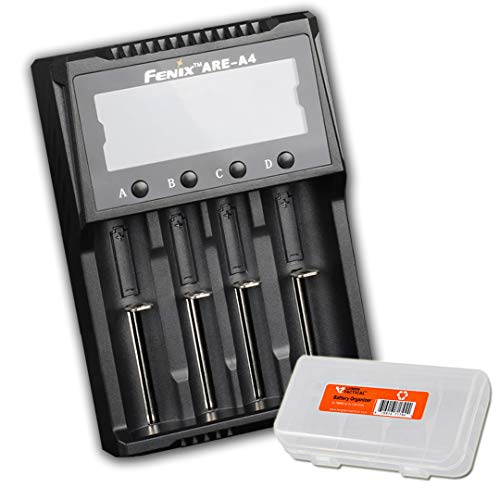
Fenix ARE-A4 Multifunctional Smart Battery Charger with LumenTac Organizer

IMREN Single-Slot 18650 Battery Charger USB-C

Dlyfull 4-Bay Universal Li-ion/Ni-MH Charger

IMREN 26650/18650 2-Bay USB-C Charger

VICMILE 7.4V 3300mAh 2S RC Li-ion Battery Pack

IMREN 4-Bay 18650/21700 USB-C Charger
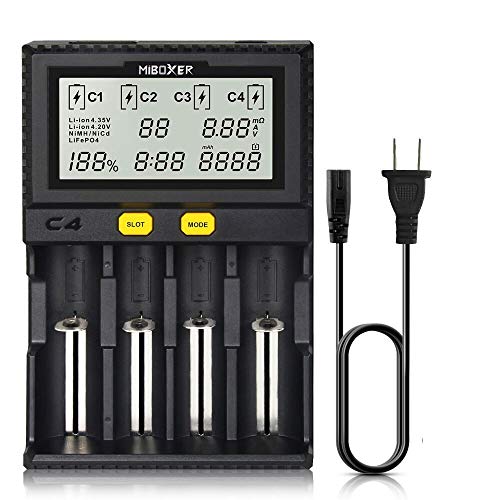
MiBOXER C4 Smart Universal 4-Bay Charger

HiLetgo 10-pack TP4056 Micro USB Charging Boards

AITRIP 20-pack TP4056 Type-C Charging Modules

Tenergy TN270 Li-ion 2-Bay Charger
A Closer Look At Each Pick
The Fenix ARE-A4 is the kind of charger I keep coming back to when a household has drifted into “battery chaos” territory. Two independent bays mean I can charge a 21700 alongside an AA without juggling cables, and the LCD screen clearly shows voltage, current, and progress at a glance.
It covers Ni-MH, Ni-Cd, and a long list of lithium-ion sizes, and it self-adjusts the current to match each cell. The bundled LumenTac organizer is a small but useful touch for anyone tired of loose 18650s rolling around a drawer. Compared with the single-bay Imren later in this list, the ARE-A4 trades portability for chemistry flexibility.
Where It Excels
- Independent bay control charges mixed chemistries simultaneously.
- LCD readout removes guesswork during long charging sessions.
- Self-adjusting current helps extend overall cell lifespan.
- Broad lithium-ion compatibility covers 16340 through 21700 sizes.
Things To Consider
- Two bays can bottleneck larger households rotating many cells weekly.
Feature Snapshot
Who It Suits Best
Anyone juggling mixed household cells, from flashlights to remotes, in a single tidy station.
Where Another Pick Suits Better
Photographers rotating AA rechargeables weekly may prefer the Dlyfull 4-Bay Universal Li-ion/Ni-MH Charger for sheer slot count.
For anyone living out of a backpack, the IMREN single-slot charger is the smallest credible option I would trust with an 18650. A USB-C input means a phone charger or power bank does the heavy lifting, which is huge on the road. The 75mm slot accommodates 26650s alongside smaller cells.
Three current settings (0.5A, 1A, 2A) let me match speed to cell health, and the LCD power indicator strips away the “is it done yet?” guessing game. Where the Fenix ARE-A4 above leans toward a permanent desk setup, this one is built to ride in a jacket pocket.
The Helpful Details
- Three current modes (0.5A / 1A / 2A) match charging speed to cell condition.
- USB-C input works with common phone bricks and power banks.
- 75mm slot fits protected and unprotected cells, including 26650.
- LCD power indicator shows live charging state at a glance.
Points To Note
- One bay means slow turnaround for anyone rotating several cells daily.
- 2A fast mode should be reserved for cells rated to accept it.
Right Fit For
Travelers and field users who only need to top off a flashlight or vape cell between stops.
Look Elsewhere When
Anyone running a small repair bench with mixed cells may prefer the IMREN 4-Bay 18650/21700 USB-C Charger for parallel charging.
The Dlyfull 4-Bay sits in that sweet spot where the IMREN single-slot feels too small but a full bench charger feels excessive. USB-C power input means the same cable that charges a laptop can run this thing, which keeps a desk cleaner.
Independent slots feed 500mA, 1000mA, or 2000mA depending on how many cells are loaded, and the bay layout accepts everything from AAAA up through 26650. Compared with the IMREN 2-Bay that follows, this one scales better for a household rotating remotes, game controllers, and flashlights at the same time.
What Stands Out
- Four independent bays handle the typical household rotation without bottlenecks.
- USB-C input drops the wall-wart clutter from older chargers.
- 2000mA fast mode on a single slot cuts downtime for high-drain 18650s.
- Chemistry coverage spans AAAA through 26650, plus Ni-MH and Ni-Cd.
Trade Offs
- Loading four cells drops per-slot current to 500mA, so patience is needed.
- The enclosure runs warm during multi-bay fast charging sessions.
Quick Facts
Made For
Busy households rotating AA, AAA, and 18650 cells from remotes, cameras, and flashlights in one pass.
Swap It Out When
Hobbyists chasing detailed per-cell telemetry may want the MiBOXER C4 Smart Universal 4-Bay Charger instead.
Where most 2-bay chargers pinch at the shoulders, the IMREN 26650/18650 unit widens the middle slots to 25mm. That extra clearance lets two 26650 cells sit side by side without wedging, which is a real headache on tighter chargers. USB-C input keeps the cabling simple.
Two current modes (1A default, 2A fast) let me speed-cycle through high-capacity cells or slow-charge to preserve longevity. Where the IMREN single-slot above is the on-the-go option, this one is the weekend workhorse for larger format cells.
What Works In Its Favor
- 25mm slot width accepts two 26650 cells at once.
- USB-C input streamlines cabling and travel kits.
- 2A fast-charge mode shortens downtime on big cells.
- Independent bay control charges mixed sizes without pairing.
A Few Limitations
- Only two bays means rotating more than a pair of cells stretches wait times.
- Charging indicator visibility in bright sunlight is limited.
Feature Card
Who Should Grab It
Flashlight fans and tool users running high-capacity 26650s who want a dedicated charger at home.
Consider Something Else When
Anyone working with both tiny 10440 cells and 26650s in the same session may prefer the Dlyfull 4-Bay Universal Li-ion/Ni-MH Charger for broader range.
This entry breaks the charger-only pattern, and intentionally so. The VICMILE 2S pack is what I would reach for when a WLtoys rig needs a replacement battery that drops in cleanly. The 3300mAh capacity gives noticeably longer runtimes than the stock 1500mAh packs many RC trucks ship with.
The Dean-style T plug is standard across most hobby-grade 1/10 to 1/16 platforms, so chances are good it slots straight in. Pair it with a balance-aware hobby charger, since the included 1-to-2 USB lead is more of a convenience top-up than a proper cycle tool.
Benefits That Matter
- 3300mAh capacity extends RC truck runtime over typical stock packs.
- Dean-style T plug fits most 1/10 to 1/16 hobby rigs.
- Hard case dimensions (70×37×18mm) match common RC battery trays.
- 2S configuration pairs cells internally, simplifying field swaps.
Honest Caveats
- Not a universal fit, so tray dimensions and plug orientation must be checked first.
- Long-term cell health benefits from a balance charger over the included USB lead.
Whose Shelf It Belongs On
RC hobbyists running WLtoys 4WD trucks and similar 1/10 to 1/16 platforms who want a plug-and-play upgrade pack.
Another Choice May Suit
Anyone charging loose 18650s rather than pre-built RC packs should start with the Tenergy TN270 Li-ion 2-Bay Charger instead.
For anyone whose collection spans everything from tiny 10440s to chunky 26650s, the IMREN 4-Bay is the most adaptable IMREN on this list. It charges any number of cells without forcing pairs, which is friendlier to long-term cell health than paired-only designs.
USB-C input pairs with the rest of the modern cable ecosystem, and the LCD display keeps me honest about voltage and progress. Compared with the Dlyfull 4-Bay above, this one feels more deliberate in its smart-detection logic.
Advantages To Know
- Single-cell charging capability avoids forced pairing of odd counts.
- Smart input detection adjusts behavior based on the power source.
- Broad size coverage from 10440 through 26650 in one unit.
- LCD readout shows voltage and current per slot during charging.
Potential Drawbacks
- Button layout takes a session or two to learn confidently.
- Documentation is lighter than what premium chargers include.
Who It Suits Best
Vape users and flashlight collectors carrying a real mix of 18650, 20700, and 21700 cells in rotation.
Skip It When
Anyone primarily charging Ni-MH AAs for household remotes may find the Dlyfull 4-Bay Universal Li-ion/Ni-MH Charger simpler for that specific job.
The MiBOXER C4 earns its keep by displaying real data, not just a blinking light. The automatic LCD readout shows voltage, current, capacity, and elapsed time per bay, which is the kind of transparency I want when cycling cells that I depend on for headlamps on long hikes.
It also handles LiFePO4 chemistry, which most consumer chargers skip, so anyone running those cells for off-grid storage benefits from the wider coverage. The fire-retardant PC body adds peace of mind during unattended overnight cycles.
The Upside
- Per-bay LCD shows voltage, current, capacity, and elapsed time.
- LiFePO4 support broadens chemistry coverage beyond standard Li-ion.
- Fire-retardant PC shell improves safety during unattended cycles.
- Error symbols flag reversed or shorted cells automatically.
Where It May Fall Short
- Charging speed is moderate compared with current-limited fast chargers.
- LCD layout takes a brief learning curve before readings become intuitive.
Specs Overview
Who Will Love This
Detail-oriented hobbyists and preppers who want per-cell data and broad chemistry coverage from a single unit.
Reach For A Different Pick When
Travelers who rarely charge more than one cell at a time may find the IMREN Single-Slot 18650 Battery Charger USB-C easier to pack.
This is where the article pivots to builders. The HiLetgo TP4056 boards are bare modules meant for soldering into custom projects, not a consumer charger. Each board accepts a 5V input over Micro USB and delivers a controlled 1000mA charge to a single 18650 cell, with built-in protection against over-discharge.
A 10-pack keeps per-project cost low, and the modules are forgiving for beginners learning to build USB power banks or replacement battery sleds. Compared with the AITRIP Type-C version below, this one is the budget-friendly, cable-compatible classic.
Why It Works Well
- 10-pack quantity supports multiple parallel DIY projects.
- 5V Micro USB input pairs with any phone charger.
- Integrated protection circuit guards against over-discharge events.
- TP4056 IC is widely documented across hobby electronics communities.
Practical Considerations
- Bare boards require soldering skills and basic wiring knowledge.
- No enclosure included, so finished projects need a safe housing.
Best Suited To
Makers building USB power banks, robotics projects, or replacement battery sleds on a budget.
Not Your Match When
Anyone wanting a turnkey charger should jump back to the Fenix ARE-A4 Multifunctional Smart Battery Charger with LumenTac Organizer instead.
The AITRIP modules do essentially the same job as the HiLetgo boards above, but with two practical upgrades: a Type-C input and dual protection circuitry. For builders who already standardized on Type-C cables, that alone removes a layer of adapter clutter on the workbench.
The 20-pack pricing makes it the most cost-efficient option per module for anyone running a small lab or classroom. AITRIP adds overcharge and over-current protection on top of the standard TP4056 cutoff at 4.2V, which is reassuring when leaving a build cycling overnight.
What Earns Its Place
- Type-C input matches modern cable standards across most benches.
- 20-pack drops the per-module cost for multi-project builders.
- Dual protection adds overcharge and over-current safeguards.
- 1000mA output per board balances speed and thermal load.
Small Caveats
- Boards still require soldering and external wiring for practical use.
- No included enclosure, so any finished build needs its own housing.
Who Should Grab It
Prototypers and electronics classrooms that want modern Type-C input across a fleet of TP4056 modules.
A Better Fit Elsewhere
Anyone wanting a ready-to-use consumer charger should skip ahead to the Tenergy TN270 Li-ion 2-Bay Charger for a turntable experience.
The Tenergy TN270 closes the list as the simplest option I would hand to someone new to 18650s. Two bays, two LEDs, no menu system. Red means charging, green means done, and the universal 100V to 240V input means it travels across regions without a voltage converter.
It only handles 18650, 18500, and 14500 sizes, which keeps the design focused on flashlights, digital cameras, and solar yard lights. Where the MiBOXER C4 above chases telemetry, this one leans into honest simplicity.
Good Reasons To Consider
- Two-LED status indicator removes any learning curve for first-time users.
- 100V to 240V AC input works across regions without adapters.
- Compatible with 18650, 18500, and 14500 cells used in flashlights and cameras.
- Compact form factor fits a kitchen drawer or travel bag.
Worth Bearing In Mind
- Limited to three cell sizes, so 21700 and 26650 users need a different unit.
- Lacks LCD telemetry, which hobbyists may want for cell health tracking.
Perfect Match For
First-time 18650 owners running flashlight and camera cells who prefer plug-and-play simplicity over data screens.
Where A Sibling Pick Shines
Anyone cycling 21700 or 26650 cells should step up to the IMREN 26650/18650 2-Bay USB-C Charger for wider size support.
What To Weigh Before Choosing a Charger or Module
Chemistry compatibility is the first filter. A charger that lists Li-ion but skips LiFePO4 won’t safely cycle cells from off-grid storage banks, and Ni-MH support matters for households still running AAs in remotes. I always cross-check the supported list against the cells I actually own before anything else.
Bay count and current mode matter more than people expect. Two-bay chargers feel plentiful until you’re rotating four cells weekly, and 500mA trickle charging across four slots stretches a routine from an evening into a full day. Smart chargers that scale current based on slot population, like the Dlyfull, save real time.
Form factor ties into daily use. A USB-C input reduces cable clutter and lets a power bank or laptop top off cells on the road, which matters for travelers and field photographers. Build-it-yourself modules suit people comfortable with soldering, but a turnkey charger makes more sense for casual users.
Key Considerations Across These Picks
Pitfalls Shoppers Hit
A common mistake is buying a charger rated only for unprotected cells and then dropping in a protected 18650 with the extra PCB. The longer length either won’t seat or triggers bad contact, and the charge never starts. Always confirm protected-cell support before adding to cart.
Another trap is assuming higher mA always means faster charging. Cells rated for 1A continuous charge will overheat on a 2A setting, accelerating capacity loss over months. Match the charger’s current modes to the cells’ spec sheets rather than chasing the highest number on the box.
Where The Extra Money Goes
Spending up typically buys better charge controllers, smarter thermal management, and clearer displays. Premium units like the MiBOXER C4 show real per-cell telemetry rather than just a status LED, which helps diagnose weak cells before they fail mid-use.
Higher-tier models also tend to include safety circuitry that prevents reverse polarity, short circuits, and over-discharge recovery. For anyone running unattended overnight cycles, that extra protection layer is the part of the price tag that actually pays off in the long run.
Frequently Asked Questions
Can any 18650 charger also charge 21700 or 26650 cells?
No. Charger compatibility depends on slot width and listed supported sizes. Bays designed for 18650 cells may physically reject the longer 21700 and 26650 formats even if the voltage matches, so always verify the size list before charging.
Is fast charging harmful to 18650 batteries?
Fast charging at higher currents generates more heat, and sustained heat accelerates capacity loss over time. Most quality 18650 cells handle 1A comfortably, while 2A should only be used on cells specifically rated for it. Slow charging at 500mA is the gentlest option for cell longevity.
What does a TP4056 module do?
A TP4056 module is a bare charging board designed for DIY projects. It takes 5V from a USB source and delivers a controlled charge to a single lithium cell, with built-in cutoff at 4.2V to prevent overcharging. It is not a standalone consumer charger and requires soldering.
Do I need a balance charger for RC battery packs?
Yes for serious use. RC packs like the VICMILE 2S contain multiple cells that can drift in voltage over time, and a balance charger equalizes those cells during each cycle. The included USB lead is fine for occasional top-ups but should not replace a proper balance charger for regular use.
Can I leave lithium batteries charging overnight?
Most quality smart chargers stop automatically when cells reach full capacity, but leaving any lithium chemistry unattended carries some residual fire risk. For overnight cycles, a charger with overcharge protection and a fire-retardant shell, like the MiBOXER C4, reduces that risk meaningfully.
Closing Remarks
The right pick depends less on spec sheets and more on the cell mix already in your drawer. Flashlight and camera households do well with the Tenergy TN270 or Fenix ARE-A4, mixed-format rotations benefit from the Dlyfull or IMREN 4-Bay, and builders chasing custom projects get the most value out of the TP4056 modules. Match the charger to the cells you actually cycle, and the rest tends to fall into place.
