

Power outages are getting less rare. Storm seasons run longer, wildfire shutoffs hit wider regions, and even a brief grid hiccup can spoil a fridge full of groceries. A portable battery power station fills the gap between a candle and a gas generator: no fumes, no noise, just a box that you can lift, charge, and run the essentials from. I put this shortlist together for anyone weighing their first station or thinking about an upgrade, and the focus stays on real-world wattage, honest trade-offs, and use-case fit.
How The Shortlist Stacks Up

Jackery HomePower 3600 Plus Portable Power Station (3584Wh, 3600W)

Jackery Explorer 2000 v2 Portable Power Station (2042Wh, 2200W)

EF ECOFLOW Delta 3 Portable Power Station (1024Wh, 1800W)

Jackery Explorer 1000 v2 Portable Power Station (1070Wh, 1500W)
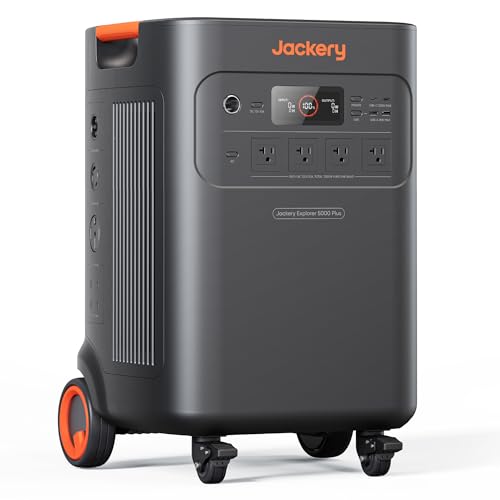
Jackery Solar Generator 5000 Plus (5040Wh, 7200W)

Jackery HomePower 3600 Plus with 2x200W Solar Panels (3584Wh)

Jackery HomePower 3000 with Hand Truck and 2x200W Solar Panels (3072Wh, 3600W)

Jackery Explorer 2000 v2 with 2x200W Solar Panels (2042Wh, 2200W)

Jackery Solar Generator 1000 v2 with 200W Solar Panel (1070Wh, 1500W)

EF ECOFLOW River 3 Plus Extra Battery EB600 (572Wh)
Meet The Standout Selections
The HomePower 3600 Plus sits in that sweet spot where a station starts to feel like a quiet piece of household equipment rather than a gadget. With a 3600W AC output (which can reach 7200W in parallel) and a 3584Wh LFP battery, it covers the appliances most homes actually lean on during an outage, from a fridge and freezer to a well pump or space heater. The 120V/240V dual-voltage support opens up heavier gear too, and capacity scales up to 21kWh per unit.
It weighs enough that you’ll want a plan for getting it from the car to its resting spot, so I’d set it up once and roll it into place. Compared to the smaller Explorer picks later in this list, this one trades portability for genuine whole-home ambition.
A Strong Showing
- 3600W continuous handles pumps, heaters, and dryers without tripping
- Expandable to 21kWh for multi-day outages
- Dual 120V/240V output covers heavier household appliances
- LFP chemistry favors long cycle life
- Quiet operation with no exhaust, indoor-safe
Trade-Offs To Consider
- Heavier and bulkier than mid-size picks like the Explorer 2000 v2
- Solar panels sold separately if you want off-grid recharging
Built With In Mind
Owners in storm-prone or wildfire-shutoff regions prepping for multi-day outages.
Where Another Pick Suits Better
Casual campers who just want weekend power should look at the lighter Jackery Explorer 2000 v2 instead.
The Explorer 2000 v2 is the kind of unit you can load into an SUV without throwing out your back. It packs a 2042Wh LFP battery, 2200W of AC output across three ports, and a 100W USB-C PD port that charges a laptop fast without dragging an extra adapter along. It’s noticeably lighter than the HomePower 3600 Plus, yet still big enough to ride out a 12-hour outage for the essentials.
For RV owners and weekend campers, the trade-off reads as pure upside: you give up raw wattage and lose the 240V outlet, but you gain a station you won’t resent hauling to the truck.
The Helpful Details
- Three AC outlets handle most campground appliances
- 100W USB-C PD port fast-charges laptops and phones
- LiFePO4 chemistry for long cycle life
Points To Keep In Mind
- No 240V output, so it can’t run heavy 240V appliances like the HomePower 3600 Plus can
- Solar panels sold separately and add to total spend
Whose Shelf It Belongs On
RVers and weekend campers who want meaningful capacity without a two-person lift.
Swap It Out When
Households prepping for extended outages should step up to the Jackery HomePower 3600 Plus.
The Delta 3 lands in the middle of the pack on raw capacity, but it plays a different game on recharge speed. A full top-up reportedly lands in roughly 56 minutes from a strong AC source, with an 80% charge in around 30 minutes, which is the kind of turnaround that matters when storms roll through back-to-back. The 1800W output and 1024Wh battery cover typical household electronics and small kitchen gear.
It also fits into EcoFlow’s broader ecosystem, so the Delta 3 can pair with extra battery packs and even the Delta Pro 3 for owners thinking long-term.
Real-World Strengths
- Among the fastest AC recharge times in this shortlist
- Compatible with multiple EcoFlow expansion batteries for growing capacity
- 1800W output runs small kitchen appliances and power tools
Honest Caveats
- Lower base capacity than the Jackery HomePower 3600 Plus
- Reaching the fastest recharge speeds depends on a high-amperage AC input source
Key Specs
Made For
Frequent travelers and mobile workers who can’t wait hours between uses.
Look Elsewhere When
Off-grid households needing multi-day capacity should pick the Jackery HomePower 3600 Plus.
The Explorer 1000 v2 hits the size most people actually need for first-time ownership. The 1070Wh LFP battery and 1500W output (3000W surge) handle a small fridge, Wi-Fi router, lights, and phone charging for a long evening, and the unit weighs in around 23.8 lb with a foldable handle that makes the trip to the car feel ordinary.
It also recharges in roughly an hour from a wall outlet, which is one of the more useful traits in this category. Side-by-side with the EF ECOFLOW Delta 3, the Explorer 1000 v2 is a touch less powerful but noticeably more portable.
Where It Helps
- Lightweight 23.8 lb build with a foldable carry handle
- Fast one-hour wall recharge keeps downtime short
- 100W USB-C output for laptops and tablets
- LFP battery chemistry suited to frequent cycling
Things To Weigh Up
- Capacity is modest compared to the HomePower 3600 Plus or Explorer 2000 v2
- Solar panels sold separately
Who Should Grab It
Newcomers to portable power who want a station that handles common outages without overcommitting.
Another Choice May Suit
Anyone regularly powering heavier tools or whole-room loads should consider the Jackery HomePower 3600 Plus instead.
The 5000 Plus is what you reach for when a portable station has to behave more like a home energy system. With a 5040Wh LFP battery, 7200W of continuous output, and both 120V and 240V AC support, it can run a 5-ton AC unit or a water heater, the kind of loads most portable stations won’t touch. Expandable up to 60kWh, it’s aimed at off-grid properties and homeowners planning for serious outages.
It’s not the kind of unit you toss in a truck for a weekend, and it requires a permanent-ish spot to live.
Everyday Perks
- 7200W continuous output handles major appliances and central cooling
- Dual 120V/240V AC support opens up heavy-duty equipment
- Massive 60kWh expansion ceiling for whole-home ambitions
- LFP chemistry supports long service life
Softer Spots
- Heaviest and largest unit in this shortlist
- Significant investment compared to smaller Explorer models
Quick Facts
Best Suited To
Off-grid households and homeowners in extended-outage regions.
A Better Fit Elsewhere
Casual campers should look at the lighter Jackery Solar Generator 1000 v2 instead.
This bundle pairs the HomePower 3600 Plus with two 200W solar panels, which is the version to grab if you plan to live off the sun rather than rely on grid recharging. The station itself offers the same 3600W output, 3584Wh LFP capacity, 120V/240V dual voltage, and 21kWh expansion as the standalone unit covered earlier.
The 400W of included solar gives you a real head start on recharging during daylight, though output drops in overcast or winter conditions.
Everyday Wins
- 400W of solar panels included for true off-grid recharging
- Whole-home capable output and dual-voltage support
- LFP battery chemistry with a long cycle life
Less Ideal Details
- Solar yield depends on weather and panel angle
- Bundled panels add to setup space and storage
Who It Suits Best
Off-grid households and rural homeowners wanting a sun-first setup.
Reach For A Different Pick When
Apartment dwellers or grid-backup households can save by choosing the standalone HomePower 3600 Plus.
Where the HomePower 3600 Plus assumes you have a permanent spot for the unit, the HomePower 3000 bundle ships with a hand truck that turns a 70+ lb station into something you can roll around the house or out to the driveway. The 3072Wh LFP battery and 3600W output cover fridge, fan, Wi-Fi router, and lights for up to about 15 hours of typical household use, and it includes a fast UPS switchover for brief outages.
The two 200W panels bring total solar input to 400W, matching the off-grid potential of the larger bundled option above.
Useful Highlights
- Hand truck included for real portability despite the size
- UPS-style fast switchover for brief grid drops
- 400W of solar panels included
- Covered handle design for easier repositioning
Room For Improvement
- Smaller base capacity than the HomePower 3600 Plus
- Bundled panels and hand truck require storage space
Core Details
Perfect Match For
Homeowners who want to reposition their power station regularly without a second pair of hands.
Skip It When
Outage preppers wanting maximum capacity should step up to the Jackery Solar Generator 5000 Plus.
If the Explorer 2000 v2 is the right size for camping and you want solar included, this bundle skips the accessory shopping. The 2042Wh LFP battery, 2200W AC output, and 100W USB-C PD port carry over unchanged from the standalone version, and the two 200W panels let you refill during the day without a wall outlet.
It’s a sensible package for van-lifers and overlanders who plan to spend more than a single night off-grid.
Features That Help
- Solar panels included, so no extra shopping required
- 100W USB-C PD port fast-charges laptops and camera gear
- LFP chemistry for many charge cycles
Practical Considerations
- Solar output drops in overcast or shaded campsites
- Panels add storage and setup effort at camp
Right Fit For
Weekend campers and van-lifers who want a self-contained power setup.
Consider Something Else When
Stationary home backup is the priority, in which case the Jackery HomePower 3000 bundle makes more sense.
The Solar Generator 1000 v2 bundle adds a single 200W panel to the Explorer 1000 v2 station, giving solo campers and tailgaters an all-in-one kit that still weighs under 25 lb on the station side. You get the same 1070Wh LFP battery, 1500W AC output (3000W surge), and one-hour wall charging, plus a meaningful solar refill during daylight hours.
For trips where you want one panel rather than two, this is the cleaner setup. The HomePower 3600 Plus remains the right call when the goal is whole-home backup rather than portability.
Notable Gains
- Single solar panel keeps the kit compact and easy to position
- Foldable station handle supports one-person transport
- Fast one-hour wall recharge when you do reach an outlet
- 100W USB-C output for phones, tablets, and laptops
Small Caveats
- Smaller battery than the Explorer 2000 v2 bundles
- 200W solar input tops out lower than dual-panel bundles
Who Will Love This
Solo campers and tailgaters wanting a grab-and-go power and solar combo.
Not Your Match When
Longer trips or small RV setups benefit more from the Jackery Explorer 2000 v2 with 2x200W panels.
The EB600 isn’t a standalone power station; it’s an expansion battery designed for the EcoFlow River 3 Plus. Stacking it onto the base unit lifts total capacity to 858Wh, and the pogo-pin connection means no extra cables or screws are involved. You can also run the EB600 on its own with its own ports for lighter trips.
For owners already in the River 3 ecosystem, it’s the cleanest way to grow capacity without buying a second whole station.
The Good Stuff
- Adds 572Wh to a River 3 Plus for 858Wh total
- Tool-free stacking via pogo-pin connection
- Functions independently for lighter loads
A Few Limitations
- Only works with the River 3 Plus platform
- Higher-capacity needs point toward a bigger standalone station like the Jackery HomePower 3600 Plus
The Right Fit
Existing River 3 Plus owners who want a modest capacity boost.
A Better Fit Elsewhere
First-time shoppers should start with a standalone station like the EF ECOFLOW Delta 3 instead.
Choosing A Station That Fits The Way You Actually Use It
Portable battery power stations look similar at a glance, but the differences show up the first time the grid drops. Capacity, measured in watt-hours (Wh), tells you how much energy the box can store, while AC output, measured in watts (W), tells you what it can run at any given moment. A 1500W station can handle a fridge and lights, but it won’t start a 5-ton AC unit or an electric dryer.
Battery chemistry matters too. The LFP (lithium iron phosphate) cells in this shortlist trade a little energy density for longer cycle life, which matters if you cycle the station weekly rather than once a year. Expandable capacity is worth a close look: a station that scales to 5kWh, 21kWh, or even 60kWh grows with your needs instead of forcing a replacement. For most households, the honest answer starts with the loads you refuse to lose, then works backward to the wattage and Wh you need.
Sizing Capacity To Your Real Outages
A 1000Wh-class station covers phones, routers, and a lamp for a day or two, which suits short brownouts and weekend trips. A 2000Wh unit steps up to a small fridge plus essentials for several hours, which is the practical floor for home backup. Anything in the 3000Wh to 5000Wh range starts behaving like a real backup for a household, especially with solar recharging.
The trap is oversizing for hypothetical events. Most outages last hours, and a station you can comfortably lift and charge will get used. The heaviest units only earn their weight when there’s a plan to actually move them.
When Higher Capacity And Wattage Earn Their Place
A 5kWh-plus station with 7000W+ output makes sense when your outage plan involves running heavy appliances like central AC, well pumps, or electric water heaters. The trade-off shows up in weight, charging time, and storage space, and you only get that investment back if the station actually gets deployed in those scenarios. For renters, apartment households, or anyone planning around short outages, a 1000Wh to 2000Wh unit with a 100W USB-C port covers more daily needs at a fraction of the size.
Common Buying Traps Worth Dodging
A common trap is chasing watt-hours without checking the AC output. A 3000Wh station with a 1500W output can’t run a 2000W appliance, so the bigger battery becomes useless for the gear that matters most. Another is ignoring the input ceiling. Stations with lower AC input limits take far longer to refill, which matters when storms come in waves.
Solar panel matching gets overlooked often too. A station rated for 500W of solar input won’t benefit from a 400W panel angled poorly, so panel placement, shading, and weather patterns all shape real output.
What Separates A Premium Pick From A Budget One
Higher-tier portable battery power stations earn the extra cost through three main upgrades: more robust AC output, true UPS (uninterruptible power supply) switchover with a millisecond response for sensitive electronics, and meaningful expandability through extra battery packs. LFP chemistry across this shortlist keeps cycle life reasonable, but premium units typically add faster charging, more ports, and a longer warranty window. The honest read is that a mid-range 1000Wh to 2000Wh station covers most households for the price; the upgrade pays off when you specifically need heavier loads, faster switchover, or whole-home ambitions.
Frequently Asked Questions
How long can a portable battery power station run a refrigerator?
A typical full-size fridge draws around 100 to 200 watts, so a 1000Wh station can run one for roughly 5 to 10 hours, depending on the compressor cycle and ambient temperature. A 3000Wh unit extends that to well over a day, and a 5000Wh station can stretch into multi-day backup.
Can portable battery power stations run a central air conditioner?
Only larger stations with 5000W or higher continuous AC output and 240V support can attempt central AC, and even then runtime depends on the unit’s BTU rating and compressor demand. Window units and portable ACs in the 5000 to 8000 BTU range are a more realistic match for most mid-size stations.
Is LFP chemistry really better than older lithium-ion?
LFP cells typically deliver more charge cycles before noticeable degradation, which matters for frequent cycling. They also tend to run cooler under load, though they’re slightly heavier for the same capacity.
How fast can these stations recharge from solar?
Recharge speed depends on panel wattage, angle, and weather. A 400W solar input under good sun can refill a 2000Wh station in roughly 5 to 7 hours, while a single 200W panel in overcast conditions can take a full day or longer.
Do I need a transfer switch to use one with home wiring?
For plugging individual appliances directly into the station, no transfer switch is needed. To power home circuits through the breaker panel safely, a licensed electrician should install a transfer switch or interlock kit.
Wrap Up
The right portable battery power station is the one that matches your real outages and your tolerance for lifting heavy boxes. Start with the loads you can’t lose, then pick a station with the wattage and watt-hours to cover them. For most households, a 1000Wh to 2000Wh unit covers daily needs; anything heavier makes sense when whole-home backup is the goal. The shortlist above spans that range, so the honest next step is to pick the station that fits your situation rather than the one with the biggest spec sheet.
