

I rely on portable battery packs more than I’d like to admit, between long commutes, weekend camping trips, and the odd flight where the seat-back outlet just doesn’t work. The right power bank turns a dead phone into a non-issue. The wrong one leaves you stranded with a brick in your bag. These five picks cover the main ways people actually carry backup power, from pocket-friendly magnetic slabs to laptop-charging heavy hitters.
A Snapshot Of The Selections
Ntaanoo Slim 5000mAh Magnetic Power Bank

Ntaanoo 10000mAh Magnetic Portable Charger

Charmast Power Bank with Built-in Cables

JUOVI 90W 20000mAh Laptop Charger
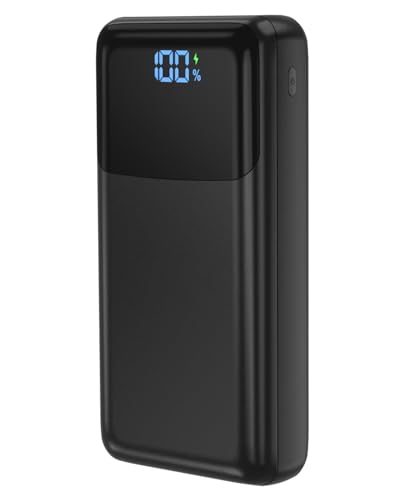
Seaistar 50000mAh PD 30W Power Bank
The Strengths Of Each Pick

This Ntaanoo magnetic power bank lives in the category of “barely know it’s there.” At roughly 0.38 inches thin and around 119 grams, it snaps onto the back of a recent iPhone and disappears into the same pocket. Compared to the JUOVI laptop charger further down the list, this one is built for short days out, not full work sessions.
The 5000mAh cell is genuinely modest. It pushes enough juice to bring a dying iPhone back to roughly a full charge, which is exactly what most people want from a pocket top-up. It also includes a USB-C port for wired charging when you want to plug in instead of going wireless.
The Good Stuff
- Slim 0.38-inch profile feels natural behind the phone during calls
- Light enough at 119g to clip on and forget about
- Magnetic ring array keeps alignment consistent with compatible iPhones
- Doubles as a wired charger through the built-in USB-C port
Things To Consider
- 5000mAh is roughly one phone charge, so heavy users will need a second top-up
- Wireless output is slower than a cable, which matters when time is short
Who It Suits Best
City commuters and casual travelers who want a featherweight top-up that snaps on the phone without adding bulk to a jacket pocket.
Consider Something Else When
Power users who drain a phone twice on a long day should reach for the Charmast Power Bank with Built-in Cables instead, since its larger cell and multi-port design handle more devices per charge.
The 10000mAh sibling to Ntaanoo’s slim 5000mAh model doubles capacity without losing the magnetic convenience. The listed magnetic force reaches around 11N, which is the kind of pull that holds firm on a phone while it sits in a crossbody bag on a crowded train. For iPhone-first households, this is the sweet spot between pocket portability and all-day runtime.
It’s still a one-handed operation. You snap the bank on, keep using the phone, and don’t fish around for cables. Compared to the Charmast multi-cable option below, this unit stays focused on a single magnetic device rather than juggling a family’s worth of cords.
Strong Points
- 10000mAh capacity handles roughly two full iPhone refills
- Stronger magnetic hold reduces slips during walking commutes
- Stays slim enough for jacket or jeans pocket carry
- Works through cases that are MagSafe-compatible
Honest Caveats
- Noticeably thicker than the 5000mAh version once you add the larger battery
- Wireless charging speed still trails wired alternatives for quick top-ups
- Charging two devices at once drains the bank faster than expected
Feature Snapshot
Made For
Travelers and commuters who want more reserve capacity than a slim 5000mAh bank but don’t need laptop charging capability.
Skip It When
Anyone running a tablet or laptop on the road should consider the JUOVI 90W 20000mAh Laptop Charger, which delivers the wattage that magnetic banks simply cannot.
Charmast takes a different approach from the magnetic Ntaanoo models above. Instead of asking you to bring your own cables, it stores four reinforced cords inside the chassis, ready for iPhones, USB-C phones, Micro-USB devices, and a USB-A port for older accessories. It also adds extra ports, bringing the total to six simultaneous outputs.
For group travel, family vacations, or anyone whose household spans iPhone, Android, and the occasional oddball gadget, this is the kind of bank that ends arguments about who charges first. The 10000mAh cell is mid-range, but the port count makes it feel larger in practice.
Strengths Worth Knowing
- Four integrated cables mean one less thing to forget when packing
- Six outputs let an entire table of devices charge at once
- Reinforced cable joints hold up to daily bend stress better than thin stock cords
- Mid-range 10000mAh cell balances weight and recharge count
- Universal coverage across iPhone, USB-C, and Micro-USB devices
Worth Noting
- No magnetic alignment, so it works best set on a table rather than held
- Six-way charging divides total output, slowing each individual device
- The integrated cables add some thickness compared to single-cord banks
Best Suited To
Families, group travelers, and shared workspaces where multiple phone types need power from one device.
Look Elsewhere When
Solo travelers who want a single-device magnetic top-up should consider the Ntaanoo 10000mAh Magnetic Portable Charger instead, since it stays attached during use.
JUOVI steps into a different league with 90W output and a 20000mAh cell. Wattage matters here: a 13-inch MacBook Air and similar thin laptops need roughly 30W to 65W just to charge under load, and 90W covers most of them at full speed. PD (Power Delivery) and QC (Quick Charge) protocols both run through the dual USB-C ports.
The included detachable cable means you don’t need to dig around for a compatible cord before leaving. For remote workers, students in long lectures, or anyone whose laptop battery won’t survive a cross-country flight, this is the practical choice. Compared to the Seaistar 50000mAh model below, the JUOVI trades raw capacity for charging speed.
A Few Highlights
- 90W single-port output charges most thin laptops at full speed
- 20000mAh capacity covers a full workday for a laptop plus a phone
- Dual USB-C ports handle PD and QC fast-charging protocols
- Detachable cable removes the “did I pack the cord” worry
Trade Offs
- Bigger and heavier than phone-focused magnetic banks
- Costs more than basic 10000mAh models, so light users may not justify the upgrade
- Heat builds up under sustained high-wattage output, which is normal for the category
Key Specs
Right Fit For
Remote workers, students, and business travelers who run a laptop off-grid and need wattage that phone-focused banks simply cannot deliver.
Swap It Out When
Weekend hikers prioritizing total capacity over charging speed should consider the Seaistar 50000mAh PD 30W Power Bank, which trades wattage for multi-day runtime.
Seaistar pushes capacity to 50000mAh, the largest cell on this list. The trade-off is weight and bulk, but for camping, road trips, hurricane kits, or off-grid weekends, raw capacity matters more than pocket-friendly dimensions. The included USB-C port supports both input and output, which simplifies recharging the bank itself.
It also runs PD 30W and QC 4.0 fast charging, so a 30W output keeps phones charging at a respectable rate. Note that 30W falls short of the JUOVI’s 90W, so this is not a laptop-replacement unit. It’s a multi-day runtime unit. Four USB-A outputs plus a Micro-USB input round out the ports.
What Stands Out
- 50000mAh capacity covers multi-day trips without recharging
- Multiple output ports let several devices share one bank
- USB-C port works for both charging the bank and charging devices
- PD 30W and QC 4.0 keep compatible phones charging quickly
Points To Note
- Significantly heavier than the 10000mAh and 20000mAh options above
- 30W output cannot fast-charge most laptops at full speed
- Long recharge time when refilling the massive cell from empty
- Bigger footprint means it lives in a backpack, not a pocket
Whose Shelf It Belongs On
Campers, overlanders, and households building an emergency kit who prioritize total runtime over compact carry.
Reach For A Different Pick When
Daily commuters should pick the Ntaanoo 10000mAh Magnetic Portable Charger instead, since it stays attached to the phone and slides into a jacket pocket.
What To Weigh Before Picking A Power Bank
Capacity is the headline number, but it tells only part of the story. A 5000mAh magnetic bank feels different in your pocket than a 50000mAh brick, even when both technically “charge a phone.” Match the capacity to the realistic scenario: a thin commuter bank handles a top-up, while a long trip demands 20000mAh or more.
Output wattage decides how fast a device actually charges. Magnetic wireless banks run slow, often around 7.5W to 15W, while PD and QC ports deliver 18W to 90W. Laptops need roughly 30W minimum, and full-speed charging requires 60W or higher. Phones accept anything, but a 90W port refills a modern iPhone far faster than wireless.
Port layout matters more than people expect. Magnetic banks charge one device cleanly. Multi-port banks with built-in cables shine in group settings but split their output across each connected device. If you regularly carry a laptop, a phone, and wireless earbuds, dual USB-C ports make a real difference.
Build and weight are the practical trade-offs. The 50000mAh Seaistar weighs noticeably more than the 5000mAh Ntaanoo, and that weight shows up in your bag on day two of a trip. For air travel, check the airline’s watt-hour limit, since some banks exceed carry-on caps above 27000mAh equivalent.
Key Considerations Across These Picks
Where Shoppers Go Wrong
Capacity confusion trips up more shoppers than anything else. A 50000mAh rating sounds huge, but actual device charges depend on battery efficiency, conversion losses, and the device you’re charging. Reading watt-hour ratings gives a more honest picture than chasing the biggest mAh number.
Forgetting about output speed is the other common slip. A massive bank with a slow port still takes forever to refill a phone. Matching output wattage to your device is worth the read before checkout.
When Paying More Pays Off
The jump from a 10000mAh magnetic bank to the 20000mAh JUOVI buys two real things: laptop-grade wattage and PD/QC fast-charging protocols. For anyone running a MacBook, iPad Pro, or USB-C ThinkPad off-grid, that upgrade pays for itself in saved frustration. For phone-only users, the smaller banks stay the smarter spend.
Frequently Asked Questions
How many mAh do I actually need? A 10000mAh bank covers most day-to-day phone use across a single day. A 20000mAh unit handles a full laptop workday, and 50000mAh fits multi-day camping or emergency kits. Anything below 10000mAh is more of a top-up than a true reserve.
Can a power bank damage my phone battery? Modern phones regulate incoming power, so any bank with PD or QC protocols from a recognized brand is safe to leave connected. Cheaper no-name units with unstable output can stress a battery over time, which is why brand matters here.
What’s the difference between PD and QC? PD (Power Delivery) is the USB-C standard that handles higher wattages for laptops and fast-charging phones. QC (Quick Charge) is Qualcomm’s protocol, common on Android phones. Many modern banks support both.
Can I bring a power bank on a plane? Most airlines allow power banks under 100Wh in carry-on luggage, which covers anything up to roughly 27000mAh. Larger banks may require airline approval, and checked luggage is generally off-limits for lithium battery banks.
Do magnetic power banks charge through cases? MagSafe-compatible cases pass the magnetic alignment and charging current without issue. Thick rugged cases or non-magnetic covers can weaken the hold and slow wireless charging considerably.
Closing Thoughts
The best portable battery packs fit the way you actually move. Magnetic slim banks suit daily iPhone top-ups, multi-port chargers handle group trips, and laptop-grade units like the JUOVI keep work moving on long flights. Pick the profile that matches your real day, and the rest of the decision gets easier.
