

Large solar generators make sense when outages are longer than a phone charge and louder than a small inverter can handle. You need enough AC output for household gear, enough battery capacity for real backup, and a layout that still works in an RV, garage, or cramped utility room. The seven picks below focus on that mix of capacity, expandability, and practical setup. Some lean toward home backup, others toward travel-friendly flexibility, and a few sit in the middle with a cleaner balance.
Quick Look At The Shortlist

EF ECOFLOW Portable Power Station DELTA Pro 3600Wh 3600W

EF ECOFLOW Solar Generator DELTA Pro 3.6KWh with 400W Panel

Jackery HomePower 3000 with 2x200W Solar Panels 3072Wh 3600W AC Output

Jackery HomePower 3600 Plus Portable Power Station with 2X 200W Solar Panels 3600W AC Output 3584Wh
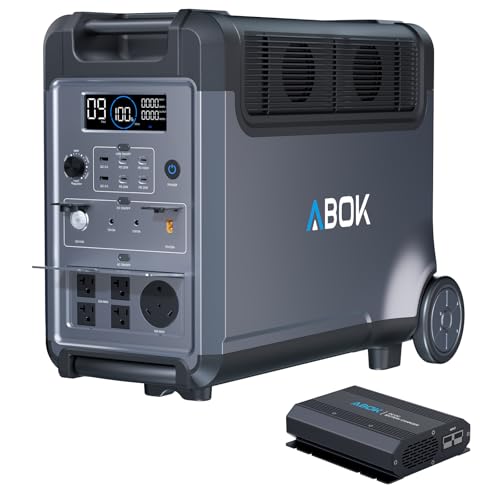
ABOK Ark3600 Portable Power Station 3600W 3840Wh LiFePO4 Battery
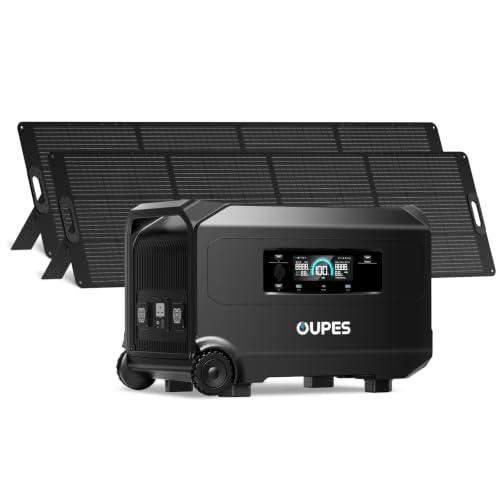
OUPES Guardian 6000 V2 Solar Generator Kit with 2x240W Solar Panels 240V 6000W Output 4608Wh LiFePO4
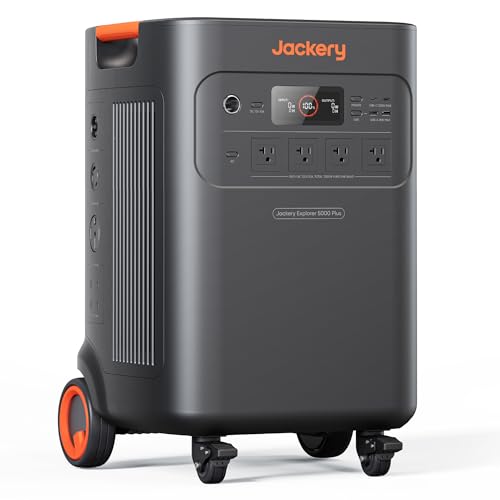
Jackery Solar Generator 5000 Plus Portable Power Station 5040Wh LiFePO4 7200W AC Output
More Details On Our Top Picks
The DELTA Pro suits you when outage coverage has to feel close to household-grade, not like a weekend gadget. Its 3600Wh battery and 3600W AC output give you enough room for larger loads, while the expandable design pushes far beyond the base unit.
That extra ceiling matters in a garage, utility room, or RV bay where you want a system that can grow with your needs. The trade-off is size and the usual planning that comes with a large-capacity unit, so it fits best where storage and setup space are already part of the plan.
Strong Points
- Large base capacity supports longer backup runs for essential gear.
- 3600W AC output helps cover heavier household appliances more comfortably.
- Expandable architecture gives you a clear path to more stored energy later.
- Fast recharge support is useful after short outages or overnight replenishing.
Things To Consider
- The footprint is substantial, so shelf or floor space matters.
- Scaling it up later adds planning, cabling, and storage considerations.
- Large systems like this are usually better as a fixed backup point than a grab-and-go carry.
Core Details
Who It Suits Best
You get the most from this model if you want serious home backup capacity and room to expand later.
A Better Fit Elsewhere
Jackery Solar Generator 5000 Plus Portable Power Station suits you better if you want a higher output ceiling and a bigger expansion path than the EF ECOFLOW DELTA Pro.
This version makes sense for you if you want the DELTA Pro platform with solar hardware already bundled. The included 400W panel carries 23% efficiency, which helps make the setup feel more complete for outdoor charging or a prepared backup corner.
Compared with Item 1, the appeal here is less about building a system from scratch and more about getting the power station and panel pairing in one place. You still have five AC outlets and the same 120V, 3600W class of output, so the practical use case stays broad.
What We Like
- Bundled panel reduces the guesswork around starting a solar setup.
- 23% panel efficiency is a strong detail for solar-aware planning.
- Five AC outlets make it easier to spread out household devices.
- The 3600W output class supports serious backup use, not just light charging.
- Good fit for a porch, patio, or garage charging station.
Softer Spots
- Panel bundles add bulk, so storage and placement take more thought.
- The larger system format is not the most casual carry for frequent travel.
- Packaged solar setups can take longer to organize than a single power station.
Feature Card
Best Suited To
You fit this model best if you want a bundled solar starter path for home backup, RV use, or a more self-contained outdoor setup.
Swap It Out When
Jackery HomePower 3000 with 2x200W Solar Panels suits you better if you want a lighter-capacity alternative with a cleaner essential-backup focus.
The HomePower 3000 lands in a practical middle ground, especially for households that want backup energy without jumping straight to the biggest frame in the category. Its 3072Wh capacity and 3600W AC output give you a serious starting point, while the LFP battery, or lithium iron phosphate, points to a chemistry favored for stable long-cycle use.
Compared with the two ECOFLOW picks, this Jackery setup feels more focused on essential backup than on aggressive expansion talk. The 7200W surge rating also gives you room for appliances that draw a stronger start-up burst, which is the detail that matters on a busy night.
Positives
- LFP battery chemistry is a sensible fit for long-service backup planning.
- 7200W surge headroom helps cover appliances with brief start-up spikes.
- Two 200W panels give you a clear solar pairing from the start.
- Feels appropriately sized for home essentials without drifting into overkill.
Minor Gripes
- The focus is practical rather than flashy, which may feel plain to some shoppers.
- Panel output and roof or yard conditions still shape real charging results.
- It does not lean as far into extreme expandability as the larger ECOFLOW and Jackery systems.
Details At A Glance
Whose Shelf It Belongs On
You suit this model best if you want a dependable backup system for essentials and you prefer a straightforward solar bundle over a sprawling expandable platform.
Reach For A Different Pick When
OUPES Guardian 6000 V2 Solar Generator Kit suits you better if you need a 240V setup for heavier equipment and RV plug compatibility.
The HomePower 3600 Plus pushes a little harder than the previous Jackery unit, and that larger 3584Wh battery gives you a bit more buffer for long evenings or repeated appliance starts. It pairs that with 3600W AC output and two 200W solar panels, so the whole kit feels set up for structured home backup rather than casual camping only.
Expandability up to 21kWh is the real story here, because it gives you a realistic path to build a larger reserve over time. You may find that useful in a home where outages are occasional but inconvenient, since the system can start moderate and grow into something more serious.
Highlights
- 3584Wh base capacity gives you a little more breathing room than Item 3.
- Expandable design makes long-term planning easier for a fixed backup space.
- Two 200W panels help the kit feel complete from day one.
- Good balance between home backup intent and RV-friendly flexibility.
- 3600W AC output keeps the core electrical profile familiar and usable.
Points To Note
- The bigger expansion story adds complexity that casual users may never need.
- Panels, cabling, and storage take more coordination than a bare power station.
- It sits in a serious category, so portability stays secondary to capacity.
Spec Overview
Who Should Grab It
You suit this model best if you want a high-capacity Jackery setup that can start as a home backup system and scale over time.
Look Elsewhere When
ABOK Ark3600 Portable Power Station suits you better if you want more outlets and a built-in UPS feature for mixed indoor equipment.
The Ark3600 looks built for busy homes that need a lot of connection points without stepping up to a giant utility-style station. Its 3840Wh capacity, 3600W output, 15 outlets, and 10ms UPS function make the spec sheet unusually practical for desks, routers, appliances, and backup corners.
That 10ms UPS, or uninterruptible power supply switchover, matters when you want a cleaner handoff during a brief outage. You may still feel the size in storage, but the payoff is a feature mix that covers more household scenarios than the simpler units earlier in this roundup.
Bright Spots
- 15 outlets give you a wide spread of connection options.
- 3840Wh capacity sits slightly above several other picks here.
- 10ms UPS support is useful for gear that hates a long power gap.
- LiFePO4 battery chemistry is a sensible fit for repetitive backup use.
- 3H fast charge support helps reduce downtime between uses.
Room For Improvement
- The dense feature set asks for careful cable management.
- More outlets can also mean more clutter around the unit.
- Storage is still a consideration, especially in smaller utility spaces.
Feature Rundown
Built With In Mind
You fit this model best if you want a feature-dense backup station for a home office, mixed electronics, or a room with many plugs.
A Better Fit Elsewhere
Jackery Solar Generator 5000 Plus Portable Power Station suits you better if raw capacity and higher AC output matter more than outlet count.
The Guardian 6000 V2 stands apart because it moves into 240V output, which matters for equipment that expects a more capable split-level setup. With 4608Wh of LiFePO4 storage, 6000W output, and two 240W panels, it looks aimed at heavier home loads, transfer-switch planning, and RV users who want a more complete electrical layout.
Native RV plugs and transfer-switch readiness make the unit feel deliberately wired for real installations, not just casual plug-and-play use. Compare that with Item 5, and you see the difference immediately: this one is less about outlet count and more about power architecture.
Upsides
- 240V output opens the door to more demanding equipment.
- 6000W class output gives you a larger operational ceiling.
- Native RV plugs save you from piecing together adapters.
- Transfer-switch readiness is useful for more structured backup setups.
- OTA-ready design points to easier software-side updates over time.
Areas To Watch
- Higher-output gear usually asks for more planning and installation care.
- The setup is better suited to committed backup spaces than casual storage.
- Its strengths are specialized, so it may be more system than some homes need.
Technical Sheet
The Right Fit
You fit this model best if your backup plan includes RV hookups, transfer-switch readiness, or equipment that benefits from 240V service.
Where A Sibling Pick Shines
EF ECOFLOW Portable Power Station DELTA Pro suits you better if you want a more familiar 120V path with strong expansion potential and a less installation-heavy profile.
This Jackery is the most ambitious pick in the group, and the numbers show it clearly. A 5040Wh LiFePO4 battery, 7200W AC output, 120V and 240V support, plus expansion to 60kWh push it into serious long-range backup territory.
For a large home, a workshop, or a family that wants the option to build way beyond the base station, that ceiling is the attraction. The catch is simple: this is the least modest unit here, so it fits best where you actually plan to use that headroom.
Best Bits
- 5040Wh starting capacity gives you a very large base reserve.
- 7200W AC output raises the practical load ceiling.
- 120V and 240V support widens the range of usable equipment.
- Expansion to 60kWh leaves room for major backup planning.
- LiFePO4 chemistry is well suited to repetitive stationary use.
Small Caveats
- The scale makes this a commitment, not a casual purchase.
- Solar panels are optional, so the full setup needs separate planning.
- The higher-capacity path makes the system best for fixed locations.
Core Details
Perfect Match For
You fit this model best if you want a major backup platform and plan to scale it into a long-duration power system.
Another Choice May Suit
Jackery HomePower 3600 Plus Portable Power Station suits you better if you want a smaller starting point with a simpler two-panel bundle.
How To Choose The Right Large Solar Generators
Start With Load, Not Hype
Power output matters because it tells you what the unit can support at once. A 3600W station suits many essentials, but a 6000W or 7200W model gives you more breathing room for appliances that start hard or stack several loads together.
Battery capacity matters just as much. A 3072Wh or 3584Wh unit can handle meaningful backup, while 4608Wh and 5040Wh choices stretch runtime further before recharge becomes urgent.
Check The Shape Of The Setup
Some systems are simple standalones, while others arrive with panels or expansion paths. Bundled panels help you get moving faster, but separate panel planning can make sense for rooftops, yards, or travel rigs with unusual space.
Expandability is worth a hard look in this category. A 25kWh, 41kWh, or 60kWh ceiling changes the conversation from short backup to longer household planning, although that growth only matters when you actually need it.
Match The Voltage To The Job
120V covers a lot of everyday household use, which is why several picks here stay in that lane. 240V becomes important for more demanding equipment, and that’s where the OUPES Guardian 6000 V2 starts to stand apart.
Think about installation too. Transfer-switch readiness, native RV plugs, and UPS support matter in real rooms because they affect how the system connects, not just how large the number looks on the page.
Choose For Storage And Recovery
Large solar generators live better in spaces that can handle their footprint. Garage shelving, a utility corner, or an RV bay usually works better than a packed closet, especially once panels and cables enter the picture.
Recharge speed also changes ownership comfort. Faster charging helps after a stormy night or repeated use, and LiFePO4 or LFP battery chemistry is a practical fit for repeated backup cycles without leaning on flashy extras.
Things Worth Knowing First
Common Shopping Slip Ups
Many setups look stronger than they are because the output number gets all the attention. You avoid that mistake by checking capacity, voltage, and surge support together, not in isolation.
Another common miss is space. Big systems need room for the unit itself, the panels, and the cables, and that becomes obvious the moment you try to park one beside a water heater or workbench.
What The Higher Tier Buys
Higher-end models usually cost more because they deliver more output, more storage, and more flexibility in the wiring path. You also tend to get bigger expansion ceilings, more complete bundles, or features like UPS support and 240V readiness.
That extra spend makes sense for households that rely on backup power often or need to support heavier appliances. For occasional outages and lighter loads, a mid-range unit can be the cleaner fit.
Frequently Asked Questions
How much capacity does a large solar generator need?
For essential backup, 3000Wh to 4000Wh covers a lot of ground. For longer outage planning, 4500Wh and up gives you more margin.
What does LiFePO4 mean?
LiFePO4 stands for lithium iron phosphate, a battery chemistry often chosen for stationary power gear. It’s valued in this category because it suits repeated backup use well.
Is 240V necessary?
For many homes, 120V is enough for a wide range of devices. 240V matters more when you want compatibility with heavier equipment or a more installation-ready setup.
Do solar panels need to be included?
Bundled panels simplify setup and make the package feel more complete. Optional panels give you more freedom to build the system around your own layout.
What is UPS support?
UPS means uninterruptible power supply, which helps a system switch over quickly during an outage. That feature matters most for equipment that dislikes even a brief power gap.
Closing Thoughts
You have seven strong paths here, and the right one depends on how you plan to use it. For a straightforward home backup anchor, EF ECOFLOW DELTA Pro stays easy to defend. For bigger installation plans, OUPES Guardian 6000 V2 and Jackery Solar Generator 5000 Plus push farther. For a cleaner middle ground, Jackery HomePower 3000 and ABOK Ark3600 make practical sense. Match the unit to your space, your load list, and how often you expect to rely on it, then you’ll land in the right zone without overbuying.
