

Off-grid life asks a lot from a generator, because your power source has to fit tight spaces, long runtimes, and changing loads without becoming a headache. You also want something that works for camping, backup chores, RV travel, or a cabin setup without forcing you to overspend on capacity you won’t use. The eight picks below cover compact inverter models, dual-fuel standby-style portables, and battery-based solar units, so you can match the machine to your routine instead of forcing your routine around the machine.
Quick Look At Our Shortlist

AIVOLT 1600W Super Quiet Inverter Generator 28lbs Portable for Camping

WEN 6800-Watt Dual Fuel RV-Ready Electric Start Inverter Generator DF680iX

EBL Portable Power Station 1000W Solar Generator 999Wh

Jackery HomePower 3000 and 2x200W Solar Panels 3072Wh
Westinghouse 4650 Peak Watt Dual Fuel Portable Generator

Jackery Solar Generator 300 and 40W Solar Panel 292Wh

Jackery HomePower 3600 Plus Portable Power Station 3584Wh
FOSSiBOT F3600 Portable Power Station 3840Wh
More Details On Our Top Picks
The first pick suits you best when space matters as much as output. At 28 pounds, it’s easier to move than most gas models, and the inverter design with pure sine wave output helps make the power steadier for sensitive electronics. The trade-off is simple, it’s built for lighter loads rather than whole-cabin duty, so it fits weekend setups and small essentials far better than a heavy household standby unit.
That quiet 57 dBA rating matters in campgrounds, patios, and close quarters where louder machines can feel intrusive. CO auto-shutoff adds a layer of practical peace of mind, and ECO mode can stretch runtime by easing output under lighter demand. For commuting vanlife, tailgates, or a modest off-grid shed, this one keeps the footprint small without feeling flimsy.
Strong Points
- Light enough to move without wrestling it, which helps in campsites or tight storage areas.
- Pure sine wave output is a better match for phones, laptops, and other sensitive gear.
- Low noise makes it easier to live near the machine instead of planning around it.
- ECO mode can help stretch fuel use during lighter evening or overnight demand.
Things To Consider
- The 1260W running figure keeps it in the light-duty lane.
- Gas upkeep still means storage discipline, fresh fuel habits, and regular attention.
- The small frame is convenient, but you give up the broad output margin found in larger dual-fuel units.
Feature Snapshot
Who It Suits Best
Weekend campers, van travelers, and off-grid hobbyists with modest electrical needs will get the most from it.
A Better Fit Elsewhere
WEN DF680iX suits you better for RV hookups or heavier backup demands, since it brings far more output and dual-fuel flexibility.
Your power needs jump a tier here, especially for RV trips, backup circuits, or heavier campsite appliances. Dual fuel support means you can choose between gas and propane, which gives you flexibility in storage and refueling routines. Electric start makes it easier to live with during cold mornings or quick setup days, though the larger body is less friendly for casual carrying than the AIVOLT.
The CO watchdog feature is worth noting for enclosed or semi-enclosed setups, and the fuel shutoff helps with storage-minded owners who want less stale-fuel hassle. This is the pick for people who want one portable machine to cover more than phone charging and lights. The honest read is that it’s more machine than many off-grid cabins need, but that’s exactly the point for heavier use.
What We Like
- Dual fuel support gives you more flexibility in how you store and replenish fuel.
- Electric start keeps the setup process less fussy than pull-start-only models.
- RV-ready output makes it easier to match common travel-trailer needs.
- Fuel shutoff helps with cleaner storage habits between uses.
- Higher output suits appliances that would overwhelm smaller inverter units.
Worth Noting
- The larger footprint takes more storage room than compact camping units.
- Dual fuel convenience still comes with the care and upkeep of a bigger generator.
- It makes more sense for structured backup use than for simple grab-and-go trips.
Core Details
Made For
RV owners, backup-power planners, and off-grid homes with larger appliance loads fit this machine well.
Where A Sibling Pick Shines
AIVOLT 1600W Super Quiet Inverter Generator 28lbs Portable works better for lighter carry needs and quieter camp use.
This one shifts from fuel-first thinking to battery-first convenience, which suits you well for indoor-adjacent backup and travel where fumes are not part of the plan. The 999Wh battery size gives you a useful middle ground, larger than a tiny lantern station but easier to manage than the big home-backup units farther down this list. Wireless charging is a nice touch for a phone or earbuds, though the real draw is the mix of ports for everyday gear.
You may find it especially handy in a cabin, RV, or home office corner where noise and fuel storage are awkward. The trade-off is obvious: battery units are simpler to live with, but they need recharge planning, especially during longer outages or cloudy stretches. That makes the EBL a strong fit for steady essentials rather than whole-house ambition.
Positives
- Battery-based design avoids fuel handling and the upkeep that comes with it.
- 999Wh capacity gives you a sensible buffer for phones, lights, and small appliances.
- Wireless charging adds a tidy spot for quick phone top-ups.
- Multiple ports make it easier to spread power across several devices at once.
- Compact backup format works well in RV storage bays or apartment closets.
Points To Note
- You need a plan for recharging during extended outages.
- Battery stations like this usually reward organized cable storage, or the setup can get messy fast.
- It serves light and moderate loads better than high-draw appliances.
Details At A Glance
Right Fit For
Travelers, RV users, and off-grid households looking for quiet backup with manageable size will like this approach.
Look Elsewhere When
Jackery HomePower 3000 and 2x200W Solar Panels suits you better for larger household loads and longer backup stretches.
This Jackery package moves into serious home-backup territory, and the solar panels bundled with it make the system feel more complete from the start. The 3072Wh battery and 3600W AC output point to heavier-duty use, so refrigerators, routers, and other household essentials sit more comfortably in its lane than in the smaller EBL unit. LFP battery chemistry, or lithium iron phosphate, is the type often chosen for steadier long-term use patterns.
The 7200W surge figure gives you extra headroom for startup spikes, which matters because many appliances ask for a brief burst of power before settling down. That said, this is not the lightest or simplest machine to tuck away in a tiny shed. For a home that wants solar support and a solid reserve, the size makes sense.
Highlights
- Large battery capacity suits longer backup runs and more demanding household routines.
- Bundled solar panels reduce the need to piece together a matching setup.
- 3600W output handles a broader mix of home essentials.
- Higher surge room helps with appliance startup needs.
- LFP battery chemistry is well suited to repeated use patterns in backup roles.
Small Caveats
- The scale that helps at home also makes storage and placement less casual.
- Solar setup planning still takes attention to panel placement and available space.
- The larger system makes more sense for fixed backup locations than for constant travel.
Feature Card
Best Suited To
Homes, RV setups with bigger electrical needs, and off-grid spaces that want a fuller solar package fit this unit well.
Swap It Out When
Jackery Solar Generator 300 and 40W Solar Panel works better for travel-first users who want a lighter, smaller system.
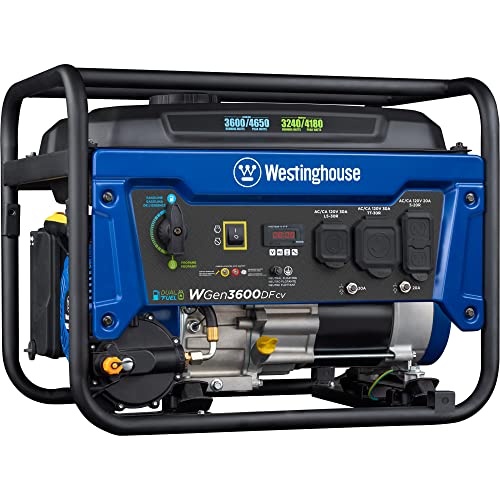
Gas-and-propane flexibility gives this Westinghouse a very practical role in off-grid setups, especially where fuel storage habits matter. The RV-ready 30A outlet lines up neatly with travel trailers, so you’re not forced into a pile of adapters for common use. Compared with the larger WEN, it feels a little more straightforward and less loaded with extras, which is part of its appeal.
The CO sensor is a useful feature in spaces where exhaust awareness matters, and that makes it feel more thoughtful than a bare-bones portable generator. The peak watt figure points to decent starting headroom, though the real fit depends on the loads you want to cover. For many cabins and RV owners, it lands in a comfortable middle zone between small camping units and larger backup machines.
Upsides
- Dual fuel support helps you choose the fuel that matches storage and usage plans.
- RV-ready 30A outlet fits travel-trailer setups more cleanly.
- CO sensor adds a practical safety-minded layer for real-world use.
- Midrange size makes it more approachable than larger standby-style portables.
Areas To Watch
- Fuel and maintenance habits still need regular attention.
- Peak watt output helps with startup spikes, but continuous load planning still matters.
- It makes more sense as a portable workhorse than as a tiny grab-and-go unit.
Core Details
The Right Fit
RV owners and off-grid setups needing a manageable dual-fuel portable will get the most from this one.
Another Choice May Suit
WEN 6800-Watt Dual Fuel RV-Ready Electric Start Inverter Generator DF680iX is the better match for shoppers who need more output and electric start.
For travel light and casual outdoor power, this Jackery kit stays easy to understand. The 292Wh battery keeps the scale small, and the pure sine wave AC outlet is useful for electronics that prefer steadier current. Compared with the EBL, it gives you a simpler, more compact solar entry point rather than a larger all-purpose battery box.
The 300W AC output tells you exactly where it belongs, namely phones, lights, small fans, and other modest loads. That makes it a smart fit for short trips, overnights, and backup of a few essentials, not a whole off-grid workload. The small solar panel also points to a setup built for portability rather than deep household backup.
Best Bits
- Small size keeps packing and storage straightforward.
- Pure sine wave AC outlet is a better match for delicate electronics.
- Solar panel pairing gives you an easy starting setup for travel use.
- Light backup profile works well for a few critical items.
Honest Caveats
- The 292Wh capacity is modest, so longer outages call for careful planning.
- Small solar input usually means patience during recharge.
- It fits light-duty travel better than sustained home backup.
Quick Facts
Whose Shelf It Belongs On
Travel campers, van users, and minimalist off-grid setups will appreciate the small footprint and simpler planning.
Reach For A Different Pick When
EBL Portable Power Station 1000W Solar Generator 999Wh suits you better once your backup needs grow beyond a small travel kit.
Once your backup needs start to look like a serious household plan, this Jackery steps into a different class from the smaller solar kits. The 3584Wh capacity and 3600W AC output give you a much broader lane for home essentials, and the included solar panels make the setup feel more complete out of the box. Expandability up to 21kWh matters most for households that want room to grow instead of replacing the entire system later.
You may find the scale a little much for casual travel, but that’s the point here. LFP battery construction suits repeated backup use, and the bigger reserve is far more comfortable for outages that last beyond a short stretch. It sits close to the FOSSiBOT in ambition, though the Jackery leans toward a more packaged home-backup approach.
Reasons To Buy
- Large battery reserve supports longer backup windows.
- 3600W output covers a wider range of household essentials.
- Solar panels included, so the system starts in a more complete form.
- Expandable architecture gives you a path for future growth.
- LFP battery format suits repeated backup cycles well.
Room For Improvement
- Size and weight make it less convenient for frequent movement.
- Expansion planning asks for more space and more deliberate setup choices.
- It makes more sense for structured home backup than for casual outdoor use.
Technical Sheet
Built With In Mind
Households, RV setups with long backup expectations, and off-grid homes with growth plans fit this station well.
A Better Fit Elsewhere
Jackery Solar Generator 300 and 40W Solar Panel is a better choice for travel users who want less bulk and simpler carry.
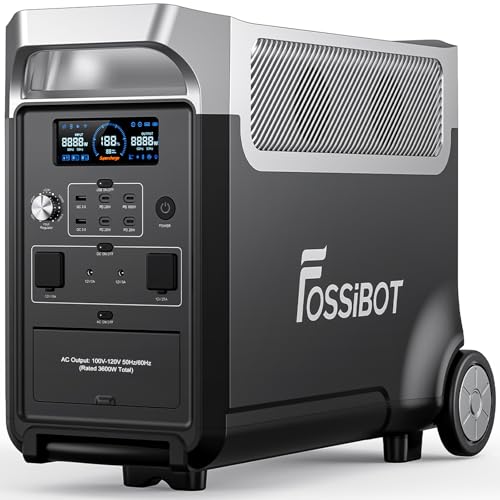
FOSSiBOT goes after heavy off-grid use with a very large battery, high output, and multiple AC outlets, so it feels built for people who need distribution as much as raw capacity. The 3840Wh battery and 3600W output already put it in substantial company, and the expandability to 11520Wh gives it serious long-range potential for cabins or large backup plans. Compared with the Jackery 3600 Plus, it leans more toward outlet count and capacity growth than bundled solar simplicity.
The five 120V AC outputs are useful in spaces where several appliances need to run without constant swapping. LiFePO4, or lithium iron phosphate, is often chosen for demanding stationary systems because it suits repeated cycling well. The catch is that a setup like this deserves deliberate placement and cable organization, especially in a garage or cabin where multiple devices can pile up fast.
Bright Spots
- Very large battery capacity supports heavier backup routines.
- Multiple AC outlets make it easier to serve several devices at once.
- Expandable design gives you a long runway for added storage.
- 3600W output fits a serious mix of off-grid loads.
- LiFePO4 battery construction suits repeated use in stationary setups.
Softer Spots
- The scale makes it better for fixed spaces than for frequent travel.
- Higher-capacity systems need more planning around placement and cable management.
- It makes more sense for larger loads than for quick grab-and-go use.
Feature Rundown
Who Should Grab It
Cabin owners, garage backup planners, and off-grid households with multiple loads will appreciate the scale here.
Where Shoppers Go Wrong
Westinghouse 4650 Peak Watt Dual Fuel Portable Generator is the more practical pick for people who want simpler fuel-based portability.
How To Choose The Right Generators For Off Grid Living
Start With Your Real Load, Not The Box Label
Your first step is matching output to the appliances you actually want to run. A small inverter unit works for laptops, lights, chargers, and a fan, while a larger 3600W station or dual-fuel portable can support far more demanding gear.
Look at running watts, which is the steady power a device needs after startup, and surge watts, which are the short bursts some appliances need at launch. That distinction matters because a fridge or pump can behave very differently from a phone charger.
For cabins and backup spaces, a little extra headroom is useful. For campsites or travel rigs, oversized capacity can turn into dead weight and wasted money.
Fuel, Solar, And Battery Each Suit A Different Routine
Gas and dual-fuel generators give you fast refueling and strong runtime flexibility. They also ask for fuel storage, regular upkeep, and more attention to placement and ventilation.
Battery-based power stations are easier to live with indoors and around quiet spaces, but they depend on recharge planning. Solar bundles help, though panel size, sun access, and weather still shape real-world performance.
That makes chemistry and charging style part of the decision, not an afterthought. Off-grid living is smoother when your power source matches your storage space, noise tolerance, and daily rhythm.
Think About Portability, Noise, And Setup Effort
Weight matters more than many shoppers expect. A 28-pound unit feels very different from a larger home-backup station once you’re carrying it across gravel, stairs, or uneven ground.
Noise can also shape daily comfort, especially near tents, trailers, or shared campsites. Quieter inverter-style machines are easier to live near, while larger high-output units suit separate utility spaces or yard edges.
Setup effort matters too. Electric start, RV-ready outlets, and bundled solar panels each reduce friction in different ways, so the best choice is the one you’ll actually use without dreading the routine.
What To Weigh Before You Click Amazon
Mistakes Worth Dodging
Plenty of off-grid setups go wrong because the output looks impressive but the machine is still too small for the appliance list. Matching capacity to real loads beats chasing a big number on the listing.
Another common miss is ignoring storage and upkeep. Fuel units need a little more care, while battery stations need charging plans and cable organization, so the easier machine on paper may still ask for discipline.
Why Top Tier Costs More
Higher-tier models usually bring larger batteries, stronger surge room, more outlet options, or bundled solar hardware. Those parts add up because they solve different parts of the same problem, not just one piece of it.
You pay more when you want a system that can stay useful as your needs grow. That upgrade makes sense for households, cabins, and RV setups that outgrow light-duty gear quickly.
Frequently Asked Questions
What size generator works for off-grid living?
The right size depends on whether you want lights and charging or appliance-level backup. Smaller inverter units suit light use, while larger battery stations and dual-fuel generators fit heavier household needs.
Are battery stations enough for a cabin?
They can be, as long as your loads stay moderate and you have a recharge plan. For bigger appliances or longer outages, a larger station or fuel-based model gives you more margin.
Is dual fuel worth it?
Dual fuel helps when storage flexibility matters or one fuel source is easier to keep on hand. That extra choice is useful for RV owners and backup planners who want options.
Do quieter generators matter outside?
Yes, especially near campsites, patios, and shared outdoor spaces. Lower noise makes day-to-day use less disruptive and easier to live with.
What matters more, wattage or battery capacity?
Both matter, but in different ways. Wattage tells you what can run at once, while battery capacity tells you how long the power can last.
Closing Thoughts
Choosing generators for off-grid living gets easier once you stop chasing the biggest number and start matching the machine to your routine. You may need a light inverter for weekend trips, a dual-fuel portable for RV backup, or a larger solar station for a cabin that needs real reserve. The right pick feels practical from the first setup, not impressive for a week and annoying after that. Keep the load list in mind, and the right fit usually becomes obvious.
