

Foldable solar panels make sense when you need power that travels with you, not power that stays put. They suit campers, RV setups, blackout prep, and small off-grid routines where space is tight and carrying a rigid panel would be awkward. The right pick depends on wattage, connector style, waterproofing, and how much folding bulk you can live with. Below, you’ll find the models that fit different jobs without asking you to guess at the trade-offs.
The Shortlist At A Glance

Renogy 200W Portable Solar Panel, IP65 Waterproof Foldable Solar Panel Power Backup

EBL 200W Portable Solar Panel for Power Station, Foldable IP65 Waterproof

FlexSolar 100W Foldable Portable Solar Panel Charger IP67 Waterproof

FlexSolar 60W Foldable Portable Solar Panel Charger IP67 Waterproof

200W Portable Solar Panel for Power Station, 24% High Efficiency ETFE Foldable Solar Panel Charger

N-Type 16BB 400W Bifacial Solar Panel, 2Pcs 200 Watt Solar Panel for 12V/24V Systems

SOLUPUP Solar Panels 30W Portable Foldable Solar Charger
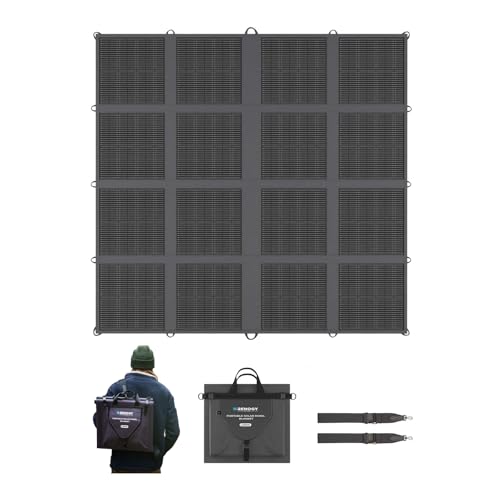
Renogy 400W Portable Solar Panel for Power Stations, 25% High Efficiency

100W Portable Solar Panel CPC Material USB-C PD3.0 & 20V DC XT60 Anderson
More Details On Our Top Picks
Renogy keeps this one squarely in practical territory, with 200 watts and a foldable frame that makes sense beside a van bed or in a packed trunk. The lightweight build and USB-A plus USB-C outputs help when you want direct device charging without turning the whole setup into a puzzle.
That said, the value shows up most clearly for campers and backup users who already own a compatible power station. Compared with the EBL 200W pick, this Renogy model feels a little more focused on straightforward portability than connector flexibility.
Strong Points
- 200-watt output suits a broad range of portable power stations.
- USB-A and USB-C ports add convenience for small devices.
- The foldable format stores more easily than rigid panels.
- IP65-rated construction gives you a sensible outdoor-ready margin.
- Kickstand support helps angle the panel without much fuss.
Things To Consider
- Device charging is handy, but your main charging plan still matters.
- The panel size suits transport, yet it still takes room when opened.
- You may find it less adaptable than connector-heavy alternatives.
Feature Snapshot
Who It Suits Best
You’ll get the most from this model as a camper, RV owner, or blackout-prep shopper who wants a 200-watt panel with direct device ports.
Where A Sibling Pick Shines
EBL’s 200W Portable Solar Panel for Power Station fits better for you if connector flexibility matters more, because its MC-4 and Anderson setup is easier to match with varied gear.
The EBL panel leans into flexibility, and that matters when your power station uses a more specific input path. Four kickstands help you spread it out and position it with less guesswork, which is useful in a campsite with uneven ground.
Compared with the Renogy 200W unit, this one stands out more for connector compatibility than built-in device charging. For power station owners who want a foldable panel to slot into an existing setup, that makes the EBL feel well judged.
What We Like
- MC-4 and Anderson output support broader power station compatibility.
- Four kickstands help with positioning on messy terrain.
- 200 watts keeps it relevant for full-size portable setups.
- IP65 protection gives you a sensible outdoor-use baseline.
Softer Spots
- Connector focus helps a lot, but direct device charging is not the story here.
- The larger format is useful, though storage space still matters.
- You may spend a little extra time arranging the kickstands on rough ground.
Core Details
Whose Shelf It Belongs On
This fits you best if your power station already expects MC-4 or Anderson-style input and you want an easy 200-watt foldable panel.
Swap It Out When
Renogy’s 200W Portable Solar Panel suits you better if built-in USB-A and USB-C ports matter for charging smaller gear directly.
A 100-watt panel like this usually hits a sweet middle ground for travel, and FlexSolar makes it more useful by adding PD3.0 USB-C, QC3.0 USB-A, and DC ports. That spread helps when you want to charge a phone, power bank, or compact station without carrying a tangle of adapters.
The IP67 rating gives it a more sealed feel than the IP65 models above, so it fits outdoor routines where dust and wet weather are part of the picture. You may still prefer the larger Renogy 200W or EBL 200W units for bigger backup needs, but this one feels easier to carry day to day.
Highlights
- 100 watts keeps the panel manageable for travel and casual use.
- PD3.0 USB-C works well for newer portable gear.
- QC3.0 USB-A adds another convenient charging path.
- DC output supports small stations and battery packs.
- IP67 protection gives you a stronger outdoor enclosure than basic water resistance.
Room For Improvement
- It covers smaller loads better than high-demand backup setups.
- The port variety helps, though the panel still needs good sun exposure.
- Folded storage is manageable, but not pocket-small.
Details At A Glance
Built With In Mind
You’ll appreciate this most as a camper, hiker, or weekend traveler who wants a compact 100-watt charger for phones and small battery gear.
Reach For A Different Pick When
Renogy’s 200W Portable Solar Panel makes more sense for you if your setup centers on a larger power station and you need more headroom.
The 60-watt format keeps this FlexSolar model easier to live with for short trips, car kits, and lighter charging jobs. It still carries the same PD3.0 USB-C, QC3.0 USB-A, and DC setup as the 100W unit above, so the appeal is more about portability than sheer output.
That makes it a sensible fit for tablets, power banks, and smaller emergency kits. Compared with the 100W FlexSolar, it gives up output headroom, but it also asks less of your storage space and packing patience.
Upsides
- 60 watts keeps the panel lighter for casual travel.
- PD3.0 USB-C supports modern device charging.
- QC3.0 USB-A and DC ports add useful range.
- IP67 protection is reassuring for outdoor carry.
Points To Note
- It suits smaller gear more naturally than larger stations.
- The lower output means longer charging windows for bigger batteries.
- Connector variety helps, but you still need compatible gear.
Quick Facts
Right Fit For
You’ll like this most for light camping, road trips, and emergency kits that only need modest solar support.
Another Choice May Suit
FlexSolar’s 100W Foldable Portable Solar Panel Charger fits better for you if you want more output for a larger battery or power station.
TWELSEAVAN packs a lot into this 200-watt panel, and the useful part is that the extras point toward real field use rather than decoration. ETFE, which is a tough fluoropolymer surface layer, matters because it usually adds a more durable outer skin, while the solar angle guide and four kickstands make setup less fussy in uneven light.
That mix puts it closer to a carefully outfitted camp panel than a bare-bones charger. Compared with the Renogy 200W pick, this one leans harder into spec density, so you may prefer it if you like a panel that spells out its strengths clearly.
Bright Spots
- 24% efficiency is a strong spec for a portable panel.
- ETFE surface material adds a more durable outer layer.
- Type-C 60W output broadens direct charging options.
- MC4 output supports many power station connections.
- Angle guide and kickstands help with setup in changing sun.
Honest Caveats
- The long feature list helps, but it can feel busy to sort through.
- 200 watts still needs decent sunlight to earn its keep.
- Folded storage is practical, though not especially small.
Feature Rundown
Best Suited To
You’ll get the most from this panel if you like feature-dense gear for camping, RV use, or emergency charging.
Look Elsewhere When
Renogy’s 200W Portable Solar Panel suits you better if a simpler, more straightforward layout matters more than extra setup features.
Callsun moves this beyond casual portable use and into serious system territory. The 400-watt total comes from two 200-watt panels, and the bifacial design means the module can take in light from both the front and the rear, which can help in the right placement setup.
The anti-shade approach is especially useful where partial shadow is hard to avoid, like beside an RV, on a rooftop, or near uneven equipment. Compared with the foldable 200W picks above, this one is less about grab-and-go carry and more about building a dependable larger array.
Reasons To Buy
- Two 200-watt panels provide a larger combined output.
- Bifacial design can capture light from both sides.
- Anti-shade layout helps in mixed-light placement.
- Works with 12V and 24V systems.
- Strong fit for RV and home backup planning.
Areas To Watch
- This is much less compact than the foldable travel-first picks.
- Installation planning matters more than with a camp-friendly panel.
- You may need more mounting space than expected.
Technical Sheet
The Right Fit
You’ll want this if your project is closer to an RV, rooftop, or home off-grid setup than a weekend-camp panel.
Consider Something Else When
Renogy’s 400W Portable Solar Panel for Power Stations fits you better if you need a high-output solution that still folds down for travel.
Thirty watts is modest, and that’s exactly why this SOLUPUP panel belongs in a lighter category. The built-in smart chip aims to recognize connected devices and adjust charging behavior, which helps make simple phone and power bank top-ups less fussy in day-to-day travel.
The auto-reconnect feature is a nice touch for moving clouds, because charging can resume once sunlight returns. Compared with the bigger FlexSolar panels, this is the calmer pick for small electronics rather than a full campsite power plan.
Best Bits
- 30 watts keeps the panel compact and easy to carry.
- USB-A and USB-C support common mobile devices.
- Smart chip behavior helps match output to connected gear.
- Auto-reconnect is handy during passing shade.
- IPX5 protection gives basic weather resistance for outdoor use.
Small Caveats
- It suits small devices better than larger battery packs.
- Lower wattage means slower progress for bigger charging jobs.
- The compact format is convenient, but not built for high-demand setups.
Feature Card
Who Will Love This
You’ll get the most out of this panel as a hiker, camper, or casual traveler who mainly needs light charging for phones and power banks.
Where A Sibling Pick Shines
FlexSolar’s 60W Foldable Portable Solar Panel Charger suits you better if you want more breathing room for tablets or a small emergency kit.
Renogy’s 400-watt blanket-style panel targets a very different use case from the 100W and 200W foldables above. The backpack-size foldable design saves space in transport, yet the output level pushes it into a more serious power range for stations and larger weekend setups.
The 25% efficiency figure matters here because higher output in a portable format usually comes down to squeezing more usable energy from the same footprint. You may find it feels a little more demanding to move around than the smaller Renogy 200W panel, but that trade-off fits larger off-grid routines.
Standout Traits
- 400 watts gives you strong output for portable station use.
- Backpack-size foldable design helps with transport and storage.
- 25% efficiency is a notable spec for this category.
- Fits camping, pickup, marine, and RV scenarios well.
- Space-saving form is useful when packing is already tight.
Worth Noting
- The output is excellent for portability, but it still needs room in use.
- Higher capacity usually means a more deliberate setup routine.
- You may want a power station that can truly use the extra output.
Core Details
Who Should Grab It
You’ll appreciate this most if you need portable high output for a power station and still care about folded storage space.
Skip It When
Renogy’s 200W Portable Solar Panel makes more sense if you want a smaller, lighter panel for simpler trips.
This Ecosonique Technology panel lands in a useful middle lane, with 100 watts and a mix of USB-C PD3.0, USB-A/C charging, plus 20V DC XT60 and Anderson output. The 3-meter DC cable is a quiet advantage, because it gives you more placement freedom when the power station sits a little farther from the best sun.
Its CPC material and IP65 rating round out the picture as a sensible travel-first option. Compared with the FlexSolar 100W, this one feels more connector-rich for mixed gear, while staying friendlier than the heavy 200W and 400W picks.
Positives
- 100 watts keeps it in the sweet spot for travel.
- USB-C PD3.0 helps compatible gear charge more efficiently.
- XT60 and Anderson outputs widen equipment compatibility.
- The 3-meter cable gives you better placement flexibility.
- IP65 protection suits outdoor carry and casual campsite use.
Minor Gripes
- The connector mix is useful, though it can feel a bit technical at first.
- One hundred watts works well, but bigger stations will want more panel.
- Folded portability helps, yet the cable length can add packing clutter.
Quick Facts
Whose Shelf It Belongs On
You’ll like this most if you want a 100-watt foldable panel with more connector choice and a longer cable for campsite flexibility.
Look Elsewhere When
FlexSolar’s 60W Foldable Portable Solar Panel Charger fits you better if your priority is lighter carry and smaller device charging only.
How To Choose The Right Foldable Solar Panels
Match Output To Your Real Load
Wattage tells you how much panel capacity you’re working with, and that matters more than flashy wording on the box. A 30W panel can keep phones and power banks moving, a 60W or 100W panel suits lighter travel use, and 200W or 400W models are aimed at power stations and larger backup routines.
The trade-off is simple: higher output usually means more size, more weight, and more setup room. For campsite charging or RV backup, that extra capacity often pays off, while a smaller panel feels easier to carry on short trips.
Check The Connector Story
USB-A, USB-C, DC, MC-4, Anderson, XT60, and similar outputs all serve different gear. USB ports help with direct phone or tablet charging, while MC-4, Anderson, XT60, and DC links are more about connecting to stations and battery systems.
That difference matters because the wrong connector can turn a well-made panel into dead weight. Renogy and EBL suit station owners, while FlexSolar and SOLUPUP make more sense for mixed portable charging.
Pay Attention To Folded Size And Field Use
Foldable does not mean small enough to disappear, so you still need to think about trunk space, cabinet storage, and where the panel will sit while open. A backpack-size model is easier to stash, but a larger 200W or 400W setup can be more efficient for the same trip.
Kickstands, angle guides, and long cables help in real campsites because sun position changes during the day. Those details do not replace good sunlight, though they do make the panel easier to live with.
What To Weigh Before You Choose
Common Shopping Slip Ups
Plenty of people focus only on wattage and miss the connector type, which creates frustration later. A 200W panel helps little when your power station needs a specific plug style, so the input path deserves a close look.
Another common miss is ignoring storage space. A foldable panel still needs a home in your vehicle, and a larger model can become awkward fast in a small hatchback or packed RV compartment.
The Upgrade Payoff
Higher-tier panels usually spend more on stronger materials, better surface layers, more output, and extra setup aids. That’s why ETFE surfaces, bifacial designs, longer cables, and richer connector sets usually show up on the pricier end of this category.
Spending up makes sense when your setup runs often, your power station is larger, or your trips depend on more predictable charging. For casual phone top-ups, a simpler 30W or 60W panel usually keeps more money in your pocket without feeling underbuilt.
Frequently Asked Questions
What size foldable solar panel fits most camping trips?
A 100W panel works well for light travel and smaller gear. A 200W panel suits a power station much better when you need a fuller charging routine.
Do USB ports matter on a foldable solar panel?
They matter a lot for phones, tablets, and power banks, because they let you charge directly. For a power station, though, you’ll still want the correct output cable and connector.
Is waterproofing worth paying attention to?
Yes, because campsites, roadside stops, and quick setup changes rarely happen in perfect weather. IP65, IP67, or IPX5 ratings give you a clearer idea of how ready the panel is for outdoor carry.
What is the benefit of a kickstand?
A kickstand helps you angle the panel without balancing it against a rock or chair. That usually makes setup easier and more stable on uneven ground.
Should a small backup kit use 30W or 60W?
Thirty watts suits basic phone and power bank charging. Sixty watts gives you a little more breathing room for tablets and slightly heavier daily use.
Closing Remarks
The best foldable solar panel for you depends on how much power you actually need, not just how portable the product sounds. A compact 30W or 60W model fits light travel, while 100W and 200W panels make more sense once you’re supporting stations, camping routines, or backup gear. For larger setups, the 400W options move into a different class altogether. Match the panel to your storage space, connector needs, and usual trip length, and the choice becomes much easier.
