

Flexible van solar panels suit you when roof space is awkward, curved, or already crowded with vents and racks. They also make sense for road trips, weekend builds, and marine setups that need a lighter panel profile without the bulk of glass modules. The key is matching bend range, cell type, and system voltage to your vehicle, so you get useful charging without creating a mounting headache.
Quick Look At Our Top Picks

Renogy Flexible Solar Panel 100 Watt 240° Ultra Flex Bendable

Topsolar 2PCS 180W Semi-Flexible Solar Panel

100W 12V Flexible Solar Panel 9BB Monocrystalline Cell
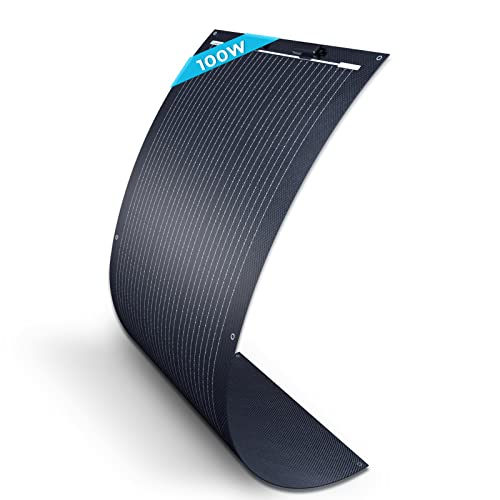
Renogy Flexible Solar Panel 100 Watt 240° Ultra Flex Bendable Black

2PCS 100W 12V Flexible Solar Panel 9BB Monocrystalline Cell

Renogy Solar Panels 200 Watt N-Type 200W Solar Panel 16BB

BougeRV Arch Pro 200W Anti-Shading N-Type Fiberglass Flexible Solar Panel

Flexible Solar Panel 100W 12V for RV Boat
More Details On Our Top Picks
The 240-degree bend range gives this Renogy panel a clear edge on curved van roofs and marine decks. The 0.1-inch profile keeps it closer to the surface than a rigid module, so your layout can stay cleaner around roof vents and rails.
The honest trade-off is that a thin panel asks for careful mounting and a sensible surface, because flex units depend more on installation quality than glass panels do. For a camper conversion that needs a neat footprint without much added height, this feels like a practical middle ground.
Strong Points
- 240-degree bend range suits curved panels, domed roofs, and other awkward mounting spots.
- The slim 0.1-inch profile helps you keep roof clutter low on a packed build.
- Its lighter build is easier to handle during solo rooftop installation.
- Works well for vans, boats, cabins, and off-grid layouts that need a flexible form factor.
Small Caveats
- Flexible panels reward careful surface prep, so loose mounting habits can shorten the useful life of the install.
- The low-profile format gives up some rigidity, which matters on rougher roofs or badly supported spans.
Feature Snapshot
Who It Suits Best
You’ll get the most from this if your van roof has curves, hardware, or low clearance that rules out a boxy panel.
A Better Fit Elsewhere
BougeRV Arch Pro 200W Anti-Shading N-Type Fiberglass Flexible Solar Panel suits you better when partial shade is part of your daily parking routine.
Two 180W panels shift this pick toward larger roof layouts, so it suits vans and campers that can spare the room for more charging surface. Compared with the single-panel Renogy option above, this route feels more like a sizing play than a minimalist install.
That bigger footprint helps on trips where you run a fridge, lights, and small electronics for longer stretches. The catch is simple, though, because more panel area means more planning for cable paths and mounting space.
What We Like
- Two panels give you more total surface area for a larger roof plan.
- Semi-flexible construction helps the panels sit more naturally on uneven surfaces.
- The dual-panel format can suit split mounting zones on a van or boat.
Points To Note
- The larger two-panel setup takes more room, so cramped roofs may feel crowded fast.
- Installation planning matters more here, since more hardware and cable routing usually mean more steps.
- Owners with compact van tops may find the footprint harder to manage than a single 100W panel.
Details At A Glance
Made For
You’re a good match for this set if your roof has room for two panels and you want more daily charging headroom.
Where A Sibling Pick Shines
Renogy Flexible Solar Panel 100 Watt 240° Ultra Flex Bendable makes more sense for tighter roofs and simpler installs.
This Topunive panel sticks to a familiar 100W, 12V layout, which makes it easy to place in many starter van systems. The 9BB cell layout, or nine busbar design, is meant to move current across the panel with less internal bottleneck, which matters in compact off-grid setups.
Compared with the dual-panel Topsolar option, this one is easier to keep simple and tidy. You may find it especially comfortable for a first roof install, where straightforward wiring matters as much as panel shape.
Highlights
- 100W output keeps the setup approachable for smaller power systems.
- 12V compatibility fits many van battery builds without extra complexity.
- 9BB cell layout supports a more efficient current path across the panel face.
- The semi-flexible form works on uneven mounting surfaces better than a rigid frame.
Softer Spots
- Single-panel output stays modest, so larger electrical loads need a broader setup.
- The lighter build still calls for careful mounting, especially on surfaces that flex in motion.
Core Details
Perfect Match For
You should look at this one for a simple 12V van setup that needs a sensible first flexible panel.
Swap It Out When
Topsolar 2PCS 180W Semi-Flexible Solar Panel is the stronger route for larger roofs that can host two panels.
This black Renogy version mirrors the first Renogy panel’s bend-friendly shape, but the darker finish gives it a cleaner look on black roofs or low-contrast installs. On a van with roof hardware you’d rather downplay, that visual restraint can matter more than people expect.
The trade-off is mostly aesthetic, since you’re still choosing a flexible 100W panel that depends on careful mounting. For a stealthier build, though, the black finish fits the job neatly and avoids looking tacked on.
Upsides
- The black finish blends more easily with darker roof surfaces.
- 240-degree flex range helps with curved mounting areas, just like the earlier Renogy panel.
- The slim profile keeps the install low and visually quiet.
- Fits travel rigs that need the panel to stay out of the way.
Areas To Watch
- The visual upgrade does not change the need for careful surface prep and mounting.
- Like most thin flexible panels, it still depends on a stable roof area for long-term use.
Feature Card
Built With In Mind
You’ll appreciate this most on a darker van roof where a lower-contrast look matters as much as output.
A Better Fit Elsewhere
Renogy Flexible Solar Panel 100 Watt 240° Ultra Flex Bendable is the better call if finish color matters less than a broader curved-roof layout.
Two 100W panels give you more room to stage a system than the single-panel Topunive option, while keeping the math easy at 12V. That makes this pair appealing for vans with split roof zones or a step-by-step build plan.
You may find the modular format useful when storage space inside the vehicle is tight, since the pieces are easier to position and route than one larger sheet. The honest trade-off is more setup work, because two panels usually mean twice the attention to mounting and cable management.
Best Bits
- Two 100W panels give you a flexible way to scale a small roof system.
- 12V and 9BB monocrystalline construction suit common van battery layouts.
- The pair format helps when roof features break the surface into sections.
- Modular placement can make planning easier on irregular roof layouts.
Worth Noting
- Two panels bring more wiring and installation steps than a single compact panel.
- The set takes more roof space, so it suits roomy layouts better than cramped ones.
Technical Sheet
Whose Shelf It Belongs On
You’re the right match for this set if your roof has enough space to justify a two-panel layout without feeling crowded.
Look Elsewhere When
BougeRV Arch Pro 200W Anti-Shading N-Type Fiberglass Flexible Solar Panel suits you better when one higher-output panel fits the roof plan more cleanly.
This Renogy panel steps away from the flexible category and into a rigid 200W format, so it makes sense only when your roof can support a more conventional module. The N-Type cell design and 16BB layout point toward a more modern cell structure, which usually matters most in compact spaces where each panel has to earn its place.
Compared with the flexible picks above, this one asks for a different kind of install but gives you a stronger output ceiling in a single unit. For a class B van or a cabin roof, that trade makes sense when you want a sturdier panel and can live without the bendable form.
Reasons To Buy
- 200W output gives you more charging headroom from one module.
- N-Type cell construction and 16BB layout point to a more advanced panel design.
- Works across 12V and 24V systems, which broadens system planning.
- Fits well for roof installs where rigid mounting is the cleaner choice.
Room For Improvement
- It lacks the flexible mounting advantage that defines the rest of this list.
- A rigid panel needs a roof plan that can handle its shape and mounting style.
Quick Facts
The Right Fit
You should grab this only when a rigid roof module suits your van, cabin, or home setup better than a flex panel.
Another Choice May Suit
BougeRV Arch Pro 200W Anti-Shading N-Type Fiberglass Flexible Solar Panel stays closer to the van-friendly flexible shape you may want for curved surfaces.
This BougeRV Arch Pro stands out because it pairs a flexible fiberglass build with anti-shading design, so it suits vans that rarely sit in perfect sun all day. On a roof interrupted by a vent, rack, or satellite hardware, that kind of tolerance can matter more than raw size alone.
The 16BB monocrystalline cell layout and 25% high-efficiency claim also place it in a more advanced tier than the basic 100W options. For mixed-light parking, the slightly higher-end feel makes sense, though the installation still deserves the same careful prep any flex panel needs.
Bright Spots
- Anti-shading design helps the panel cope better with partial roof shadow.
- Fiberglass backing adds a sturdier feel than many thinner flexible panels.
- 200W output gives you more charging room for busier travel use.
- The 24V portable setup suits more advanced off-grid plans.
- Works well on curved surfaces where a rigid module would be awkward.
Honest Caveats
- Its stronger feature set brings a more involved install than a simple 100W panel.
- Flex panels still depend on solid mounting and regular roof checks over time.
- The 24V format may ask for more planning in smaller electrical systems.
Feature Rundown
Best Suited To
This belongs on a van roof that sees patchy shade and needs a more capable flexible panel.
Reach For A Different Pick When
Renogy Flexible Solar Panel 100 Watt 240° Ultra Flex Bendable suits you better when a lighter 100W install feels more manageable.
This XINPUGUANG panel keeps things familiar with a 100W, 12V format, which makes it easy to understand and easier to place in a modest van system. The fiberglass and bendable build should suit curved spots better than a rigid panel, and that matters on roofs where you’re working around vents or uneven surfaces.
Compared with the Renogy and BougeRV options, this one feels more straightforward than fancy. That’s often enough for weekend travel rigs or small cabin installs, where reliable shape and basic compatibility matter more than a long feature list.
Positives
- 100W output keeps the panel approachable for smaller charging needs.
- 12V format fits common RV and van battery systems.
- Monocrystalline cell construction suits compact solar layouts well.
- Fiberglass backing adds a useful layer of structure for flexible mounting.
Minor Gripes
- The simple feature set will not satisfy you if you want a more advanced high-output build.
- As with most flexible panels, careful mounting and clean roof prep matter a lot.
At A Glance
Who Will Love This
You’re a good match for this panel if you want a plain, flexible 100W option for a smaller travel setup.
Skip It When
BougeRV Arch Pro 200W Anti-Shading N-Type Fiberglass Flexible Solar Panel is the better step-up for shade-prone roofs and heavier charging needs.
How To Choose The Right Flexible Van Solar Panels
Match Bendability To Your Roof
Flexible panels matter most on roofs that curve, taper, or already carry accessories. A quoted bend range, like Renogy’s 240 degrees, tells you how much shaping the panel can tolerate before the fit stops being clean.
That number matters more than it first sounds. A panel that sits naturally on the roof is easier to mount, easier to seal, and less likely to feel awkward around vents or rails.
Choose Output Around Your Daily Load
Wattage tells you the charging ceiling, so 100W suits lighter use while 180W or 200W makes more sense for fuller travel routines. Fridges, fans, lights, and device charging all add up faster than many first-time installers expect.
Think in terms of routine, not wishful math. A compact weekend build can stay happy with a smaller panel, while long-haul van living usually benefits from a larger array or a more efficient cell design.
Look Closely At Cell Type And Backing
Monocrystalline cells are common in this category because they fit compact panels well, and N-Type or 16BB layouts point to more advanced internal design. Those details matter because they affect how the panel handles current flow and how much roof space you need to do the job.
Fiberglass backing often adds structure without turning the panel into a rigid module. That helps on curved surfaces, although careful mounting still matters because flexible panels lean more on the installer than glass-framed panels do.
Things Worth Knowing First
Mistakes Worth Dodging
A lot of van builds go sideways by focusing on wattage alone. Roof space, mounting surface, and cable routing usually matter just as much, especially on smaller rigs with vents and racks already in place.
Another common miss is pairing a panel with the wrong system voltage. A 12V panel suits many compact setups, while a 24V option can make more sense in a larger electrical plan.
The Upgrade Payoff
Higher-tier panels usually cost more because the cell design, backing material, and shade handling are more advanced. BougeRV’s anti-shading layout and Renogy’s N-Type and 16BB construction show where that money tends to go.
That extra spend starts to make sense when your roof sees patchy light, your power demand is steady, or you want a more durable-feeling panel body. For a simple weekend van, though, the simpler 100W options can stay perfectly sensible.
Frequently Asked Questions
What makes a flexible panel better for a van roof?
Its shape helps it sit on curved or uneven surfaces more naturally than a rigid module. That can make the roof look cleaner and simplify the install.
How much wattage do you need for van travel?
Light use often starts around 100W, while fuller travel routines usually call for more output. Your fridge, fans, and charging habits set the real target.
Are semi-flexible panels the same as flexible panels?
They’re closely related, but semi-flexible panels usually keep a little more structure. That can help on slightly uneven surfaces without feeling fully rigid.
Why do some panels use 9BB or 16BB layouts?
BB means busbar count, which refers to the internal lines that move current across the cells. More busbars can help current flow across the panel more evenly.
Should you choose 12V or 24V for a van build?
12V fits many smaller and simpler systems, especially starter van setups. 24V fits larger electrical plans and can be a smarter match for higher-output builds.
Closing Thoughts
The best flexible van solar panels fit your roof first, then your power needs, not the other way around. A curved roof with limited clearance calls for a true flex design, while a bigger rig may justify extra output or a more advanced cell layout. The Renogy and BougeRV picks lean into different strengths, and the simpler 100W panels keep things manageable for lean builds. Match the panel to your roof, your battery system, and how you actually travel, and the choice becomes a lot clearer.
