

Car power can feel invisible until your laptop dies on the way to a meeting or a cooler fan quits during a long drive. The right inverter turns your vehicle into a steadier place to charge phones, run small appliances, or keep travel gear ready without a mess of adapters. This roundup focuses on real use, from commuting and camping to RV travel and mobile work. You’ll see where each pick fits, and where a simpler model makes more sense.
The Shortlist At A Glance

BESTEK 1000W Power Inverter for Vehicles 2 AC Outlets

TOPBULL 3000 Watt Power Inverter, Car/Home

FSATBTNE 400W Power Inverter

DrimMek 300W Car Power Inverter 12V to 110V

BELTTT 2000W Pure Sine Wave Inverter
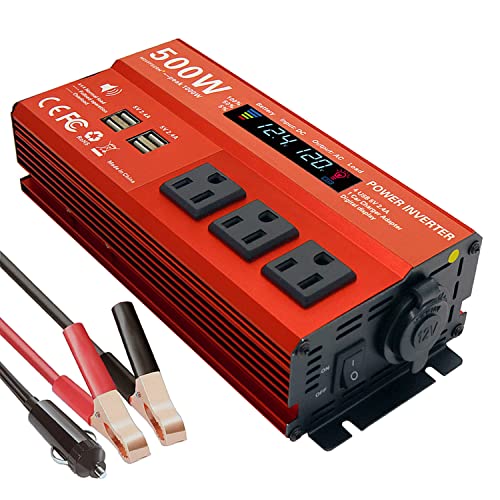
MOVFFGGRM 500W Peak 1000W Power Inverter

BESTEK Power Inverter DC 12-17V to AC 110V 300W

vansoet 400W Car Power Inverter for Vehicles
More Details On Our Top Picks
This one fits the person who wants a little of everything without jumping into a heavy-duty setup. Two AC outlets, a 30W USB-C port, and an 18W USB port cover mixed travel gear well, especially in a family car or work van.
The 1000W continuous rating gives you room for moderate household-style devices, while the 2000W surge helps at startup. The honest trade-off is size and load discipline, so you’ll get the best use from it with gear that stays comfortably inside its limits.
Strong Points
- Two AC outlets let you run or charge more than one device at once.
- USB-C and USB-A support cuts down on extra adapters in the glove box.
- 1000W continuous output suits stronger travel setups than basic 300W units.
- 2000W surge headroom helps with startup loads.
Things To Consider
- You’ll want to match your device draw carefully, especially with larger appliances.
- It takes more space than the smaller DrimMek and FSATBTNE picks.
- More capability usually means a bit more cable and storage planning.
Feature Snapshot
Who It Suits Best
You’re a strong match here if your vehicle carries a mix of laptops, tablets, and travel accessories and you want fewer charging compromises.
Where A Sibling Pick Shines
TOPBULL 3000 Watt Power Inverter, Car/Home suits people who need much higher output for larger rigs or backup-style use.
TOPBULL is the brute-force option in this group, built for bigger electrical demands than the smaller road-trip units. The remote controller and LED display make it easier to manage from a distance, which matters in an RV bay or a tucked-away install.
The trade-off is straightforward: this is less about pocket-sized convenience and more about serious capacity. You’ll appreciate it most in a van, camper, or home backup setup where the included cables and dual smart fans support a sturdier installation.
What We Like
- 3000W output gives you room for demanding equipment.
- Remote control access helps with installs that sit out of reach.
- LED readout makes status checks easy at a glance.
- Dual smart fans suit longer sessions better than simpler single-fan designs.
- Cables are included, which saves you a separate sourcing step.
Softer Spots
- It asks for more planning, space, and installation care than a 300W model.
- The feature set makes most sense in larger vehicles or fixed setups.
- For tiny cars, the scale can feel like overkill.
Core Details
Made For
You’ll get the most from this in an RV, truck, camper build, or home backup setup where high output matters more than compact size.
Swap It Out When
BESTEK 1000W Power Inverter for Vehicles 2 AC Outlets is a better fit for daily drivers who want a simpler, easier-to-place unit.
FSATBTNE lands in a useful middle ground, especially for road users who want fast phone and tablet charging without carrying a larger inverter. The 65W USB-C port stands out here, since that level is more comfortable for many laptop-style devices than the smaller 30W options above.
Compared with the BESTEK 1000W unit, this one is easier to think of as a travel companion than a full mobile power station. That keeps it appealing for commuters, weekend trips, and people who mainly want AC outlets for light loads.
Upsides
- 65W USB-C output gives you better headroom for modern devices.
- Two AC outlets let you keep more than one accessory powered.
- 18W USB-A adds a familiar quick-charge option.
- 400W capacity suits light travel gear without taking over the cabin.
Room For Improvement
- It still sits below the 1000W and 3000W units for heavier loads.
- You may find the label style a little busy at a glance.
- Light-duty use keeps it useful, but not for demanding appliances.
Quick Facts
Right Fit For
You’re in the sweet spot here if you want a compact travel inverter with stronger USB-C support and only modest AC needs.
Look Elsewhere When
BELTTT 2000W Pure Sine Wave Inverter makes more sense for RV users or anyone powering more sensitive equipment for longer stretches.
DrimMek is the neat little option for daily driving, especially when you want a simple add-on that doesn’t crowd the cabin. The 65W USB-C port is the standout detail, because it gives your laptop or other higher-draw USB-C gear a more practical charging path than older 18W-only designs.
That small footprint comes with a clear trade-off, though, since 300W is best kept for lighter devices and routine charging. For errands, commutes, or short trips, that balance feels sensible rather than limiting.
Highlights
- Small size makes storage easy in a center console or travel bag.
- 65W USB-C is useful for modern portable electronics.
- 300W output fits routine vehicle charging needs.
- LED display gives you a quick status read while driving.
Points To Note
- It’s better for lighter gear than for anything power hungry.
- The compact body is handy, but it also means less headroom.
- Best results come from keeping cables tidy in a small space.
At A Glance
The Right Fit
You’ll like this most as a simple, compact inverter for commuting, short road trips, and light charging needs.
A Better Fit Elsewhere
vansoet 400W Car Power Inverter for Vehicles gives you more port variety, which suits multi-device travel better.
BELTTT is the most specialized pick here, and the pure sine wave output is the reason. Pure sine wave means the AC power is shaped more like the electricity from a house outlet, which matters for some sensitive electronics and quieter-running gear.
Compared with the modified sine units in this roundup, it asks more of your budget but gives you a cleaner power profile in return. That makes it a strong fit for RVs, solar builds, and truck setups where the inverter may stay in place for long stretches.
Best Bits
- Pure sine wave output suits more sensitive equipment.
- 2000W output with 4000W surge gives useful operating room.
- Hardwire port supports more permanent installations.
- Remote controller makes placement more flexible.
- Dual AC outlets, a 20A socket, and USB give you broad connection options.
Areas To Watch
- This is more complex than a simple plug-in inverter.
- Its strengths show up most in planned installs.
- Portable use is possible, but not the easiest match for quick swaps.
Technical Sheet
Built With In Mind
You’re the right fit for this model if your RV, truck, or solar setup needs stronger, cleaner power and a more permanent layout.
Where Shoppers Go Wrong
BESTEK 1000W Power Inverter for Vehicles 2 AC Outlets is easier to live with for simpler car use and lighter luggage space.
This MOVFFGGRM unit is built around convenience more than drama, and the four USB ports make that clear. For a car full of phones, tablets, earbuds, and small accessories, that port count can matter more than a single stronger outlet.
The 500W peak rating gives it a little breathing room, but the honest read is that its best use stays in everyday charging rather than heavy appliance duty. Compared with the DrimMek or FSATBTNE picks, it’s less about one standout port and more about spreading power around a busy cabin.
Reasons To Buy
- Four USB ports make multi-device charging easy to manage.
- 1 cigarette lighter socket adds a familiar vehicle connection.
- 500W peak rating gives light gear a useful buffer.
- Good fit for family travel where several small devices need juice.
Honest Caveats
- It’s better for charging than for powering demanding equipment.
- Cabin organization matters, since many cables can pile up fast.
- Peak power should not be confused with sustained output.
Details At A Glance
Whose Shelf It Belongs On
You’ll like this most if your car regularly carries a few charging-hungry gadgets and you want fewer splitter cables.
Skip It When
TOPBULL 3000 Watt Power Inverter, Car/Home is the better call for large equipment or a more demanding power plan.
This BESTEK model stands out because of its wider input range, which can be useful in vehicles where voltage isn’t perfectly fixed. The aluminum housing also gives it a tougher, more finished feel than many simple plastic-bodied compact units.
Its modified sine wave output is a trade-off, though, so it’s better for common charging gear than for more sensitive electronics. Road-trip users who want a cleaner look and a sturdier shell will probably appreciate it more than people chasing raw wattage.
Peculiar Strengths
- 12V to 17V input range adds flexibility in vehicle setups.
- PD 65W USB-C supports stronger USB-C charging than most compact models here.
- 18W USB-A gives you a second fast-charge option.
- Aluminum housing is a solid match for regular travel use.
Small Caveats
- Modified sine wave output is less versatile than pure sine wave designs.
- 300W keeps it in the lighter-duty class.
- You’ll get the most from it with routine electronics, not heavy appliances.
Feature Card
Perfect Match For
You’re in the right lane here if you want a compact inverter for road trips and value a tougher shell with stronger USB-C support.
Where A Sibling Pick Shines
BESTEK 1000W Power Inverter for Vehicles 2 AC Outlets is the smarter step up for people who need a broader AC setup.
vansoet gives you a nicely balanced mix of USB and AC connections, which makes it easy to pack for a weekend away or keep in the trunk for routine use. The combination of PD 30W, USB-C and USB-A ports, and dual AC outlets helps it serve more than one kind of device without feeling cluttered.
Compared with the DrimMek 300W unit, this one feels a bit more flexible for multi-device travel, though it still belongs in the light- to mid-duty range. That keeps it useful for laptop charging, camping gear, and passenger-friendly road trips where variety matters more than brute force.
Positives
- Dual AC outlets add flexibility for small travel devices.
- USB-C and USB-A support broadens your charging options.
- 400W output fits everyday road use well.
- Good choice for cabin organization because it covers several plug types.
Trade Offs
- It won’t replace the larger 1000W or 2000W models for demanding gear.
- Port variety helps, but it can also mean more cable clutter.
- Light travel use suits it better than long-term installed power.
Core Details
Who Should Grab It
You’re a strong match for this one if you want a balanced travel inverter with multiple charging paths and modest power needs.
Another Choice May Suit
FSATBTNE 400W Power Inverter is the better call for people who place more value on a stronger USB-C output.
How To Choose The Right Car Inverters
Start With Wattage And Real Load Needs
Wattage tells you how much power the inverter can supply, but the useful number is the one that matches your gear. A 300W or 400W unit suits phones, tablets, cameras, small laptops, and light travel tools, while 1000W and 2000W models are built for much bigger demands.
Surge power matters too, because some devices need extra startup headroom. That’s why a unit like BESTEK 1000W or BELTTT 2000W can feel more forgiving than a smaller inverter, even when you’re not running at full output.
Match The Outlets To Your Devices
USB-C ports help with newer phones, tablets, and laptops, especially when the output reaches 30W, 65W, or more. USB-A still matters for older cables and accessories, and dual AC outlets become useful the moment you travel with a charger, a fan, and a second device.
The cleanest setup is the one that reduces adapters. FSATBTNE and vansoet lean into mixed charging, while DrimMek keeps things compact and straightforward.
Think About Waveform And Equipment Sensitivity
Pure sine wave inverters, like BELTTT, produce a smoother AC shape that is closer to household power. That matters for some sensitive electronics and more finicky equipment, even though the unit usually costs more than a modified sine wave design.
Modified sine wave models can still work well for many travel jobs, and they often keep the price and size friendlier. BESTEK’s compact 300W option makes sense for ordinary charging, while the pure sine wave step-up is better reserved for setups where smoother output really earns its keep.
Plan For Installation, Portability, And Heat
Plug-in inverters are easier to move and store, which suits commuters and weekend travelers. Hardwire-ready units, remote controllers, and larger cooling systems make more sense in RVs, campers, or truck builds where the inverter stays put.
Heat control also deserves attention, because higher output usually means more thermal management. Dual fans, aluminum housing, and better spacing around the unit all help with long sessions, especially in a warm cabin.
What To Weigh Before You Order
Common Shopping Slip Ups
Many people focus on peak wattage and ignore the continuous rating, then end up with a setup that feels smaller than expected. Another easy miss is port type, since a strong USB-C line does not always replace the need for AC outlets.
Space matters too. A 3000W inverter can be a poor fit in a small hatchback, while a compact 300W model may be too limited for a camper or work truck.
The Upgrade Payoff
Higher-tier models cost more because they usually bring stronger output, better cooling, more flexible wiring, or a cleaner power waveform. BELTTT is the clearest example here, since pure sine wave output and hardwire support add usefulness that compact units don’t offer.
You’re paying for flexibility and headroom as much as raw numbers. That spending makes sense when the inverter becomes part of your travel routine or a fixed setup instead of a backup gadget in the glove box.
Frequently Asked Questions
What Size Inverter Works For A Laptop?
A 300W or 400W inverter often covers laptop charging well, especially with a strong USB-C port. Heavier laptop bricks or multi-device charging setups benefit from more headroom.
Do You Need Pure Sine Wave Power?
Pure sine wave is the safer match for more sensitive electronics and some home-style equipment. For basic charging and many travel accessories, a modified sine wave model can still make sense.
Can You Run An Inverter In A Car All Day?
Long use depends on the vehicle, the load, and the inverter’s cooling setup. Larger models with better fans and proper wiring handle extended sessions more comfortably than tiny plug-in units.
Why Do Some Inverters Have So Many USB Ports?
Multiple USB ports help you charge several devices without extra adapters or splitters. That matters most in family travel, ride-sharing, or workdays with a lot of small electronics.
What’s The Difference Between 300W And 1000W?
300W suits light electronics, while 1000W opens the door to larger devices and a wider mix of travel gear. The extra capacity also gives you more margin at startup.
Closing Thoughts
The best car inverter for you depends on how you travel and what you plug in. For simple charging, the smaller BESTEK, DrimMek, FSATBTNE, or vansoet options keep things tidy and practical. For RVs, camper builds, or heavier gear, TOPBULL and BELTTT move you into a different class of capability. Match the inverter to your real routine, not to the loudest wattage number, and you’ll end up with a setup that feels useful every time you hit the road.
