

Budget solar generators make sense when you want backup power without building a full home-energy setup. You get a quieter, cleaner-feeling alternative to gas machines, plus a solar path that suits outages, RV trips, tailgates, and camping weekends. The key is matching capacity, output, and charging speed to your own routine, not just chasing the biggest numbers on the page.
That means a small travel setup can look very different from a home-backup unit. The picks below cover compact carry-alongs, mid-size portable stations, and higher-capacity systems for heavier household loads, so you can sort out what fits your space, storage, and daily habits.
Quick Look At The Shortlist

Jackery HomePower 3000 and 2x200W Solar Panels

Jackery Explorer 2000 v2 and 2x200W Solar Panels

AFERIY 3840Wh Portable Power Station

Jackery Solar Generator 300 and 40W Solar Panel

OUPES Mega 1 Solar Generator with 100W Panel

Jackery HomePower 3600 Plus Portable Power Station
BLAVOR Portable Power Station 1600W
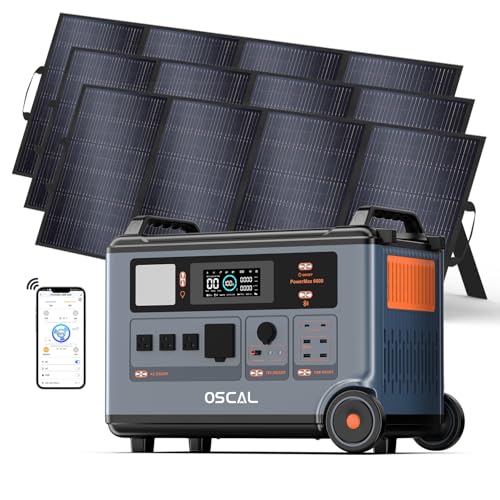
OSCAL PowerMax 6000 Solar Generator
More Details On Our Top Picks
For home backup, this Jackery setup sits in the larger, more serious part of the field. The 3,072Wh battery means more stored energy than the small travel units below, and the 3,600W AC output gives you room for more demanding household gear.
The trade-off is simple, it’s a bigger system to store and move, so it suits a garage, utility room, or RV base camp more than a minimalist carry kit. In most homes, that extra size pays off when you want a steadier backup plan for longer outages.
Strong Points
- Large battery reserve supports longer backup sessions than compact picks.
- 3,600W AC output gives you more headroom for household essentials.
- Two 200W panels make the solar bundle easier to picture as a complete setup.
- LFP, or lithium iron phosphate, battery chemistry tends to suit frequent charge cycles.
Things To Consider
- The size makes storage and placement more demanding than the smaller Jackery 300.
- You may want a dedicated spot for charging and cable management.
- For light camping, this is more system than you probably need.
Feature Snapshot
Who It Suits Best
Households that want a stronger backup anchor for outages, RV stays, or semi-permanent emergency storage will get the most from this setup.
A Better Fit Elsewhere
Jackery Explorer 2000 v2 suits apartment dwellers and lighter backup needs better, especially when portability matters more than reserve capacity.
This model trims the scale a bit while keeping a very practical amount of capacity. The 20ms UPS function, where UPS means uninterruptible power supply, matters for sensitive electronics because it aims for a quick handoff during an outage.
The 100W USB-C PD port also makes it friendlier for laptops and modern devices than many basic stations. That combination suits home offices, apartment backup, and anyone who wants a cleaner bridge between wall power and portable power.
What We Like
- 2,042Wh capacity lands in a comfortable middle ground for backup tasks.
- 20ms UPS support gives the unit a useful edge for electronics.
- 100W USB-C PD is well suited to laptops and large tablets.
- The bundle includes two 200W panels, which helps round out the system.
Worth Noting
- It still takes meaningful storage space compared with the compact Jackery 300.
- Users focused on whole-house loads may want the larger HomePower 3000 or OSCAL PowerMax 6000.
- Cable routing can matter more here because the setup has several modern connections to manage.
At A Glance
Who Will Love This
You’ll appreciate this more than the Jackery HomePower 3000 if your space is tighter and your backup needs center on electronics, not heavy appliances.
Another Choice May Suit
OUPES Mega 1 fits tech-heavy setups better, especially for shoppers who want app control and a broader port mix in one chassis.
AFERIY pushes hard into large-capacity territory, and that matters most when you want more than a short outage cushion. With 3,840Wh on board and room to expand to 11,520Wh, it’s built for long sessions, backup planning, and power-hungry spaces.
Five 120V AC outlets also help you spread out multiple devices without leaning too heavily on one strip. The honest read is that this is a big system, so it fits people who have a real place for it and a real reason to use it.
Upsides
- Very large base capacity gives you a strong reserve for outages.
- Expandable design leaves room for a much bigger backup setup later.
- 3600W output, plus 7200W peak, supports demanding loads more comfortably.
- Five AC outlets make it easier to distribute devices across one station.
- LiFePO4 battery chemistry suits repeated use and long-term storage planning.
Small Caveats
- The scale makes it a poor match for quick grab-and-go use.
- You’ll want to think through placement, ventilation, and cable reach at home.
- For small apartments, the footprint may feel hard to justify.
Core Details
The Right Fit
Homeowners with dedicated backup space, RV travelers with larger electrical needs, and anyone planning around longer outages will feel the most value here.
Where A Sibling Pick Shines
Jackery Explorer 2000 v2 is the cleaner fit for commuters, apartment dwellers, or anyone who wants a more compact station with faster everyday handling.
This Jackery feels much more travel-minded than the larger stations above. The 292Wh battery and 300W AC output keep it in the light-duty zone, which suits phones, lamps, small electronics, and weekend camping basics.
The pure sine wave AC outlet is worth noting because it gives sensitive electronics a cleaner power shape than a rougher modified output. For tent camping, day trips, and light blackout support, it’s tidy and easy to understand.
Bright Spots
- Small capacity keeps the unit easier to store and carry.
- Pure sine wave output suits electronics that benefit from cleaner power delivery.
- The included 40W panel makes the bundle feel ready for casual outdoor use.
- Simple power levels are less intimidating for first-time portable-power shoppers.
Areas To Watch
- 300W output limits the kinds of appliances you can run.
- The battery size is modest beside the Jackery Explorer 2000 v2.
- It works best for lighter loads, not household backup across a whole room.
Details At A Glance
Who Should Grab It
Weekend campers, travelers with a tight packing list, and households that want a small emergency backup unit will get the most from it.
Look Elsewhere When
Jackery HomePower 3000 makes more sense for you once appliance support and longer runtime matter more than portability.
OUPES is built for shoppers who like practical extras, not just raw battery figures. The 1,024Wh pack is a workable middle size, and the promise of expansion to 5kWh gives you a growth path that the smaller Jackery 300 simply can’t offer.
The 36-minute path to 80 percent charge is the headline feature, but it matters most in busy households where wall power is available and the unit has to cycle back quickly. APP control, 13 ports, and 100W USB-C make it a flexible hub for mixed gear.
Reasons To Buy
- Expandable design gives you room to scale beyond the base unit.
- Fast recharge potential suits households that need quick turnarounds.
- 13 ports make it easier to handle several devices at once.
- Built-in MPPT, or maximum power point tracking, helps solar charging work more efficiently in changing light.
- APP control adds a more modern layer of monitoring and adjustment.
Points To Note
- The feature set adds convenience, but it also adds more menus and settings to learn.
- 100W panel bundles can feel modest once you start expanding the system.
- Users who prefer a very simple setup may find the app layer unnecessary.
Feature Rundown
Built With In Mind
Tech-heavy homes, workshop corners, and backup setups that mix phones, laptops, and small appliances are the sweet spot here.
Swap It Out When
Jackery HomePower 3600 Plus is the stronger choice for heavier household backup, especially once reserve capacity starts to matter more than port count.
This model sits close to the top of the home-backup ladder in this roundup. Its 3,584Wh battery, 3,600W AC output, and expansion path to 21kWh point to a serious setup for longer outages and bigger households.
Compared with the HomePower 3000, it adds even more reserve while keeping the same kind of home-first intent. That makes it a strong fit for garages, backup closets, and RV owners who want a station that can grow rather than get replaced.
Positives
- Large 3,584Wh base capacity supports longer backup intervals.
- Expansion up to 21kWh gives the system rare room to grow.
- 3,600W output makes it easier to cover more demanding home loads.
- The two 200W panels create a more complete solar bundle from the start.
Minor Gripes
- The larger footprint asks for more dedicated storage space.
- Setup feels more at home in a planned backup area than a casual shelf.
- For light travel, you’ll carry more station than you probably need.
Spec Overview
Whose Shelf It Belongs On
Households that want a large reserve, RV users with power-hungry routines, and shoppers thinking beyond short outages will benefit most.
A Better Fit Elsewhere
BLAVOR Portable Power Station 1600W fits lighter home backup and camping use better, especially when you want a simpler, more compact footprint.
BLAVOR takes a convenience-first route with its built-in solar panel, which cuts down on the number of separate pieces you need to keep track of. The 1,024Wh battery and 1,600W output place it in a useful middle ground for backup, camping, and RV weekends.
The 100W USB-C fast-charge support is handy in homes where laptops and modern devices are part of the daily mix. Compared with the OUPES Mega 1, this one feels simpler and more direct, even though it gives up the same level of expansion and app control.
Best Bits
- Built-in solar panel reduces the number of loose accessories you need.
- 1,024Wh capacity works for practical, everyday portable-power tasks.
- 100W USB-C fast charging helps with laptops and compatible gear.
- LiFePO4 battery chemistry suits repeated use patterns.
Softer Spots
- The integrated-panel concept can feel less flexible than a separate-panel setup.
- Power users may want the larger reserve of Jackery HomePower 3000 or OSCAL PowerMax 6000.
- There’s less room here for future expansion than on the higher-tier stations.
Core Details
Best Suited To
Shoppers who want a straightforward backup station for a home office, car camping, or weekend RV use will get the cleanest fit here.
Where Shoppers Go Wrong
Jackery Explorer 2000 v2 is the smarter move for anyone who needs UPS support and a more desktop-friendly home backup role.
OSCAL sits at the high-output end of the shortlist, and the split-phase 120V/240V support sets it apart from the smaller stations here. That matters for homes and backup setups that need more than basic portable-power behavior.
The 6,000W AC output, 9,000W peak figure, and charging rates up to 2,400W from solar give this unit a much more substantial profile. It’s not the lightest or simplest choice, but it speaks to households planning around more demanding electrical needs.
What We Like
- Split-phase 120V/240V support broadens home-use potential.
- 6,000W AC output gives you serious headroom for larger loads.
- 9,000W peak helps with brief startup demands.
- 3 x 400W panels make the solar bundle feel substantial.
- High charging figures can shorten the wait between uses.
Room For Improvement
- The scale makes it more of a home installation than a portable travel kit.
- For casual camping, this is far more station than you need.
- Some households will need space planning before bringing it in.
Quick Facts
Right Fit
Homes with bigger backup requirements, equipment-heavy spaces, or plans that call for split-phase support are the best match for this unit.
Reach For A Different Pick When
Jackery Explorer 2000 v2 is easier to live with for apartment backup, laptop charging, and lighter emergency use.
How To Choose The Right Budget Solar Generators
Start With The Load, Not The Label
Watts tell you how much a station can run at once, while watt-hours tell you how long it can keep going. That difference matters in real life, because a phone charger and a fridge drawer do not ask the same thing of a power station.
For light travel, a smaller unit like the Jackery Solar Generator 300 keeps the setup easy. For home backup, the larger figures on Jackery HomePower 3000, Jackery HomePower 3600 Plus, or OSCAL PowerMax 6000 matter more because they give you more room to breathe.
Battery Chemistry And Cycle Life Matter Too
LiFePO4, short for lithium iron phosphate, is a battery chemistry often chosen for portable power because it suits repeated charging well. You still need to match capacity to your use, but the chemistry helps explain why many mid and large stations feel better suited to regular backup duty.
That’s where the OUPES Mega 1 and BLAVOR station become practical middle-ground choices. They bring LiFePO4 into setups that may sit for a while, then work hard during outages, weekends away, or work-from-home interruptions.
Charging Speed And Panel Pairing Change The Experience
Fast AC recharge is helpful in the real world, especially after a night of outage use. The OUPES Mega 1 stands out for a quick return to readiness, while larger bundles like the Jackery HomePower systems spread the load across included panels.
Solar panel count and wattage also affect convenience. A compact kit with one smaller panel feels easy to carry, while a 3-panel setup like OSCAL’s leans toward a more fixed home-backup role.
Ports And Output Shape How You’ll Use It
USB-C PD, or power delivery, supports modern laptops and other capable devices without extra adapters. UPS support matters for desktop setups, because it aims to bridge short outages with less interruption.
If your routine includes routers, laptops, and phones, the Jackery Explorer 2000 v2 and OUPES Mega 1 make a lot of sense. For larger appliances or a deeper home reserve, higher output and more AC outlets become the deciding factor.
A Quick Reality Check Before You Choose
Common Shopping Slip Ups
Shoppers often focus on capacity and skip output limits, then find the unit cannot run the appliance they had in mind. A second common miss is ignoring storage, which makes a big station awkward to keep in a hallway or small closet.
You can sidestep both by matching wattage to the gear you already own and by measuring the space before the box arrives. The compact Jackery 300 solves a very different problem from the Jackery HomePower 3600 Plus, so the right size is not guesswork.
The Upgrade Payoff
Higher-tier models cost more because they usually bring larger batteries, stronger AC output, more outlets, and broader charging options. Extra money also tends to buy faster recharge, better expansion paths, and a more comfortable margin for larger household loads.
That upgrade makes sense for households that treat backup power as part of daily life, not a rare emergency-only tool. For lighter use, the smaller stations in this roundup keep the experience simpler and easier to store.
Frequently Asked Questions
What Size Budget Solar Generator Do You Need For A Fridge?
You usually want a station with enough AC output and battery reserve to handle startup demand and running time. In this roundup, the larger Jackery HomePower models, AFERIY, and OSCAL are the more realistic fits.
Are LiFePO4 Batteries Better For Regular Backup Use?
LiFePO4 is often favored for frequent cycling because it fits repeated charging routines well. That makes it a sensible choice for backup stations that may sit unused and then work hard during outages.
Does UPS Support Matter For Home Office Use?
Yes, it can matter a lot for routers, desktops, and work gear that dislike sudden power loss. The Jackery Explorer 2000 v2 is the standout here thanks to its 20ms UPS feature.
Is A Bigger Solar Panel Bundle Always Better?
Not always, because bigger bundles bring more setup space and storage needs. A smaller panel bundle can be the cleaner fit for travel, while larger bundles suit planned home backup.
Can You Use These Units For Camping Too?
Yes, but the best camping pick depends on how much you carry and how many devices you bring. Jackery Solar Generator 300 and BLAVOR are the easiest camping matches in this list.
Final Thoughts
Your best match depends on how you actually live with backup power. For a compact travel setup, the Jackery Solar Generator 300 keeps things light, while the Jackery HomePower 3000 and OSCAL PowerMax 6000 move into much more serious household territory. Jackery Explorer 2000 v2, OUPES Mega 1, AFERIY, Jackery HomePower 3600 Plus, and BLAVOR fill the useful middle ground in between. Pick the size that fits your space, your gear, and the kind of outage you’re preparing for, and the choice gets a lot easier.
