

Most homes hide a few small boxes behind walls, under cabinets, or out by the curb, and most of them don’t get a second glance until something goes wrong. A meter socket sits open after a service call, a junction box rattles in the basement, or a curb stop buries itself under mud right when a shutoff is needed.
I put together this roundup for the people who actually handle those moments: homeowners swapping in their own covers, electricians stocking the truck, RV owners wiring campsites, and DIYers building sensor projects. The list runs from simple plastic meter blanks to IP65 junction enclosures, portable distribution panels, and the specialty keys that open curb boxes in the first place.
The Choices Worth Comparing
The Choices Worth Comparing
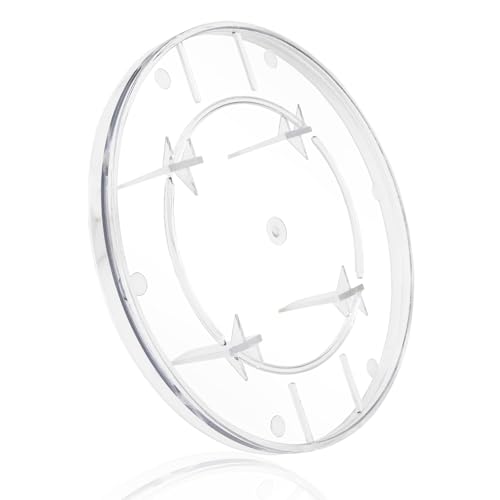
LhyBtm Clear Plastic Meter Socket Cover

TOKDOOT Meter Socket Cover 2 Pack

PINFOX ABS IP65 Project Box 2-Pack

Milbank 6002 Plastic Meter Blank
GWCASE Multimeter Carry Case (Large)

HIITIO 110V 4-Outlet Distribution Box

HIITIO TT-30R RV Outlet Box (ETL)

HIITIO 14-50R RV Outlet Box (UL)

IGIUA MKF2 Triangle Curb Box Key

Jones Stephens Pentagon Curb Box Wrench
A Closer Look At Each Pick
A blank meter cover is one of those parts most people never think about until a meter has been pulled for service and the socket sits exposed to weather, insects, and curious fingers. This LhyBtm cover drops into a Milbank 6002 style socket, which is one of the more common residential bases in the U.S.
The standout detail is the clear plastic body. Rather than pulling the cover off to read a sub-meter, owners can glance through and confirm the reading or check the seal inside without disturbing anything. For property managers and homeowners who cycle meters often, that adds up to real convenience.
Useful Highlights
- Clear plastic makes meter readings and seal checks possible without removing the cover.
- UV-resistant plastic is designed to hold up under weather and sunlight exposure.
- Slides into Milbank 6002-style bases with no tools required, easing quick swaps.
- Acts as a safety barrier when a meter has been pulled for service or replacement.
Things To Consider
- Clear plastic can yellow slightly after years of UV exposure, depending on climate.
- Only fits Milbank 6002-pattern bases, so confirm your socket style before ordering.
Feature Snapshot
Best Suited To
Property managers and homeowners who need a quick Milbank 6002 replacement they can read through.
Look Elsewhere When
Stocking multiple covers at once makes more sense with the TOKDOOT 2-pack covered next.
For anyone managing more than one property, or a small electrician’s van, buying singles gets old fast. The TOKDOOT 2-pack delivers two Milbank 6002-style blank covers in a single order, which keeps the truck stocked without breaking the budget.
Where this option shines is the same scenario as the LhyBtm above: a meter pulled for service leaves the socket exposed to dust, debris, and weather. Drop one of these in and the box is sealed until a replacement meter is installed.
What It Does Well
- Two covers per pack keeps a service truck or shop supplied.
- Plastic body shrugs off weather and UV in outdoor meter bases.
- Snaps into standard Milbank 6002-pattern sockets without tools.
- Keeps pests and debris out when a meter is removed from service.
Points To Note
- Opaque body, so readings require removal if used over a live meter.
- Plastic tabs can wear after repeated install cycles on busy service routes.
Whose Shelf It Belongs On
Electricians and property managers stocking multiple sockets who want spare covers ready.
Reach For A Different Pick When
Reading the meter through the cover matters, in which case the LhyBtm clear option is the smarter buy.
Meters and sensors don’t always live inside a finished electrical box. A homemade watt meter, a garage temperature sensor, or a 4-20 mA current loop often needs a clean ABS shell that resists splashes. The PINFOX enclosure serves exactly that niche.
At roughly 3.94 by 2.68 by 1.97 inches, each box fits a small prototype board plus connectors, and the ABS plastic drills cleanly for custom cutouts. The IP65 rating, meaning dust-tight and protected against low-pressure water jets, suits damp basements and outdoor enclosures better than a typical project case.
Practical Pluses
- IP65-rated ABS keeps splashes and dust out of meter and sensor builds.
- ABS body drills and shapes cleanly for custom connector cutouts.
- Compact 100 x 68 x 50 mm footprint fits prototype boards and small displays.
- Two-pack lets a hobbyist run matched builds without ordering twice.
Honest Caveats
- Six internal mounting screws mean more assembly time than snap-together cases.
- Not rated for submersion, so direct burial or flooded installs are out.
The Right Fit For
Makers and field techs building weather-resistant meter enclosures for garages and outdoor sensors.
Swap It Out When
You need a panel-mount-ready blank for a real electrical socket, which the Milbank 6002 covers serve instead.
Most of the alternatives on this list copy the Milbank 6002 pattern. This is the original, made by the brand that defined the format. For utility inspectors and electricians working on builds that strictly spec OEM parts, the genuine article carries weight.
It fits both ringed and ringless meter bases using the included plastic tabs, which keeps install simple across the most common residential meter styles. The blank ships ready for outdoor use in all climate conditions.
The Value In It
- Genuine Milbank part matches the spec utility inspectors expect.
- Works with both ringed and ringless meter bases using included tabs.
- Rated for outdoor use across all climate conditions.
A Few Limitations
- Single-pack only, so multi-property jobs mean ordering more than one.
- Opaque cover blocks meter visibility, unlike the LhyBtm option.
Perfect Match For
Inspectors, electricians, and homeowners who want an OEM-spec blank for a Milbank 6002 socket.
Skip It When
Budget pricing matters more than OEM branding, in which case the TOKDOOT 2-pack is the leaner play.
A meter is only useful when you can find it, and the leads aren’t tangled into a knot. The GWCASE case slots into a different category from the rest of this list: it’s a soft organizer for the meter that reads the boxes, not the box itself.
The large size fits Klein mm300/325 multimeters, circuit breakers like the ET310, digital clamp meters, non-contact voltage testers, leads, batteries, and small screwdrivers in one carry. Field techs who jump between jobs appreciate keeping that kit in one place.
Notable Gains
- Roomy main pocket fits Klein mm300/325 series multimeters and similar tools.
- Separate slots hold clamp meters, testers, leads, and small accessories.
- Zippered closure protects test gear from dust and shop debris.
- Larger size swallows circuit breaker finders and outlet testers alongside the meter.
Less Ideal Details
- Soft case offers impact protection mainly from scuffs, not drops from ladders.
- Larger size may be overkill for homeowners who only carry a single multimeter.
Who Should Grab It
Field electricians carrying Klein mm300/325 multimeters and a full test kit between jobs.
Another Choice May Suit
Homeowners running only a basic voltage tester are better served by a smaller pouch than this GWCASE Large.
On a real job site, a single extension cord feeding four tools is a fire hazard, and most household power strips are not built for the dust and splash of outdoor work. The HIITIO 110V portable box takes a 110V feed and breaks it out into four NEMA 5-20 outlets, the standard 125V, 20-amp configuration widely used in North American shops.
Its IP54 rating, meaning limited dust ingress and splash resistance from any direction, suits framing sites, concrete pours, and outdoor events. The square body lays flat on its side for hands-free work and has a built-in carry grip for moving between tasks.
Real-World Strengths
- Four NEMA 5-20 outlets run multiple 20-amp tools at once.
- IP54 splash-resistant housing for outdoor and construction environments.
- Built-in carry grip and stable flat-laying square shape.
- Plug-and-play setup simplifies temporary power distribution on jobs.
Trade-Offs To Consider
- Limited to 110V loads, so heavy 240V welders won’t run on this box.
- IP54 isn’t a substitute for permanent outdoor enclosures, so leaving it in standing water is unwise.
Feature Snapshot
Who Will Love This
Contractors and event crews who need portable 110V distribution for tools and gear.
Where A Sibling Pick Shines
RV owners running 30-amp or 50-amp service should look at the HIITIO RV Outlet Box models instead.
Campground pedestals don’t always deliver the kind of split power an RV actually needs. The HIITIO TT-30R box, where TT-30R refers to the 125V/30A travel-trailer receptacle, brings that 30-amp RV circuit out into a portable distribution panel with two standard 20-amp outlets alongside it.
Three independent branch breakers isolate each loop, which protects against overloads when running an RV air conditioner plus accessories on the same feed. ETL certification to Intertek standards helps when park managers or inspectors ask for documentation.
Why It Works Well
- TT-30R outlet supports up to 3600W for typical RV loads.
- Two NEMA 5-20 outlets power standard 20-amp accessories.
- Three independent branch breakers isolate each connected loop.
- ETL certification satisfies campground and inspector documentation needs.
Some Limits To Know
- TT-30R tops out around 3600W, so large residential RVs may need the 50-amp version.
- Portable enclosure should be stored dry between uses for longest life.
Made For
Travel-trailer owners and small welding setups running 30-amp RV park connections.
Not Your Match When
Large motorhomes and EV charging need 50-amp service, which the HIITIO 14-50R box handles.
The 14-50R outlet is the workhorse receptacle behind most large RVs, EV charging at home, and high-output welders, and UL listing is the certification most inspectors look for on those circuits. The HIITIO 14-50R box pairs that outlet with two NEMA 5-20 branches for everyday loads.
Internally, the 2P main breaker (a 2-pole breaker that disconnects both hot legs simultaneously) plus dual 1P branch breakers (single-pole breakers protecting each 120V leg) cover total and per-circuit protection. Flame-retardant materials and copper bus bars, the rigid metal strips that carry current inside the panel, support the higher amperage.
The Helpful Details
- NEMA 14-50R outlet handles up to 12000W at 250V for large RVs and EV charging.
- Two NEMA 5-20 outlets drive standard accessories in parallel.
- 2P main breaker plus 1P branch breakers meet NEC high-current standards.
- UL listing and flame-retardant housing suit permanent and field installs.
Practical Considerations
- Higher amperage capacity commands a higher cost than the TT-30R sibling.
- Feeder wiring and breakers upstream must match 50A to use the full capacity.
The Right Fit For
Large-RV owners, EV drivers, and welders needing 50-amp portable distribution.
Consider Something Else When
Smaller travel trailers running 30-amp service are over-served by this box; the TT-30R model fits better.
None of the boxes on this list matter much if you can’t open the lid in the first place. The IGIUA MKF2 is a triangle-pattern curb box key, the kind of specialty wrench needed to lift meter pit lids and shut off water at the curb in many U.S. municipalities.
At roughly 5.5 by 5.5 inches with a half-inch depth, it packs flat in a service truck or a garage drawer. For property managers and homeowners in areas where the triangle pattern is standard, this is the cheapest insurance against being locked out of a curb stop.
Reasons It Performs
- Triangle socket fits the MKF2 curb stop pattern used by many utilities.
- Compact 5.5 x 5.5 inch footprint stores easily in a truck or drawer.
- Lifts meter pit lids and curb box covers without specialty hardware.
- Affordable backup for property managers covering multiple addresses.
Soft Spots
- Only fits the triangle pattern, so pentagon-bolt curb boxes need a different tool.
- Light-gauge steel can flex under heavy torque on stubborn lids.
Who Will Love This
Homeowners and property staff who face MKF2 triangle curb stops on their routes.
Look Elsewhere When
Pentagon-pattern curb stops are the local standard, in which case the Jones Stephens wrench is the right tool.
The Jones Stephens wrench tackles the other common curb stop pattern: the pentagon bolt found on recessed water shutoffs. It’s the kind of tool that earns its keep once and lives in a truck for a decade.
One-piece steel construction gives it real torsional strength, and the T-handle offers a firm grip even with gloved hands. The thin-wall socket fits most recessed boxes without binding on the housing.
A Strong Showing
- Pentagon socket fits recessed curb stops used by many water utilities.
- One-piece steel body resists flexing under heavy torque.
- T-handle allows a complete, firm grip with gloves.
- Thin-wall socket reaches recessed nuts without scraping the box housing.
Worth Bearing In Mind
- Limited to the pentagon pattern, so triangle-bolt stops still need a separate key.
- Slightly heavier than stamped alternatives, which matters for long carry.
Best Suited To
Plumbers and homeowners in pentagon-bolt territories who want a long-life shutoff tool.
A Better Fit Elsewhere
Triangle-pattern curb stops call for the IGIUA MKF2 key reviewed just above.
What Matters Most Before Choosing Boxes For Meter
The word “meter” hides several different products, and the right box depends entirely on the use case. Pull the meter out and a Milbank 6002 blank seals the socket. Build a sensor project and an IP65 ABS enclosure keeps moisture out. Run a job site and a portable distribution box with the right NEMA outlet count matters more than anything else.
Start by matching the base pattern or outlet spec before anything else. A clear plastic cover is wasted money on a square junction box, and a TT-30R outlet box is the wrong tool for an EV charger that needs 50 amps. UL and ETL listings matter when inspectors will see the install, but a homeowner patching a meter socket in the backyard can usually skip that paperwork.
Material drives longevity. UV-rated plastic handles outdoor sun, ABS stands up to drill cuts and modest splashes, and steel curb keys outlast stamped steel by years. For trade work that gets tossed in a truck daily, heavier usually beats lighter.
Key Considerations Across These Picks
Common Shopping Slip Ups
The easiest mistake is treating “meter box” as one category. Buyers sometimes order a project enclosure when they actually need a Milbank-style socket blank, then discover the mounting tabs don’t match. Always confirm the base pattern or outlet configuration before clicking through.
A second trap is ignoring certification labels. UL and ETL listings exist for a reason, and they matter most on portable distribution panels that inspectors or campground managers will look at. Saving a few dollars on an unmarked box can complicate permits and insurance later.
What The Higher Tier Buys
Spending more on distribution boxes usually buys better breakers, thicker copper bus bars, and dual-voltage outlets. On the RV side, the step from TT-30R to 14-50R roughly doubles the available wattage and opens the door to EV charging.
For socket blanks, the OEM Milbank part costs a bit more than third-party copies but removes any guesswork on fit. For curb keys, heavier steel costs more but resists the flex that ruins cheaper wrenches on stuck lids.
Frequently Asked Questions
What is a meter socket blank used for?
A meter socket blank covers the open base after a meter has been removed for service. It keeps weather, debris, and curious hands out of a live socket.
Are clear plastic meter covers safe outdoors?
Clear covers made from UV-resistant plastic are designed to handle sun exposure and rain. Over many years they can yellow slightly, but functionality stays the same.
What does IP65 mean on a project enclosure?
IP65 means the box is dust-tight and protected against low-pressure water jets. That covers splashes and rain but not submersion.
Do RV outlet boxes need a special breaker upstream?
Yes. A 30-amp TT-30R box needs a 30-amp breaker, and a 50-amp 14-50R box needs a 50-amp breaker in the source panel to deliver its rated capacity.
How do I know if I need a triangle or pentagon curb key?
Check the bolt head inside your curb box cover. Five-sided nuts take a pentagon key, and three-sided recessed lids take a triangle key.
The Takeaway
Boxes for meter work cover a wider range than most shopping trips suggest, from a $10 socket blank to a 50-amp portable panel. Start with the actual base pattern or outlet spec in front of you, match the certification level to whether an inspector will see the install, and lean on heavier materials when the tool lives in a truck. The right pick is rarely the flashiest one; it’s the one that fits the box already on the wall.
