

A battery that won’t hold a charge doesn’t always need replacing. Sulfation builds up on lead plates over time, quietly stealing cranking amps until your bike, lawn tractor, or daily driver refuses to wake up. The right reconditioning charger can reverse that damage, pushing high-frequency pulses through the cells to break down sulfate crystals and restore usable capacity. I put together this roundup for anyone tired of replacing batteries that just need a second chance, from garage tinkerers with a shelf of neglected powersport batteries to commuters fighting cold-morning starting problems.
The Essentials At A Glance

Battery Tender Junior 12V, 750mA Charger and Maintainer (021-0123)
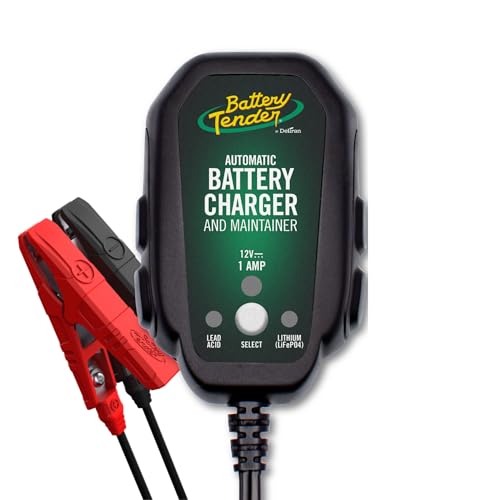
Battery Tender Junior 12V, 800mA Charger for Lead Acid and Lithium (022-0199-DL-WH)

Schumacher Electric 12V Lithium Jump Starter & Power Pack (SL1674)

NOCO GENIUS1 1A 6/12V Smart Battery Charger and Maintainer

NOCO GENIUS10 10A 6/12V Smart Battery Charger, Maintainer and Desulfator

NOCO GENIUS5 5A 6/12V Smart Battery Charger and Maintainer

NOCO GENPRO10X1 12V 10A 1-Bank OnBoard Marine Battery Charger

Schumacher Electric 1.5A 6V/12V Charger and Maintainer (SC1355)

Schumacher Electric SC1280 12V/6V Charger, Maintainer and Restorer

Schumacher Electric Wheeled 6/12V 250A Starter/Charger (SC1445)
The Picks, Examined More Closely
Motorcycles, ATVs, and lawn tractors tend to sit through long winters with their batteries slowly losing charge. The Battery Tender Junior 021-0123 is built for exactly that situation, and it’s the kind of unit most folks leave clipped to a battery indefinitely. At 750mA it isn’t going to jump a dead truck, but that’s not the point. The whole idea is to feed a slow, controlled charge and then hand off to a maintenance mode that keeps the battery topped up without cooking it.
What sets this model apart from a plain trickle charger is the four-step program: initialization, bulk charge, absorption, and float. The transition into float happens automatically once the battery is full, so leaving it connected all winter doesn’t risk boiling off electrolyte. For powersports batteries, which are often left in unheated garages, that hands-off behavior is the real selling point.
A Strong Showing
- Automatic four-stage charging with a true float mode that prevents overcharging on long-term storage.
- Compatible with flooded, AGM, and gel cell lead-acid batteries, covering most powersport applications.
- Compact, lightweight body that’s easy to mount on a workbench or stash in a toolbox.
- Includes ring terminals and alligator clips, so installation is flexible for permanent or temporary hookups.
Things To Consider
- 750mA output is too small for reviving a deeply discharged car battery in any reasonable time.
- No support for lithium chemistries, so newer LiFePO4 powersports batteries need a different charger.
- The LED indicator is binary rather than diagnostic, so you don’t get voltage or stage readouts.
Key Specs
Built With In Mind
Riders and weekend powersports owners who store bikes or ATVs seasonally and want a set-and-forget maintainer that just works all winter.
Look Elsewhere When
Anyone running lithium batteries should look at the Battery Tender Junior 12V, 800mA Charger for Lead Acid and Lithium, which adds switchable LiFePO4 support.
Garages that house a mix of older lead-acid gear and newer lithium-powered bikes have a real problem: most chargers only do one chemistry well. The Battery Tender Junior 022-0199-DL-WH solves that with a button that switches between lead-acid (AGM, flooded, gel) and lithium LiFePO4 (lithium iron phosphate) profiles. At 800mA it’s a touch stronger than the 750mA Junior I just covered, which is useful when you want faster recovery between rides.
The unit uses an ISM microcontroller to manage the charging curve, which sounds like marketing fluff but actually means the charger is watching the battery state and adjusting output rather than feeding a fixed voltage. For someone storing a classic motorcycle with a lead-acid battery next to a modern dirt bike with lithium, this dual-mode approach saves owning two separate maintainers.
Bright Spots
- Switchable chemistry support covers both traditional lead-acid and modern LiFePO4 batteries from one unit.
- Microprocessor-managed charging adapts output to battery condition rather than running a fixed voltage.
- 800mA output gives slightly faster recovery than the 750mA Junior for batteries that sit unused for weeks.
- Compact body fits in a crowded garage shelf or a saddlebag for race-day emergencies.
Points To Note
- You must remember to flip the chemistry switch manually, or you’ll feed the wrong charging profile.
- Still not powerful enough for automotive starting batteries or anything beyond small powersport use.
Whose Shelf It Belongs On
Mixed-fleet owners who ride both classic bikes and modern lithium-equipped machines and want a single charger for both without buying two units.
A Better Fit Elsewhere
Riders who only run lead-acid batteries and don’t need the lithium mode can save a few dollars on the simpler Battery Tender Junior 021-0123 instead.
Reconditioning is one thing, but sometimes you just need to get going right now. The Schumacher SL1674 is built for that moment, packing 1500 amps of lithium-powered jump-starting into a portable brick. Unlike the bench chargers above, this one lives in your trunk and gets pulled out when a battery is too dead to crank. It’s a four-in-one tool: jump starter, USB power bank, 10W wireless charging pad, and an LED flashlight.
The wireless charging pad is a small but welcome touch for road trips where you don’t want to fish for cables. For drivers who regularly deal with older vehicles or park a fleet in cold climates, having a jump box that also tops up a phone during a roadside wait makes the unit feel less like a single-purpose tool and more like a general emergency device.
The Good Stuff
- 1500A peak output handles most cars, trucks, and SUVs that won’t turn over in cold weather.
- Built-in wireless charging pad means fewer cables in the glove box during a roadside stop.
- Multi-mode LED flashlight covers signal, work light, and emergency flash patterns.
- USB-A and USB-C fast charging ports let it double as a power bank for phones and tablets.
Honest Caveats
- This is a jump starter, not a long-term reconditioning unit, so it won’t desulfate a battery over days.
- Lithium jump packs lose charge sitting in a hot trunk, so it needs topping off every few months.
Feature Snapshot
Made For
Daily commuters and road-trippers who want a grab-and-go emergency tool that handles a dead battery without waiting for a tow or a second vehicle.
Swap It Out When
Anyone wanting to actually recondition and restore sulfated batteries should reach for the NOCO GENIUS10 instead, which is built for long-term repair rather than one-shot jumps.
Some folks want a charger that handles 6V classic car batteries alongside modern 12V gear, without owning two units. The NOCO GENIUS1 covers both, plus lead-acid and lithium-ion chemistries up to 30 amp-hours (Ah). For small batteries, that’s the sweet spot: motorcycle batteries, lawn tractor cells, even older golf cart accessories. The unit is small enough to leave permanently mounted on a bench without hogging space.
Where it earns its place is versatility. NOCO markets the GENIUS1 as an all-in-one charging, maintenance, and restoration tool, and the desulfation mode runs a high-frequency pulse through the plates to break down sulfate buildup. For a battery that’s been sitting neglected for a season, that pulse cycle can recover usable capacity without requiring replacement.
The Value In It
- Supports both 6V and 12V batteries, covering vintage vehicles alongside modern equipment.
- Works with lead-acid (AGM, gel, flooded, deep-cycle) and lithium-ion LiFePO4 batteries in one unit.
- Pulsed desulfation mode helps recover capacity in batteries that have sat discharged for extended periods.
- Compact form factor stays out of the way on a crowded workbench or shelf.
Trade Offs
- 1A output is slow for larger automotive batteries that need a meaningful recovery charge.
- Best suited to batteries up to 30Ah, which excludes full-size car and truck starting batteries.
Quick Facts
Right Fit For
Collectors and tinkerers running a mix of vintage 6V cars and modern motorcycles who want a single compact charger that handles both battery types.
Reach For A Different Pick When
Anyone with full-size car or truck batteries should look at the NOCO GENIUS5 for the extra amperage those larger batteries need.
The NOCO GENIUS10 is where the GENIUS line shifts from hobbyist tool into serious restoration gear. At 10 amps it can push meaningful current into batteries up to 230 amp-hours, which covers everything from cars and trucks to deep-cycle marine and RV banks. Compared to the GENIUS1 I just covered, this is the unit for batteries that have actually been neglected and need a real recovery cycle rather than gentle maintenance.
The “desulfator” label in the spec line isn’t just a buzzword. The unit runs a high-frequency pulse profile designed to break down lead sulfate crystals that build up on plates during long storage. Combined with overcharge protection, temperature compensation (adjusting output based on ambient heat or cold), and a force mode for bringing batteries back from near-zero voltage, this is the most capable reconditioning unit in the NOCO consumer line.
Reasons It Performs
- 10A output handles large automotive, marine, and deep-cycle batteries up to 230Ah.
- Dedicated desulfation mode targets the sulfate buildup that kills stored batteries.
- Force mode revives batteries that have dropped too low for normal charging to begin.
- Temperature compensation adjusts output for hot engine bays and freezing garages alike.
A Few Limitations
- The unit runs warm during extended high-current sessions, so it needs airflow around the case.
- Higher cost than the smaller GENIUS1 and GENIUS5, which may be hard to justify for small batteries.
Feature Card
Best Suited To
Garage owners and hobbyists with neglected automotive or deep-cycle batteries who want a serious restoration tool rather than a gentle maintainer.
Consider Something Else When
For smaller batteries or simple seasonal maintenance, the NOCO GENIUS5 delivers much of the same technology at a lower output rating.
Slotted between the GENIUS1 and the GENIUS10, the NOCO GENIUS5 sits in the practical middle for daily drivers and small fleet owners. At 5 amps it handles batteries up to 120 amp-hours, which is the size range for most passenger vehicles and light trucks. The unit covers 6V and 12V systems plus lead-acid and lithium LiFePO4 chemistries, which makes it a true generalist.
The smart charging profile follows the same pattern as the larger GENIUS10: it monitors voltage and adjusts output through bulk, absorption, and float stages. For someone who wants NOCO’s reconditioning technology without paying for the heaviest output, this is often the sweet spot. It also supports the brand’s temperature compensation feature, which adjusts voltage based on ambient temperature to prevent overcharging in summer heat and undercharging in winter cold.
Points In Its Favor
- 5A output is a strong fit for most daily-driver batteries without paying for heavy-duty amperage.
- Multi-stage charging with desulfation mode extends the life of stored or lightly used batteries.
- Works on 6V and 12V lead-acid and lithium chemistries for cross-fleet flexibility.
- Temperature compensation prevents overcharging in summer and undercharging in winter.
Some Limits To Know
- Slower recovery than the GENIUS10 for batteries above 120Ah.
- Force mode is less aggressive than the larger unit, so deeply dead batteries may need multiple cycles.
Who Will Love This
Daily drivers and small-fleet owners who want a single charger for mixed cars and trucks without paying for workshop-level amperage.
Where Another Pick Suits Better
Boaters and marine users should look at the NOCO GENPRO10X1, which is waterproof and built for permanent on-board mounting.
Marine environments are rough on chargers. Salt spray, vibration, and humidity kill ordinary units within a season, which is why the NOCO GENPRO10X1 is fully sealed and rated for on-board mounting. This is the kind of charger you bolt permanently into a boat or trailer, wire to a single 12V battery bank, and forget about until the off-season.
Unlike the portable NOCO units I’ve covered, the GENPRO10X1 is a single-bank design, meaning it serves one battery at a time at 10 amps. For boats with a single house battery, that’s perfect. Multi-battery setups need a higher-bank model. The fully sealed waterproof housing means you don’t have to baby it during wash-downs or worry about bilge humidity.
What Earns Its Place
- Fully sealed, waterproof housing stands up to bilge humidity and on-deck wash-downs.
- 10A output handles typical 12V marine house banks with room for meaningful recovery cycles.
- On-board mounting means it’s permanently wired and always ready when the boat comes off the lift.
- Compatible with flooded, AGM, gel, and LiFePO4 batteries found across modern marine applications.
Potential Drawbacks
- Single-bank design only serves one battery, so dual-battery boats need a different model.
- Installation requires basic 12V wiring knowledge or a marine electrician for first-timers.
At A Glance
Perfect Match For
Boat and trailer owners who want a permanently mounted, weatherproof charger that handles a single 12V battery without taking up cabin space.
Not Your Match When
Drivers needing a portable charger for a garage should look at the NOCO GENIUS10, which offers similar output in a portable form factor.
Not every shop needs 10 amps of reconditioning muscle. For seasonal vehicles sitting in a shed through the off-season, the Schumacher SC1355 keeps things simple: 1.5 amps of charging power, multi-voltage support, and a reconditioning mode that helps shake loose light sulfation. The 3-in-1 design covers charging, maintaining, and desulfating in one small brick.
The 1.5A output is best read as a slow-maintenance unit. Drop it on a stored lawn tractor battery in October and let it hum along through April. It won’t resurrect a deeply dead battery in a weekend, but for vehicles that simply need to maintain a healthy state of charge through dormancy, that gentle approach is exactly right.
What Pays Off
- Low 1.5A output is gentle on small batteries and safe for long-term connection without monitoring.
- Supports 6V and 12V systems, covering classic car owners alongside modern equipment users.
- Reconditioning mode addresses mild sulfation that builds during seasonal storage.
- Simple interface keeps first-time users from guessing which mode to select.
Possible Compromises
- 1.5A is too slow for meaningful recovery on deeply discharged automotive batteries.
- No lithium chemistry support, which excludes newer LiFePO4 batteries.
Who Should Grab It
Owners of stored lawn tractors, motorcycles, and classic cars who want a low-maintenance trickle charger with light reconditioning for seasonal storage.
Skip It When
Drivers who need active recovery from a dead battery should reach for the Schumacher SC1280 instead, which provides more amperage and a full restoration mode.
The Schumacher SC1280 brings 15 amps of microprocessor-controlled charging plus a dedicated restoration mode that pushes high-frequency pulses through sulfated batteries. The 4-in-1 design handles charging, maintaining, testing, and restoring in one unit, which makes it a strong fit for shops that see a mix of automotive and marine batteries. It supports standard, AGM, gel, and deep-cycle batteries.
For someone running a small repair business or maintaining multiple vehicles, the SC1280 fills a useful middle ground. It has more muscle than the SC1355 I just covered but doesn’t take up the wheeled footprint of the SC1445. Owners commonly report the auto-detect voltage feature simplifying operation, especially when moving between cars and marine applications.
What Makes Sense
- Microprocessor-controlled charging adjusts output based on detected battery condition.
- Restoration mode targets sulfation on batteries that have lost capacity from neglect.
- 15A output handles full-size automotive and marine batteries in reasonable timeframes.
- Multi-chemistry support covers standard, AGM, gel, and deep-cycle battery types.
Things To Weigh
- Bench-form-factor unit isn’t designed for permanent mounting like the marine GENPRO10X1.
- Lacks lithium LiFePO4 support, so newer lithium batteries need a different charger.
Made For
Small shop owners and multi-vehicle households that need a single bench unit covering both automotive and marine batteries across chemistries.
Consider Something Else When
For permanent marine installation, the waterproof NOCO GENPRO10X1 is purpose-built for boats where humidity and spray are daily realities.
The Schumacher SC1445 is a different animal than anything else on this list. Where the other units are bench or maintainer-class tools, this one rolls on wheels and delivers 250 amps of engine-starting current. It’s built for garages that need to crank stubborn engines in addition to recharging batteries. The 2-in-1 design pairs a manual 10A charger with that hefty engine-starting output.
The wheeled form factor matters in a working shop. You wheel it to the car, attach the clamps, and crank. For home mechanics dealing with classic cars that have been parked for months, or small repair operations, the SC1445 fills a real niche. Trade-off: it’s a manual charger rather than fully automatic, so the operator needs to monitor the charge and stop it at the right point.
Practical Advantages
- 250A engine-starting capability cranks stubborn vehicles without needing a second car.
- Wheeled chassis makes it easy to roll around a busy garage or shop floor.
- 6V and 12V compatibility covers vintage vehicles alongside modern equipment.
- Durable clamp-and-cable setup handles repeated heavy-current use in working environments.
Practical Considerations
- Manual operation requires monitoring voltage rather than relying on automatic shutoff.
- Bulky size and weight make it unsuitable for household storage or portable use.
Who It Suits Best
Garage mechanics and home shop owners who regularly start dormant engines and want rolling muscle rather than a maintainer-grade bench unit.
Reach For A Different Pick When
Household users wanting automatic, set-and-forget maintenance should reach for the Schumacher SC1355 or SC1280 instead, which don’t require manual monitoring.
What To Know Before Choosing a Reconditioning Charger
Pick a charger based on the battery you actually own, not the biggest number on the spec sheet. A motorcycle battery and a deep-cycle marine bank have wildly different needs, and matching the charger’s output range to your battery’s amp-hour rating matters more than peak amperage.
Output Current and Battery Capacity
The charger’s amp output controls how fast energy moves into the battery, but pushing too much current into a small battery risks overheating and plate warping. General guidance: 1A to 2A suits motorcycle and lawn tractor batteries under 30Ah, 5A handles most daily drivers and small fleets in the 50 to 120Ah range, and 10A or higher is right for full-size trucks, marine banks, and deep-cycle setups above 120Ah.
Chemistry Compatibility
Lead-acid, AGM (absorbent glass mat), gel, and lithium LiFePO4 (lithium iron phosphate) batteries all want slightly different charging profiles. Lithium in particular needs a charger with a dedicated LiFePO4 mode. Using a lead-acid profile on a lithium battery can damage the cells, so check the chemistry switch before connecting.
Reconditioning and Desulfation Features
Sulfation (the buildup of lead sulfate crystals on battery plates) is the leading cause of stored-battery failure. Chargers with a desulfation mode send high-frequency pulses through the battery to break down those crystals and restore usable capacity. The longer the pulse cycle, the better the recovery, so look for units that run this mode automatically rather than as a manual step.
Permanent Mount vs Portable
Marine and trailer users often want a permanently mounted, waterproof charger like the NOCO GENPRO10X1 that stays wired to the battery year-round. Household users typically prefer portable units that move between vehicles. The choice depends on whether the battery lives in a fixed location or moves with you.
Key Considerations Across These Picks
Common Shopping Slip Ups
The most common mistake is grabbing the highest-amperage charger on the shelf, assuming more is better. Too much current into a small motorcycle battery can warp plates and shorten life. The other frequent error is ignoring chemistry. Lead-acid chargers used on lithium batteries cause permanent damage, and lithium chargers used on lead-acid batteries undercharge them. Match the unit to the chemistry you actually run, and check the chemistry switch each time you reconnect.
What The Higher Tier Buys
Spending up on a 10A unit like the NOCO GENIUS10 or the Schumacher SC1280 gets you faster recovery, more sophisticated desulfation cycles, and broader battery-size coverage. The extra cost covers internal components like larger transformers and better temperature sensors. For users with a single small motorcycle battery, the premium tier is overkill. For shops, fleet owners, or anyone restoring neglected batteries, the higher output and smarter reconditioning cycles pay back quickly in batteries that don’t need replacing.
Frequently Asked Questions
Do battery reconditioning chargers actually work?
Yes, on sulfated lead-acid batteries that still hold some charge. The high-frequency pulses break down sulfate crystals on the plates and restore usable capacity. Batteries with physically damaged plates or completely dead cells won’t recover.
How long does the reconditioning process take?
A full desulfation cycle typically runs 8 to 24 hours, depending on the charger’s pulse frequency and the battery’s level of sulfation. Severely neglected batteries may need several cycles over multiple days to see meaningful improvement.
Can I leave a reconditioning charger connected indefinitely?
Modern smart chargers switch to a float or maintenance mode once the battery reaches full charge, which makes long-term connection safe. Older trickle chargers without automatic shutoff should not be left connected for weeks, since they can boil off electrolyte over time.
Will reconditioning revive a battery that won’t hold any charge?
Sometimes, especially if the issue is surface sulfation rather than internal damage. Batteries with very low voltage (below 10V on a 12V unit) may need a force mode to begin accepting charge. If the battery refuses to hold charge after multiple cycles, replacement is usually the realistic path.
Are lithium-compatible chargers safe for lead-acid batteries?
Only when set to the correct chemistry profile. Lithium profiles use different voltage targets than lead-acid, so running a lithium battery on a lead-acid setting undercharges it, and vice versa. Most dual-chemistry chargers require a manual switch between modes.
Final Verdict
The right reconditioning charger depends less on output and more on matching the unit to your battery size, chemistry, and storage habits. Light seasonal maintenance calls for a gentle 750mA to 1.5A maintainer. Restoration work on neglected automotive or marine batteries benefits from a 5A to 10A smart charger with desulfation mode. Permanent marine installations demand a sealed, waterproof unit. Pick the tool that fits the battery you actually own, and you’ll extend its life well beyond the day most people would scrap it.
