

A dead battery always picks the worst moment to interrupt a routine, whether it’s a motorcycle parked for the winter, a boat on a lift, or a daily driver that only sees short trips. I put together this shortlist for people who want to keep stored vehicles topped up, recover neglected batteries, or carry a serious rescue tool for roadside emergencies. The mix here covers gentle trickle maintainers, multi-stage smart chargers, and a wheeled workshop unit, so there’s a sensible match for nearly every storage scenario.
How The Shortlist Stacks Up

Battery Tender Junior 12V 750mA Charger and Maintainer for Motorcycle, ATVs
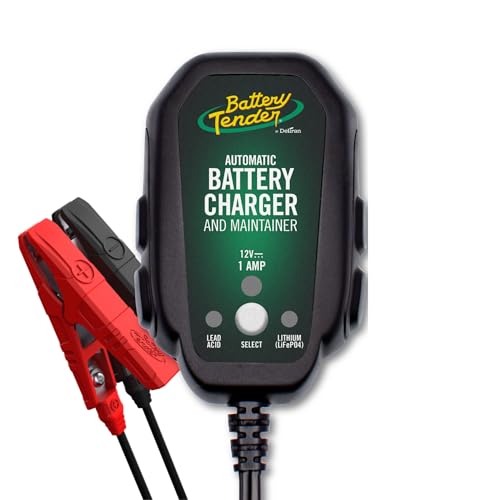
Battery Tender Junior 12V 800mA Battery Charger for Lead Acid and Lithium

NOCO GC008 X-Connect M10 XL Eyelet Terminal Accessory

Schumacher Electric 12V Lithium Jump Starter and Power Pack 1500A SL1674

NOCO GENIUS1 1A 6/12V Smart Battery Charger and Maintainer

NOCO GENIUS10 10A 6/12V Smart Battery Charger and Maintainer

NOCO GENIUS5 5A 6/12V Smart Battery Charger and Maintainer

Schumacher Electric 1.5A 6V/12V Car Battery Charger and Maintainer SC1355

Schumacher Electric SC1280 12V/6V Trickle Charger and Maintainer

Schumacher Electric Wheeled 6/12V 250A Car Battery Starter and Charger SC1445
What Each Pick Brings To The Table
The 750mA Battery Tender Junior has earned its reputation in powersports garages for one simple reason: it does the slow, gentle thing well. Owners of motorcycles, ATVs, and lawn tractors who tuck vehicles away for months often wire this in, button up the shed, and forget about it. Unlike the Schumacher SL1674 down the list, which is built for jump-starting emergencies, this unit is meant to sit on a battery for weeks without overcooking it.
Compatibility with flooded, AGM (absorbed glass mat, a sealed lead-acid design), and gel cell batteries makes it a flexible match for the most common 12V powersports setups on the road. The four-step charging program (initialization, bulk charge, absorption, and float mode) means it tops the battery up, then drops to a maintenance voltage. Float mode is the “rest” stage that holds a full charge without pumping in extra current, which matters for batteries that sit idle.
The Upside
- Long-term float mode protects stored batteries from sulfation (the buildup of lead sulfate crystals that slowly strangles capacity)
- Works across flooded, AGM, and gel cell chemistries, so one unit covers a typical powersports lineup
- Low 750mA output means it can be left connected without cooking small batteries
- Compact body fits inside a saddlebag or toolbox between rides
Things To Consider
- Not designed for jump-starting, so it’s the wrong tool for a roadside emergency
- 750mA is slow on larger car batteries; owners commonly report overnight runs for a full top-off
Who It Suits Best
Riders and powersports owners storing a single vehicle for winter benefit most, especially anyone who wants a “set it and forget it” maintainer that won’t overcharge a small battery.
Look Elsewhere When
Riders also running a lithium bike should consider the Battery Tender Junior 800mA Switchable unit instead, since it explicitly handles LiFePO4 (lithium iron phosphate) chemistries.
The 800mA switchable Junior is the chemistry-flexible sibling of the previous pick. A button on the housing lets the user toggle between lead-acid (AGM, flooded, or gel) and lithium (LiFePO4), which removes a real headache for anyone juggling both battery types in the same garage. Compared to the 750mA model above, this one nudges output up slightly and adds lithium compatibility in the same compact body.
For a household with a classic car on AGM and a modern motorcycle on lithium, the switchable design means one charger can move between vehicles without buying two separate units. The internal ISM microcontroller (a tiny chip that monitors voltage and adjusts charging behavior in real time) manages the charging curve so the unit doesn’t push the wrong algorithm into the wrong chemistry. That matters because lithium batteries want a different voltage profile than lead-acid, and forcing one onto the other shortens lifespan.
Strong Points
- Single-button chemistry switching simplifies ownership across mixed battery types
- LiFePO4 support opens the door to newer lithium powersports batteries
- Same gentle float behavior as the proven 750mA model
- Still small enough to leave permanently mounted on a project bike
Points To Note
- Slightly higher cost than the lead-acid-only Junior
- Still slow on full-sized automotive batteries; not a substitute for a high-output shop charger
Best Match For
Multi-vehicle owners with at least one lithium battery in the mix get the most out of this, since it removes the need to track which charger belongs to which chemistry.
Where Another Pick Suits Better
Anyone working on cars and trucks in a home shop will get faster results from the NOCO GENIUS10, which delivers far more amperage for big batteries.
The GC008 isn’t a charger on its own; it’s a permanent accessory for owners who already run a compatible NOCO Genius smart charger. The XL eyelet terminals bolt onto a battery’s posts, and the lie-flat design keeps the cable close to the battery housing so the install looks tidy under a hood or seat. For someone maintaining a fleet, the eyelets make plugging in as easy as dropping a connector onto a magnetic puck.
Compatibility spans the older G-series chargers (G750 through G7200, plus G4) and the newer GENIUS lineup (GENIUS1 through GENIUS10), so most people who own a NOCO already have the charger this accessory pairs with. The M10 hole size fits larger terminal bolts common on automotive and marine batteries. One thing to keep in mind: this accessory isn’t compatible with NOCO Boost or Boost X jump starters, so it lives strictly in the charger ecosystem.
The Value In It
- One permanent install turns battery charging into a snap-on operation
- Lie-flat cable routing reduces snag points in tight engine bays
- Broad compatibility across NOCO’s smart charger lineup protects past purchases
Room For Improvement
- Useless without a compatible NOCO charger already in the toolbox
- Not compatible with NOCO Boost or Boost X jump starters, so it can’t double as a roadside quick-disconnect
Right Fit For
Owners with multiple vehicles on NOCO chargers who want a clean, permanent hookup in each bay benefit most from adding this accessory.
Swap It Out When
Shop owners running Schumacher gear should look at the Schumacher SC1280 instead, since mixing brands means duplicated eyelet installs.
The SL1674 sits in a different category than everything else on this list. It’s a portable lithium jump starter and power bank rather than a wall-plug maintainer, aimed at people who want one tool that handles a dead battery on the roadside and also tops up phones. The 1500A peak output is the kind of headroom that can spin a stubborn V8 on a cold morning.
Beyond jump-starting, the unit packs a 10W wireless charging pad, USB-A and USB-C fast charging ports, and a multi-mode LED flashlight. That makes it a credible emergency kit anchor for camping, road trips, or long commutes through remote areas. The trade-off compared to the maintainer-style picks above is that the SL1674 doesn’t replace a wall charger; it complements one. Owners commonly pair it with a maintainer like the NOCO GENIUS5 for the garage, then toss the SL1674 in the trunk.
Useful Highlights
- 1500A peak jump-starting handles most passenger vehicles and light trucks
- 10W wireless charging plus USB-A and USB-C ports cover phones and tablets
- Multi-mode LED flashlight adds an extra layer of emergency utility
- Lithium chemistry keeps the whole package light enough for a glove box
Some Limits To Know
- Not a long-term maintainer; battery self-discharges when stored, so periodic top-ups are part of ownership
- Lithium jump packs lose capacity in extreme cold, which matters for winter drivers in northern climates
Built With In Mind
Drivers who want a single trunk-friendly tool that jumps a battery, charges devices, and lights up a campsite benefit most from this design.
Skip It When
Owners focused purely on garage storage should reach for the Battery Tender Junior 750mA, since it costs less and handles long-term float charging more gracefully.
The GENIUS1 is NOCO’s smallest entry in the smart charger family, and it leans into the brand’s “do everything small” approach. At 1A, it isn’t going to wake up a deeply discharged battery in a hurry, but it’s a tidy match for motorcycles, lawn tractors, and small engines that mostly sit between uses. Compared to the older G750 it replaced, the GENIUS1 is reportedly 35% smaller, which sounds modest until you see the old unit next to it on a workbench.
Compatibility stretches from 6V and 12V lead-acid (AGM, gel, flooded, deep-cycle) all the way to lithium-ion (LiFePO4) batteries up to 30 amp-hours. That chemistry breadth makes it a credible backup for the small end of a household fleet, especially since most maintainers skip 6V. Deep-cycle support also means it can handle batteries that get drained and refilled regularly, like those in golf carts or small trolling motors.
Practical Pluses
- Handles both 6V and 12V systems, useful for vintage vehicles and modern gear alike
- Supports deep-cycle and lithium-ion in addition to standard flooded and AGM
- Smallest footprint in the GENIUS lineup, easy to stash on a shelf
- Smart charging logic recovers batteries as low as 1V, which is helpful for neglected storage
Points To Note
- 1A output is slow on anything beyond a small battery
- 30Ah ceiling means it isn’t a real fit for large automotive or marine banks
Right Fit For
Owners maintaining motorcycles, ATVs, or classic 6V vehicles benefit most, especially anyone with limited shelf space in a small garage.
Skip It When
Daily drivers and larger batteries are a better match for the NOCO GENIUS5 or GENIUS10, both of which move more amperage.
The GENIUS10 is the top of NOCO’s consumer smart-charger stack, and the spec sheet is what you’d expect at that level. 10A of output covers cars, trucks, SUVs, boats, and even some light equipment without the long waits of smaller maintainers. NOCO positions it as the successor to the older G7200, claiming more power in a smaller package, which matters for shop carts where bench space disappears fast.
Beyond raw amperage, the GENIUS10 adds features the smaller GENIUS1 and GENIUS5 don’t emphasize: overcharge protection, a desulfator mode (a pulse routine that can break down sulfate crystal buildup on older batteries), temperature compensation (the charger adjusts voltage based on ambient temperature to avoid overcharging in heat or undercharging in cold), and a “Force Mode” for reviving deeply discharged batteries that have dropped below the normal operating range. Compatibility covers 6V and 12V lead-acid (wet, gel, AGM) plus lithium (LiFePO4) up to 230Ah, which is well into automotive territory.
A Few Strong Suits
- 10A output shortens recovery time on large automotive and marine batteries
- Desulfator mode can coax extra life out of older batteries that haven’t been maintained
- Temperature compensation adapts voltage to garage conditions, which protects batteries in unheated shops
- Force Mode revives batteries that have dropped too low for normal chargers to recognize
Honest Caveats
- Higher amperage means more heat under heavy load; owners commonly report warm housings during long charging sessions
- Larger body and heavier gauge cables reduce portability compared to the GENIUS1
Who Should Grab It
Shops and serious DIYers juggling everything from powersports to large marine banks get the most from the GENIUS10’s higher output and recovery modes.
Reach For A Different Pick When
Anyone focused only on a small motorcycle battery should save space and money with the GENIUS1, which handles that workload without the extra bulk.
The GENIUS5 is the middle child of NOCO’s lineup, and for most households it lands in the sweet spot. At 5A, it handles cars, trucks, and SUVs without the marathon charging times of the 1A GENIUS1. NOCO markets it as the successor to the older G3500, with claims of more power in a smaller housing, which is a real win when the charger lives on a crowded workbench.
Chemistry support is the same broad family the rest of the GENIUS line offers: 6V and 12V lead-acid (AGM, gel, flooded, deep-cycle) plus lithium-ion (LiFePO4), all the way up to 120Ah. For a daily driver or weekend project car, that ceiling covers the bulk of batteries on the road. The 5A output also keeps charging times reasonable on moderately discharged batteries without the heat and weight of the 10A GENIUS10.
Everyday Wins
- 5A output strikes a practical balance between charging speed and heat
- 120Ah ceiling covers most passenger and light-truck batteries
- Same multi-chemistry support as the larger GENIUS10, minus the extra amperage
- Compact body is easier to mount or stash than the GENIUS10
Trade Offs
- Slower recovery than the GENIUS10 on deeply discharged large batteries
- No dedicated Force Mode equivalent of the higher-output unit for extreme low-voltage recovery
Right Fit For
Daily drivers and household fleets with a mix of cars and powersports vehicles benefit most from the GENIUS5’s middle-ground output.
A Better Fit Elsewhere
Shops and serious hobbyists running larger marine or RV banks should consider the Schumacher SC1445 wheeled unit instead, which trades precision for raw cranking power.
The SC1355 is a plug-and-forget maintainer aimed at people who don’t want to think about charging curves. The 1.5A output is gentle enough for storage duty on cars, motorcycles, ATVs, trucks, SUVs, and boats, and the unit advertises a 3-in-1 charging, maintaining, and reconditioning role. For someone storing a daily driver through a long deployment or a snowbird absence, that’s a reasonable promise in a small package.
Compared to the NOCO GENIUS1 earlier in this list, the SC1355 trades a smaller footprint for a slightly higher output and Schumacher’s reconditioning mode. Where it falls short is chemistry breadth; this unit focuses on standard, AGM, and deep-cycle batteries rather than lithium-ion. Owners with lithium setups should look elsewhere, since LiFePO4 wants different voltage handling than what this maintainer provides.
The Helpful Details
- 1.5A output handles small and mid-size batteries without long charge times
- 3-in-1 design covers charging, maintaining, and reconditioning in one unit
- Compatible with 6V and 12V systems, including classic cars
- Simple controls make it approachable for first-time owners
Less Ideal Details
- No lithium-ion support, so it’s the wrong tool for LiFePO4 batteries
- 1.5A is too slow for recovering a deeply discharged large battery in any reasonable time
Best Match For
First-time owners and casual users who want a low-fuss maintainer for a stored car or boat benefit most from the SC1355’s straightforward design.
Where A Sibling Pick Shines
Anyone maintaining a lithium-powered modern vehicle should reach for the Battery Tender Junior 800mA Switchable, since it explicitly covers LiFePO4 chemistry.
The SC1280 sits a notch above the SC1355 and is built for drivers who expect the charger to do real work, not just hold a topped-off battery. The 15A peak and 3A trickle rating make it a credible tool for reviving neglected auto and marine batteries before settling into maintenance mode. For owners of boats, classic trucks, or daily drivers that sit for long stretches, that combination is genuinely useful.
Coverage extends to AGM, gel, and deep-cycle batteries across 6V and 12V systems, which covers most consumer vehicles without stepping into lithium territory. The microprocessor-controlled charging adjusts output based on the battery’s condition, and a built-in desulfator routine aims to recover capacity that has slipped from underused batteries. Compared to the NOCO GENIUS5 earlier in this list, the SC1280 leans harder toward recovery than precision monitoring.
What Works In Its Favor
- 15A charging handles neglected batteries faster than 1A to 5A maintainers
- 3A trickle mode keeps topped-off batteries healthy during long storage
- Microprocessor control adapts to battery condition without manual switching
- AGM, gel, and deep-cycle support covers auto and marine use cases
Worth Bearing In Mind
- No lithium-ion support, which limits future-proofing for LiFePO4 upgrades
- Larger and heavier than the GENIUS5, with cables that may need careful routing in a small shop
Whose Shelf It Belongs On
DIYers who store classic cars, marine batteries, or seasonal vehicles benefit most, especially anyone who has dealt with a battery that died over a long winter.
Not Your Match When
Daily commuters with a single modern lithium-compatible car should look at the NOCO GENIUS10, which adds LiFePO4 support and a more compact housing.
The SC1445 is a different animal from the rest of this list. It’s a wheeled, garage-grade starter and charger that pairs a 250A engine start with a 10A charging output, built for shops and serious home mechanics. The cart-style design rolls around the bay rather than living on a shelf, and the heavy gauge leads feel like the tools you’d expect in a working garage.
For owners who service multiple vehicles or own a diesel truck that needs real cranking amps, this is the kind of tool that earns its space over time. Unlike the NOCO GENIUS10, the SC1445 is manual rather than fully automatic, so the user has more direct control over the charging cycle. The trade-off is bulk and weight, which makes it impractical for trunk storage or quick roadside use. The SL1674 jump pack earlier in this list handles that side of the equation far better.
Positive Takeaways
- 250A engine start handles stubborn engines and light diesels
- 10A charging output covers routine battery recovery in the bay
- Wheeled frame moves easily between vehicles in a shop setting
- Manual controls give experienced users direct command over charging stages
Practical Considerations
- Bulky and heavy; not realistic for apartment dwellers or small home garages
- Manual operation means less “set and forget” convenience than smart chargers in this list
Perfect Match For
Home mechanics, small shops, and fleet owners with the floor space for a wheeled unit benefit most from the SC1445’s combination of cranking power and charging output.
Where Another Pick Suits Better
Anyone without dedicated shop space should pick the NOCO GENIUS10, which delivers smart charging in a much smaller housing.
What To Weigh Before Picking a Charger
The first thing to match is chemistry. Lead-acid flooded batteries are forgiving and cheap, AGM batteries handle vibration better and prefer slightly different voltage targets, gel cells are sensitive to overcharge, and lithium iron phosphate (LiFePO4) batteries need their own charging profile entirely. A unit that handles only one chemistry is fine for a single-vehicle owner, but anyone with mixed equipment should look at switchable units like the Battery Tender Junior 800mA or the NOCO GENIUS5.
Output amperage is the second big lever. A 1A trickle maintainer is built for storage, not recovery, so deeply discharged batteries can take days to come back. For owners who occasionally let a battery sit too long, a 5A to 10A smart charger cuts recovery time dramatically. Heavy-duty users with large banks or diesel trucks should consider wheeled shop units for the cranking amps they provide.
Use case matters too. A motorcycle or lawn tractor on tender duty in a quiet garage doesn’t need much more than a compact maintainer. A daily driver in a cold climate benefits from temperature compensation, which adjusts voltage based on ambient conditions. Roadside emergencies call for a portable jump pack with USB charging rather than a wall-bound charger, since the tool needs to live in the trunk, not on a workbench.
Key Considerations Across These Picks
Common Shopping Slip Ups
The most frequent mistake is grabbing a charger that’s the wrong chemistry, particularly picking up a lead-acid-only unit for a lithium battery. Lithium iron phosphate batteries want a specific voltage ceiling, and a charger designed for flooded or AGM will eventually shorten their lifespan. The second slip is underestimating amperage, since a 1A trickle maintainer sounds sufficient but can take a full day or more to recover a deeply discharged battery. Owners should also think about cable length and storage placement before buying, since a charger that can’t reach the battery without an extension cord tends to live in a box instead of on the vehicle.
Where The Extra Money Goes
Higher-tier models like the NOCO GENIUS10 add features that aren’t strictly necessary for casual maintainer duty but pay off in edge cases. Desulfator modes can recover capacity from older batteries that haven’t been maintained, which is the difference between replacing a battery and squeezing another year out of it. Temperature compensation protects batteries stored in unconditioned garages, which matters in climates with extreme heat or cold. Force Mode handles batteries that have dropped so low they don’t trigger a normal charger’s detection circuit, and that recovery capability alone can save a battery that would otherwise be scrap.
