

Battery cables are easy to overlook until something fails. A corroded lug, an undersized gauge, or a too-short run can turn a routine weekend project into a troubleshooting session. I put together this roundup for DIYers wiring a boat, off-grid solar builders, car audio installers, and anyone replacing tired factory leads with something more dependable.
Gauge, strand count, lug material, and insulation all matter more than brand hype. Tinned copper resists corrosion in salty air, while bare copper stays flexible and conductive. Marine-rated PVC shrugs off oil and fuel. The picks below cover common lengths and gauges so you can match cable to the job without overbuying.
The Main Contenders

End Game 6 Gauge Marine Battery Cables 3ft 3/8″ Lugs
WotyWire 1/0 Gauge Heavy Duty Battery Cable 5FT Pair

WotyWire 1/0 Gauge Heavy Duty Battery Cable 10FT Pair

WotyWire 2 Gauge Heavy Duty Battery Cable 10FT Pair

WotyWire 2 Gauge Heavy Duty Battery Cable 15FT Pair
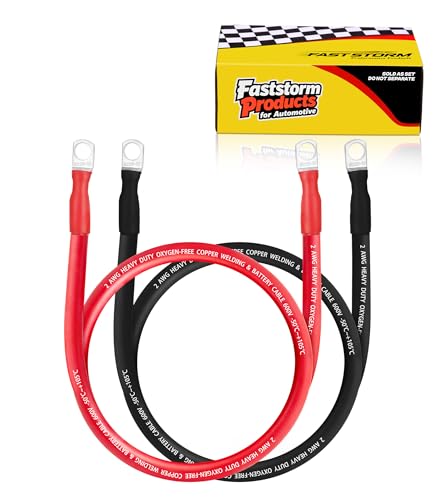
FASTSTORM 2 AWG Inverter Cables 2FT Pair 3/8″ Lugs
FASTSTORM 2 AWG Inverter Cables 3FT Pair 3/8″ Lugs

KnuKonceptz Kolossus Flex 1/0 OFC Power Cable 10ft Red

Nilight 6 AWG Battery Cables 1FT Pair 5/16″ Lugs

FASTSTORM 2 AWG Cable 10ft Pair with Lug Kit and Heat Shrink
A Closer Look At Each Pick
When the job involves saltwater spray and a bilge that never quite dries out, ordinary automotive cable tends to give up early. The End Game 6 Gauge Marine Battery Cables arrive fully assembled with sealed tinned copper lugs on each end, so there’s no soldering or crimping required before the install. PVC insulation rated for oil and fuel contact helps the jacket hold up where engine rooms get messy.
ABYC (American Boat and Yacht Council) alignment and USCG approval make these a straightforward pick for boat owners who want paperwork-friendly parts. I find them useful for switch-to-starter jumps where the run is short and the environment is unforgiving. Compared with the bare-copper options lower in this list, the tinned construction here trades a touch of conductivity for corrosion resistance, which matters more on a mooring than under a hood.
Features That Help
- Tinned copper conductor resists oxidation in humid, salty conditions
- Sealed heavy-duty lugs arrive pre-crimped for a faster install
- PVC jacket shrugs off oil, fuel, and engine bay heat
- 3/8″ and 5/16″ ring sizes fit common battery posts and starter terminals
- USCG and ABYC alignment gives marine surveyors less to question
Honest Caveats
- 3ft may be too short for stern-to-bow runs on larger boats
- Tinned cable tends to cost more per foot than bare copper of equal gauge
Built With In Mind
Boat owners and marine electricians who need short, sealed runs between battery, switch, and starter in a corrosive environment.
Skip It When
You need a long inverter cable for a van build, where the WotyWire 1/0 Gauge Heavy Duty Battery Cable 10FT Pair offers more reach at lower gauge cost.
Big amps need big cable, and 1/0 AWG (American Wire Gauge, where lower numbers mean thicker wire) is the threshold where most high-output car audio and inverter setups start to breathe. The WotyWire 1/0 Gauge Heavy Duty Battery Cable uses oxygen-free annealed copper (OFC), a conductor prized for low resistance and flexibility. The fine 0.2mm strand count helps the cable bend around tight trunk corners without kinking.
Owners commonly report that the jacket handles engine bay heat without going brittle, and the 5-foot length suits compact installs where the battery sits close to the amp rack or inverter. The End Game cable above is sealed for marine use; this WotyWire pair is a better match for dry, indoor-style installs where flexibility and conductivity matter more than saltwater resistance.
Practical Pluses
- 1703 fine strands make routing through firewalls and trunk grommets easier
- OFC conductor keeps voltage drop modest on shorter runs
- 1/0 gauge handles high-current demands from inverters and amplifiers
- Annealed copper resists work-hardening after repeated bends
Trade Offs
- Bare copper strands can oxidize if exposed to moisture over time
- 5ft may leave little slack for vehicles with batteries mounted far from the load
Right Fit For
Car audio enthusiasts and van builders running mid-power inverters who want a flexible, high-conductivity cable in a short length.
A Better Fit Elsewhere
Boat owners should reach for the End Game 6 Gauge Marine Battery Cables 3ft instead, since tinned copper handles the wet environment better.
Doubling the length to 10 feet per leg changes where this cable makes sense. Longer trucks, dual-battery setups under the bed, and overland rigs with rear-mounted accessory panels all benefit from the extra reach. The conductor is the same 1703-strand OFC build as the 5ft sibling above, so flexibility stays high despite the larger cable.
Voltage drop becomes more visible at 1/0 over long distances, so owners with massive amp racks sometimes pair this with a 250-amp fuse block near the battery. Compared with the FASTSTORM 2 AWG pair, this is the better choice when current demand exceeds what 2-gauge can safely carry.
What Stands Out
- 10ft per leg covers full-cab and chassis-to-cab routing without splicing
- Same fine-strand OFC conductor for easier pulling through tight spaces
- Handles high-current inverters and dual-battery isolator wiring
- Annealed copper resists fatigue at bend points
- Useful for solar battery banks where batteries sit away from the charge controller
Worth Bearing In Mind
- At 10ft, voltage drop becomes more noticeable on very high-amperage loads
- Heavier gauge means stiffer cable that needs careful clamping to prevent chafe
Who Should Grab It
Overlanders and dual-battery van owners who need a long, flexible 1/0 run between chassis and rear-mounted equipment.
Reach For A Different Pick When
Compact installs with the battery close to the load are better served by the shorter WotyWire 1/0 Gauge Heavy Duty Battery Cable 5FT Pair.
Two-gauge wire sits in a comfortable middle spot. It’s thick enough for mid-sized inverters and 1000-watt amps, but lighter and cheaper than the 1/0 options above. The WotyWire 2 Gauge Heavy Duty Battery Cable uses 1070 strands of OFC copper, which keeps the cable pliable enough to route behind trim panels without fighting it.
Solar battery banks in small cabins, second-battery installs in SUVs, and modest car audio systems all line up well with this cable’s current-carrying capacity. I find that owners moving from factory wiring to aftermarket cable notice easier cranking and brighter headlights, especially on older vehicles where the original runs have started to corrode.
The Helpful Details
- 1070-strand construction bends without kinking around interior panels
- 2 AWG handles most 1000-1500W inverter draws comfortably
- 10ft per leg suits cabin and small van battery layouts
- OFC copper keeps resistance low for cleaner power delivery
Practical Considerations
- Not thick enough for very high-amperage amplifiers above 1500W RMS
- Bare copper will tarnish if jacket is nicked and exposed to moisture
Made For
Solar cabin owners and moderate car audio installers who need flexible cable without stepping up to full 1/0 gauge.
Where Another Pick Suits Better
High-output audio competitors running 2000W or more should look at the WotyWire 1/0 Gauge Heavy Duty Battery Cable 10FT Pair instead.
Trailers, RVs, and long-bed trucks often need more length than a 10-foot run can deliver. The WotyWire 2 Gauge Heavy Duty Battery Cable 15FT Pair adds five extra feet per leg while keeping the same 1070-strand OFC construction. That extra reach helps when batteries sit forward and the inverter or fuse panel mounts in the back.
Owners commonly route this along frame rails with cable clamps every foot or so, since longer runs benefit from secure mounting to prevent abrasion. Compared with the FASTSTORM 2 AWG pair below, this cable ships without pre-attached lugs, which trades convenience for the freedom to crimp your own terminals in custom orientations.
Positive Takeaways
- 15ft per leg reaches from front battery to rear-mounted fuse panels
- Fine OFC strands stay pliable for long routing paths
- 2 AWG suits mid-power inverters up to about 1500W
- Bare cable ends let you cut and crimp custom lug orientations
Where It Is Less Suited
- Bare ends require a crimper and lugs sold separately
- Longer length means more voltage drop if undersized for the load
Who Will Love This
RV owners and trailer builders wiring rear battery boxes who need extra slack without stepping up to heavier 1/0 gauge.
Consider Something Else When
Installers who want pre-crimped lugs and ready-to-go terminations should consider the FASTSTORM 2 AWG Inverter Cables 3FT Pair.
Short battery-to-inverter jumps are often the most awkward to source, since off-the-shelf lengths tend to leave ugly loops of excess cable. The FASTSTORM 2 AWG Inverter Cables ship at a tidy 2 feet per leg with 3/8″ tin-plated copper terminals already crimped on. The red-and-black color coding matches standard polarity, which helps when working in cramped battery compartments.
These work nicely for compact setups where an inverter mounts inches from the battery, such as under a seat or beside a fuse box. Owners commonly use them as direct replacements for worn factory jumper links between dual batteries. Compared with the WotyWire 2 Gauge pair, this one arrives ready to bolt down without extra tooling.
What Makes Sense
- 2ft length suits tight battery-to-inverter jumps without excess coil
- Pre-crimped 3/8″ lugs save a trip to the crimping tool
- Tin-plated terminals resist corrosion at the connection point
- OFC copper conductor keeps voltage drop low for the short run
Small Limitations
- 2ft is too short for any install where the inverter sits away from the battery
Best Suited To
Compact inverter owners and dual-battery setups where the gear mounts inches from the battery posts.
Not Your Match When
Van builds with rear-mounted inverters should reach for the FASTSTORM 2 AWG Inverter Cables 3FT Pair for slightly more reach.
One extra foot can make the difference between a clean install and a strained one. The FASTSTORM 2 AWG Inverter Cables 3FT Pair adds a foot over the 2ft sibling while keeping the same pre-crimped 3/8″ tin-plated lugs. That extra reach helps when the inverter mounts behind a panel or slightly outboard of the battery box.
I find this length a useful sweet spot for many camper van and small RV installs. The OFC copper conductor and PVC jacket match the build quality of the shorter pair, so choosing between them comes down to layout rather than quality. Compared with the bare WotyWire 2 Gauge cable, you trade customizability for installation speed.
A Few Highlights
- 3ft length covers most battery-to-nearby-inverter layouts
- Pre-attached 3/8″ tin-plated lugs save install time
- OFC copper keeps resistance low for efficient power transfer
- Red and black insulation matches standard polarity conventions
Points To Note
- Fixed lug orientation may not fit every terminal layout
- 3ft still falls short for rear-of-vehicle inverter runs
Whose Shelf It Belongs On
Van builders and small RV owners who want a ready-to-bolt inverter cable with a bit of routing slack.
Swap It Out When
Installers building custom-length runs with their own lugs should consider the WotyWire 2 Gauge Heavy Duty Battery Cable 15FT Pair.
Car audio competitors have long trusted KnuKonceptz for power cable, and the Kolossus Flex series continues that reputation. The 1/0 AWG conductor here packs 5145 tinned oxygen-free copper strands, which is a denser build than the WotyWire 1/0 options reviewed earlier. Tinning prevents oxidation on the bare copper underneath, so the cable stays conductive in trunk-mounted installs where humidity creeps in.
The cable ships as a single 10-foot red run, which means you’ll need a separate black run for the negative side or use the KnuKonceptz black equivalent. Owners commonly report that the jacket handles amp rack heat without stiffening. I find the strand density makes a tangible difference when bending around tight trunk contours.
The Case For It
- 5145 tinned OFC strands fight oxidation in enclosed installs
- 1/0 AWG handles competition-level amplifier current draws
- Fine strand count keeps the cable flexible for trunk routing
- Exceeds AWG specifications for verified conductor area
Potential Compromises
- Single-color 10ft red run means buying a second cable for the negative side
- Specialty audio focus may be overkill for non-audio installs
Who It Suits Best
Car audio competitors and SPL enthusiasts who want a high-strand-count tinned cable for trunk-mounted amplifier racks.
Look Elsewhere When
General-purpose vehicle wiring is better handled by the WotyWire 1/0 Gauge Heavy Duty Battery Cable 10FT Pair, which ships as a red-and-black pair.
Sometimes the job is just a short jumper between two batteries sitting side by side, and a 1-foot cable handles that with no excess to tuck away. The Nilight 6 AWG Battery Cables ship as a pair at that tidy length, with 5/16″ tinned copper lugs pre-crimped on both ends. The 6 AWG gauge fits the lower-current side of the family: solar combiners, small inverters, and accessory batteries.
Compared with the End Game 3ft marine cable reviewed first, this Nilight pair trades the longer marine-rated run for a smaller jumper-cable format aimed at combiner and accessory use. Owners commonly keep a pair like this in the toolbox for quick battery-to-battery links during troubleshooting or temporary setups.
Standout Benefits
- 1ft length fits tight battery-to-battery jumps without coiled slack
- Pre-crimped 5/16″ tinned copper lugs arrive ready to install
- 6 AWG suits solar combiners and small accessory batteries
- Pair format includes both positive and negative runs
Honest Caveats
- 1ft is far too short for any cross-vehicle or chassis-to-cab routing
- 5/16″ lugs may not fit larger 3/8″ battery posts without adapters
Perfect Match For
Solar combiner owners and accessory-battery installers who need a tidy jumper for closely mounted battery banks.
Another Choice May Suit
Boat owners needing longer marine-grade runs should look at the End Game 6 Gauge Marine Battery Cables 3ft 3/8″ Lugs instead.
Building a custom cable often means sourcing the wire, lugs, heat shrink, and terminals separately. The FASTSTORM 2 AWG Cable 10ft Pair bundles all of that into one package: 10 feet each of red and black 2 AWG wire, plus five 5/16″ and five 3/8″ tinned copper lugs, plus heat shrink tubing. For someone starting a custom build from scratch, that bundle saves a parts list.
The OFC copper conductor matches the other FASTSTORM cables in this roundup, and the included heat shrink lets installers seal the crimp joints against moisture. Compared with the pre-crimped FASTSTORM 2ft and 3ft pairs, this kit is for people who want to choose their own lug orientation and route. Depending on your crimping tool, the bundled heat shrink may be a touch thick for some terminals.
Well-Handled Touches
- Includes lugs in two stud sizes for varied battery post fitments
- Bundled heat shrink seals crimp joints against moisture intrusion
- OFC copper conductor matches other FASTSTORM cables in this list
- 10ft per leg suits custom-length inverter and accessory runs
Trade-Offs To Consider
- Requires a crimping tool and heat gun to assemble properly
- Bundle format costs more upfront than bare cable alone
The Right Fit
Custom builders and first-time installers assembling their own cable runs who want lugs and heat shrink included in one box.
A Better Fit Elsewhere
Owners who want a ready-to-bolt cable should consider the FASTSTORM 2 AWG Inverter Cables 3FT Pair, which ships with lugs pre-crimped.
What Matters Most Before Choosing Battery Cables
Gauge sits at the top of the list. Thicker wire (lower AWG number) carries more current with less voltage drop, and undersized cable is the most common cause of melted insulation and dim headlights under load. For most 12V accessory circuits up to about 30 amps, 10 AWG works fine. Mid-range inverters in the 1000-1500W range call for 2 AWG, and high-output audio or large inverter banks usually demand 1/0 or 4/0.
Conductor material shapes long-term durability. Tinned copper resists oxidation where moisture is unavoidable, while bare OFC copper offers slightly better conductivity for dry installs. Strand count affects flexibility: more fine strands bend more easily around tight corners, which matters in cramped engine bays and trunk interiors.
Lug quality and insulation round out the decision. Sealed or tin-plated copper lugs fight corrosion at the connection point, which is the most common failure location. PVC jackets rated for oil and fuel contact hold up better under the hood, while marine-rated jackets survive bilge humidity. Length should be measured along the actual routing path, not the straight-line distance, since cables always end up longer than expected once they curve around obstacles.
Where Shoppers Go Wrong and What The Upgrade Buys You
Wrong Turns To Avoid
Picking gauge by price alone is a frequent mistake. Undersized cable for a high-current load creates heat, voltage drop, and a genuine fire risk over time. Measure the amp draw first, add headroom, and then choose the gauge that fits.
Ignoring lug material is another common slip. Bare copper lugs in a marine or humid environment start to corrode within months, and that corrosion works its way under the insulation. Tinned lugs cost a little more and dramatically extend service life in wet environments.
Forgetting the routing path leads to ordering cable that’s technically the right gauge but too short once it bends around the firewall and along the frame. Always measure the path with a piece of string first, then add a foot of slack.
What Separates Premium From Basic
Higher-tier battery cables invest in finer strand counts, tinned copper throughout, and sealed lugs that arrive pre-crimped. The extra cost buys easier routing, longer service life in harsh environments, and a cleaner install without extra tool purchases. For weekend projects in dry garages, mid-tier bare copper works well. For marine use, dual-battery systems, or any install where the cable sees moisture and heat, the upgrade to tinned construction pays back in reliability.
Frequently Asked Questions
What gauge battery cable do I need?
Choose the gauge based on the maximum current your load will draw and the total cable run length. For most 12V accessory circuits under 30 amps, 10 AWG is fine. Inverter and high-power audio systems typically need 2 AWG or thicker, often 1/0 for runs longer than about 8 feet.
Is tinned copper worth the extra cost?
In dry, indoor-style installs, bare copper performs well and costs less. In marine, off-road, or any environment where moisture reaches the cable, tinned copper resists oxidation far better and is generally worth the modest price premium.
Can I use welding cable for battery cables?
Welding cable shares similar construction with battery cable and is often used interchangeably for inverter and high-current runs. The key is matching gauge and strand count to the current load, then adding properly crimped copper lugs.
How do I know what lug size fits my battery?
Measure the stud diameter on the battery post or terminal. Common sizes are 5/16″ and 3/8″, and most quality battery cables ship with one or both sizes included. Marine and automotive posts can differ, so check before ordering.
Should I buy pre-crimped cable or build it myself?
Pre-crimped cable saves time and tools for standard installs. Building your own cable lets you choose lug orientation, cut custom lengths, and add heat shrink seals, which matters for complex routing or marine environments.
The Takeaway
Battery cables are the kind of part you install once and forget, so getting the gauge, conductor, and length right upfront saves rework later. Match the cable to the environment first, then the current draw, and you’ll end up with an install that holds up for years. The right pick depends less on brand and more on whether the cable fits where you need it and survives what you put it through.
