

I spend enough time around garages and shop benches to know that the wrong cable can ruin a weekend. Whether the job is reviving a dead battery, wiring a solar shed, or finishing a marine repair, the cable under your hands decides how smoothly the project actually goes. I pulled together this list of ten battery cable wires, lugs, and adapters that cover the most common situations I hear about from DIYers, mobile installers, and weekend tinkerers. The goal here is practical: match the right gauge and insulation to the right job, without overspending on capacity you won’t use.
The Picks In Brief

Bghdas 50ft 8/4 SOOW Portable Power Cable

CONEPY 6 Gauge Marine Duplex Cable 50FT

XHF 10PCS 6 AWG-5/16 Battery Lugs With Heat Shrink

BatteryMINDer DCE25 DC Extension Cable 25FT

MakerDoIt XT90 Connector With Solder Caps (12pair)

Hobbypark Deans T to Banana Bullet Adapter (2PCS)

MOOKEERF 4 Gauge Battery Cable 3FT Red + Black

ELFCULB XT60i to O Ring Terminal Cable 10AWG 2FT
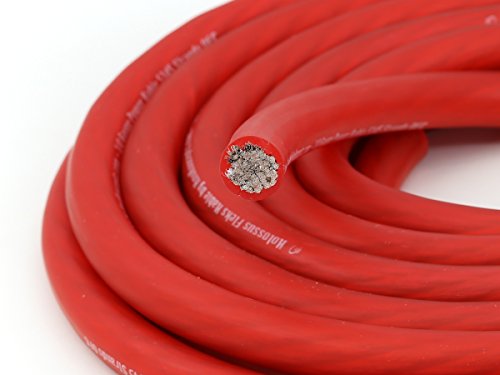
KnuKonceptz Kolossus Flex Kable 1/0 AWG 10FT

EWCS 4/0 Gauge Welding Cable 25FT Red
The Details Behind The Selections
The Bghdas 50-foot SOOW cord lands first because it solves a problem most people only realize they have after the generator is already running: not enough reach, and not enough conductors to do the job right. SOOW stands for Service, Oil, and Water-resistant cable, a flexible rubber-jacketed cord designed for rough commercial and outdoor duty. With four 8 AWG conductors inside a single jacket, this cable handles generator outputs, RV shore-power runs, and portable light towers without forcing you to string multiple cords together.
For homeowners running a backup generator during an outage or RVers wiring a temporary 240V feed, the 600V rating and oil-resistant jacket translate into real confidence when the cable sits on wet grass or dragged across gravel. Compared to a basic indoor extension cord, this is a different animal entirely. The trade-off is bulk and weight, but for stationary outdoor use that rarely matters.
The Helpful Details
- Four 8 AWG copper conductors handle split-phase 120/240V loads
- SOOW rubber jacket resists oil, water, and most common chemicals
- 600V rating covers generator outputs and heavier appliance circuits
- 50-foot reach removes the need for splicing or chaining cords
- Flexible stranded conductors handle cold-weather coiling without cracking
Worth Noting
- Heavier and stiffer than a standard indoor extension cord
- No included plugs or connectors, so end terminations are a separate purchase
Right Fit For
Homeowners and RV owners who need a rugged, weather-resistant cord to link a portable generator to a transfer switch or sub-panel.
Look Elsewhere When
Lightweight single-connector charging tasks suit the BatteryMINDer DCE25 DC Extension Cable better than this heavy four-conductor run.
The CONEPY 6 AWG duplex cable earns its spot by checking every marine-grade box that saltwater boaters actually care about. Tinned copper strands sit inside a thick PVC jacket rated for saltwater, UV, and abrasion resistance. Duplex means two conductors sharing one jacket, which is the standard format for running positive and negative runs to a battery, bilge pump, or trolling motor.
Each conductor carries 188 strands of 0.3 mm tinned copper with a 13.26 mm² cross-section, so voltage drop stays controlled over longer runs. The IP68 waterproof rating and VW-1 flame-retardant jacket matter when the cable sits inches above a wet bilge. Compared to the Bghdas SOOW cord, this is more specialized: built for one job, and built to survive it.
Reasons It Performs
- Tinned copper strands resist corrosion in saltwater environments
- Thick PVC jacket handles UV, abrasion, and oil exposure
- Duplex format simplifies positive and negative runs in one cable
- IP68 waterproof rating protects against bilge splash and spray
Trade Offs
- Specialized jacket and tinning push cost above basic copper wire
- Stiffer than pure silicone wire, so tight bends through bulkheads take more care
Who It Suits Best
Boat owners and marine electricians who need a saltwater-rated run between battery banks, pumps, or accessory panels.
Consider Something Else When
Dry automotive amplifier installs fit the KnuKonceptz Kolossus Flex Kable better, since marine tinning is unnecessary there.
The XHF lug kit shows up for a simple reason: a cable without a properly crimped end is just expensive wire. This kit ships ten 6 AWG copper ring terminals alongside five red and five black 3:1 heat shrink tubes, which is exactly what most DIYers need to finish a set of battery cables. The lugs are annealed electrolytic copper, meaning they’re softer and easier to crimp cleanly than harder alloys.
The included heat shrink is the part I appreciate. A 3:1 shrink ratio wraps tightly around the lug barrel and seals out moisture at the connection, which is where most battery cable failures actually start. For someone wiring a small off-grid setup or replacing corroded terminals, this kit keeps the project moving without a second trip to the store.
A Few Highlights
- Annealed copper lugs crimp easily and seat flat against battery posts
- 3:1 heat shrink seals the lug-to-cable transition from moisture
- Color-matched red and black tubing simplifies positive and negative ID
- Enough quantity for several battery cable assemblies
Room For Improvement
- 5/16 hole size fits larger battery posts only, so confirm stud size before ordering
- Heat shrink requires a heat gun, which is not included
Made For
DIYers finishing custom battery cable runs for solar banks, audio systems, or off-grid setups who want the termination hardware in one box.
Skip It When
Pre-made cable assemblies with ring terminals already attached suit the MOOKEERF 4 Gauge Battery Cable better for quick automotive installs.
Most battery maintainers ship with a short lead that barely reaches from the wall outlet to the battery. The BatteryMINDer DCE25 fixes that with a 25-foot 16-gauge zip cord and SAE bullet connectors on each end, which is the standard format for most maintainers and tender-style chargers. It is not a heavy-gauge cable, and it is not trying to be one.
The value here is convenience. Plug one end into the existing maintainer output, run the cord under the seat or along the frame, and connect the other end to the battery. For people storing a classic car, boat, or ATV in a garage where the nearest outlet is across the room, this removes the daily balancing act.
The Good Stuff
- SAE bullet connectors match most common maintainer outputs
- 25-foot reach handles outlet-to-battery distances in most garages
- 16-gauge copper handles low-amperage maintainer current safely
- Zip cord format lays flat and tucks along frame rails cleanly
Some Limits To Know
- Not suitable for high-amperage charging or jump-starting duty
- SAE connector polarity must match the maintainer, so check before connecting
Best Suited To
Garage-stored vehicle owners using a BatteryMINDer or similar maintainer who need extra reach to a distant outlet.
Not Your Match When
Heavy-current jump-start or welder-style power delivery requires the EWCS 4/0 Gauge Welding Cable instead.
XT90 connectors are the standard for higher-amp RC and drone battery leads, and the MakerDoIt kit ships twelve pairs, which is enough to wire up several packs, parallel boards, or charge adapters. Each connector comes with a solder point cover cap, the small plastic sleeve that slides over the joint after soldering to keep the bare connection from shorting against a frame.
The cover cap is the detail worth calling out. Soldered XT90 connections left bare can short against carbon-fiber or aluminum plates, and the cap adds a clean layer of protection. For hobby builders running 6S LiPo packs through high-current ESCs, this is the right size connector at the right quantity.
Benefits That Matter
- Twelve pairs cover multi-pack and parallel board builds
- Solder point cover caps add insulation at the most exposed joint
- XT90 form factor handles the current demands of 6S LiPo systems
- Heat-resistant housing holds up to repeated high-current cycles
Points To Note
- Requires soldering skills; not a crimp-style connector
- Twelve pairs is more than a one-pack hobbyist may need
Who Should Grab It
RC hobbyists and drone builders assembling or repairing high-current LiPo battery leads on a regular basis.
A Better Fit Elsewhere
Plug-and-play RC charging without soldering fits the Hobbypark Deans T Adapter more closely for casual hobbyists.
Most RC chargers still output through banana jacks while most modern LiPo packs ship with Deans-style connectors. The Hobbypark adapter bridges that gap with a male Deans T plug on one end and 4mm banana bullets on the other, built from 14-gauge silicone wire with tin-plated copper for low resistance. Two adapters come in the pack, which matches the typical two-pack charging routine.
The silicone wire jacket stays flexible in cold weather, which is a quiet benefit for anyone who flies or drives RC outdoors through winter. Battery straps are included for securing the pack during charging. The honest read is that this is a simple accessory, but it solves a real and recurring compatibility problem.
Positive Takeaways
- 14-gauge silicone wire handles typical RC charging current
- Tin-plated copper keeps resistance low across the adapter
- Two-pack quantity covers parallel charging setups
- Silicone jacket stays flexible in cold-weather conditions
Less Ideal Details
- Limited to charger setups with 4mm banana outputs only
- Not rated for high-discharge ESC duty, only charging
Who Will Love This
RC drivers and pilots charging Deans-equipped LiPo packs from a banana-jack charger without rewiring either end.
Reach For A Different Pick When
Building a fresh ESC-to-battery lead from scratch fits the MakerDoIt XT90 Connector kit better than an adapter.
The MOOKEERF 4 AWG cable comes as a pre-cut red and black pair, which is exactly the right format for automotive, inverter, and small solar projects where polarity mistakes get expensive fast. Each conductor uses 469 strands of 0.24 mm oxygen-free copper, giving the cable serious flexibility for routing through firewalls and around battery trays.
Rated for 600V and a working temperature range of -40°F to +221°F, this cable shrugs off engine bay heat and winter cold alike. The oxygen-free copper designation means lower resistance and slower corrosion than standard copper. For someone wiring a 1000W inverter or a secondary battery in a truck bed, this is the kind of cable that disappears into the project and just works.
A Few Strong Suits
- 469-strand OFC conductor stays flexible for tight routing
- Pre-cut red and black pair prevents polarity mix-ups
- 600V rating covers automotive and inverter load demands
- Wide temperature range suits engine bay and outdoor installs
Honest Caveats
- Bare cable ends require separate lugs and terminals, like the XHF kit above
- 3-foot length fits shorter runs only; longer projects need a different cut
The Right Fit
DIYers and mobile installers building short automotive, inverter, or solar cable runs who want a matched polarity pair ready to terminate.
Another Choice May Suit
Longer runs for high-current amplifier systems suit the KnuKonceptz Kolossus Flex Kable more than these 3-foot cuts.
Portable power stations are getting popular, and most of them output through an XT60i port, which is the keyed version of the standard XT60 that prevents reverse polarity mistakes. The ELFCULB adapter cable converts that port to a ring terminal that bolts directly to a battery post, fuse block, or bus bar. The cable itself is 10 AWG tinned copper with UL2468 certification, wrapped in PVC and nylon for abrasion resistance.
The XT60i connector’s anti-reverse feature is the standout detail. Plugging a standard XT60 cable backward into a power station can damage the port or the connected device, so the keyed plug is worth the small premium for anyone who regularly swaps loads. Two feet is short on purpose: it keeps the run tight and reduces voltage drop when bridging to a fuse box.
Strong Points
- XT60i connector prevents accidental reverse polarity
- Tinned copper resists oxidation at the ring terminal
- Ring terminal bolts to standard battery posts and fuse blocks
- Short 2-foot length minimizes voltage drop and clutter
Worth Bearing In Mind
- 10 AWG limits continuous current, so high-draw inverters need heavier cable
- Two-foot length is too short for some installation layouts
Built With In Mind
Portable power station owners who want a clean, keyed adapter cable for occasional DC loads or battery bridging.
Swap It Out When
Higher-current inverter installations call for the MOOKEERF 4 Gauge Battery Cable rather than this 10 AWG adapter.
The KnuKonceptz Kolossus Flex Kable is the cable I think of when someone is building a serious car audio system. At 1/0 AWG, this is the heavy end of the power wire scale, using 5,145 strands of tinned oxygen-free copper in a single conductor. The tinning protects each strand from oxidation, which is the failure mode that turns copper power cable green inside a sealed amp rack over years.
The cable meets or exceeds AWG standards, so the rated cross-section is honest rather than inflated. For installers running a 2,000-watt amp setup or feeding a big capacitor bank, this cable carries the current without voltage drop dimming the headlights on every bass hit. Compared to the CONEPY marine duplex, this is single-conductor power wire for one specific job.
Advantages To Know
- 5,145 tinned OFC strands resist oxidation over years of use
- 1/0 AWG carries the current demands of high-wattage amplifiers
- Exceeds AWG standards for honest gauge rating
- 10-foot run handles most vehicle amplifier installations
Potential Drawbacks
- Bare cable requires separate ring terminals and a heavy crimp tool
- Single conductor means buying a separate ground cable of the same gauge
Whose Shelf It Belongs On
Car audio installers and enthusiasts running high-current amplifier systems who want tinned copper at a serious gauge.
Where A Sibling Pick Shines
Solar and welding applications that need heavy flexible cable at a longer length suit the EWCS 4/0 Gauge Welding Cable better.
The EWCS 4/0 cable closes the list because it handles the most demanding current jobs a DIYer is likely to encounter. At 4/0 gauge, this is industrial-grade territory, the same class of cable used for welding leads, large inverter runs, and high-output solar battery banks. The 25-foot length gives enough reach for most shop and off-grid configurations, and the cable stays flexible even at this massive cross-section.
Rated from -50°C to 105°C at 600V, the jacket handles extreme cold and the heat that builds up under heavy current load. For someone running a 300-amp inverter, wiring a forklift charger, or building a portable welding lead, this is the cable that won’t become the weak link. For lighter projects, the KnuKonceptz 1/0 cable is the better match.
A Favorable Mix
- 4/0 gauge carries industrial-level continuous current loads
- Temperature range covers both cold weather and high-heat conditions
- 25-foot length handles most shop and off-grid layouts
- Flexible jacket coils and routes despite the thick conductor
Factors To Consider
- Heavy and bulky, so storage and handling require planning
- Overkill for automotive alternators or modest inverter setups
Perfect Match For
Off-grid solar installers, welders, and shop owners running heavy-current battery banks and inverter systems.
Skip It When
Standard car audio or automotive battery replacement work fits the KnuKonceptz Kolossus Flex Kable without the extra bulk.
Matching Cable To The Job At Hand
Choosing the right battery cable wire comes down to three questions: how much current, how far, and where the cable lives. Current drives gauge, with heavier loads demanding lower AWG numbers. A 4 AWG cable handles most automotive alternators and 1000W inverters comfortably, while 1/0 and 4/0 territory is reserved for serious amplifiers, welders, and solar battery banks. Distance matters because longer cables accumulate voltage drop, and undersized cable over a long run will starve equipment of power and run hot at the connections.
Environment is the third filter. Marine installations need tinned copper and saltwater-rated jackets, garage battery maintainers just need a long enough zip cord, and engine bay runs need heat-resistant insulation. Match these three factors to the cable spec sheet and most of the guesswork disappears.
Gauge And Current Demand
Battery cables are sized by the American Wire Gauge scale, where smaller numbers mean thicker conductors. A 6 AWG cable handles roughly 60 amps of continuous load, a 4 AWG around 100 amps, and 1/0 AWG pushes past 200 amps. Oversizing a cable by one gauge rarely causes problems, while undersizing it generates heat, voltage drop, and eventually a failure point at the lug or terminal.
Insulation And Jacket Material
The jacket determines where the cable can live. PVC works fine indoors and in dry engine bays. Rubber-based jackets like SOOW handle oil, water, and outdoor use. Marine-grade tinned copper resists corrosion in saltwater. For welding or high-heat environments, a high-temperature jacket is essential.
Connector And Termination Style
Ring terminals, lugs, and butt connectors each serve different roles. A complete lug kit like the XHF 10-pack pairs well with raw cable purchases, while adapters like the Hobbypark Deans-to-banana solve specific compatibility gaps. Always match the connector size to the stud or post it bolts to.
Picking The Right Battery Cable Without The Regret
Where Shoppers Go Wrong
The most common mistake is buying cable based on price per foot without checking the actual gauge and strand count. Some budget cables inflate their listed AWG while skimp on copper content, which leads to voltage drop and overheating under load. Another trap is choosing jacket material based on the indoor environment when the cable actually lives in a hot engine bay or wet bilge. Always match the jacket rating to the real environment, not the imagined one.
When Paying More Pays Off
Higher-tier cables earn their premium through tinned copper strands, thicker jackets, and verified AWG ratings rather than marketing claims. For a one-time automotive repair, a mid-tier cable is plenty. For a marine install or off-grid solar bank that will live outdoors for years, the upgraded jacket and tinning pay back through longer service life and fewer replacement jobs.
Frequently Asked Questions
What gauge battery cable do I need for a 1000W inverter?
A 4 AWG cable is generally the minimum for a 1000W inverter at 12V, with shorter runs allowing it to stay comfortable and longer runs requiring an upgrade to 2 or 1/0 AWG. Match the cable to both the inverter draw and the run length.
Can I use welding cable for battery cables?
Yes, welding cable is a popular choice for battery cable because it uses finely stranded copper for excellent flexibility. The EWCS and MOOKEERF options on this list are technically welding cable grades that double as battery cable.
Is tinned copper worth the extra cost?
For marine, outdoor, or humid environments, tinned copper is worth the premium because it resists corrosion that destroys bare copper over time. For dry indoor automotive installs, bare copper works fine and saves money.
How do I know what lug size to buy?
Match the lug size to both the cable gauge and the stud diameter. The XHF 6 AWG-5/16 kit, for example, fits 6-gauge cable onto a 5/16-inch stud. Measure the stud first, then pick a lug with the matching ring hole.
Can I extend my battery maintainer cable with any wire?
Maintainers and tenders need a cable rated for the current they draw, which is usually low. A 16-gauge zip cord like the BatteryMINDer DCE25 is appropriate, while heavier jumper cables are overkill and stiff.
Bottom Line
The right battery cable depends almost entirely on the current, the run length, and the environment it lives in. Generators and RVs need rugged SOOW cord, marine projects demand tinned copper, and heavy inverter systems call for 1/0 or 4/0 territory. Pick the cable that matches your actual project, not the biggest one in the catalog, and the wiring job will outlast the equipment it powers.
