

Speaker wire gets treated like an afterthought, then blamed when a system sounds thin or hollow. The truth sits in the gauge, the metal, and how far the run needs to travel. After sorting through the options, I pulled together eight solid picks that cover most setups I hear about, from budget-friendly replacements to dedicated hi-fi rigs. The list runs from short jumper kits to long 500-foot rolls for whole-home runs. What matters most is matching the cable to the room, the amplifier, and the speakers already in the house.
Your Options, Compared
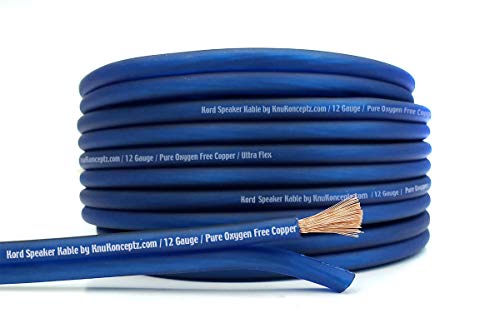
KnuKonceptz Kord 12 Gauge OFC Speaker Wire 50 ft Blue

GEARit 14 Gauge Speaker Wire 100 ft 14/2 Cable

Install Link 16 AWG Speaker Wire 100 ft CCA
KeyLine 12 Gauge OFC Speaker Wire 100 ft Black

Rockville RCC14-500 14 AWG 500 ft CCA Wire

Monosaudio 9AWG Audiophile Speaker Cable 3 m Pair
Monosaudio 9AWG Audiophile Speaker Cable 2.5 m Pair

Rockford Fosgate RFWP12-15 12 AWG 15 ft Wire
Meet The Standout Selections
The KnuKonceptz Kord is one of those cables I keep recommending to friends who finally upgrade from the thin zip cord bundled with their receiver. It runs 12 AWG (American Wire Gauge, a thickness standard where lower numbers mean thicker wire) and uses oxygen-free copper (OFC), which is copper refined to remove trapped oxygen for cleaner signal transfer. The jacket is a soft PVC that lays flat the moment you uncoil it, a small detail that matters when running along a baseboard.
For a typical living-room setup with bookshelf or tower speakers sitting 8 to 15 feet from the amp, 50 feet gives enough slack without much waste. I like that KnuKonceptz prints the gauge and OFC rating right on the jacket every foot, so nobody has to guess what’s hiding under the insulation later.
A Favorable Mix
- True 12 AWG OFC conductor with 294 strands per leg for flexibility and clean signal transfer.
- Soft PVC jacket that lays flat and resists coil memory, great for baseboards and under-carpet runs.
- Printed specifications every foot make polarity checks and inventory painless during long installs.
- 50-foot length suits most home theater layouts without leaving a lot of costly slack.
Points To Note
- Only 50 feet, so larger rooms or bi-wire setups may need a second spool.
- Not rated for direct burial or in-wall use, so outdoor patios and hidden runs require a different cable.
Key Product Details
Best Suited To
Home audio fans running bookshelf or tower speakers from a mid-power amp in a single room.
Look Elsewhere When
The KeyLine 12 Gauge cable is a smarter grab for outdoor patios or in-wall work since it carries CL3/CL2 ratings the Kord does not.
GEARit’s 14-gauge cable hits the sweet spot for a lot of people, and the thoughtful touches show it. Sequential foot markers run along the jacket so cuts stay accurate, and clear polarity markings help avoid the classic “why is one speaker quieter” mistake during installs. The soft PVC bends easily around door frames and through car interiors without fighting back.
Where the KnuKonceptz Kord above uses pure copper at 12 gauge, this GEARit cable steps down to 14 gauge at 100 feet. For most home and car stereo work under about 50 feet per run, that tradeoff is invisible in practice. It also comes in several jacket colors, which helps when running across a white ceiling or matching a dark car interior.
Useful Touches
- Sequential foot markers printed on the jacket simplify measurement and reduce wasted cable.
- Clear polarity markings speed up installs and reduce wiring errors during tight car stereo jobs.
- Soft, flexible PVC routes easily around furniture and through vehicle door boots without kinking.
- 100-foot spool gives enough wire for two to four average rooms or a full car audio overhaul.
Trade-Offs To Consider
- 14 gauge is thinner than 12 gauge, so runs over 50 feet to power-hungry towers may show some signal loss.
- Not rated for in-wall or outdoor use, so it belongs inside the room or inside the vehicle, not behind drywall.
Feature Snapshot
Right Fit For
DIY-first homeowners and car audio installers who want a forgiving, well-marked cable for moderate runs.
A Better Fit Elsewhere
The KnuKonceptz Kord is the stronger match for someone prioritizing pure OFC copper at 12 gauge over marking convenience.
Install Link’s 16-gauge cable is the kind of workhorse wire that keeps showing up in basic home and car setups, and for good reason. It uses copper-clad aluminum (CCA), where an aluminum core is wrapped in a thin copper layer for conductivity at a lower cost than pure copper. The frosted red and black jacket makes polarity obvious even in a dim equipment closet.
At 16 AWG, this is thinner than the GEARit and KnuKonceptz options above, so it shines in short runs under about 25 feet. Background music zones, bedroom setups, and small desktop rigs are the sweet spot. Push it past 50 feet with a hungry amp and the higher resistance of CCA starts to show up as rolled-off bass.
The Practical Payoff
- CCA construction keeps the cost down for whole-room or multi-zone basic audio installs.
- Frosted red and black jacket gives fast polarity ID during rushed wiring jobs.
- Stranded design strips cleanly and bends around corners without cracking.
- 100-foot length supports several small rooms or a large single-room layout.
Honest Caveats
- 16 AWG is thin, so long runs to power-hungry towers can lose bass weight compared to 12 or 14 gauge.
- CCA has higher resistance than pure OFC, making it less ideal for high-current amplifiers.
- Not rated for outdoor, marine, or direct burial applications.
Made For
Shoppers on a tight budget wiring a small apartment, dorm, or secondary listening space with modest gear.
Swap It Out When
The KeyLine 12 Gauge cable makes more sense for outdoor patios or any in-wall install that demands a higher safety rating.

KeyLine’s 12-gauge cable earns its place in this roundup by covering jobs the indoor-focused picks cannot touch. It carries CL2 and CL3 ratings, which are National Electrical Code classifications for low-voltage cable approved for in-wall and certain outdoor installations. It also handles direct burial, so running it through a trench to a patio speaker or landscape sub becomes a realistic weekend project.
The conductor is oxygen-free copper with 180 strands per leg, slightly fewer than the KnuKonceptz Kord above but still well within hi-fi territory. Marine and trailer installs are common uses I hear about from friends who boat. The black jacket blends into mulched beds and disappears behind trim.
Useful Strengths
- CL2 and CL3 ratings open up in-wall, ceiling, and direct burial applications.
- True OFC conductor at 12 gauge handles long outdoor runs without major signal loss.
- Marine and trailer compatibility broadens the use cases beyond the typical living room.
- Black jacket stays discreet in landscape beds and behind baseboards.
Practical Considerations
- Heavier jacket is less flexible than indoor-only cables, which can frustrate tight indoor corners.
- 100 feet may not be enough for very large properties without splicing, and splices in buried cable need proper gel caps.
Quick Facts
Who It Suits Best
Homeowners running wire to outdoor speakers, marine audio installers, and anyone needing a code-compliant in-wall pull.
Where Another Pick Suits Better
The Monosaudio 9AWG cable is a more focused choice for a short dedicated hi-fi rack where pure copper thickness matters more than burial rating.
Rockville’s 500-foot spool is the cable for someone planning a serious multi-room project. It runs 14 AWG CCA and carries a CL2 rating, which means it is approved for in-wall and ceiling pulls in residential and commercial spaces. Whole-home audio systems, restaurant backgrounds, and office installs are the natural fits.
The 500-foot length reduces splicing, which is where signal loss tends to creep in on long runs. Compared to the GEARit 100-foot option earlier, this is a different scale entirely. The tradeoff is storage and handling, since a 500-foot spool needs a proper reel stand or at least a partner to help unspool it cleanly.
What Earns Its Place
- 500-foot bulk spool minimizes mid-run splices in multi-room and commercial installations.
- CL2 rating covers in-wall and ceiling pulls required by code.
- CCA build keeps cost manageable for projects that would burn through pure copper budgets.
- 14 AWG handles most 70V (a constant-voltage commercial audio distribution standard) and standard speaker runs without strain.
Things To Consider
- A 500-foot spool is heavy and awkward for solo installers without a reel stand.
- CCA conductor has higher resistance than OFC, so it is less ideal for audiophile-grade tower setups.
Built With In Mind
Contractors and dedicated DIYers wiring multi-zone audio across a home, restaurant, or small commercial space.
Not Your Match When
The KeyLine 12 Gauge cable is a smarter single-room pick since it ships at a more manageable length with OFC construction.
The Monosaudio 9 AWG cable steps into audiophile territory, where the goal is the lowest possible resistance between amp and speaker. At roughly 6.3 mm² per conductor (a cross-sectional area measurement where higher numbers mean more copper), this is significantly thicker than the 12 AWG KnuKonceptz Kord earlier. The 3-meter pair suits a compact hi-fi rack where speakers sit close to the amp.
The OFC core aims for a clean, neutral signal path. At this thickness and length, the cable becomes the heaviest thing behind the speakers. Anyone with a suspended shelf or lightweight stands should plan for some cable management to keep things stable.
What Pays Off
- Heavy 9 AWG OFC conductor minimizes resistance for high-current amplifiers and demanding speakers.
- 3-meter pair fits typical bookshelf-to-amp distances in a dedicated two-channel setup.
- Pure copper construction targets a neutral, transparent signal path for critical listening.
- Substantial gauge supports bi-wire configurations when paired with compatible speakers.
A Few Limitations
- 3-meter length is too short for most room-spanning home theater layouts.
- Heavy gauge cable puts visible stress on lightweight speaker terminals and stands.
Whose Shelf It Belongs On
Two-channel hi-fi enthusiasts running a dedicated listening room with sensitive floor-standing or bookshelf speakers.
Reach For A Different Pick When
The Monosaudio 2.5 m pair is the better match for tight desktop or nearfield monitor setups where every centimeter counts.
The 2.5-meter version of Monosaudio’s audiophile cable is purpose-built for tight spaces. A desktop rig with powered monitors, a small bedroom system, or a nearfield studio setup benefits from the same heavy 9 AWG OFC conductor without the cable slack spilling across the floor.
Compared to the 3-meter pair above, the 0.5-meter savings can matter when speakers sit on a desk mere inches from a compact amp. The thickness still demands a secure terminal connection, and stripped ends should be tidied before insertion to avoid stray strands shorting across binding posts.
Where It Excels
- 2.5-meter length keeps cable slack manageable on desks and small racks.
- Heavy 9 AWG OFC core preserves the low-resistance signal path for sensitive nearfield monitors.
- Pure copper construction targets clean, neutral transmission for critical listening.
- Short run minimizes the visual footprint in minimalist setups.
Points To Keep In Mind
- Too short for floor-standing speakers placed more than a few feet from the amp.
- Heavy gauge requires care when terminating to avoid loose strands at binding posts.
Perfect Match For
Desktop audiophiles and content creators running nearfield monitors in a small studio or bedroom setup.
Consider Something Else When
The KnuKonceptz Kord is the better choice for a living-room layout where the longer 50-foot run and pure OFC at 12 AWG cover more ground.
Rockford Fosgate’s 15-foot wire kit is a tidy solution for car audio, marine, and motorcycle installs. The cable meets BC-5W2 compliance, a marine safety standard specifically for boat wiring exposed to the elements, which puts it ahead of most general-purpose speaker cables for harsh environments. The frosted outer jacket stays flexible in cold weather, which matters more than people expect during winter installs.
The 12 AWG pure OFC conductor matches the KnuKonceptz Kord above for copper quality, just in a much shorter pre-cut length. For most subwoofer or component speaker runs behind a dashboard or in a boat hull, 15 feet is plenty. Larger vehicles with amps mounted in the trunk may need to pair two kits.
Useful Highlights
- BC-5W2 marine compliance makes it safe for boats and other moisture-exposed installs.
- 12 AWG pure OFC handles car audio and marine amplifiers without resistance issues at short lengths.
- Frosted jacket stays flexible in cold weather for off-season and northern climate installs.
- Pre-cut 15-foot length speeds up standard sub or component speaker replacements.
Some Limits To Know
- 15 feet is short for vehicles with trunk-mounted amps and rear-deck speakers.
- Pre-cut design leaves little room for error if a length is misjudged.
Feature Card
Who Should Grab It
Car audio installers, marine audio enthusiasts, and DIYers needing a short pre-cut run that meets marine safety standards.
Skip It When
The GEARit 100-foot spool is a smarter choice for a full vehicle rewire where one continuous run is easier than joining short kits.
Choosing Awg Speaker Wires That Match Your Setup
Picking the right speaker wire comes down to three things: distance, gauge, and conductor material. Distance matters most because signal loss grows with every foot. For runs under about 25 feet, 16 AWG handles most bookshelf and desktop setups without a problem. Push past 50 feet, and 14 or 12 AWG becomes the safer call, especially with power-hungry tower speakers or subwoofers.
Conductor material is the second decision. Oxygen-free copper (OFC) carries signal more efficiently than copper-clad aluminum (CCA), so OFC is the right pick for long runs, high-current amps, or critical listening. CCA still works fine for shorter runs and background audio zones where cost matters more than absolute fidelity.
Gauge And Run Length
Match wire thickness to the distance between amp and speaker. The longer the run, the thicker the wire needed to keep resistance low. A 12 AWG cable like the KeyLine or KnuKonceptz Kord handles 50-foot runs effortlessly, while a 16 AWG cable like the Install Link stays within its comfort zone at 25 feet or less.
For most living rooms and home theaters, 14 AWG sits in the practical middle. The GEARit cable shows how thoughtful marking and jacket design make mid-gauge installs much easier on the installer.
Where The Cable Will Live
Indoor-only cable does not need safety ratings beyond basic insulation. In-wall, ceiling, and outdoor installs need CL2 or CL3 ratings, which the KeyLine and Rockville cables carry. Direct burial adds another layer, and marine or boat installs demand standards like BC-5W2, which the Rockford Fosgate kit meets.
Ignoring ratings on hidden cable runs is a common regret. Inspectors and insurance adjusters do not look kindly on unrated wire stuffed behind drywall.
Copper Versus Copper-Clad Aluminum
CCA wire costs less and weighs less, making it tempting for whole-home projects where budget stretches thin. OFC costs more but delivers cleaner signal transfer and lower resistance, which becomes audible at long runs and high volumes. Choosing between them usually comes down to where the cable lives and how hard the amp is working.
Key Considerations Across These Picks
Where Shoppers Go Wrong
One common mistake is grabbing the cheapest wire without checking the gauge. Thinner wire at long distances robs bass response and can make an amp run hotter than it should. Another pitfall is using indoor-only cable behind walls or outdoors, which creates fire and corrosion risks. Always match the cable rating to the environment it will live in.
What Separates Premium From Basic
The upgrade from entry-level to premium speaker wire usually brings thicker gauges, purer copper, and better jackets. For most home audio setups, the jump from CCA 16 AWG to OFC 12 AWG is the meaningful leap. Beyond that, paying more mostly buys audiophile build quality and shorter, tighter runs where every fraction of an ohm counts.
Frequently Asked Questions
What Does AWG Mean For Speaker Wire?
AWG stands for American Wire Gauge, a thickness standard where lower numbers mean thicker wire. Thicker wire carries signal with less resistance, which matters over long runs and high-power systems.
Is Oxygen-Free Copper Better Than CCA?
Oxygen-free copper (OFC) generally has lower resistance and cleaner conductivity than copper-clad aluminum (CCA). For long runs or critical listening, OFC is the stronger choice, while CCA fits budget-friendly short runs.
How Long Can My Speaker Wire Run Be?
For 16 AWG, runs under 25 feet are usually safe. For 14 AWG, runs up to 50 feet work well. For 12 AWG and thicker, runs over 50 feet remain stable even with power-hungry speakers.
Do I Need CL2 Or CL3 Rated Cable?
Any cable running behind drywall, through ceilings, or outdoors should carry a CL2 or CL3 rating. Unrated indoor cable hidden in walls creates fire risks that inspectors and insurers take seriously.
Can I Use Speaker Wire For Subwoofers?
Yes, as long as the gauge matches the run length and the amp’s power demands. Most subwoofer installs benefit from 12 to 14 AWG wire, especially in car audio and home theater setups.
The Takeaway
Speaker wire is one of the most underrated parts of any audio system. Match the gauge to the run length, the material to the amp, and the rating to the environment, and the rest falls into place. The picks above cover most setups I run into, from quick car audio swaps to whole-home installations.
