

Power transfer gear matters most when you need a clean handoff during an outage, a workshop job, or a cabin setup that can’t afford guesswork. The right switch matches your generator size, circuit plan, and mounting space without turning a backup plan into a wiring headache. This roundup keeps the focus on practical fit, from heavy-duty manual units to compact automatic changeover models.
Quick Look At The Shortlist

MUJURUR 100A Generator Transfer Switch 24000W

IGEYAPA 100Amp AC110V Automatic/Manual Transfer Switch 2P

JOTTAELE Automatic Transfer Switch 2P 63A

Tzechkii 200 Amp Manual Generator Transfer Switch 48000W

HCDC AC120V 15Amp Automatic Transfer Switch
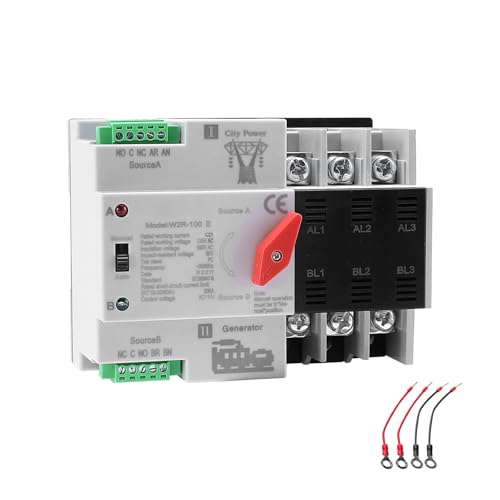
IGEYAPA 100Amp AC110V Automatic/Manual Transfer Switch 3P

Nature’s Generator Manual Transfer Switch 12-Circuits 50A
IGEYAPA 100Amp AC220V Automatic/Manual Transfer Switch 2P
More Details On Our Top Picks
For larger homes, this manual double-throw switch gives you a straightforward way to move between utility power and a generator. The 120/240-volt design and 100-amp rating point to serious backup use, while the NEMA 3R housing makes more sense for covered outdoor spots or indoor mounting where dust and moisture can still be part of the story.
The honest read is that it suits people who want a sturdy, no-nonsense transfer setup and don’t mind doing the switching themselves. Compared with the smaller IGEYAPA units later in this list, it’s the more house-scale option, and that extra capacity is exactly the reason it earns attention for whole-home planning.
Strong Points
- 100-amp capacity fits heavier home backup needs.
- Double-throw layout keeps source changes clear and deliberate.
- 120/240-volt support works for mixed household loads.
- NEMA 3R housing broadens placement options.
- Manual control suits people who prefer direct oversight during outages.
Things To Consider
- Manual switching asks more from the person using it.
- Larger installs usually call for careful planning around wiring space.
- The outdoor-friendly housing still benefits from sensible placement under cover.
Core Details
Who It Suits Best
You benefit most here when your backup plan covers multiple rooms, major appliances, or a full-house electrical panel.
A Better Fit Elsewhere
IGEYAPA 100Amp AC110V Automatic/Manual Transfer Switch 2P suits compact solar or RV-style setups more cleanly, especially when you want a smaller footprint.
This mini ATS, meaning automatic transfer switch, aims for smaller electrical layouts that still need both automatic and manual control. The 2-pole, 100-amp format and DIN rail mounting make it a neat fit for panels where space is tight, especially in solar-backed or generator-assisted systems.
Compared with MUJURUR’s manual house-scale switch, this one feels more compact and more specialized. For a utility room, RV-oriented setup, or a slim cabinet where orderly rail mounting matters, that tighter footprint is the main attraction, though the narrow focus also means it is not a universal answer.
What We Like
- Automatic and manual modes give you more control paths.
- DIN rail mounting helps keep installation tidy.
- 2-pole format suits simple dual-source setups.
- 100-amp rating leaves room for substantial circuits.
Small Caveats
- The compact design works best in planned enclosures, not ad hoc installs.
- Single-purpose layouts may not need this much switching complexity.
- Rail-mounted gear usually rewards careful wiring organization.
Feature Card
Made For
You’ll get the most from this in a small panel, a mobile power setup, or a tidy backup cabinet where space is at a premium.
Another Choice May Suit
Nature’s Generator Manual Transfer Switch 12-Circuits 50A fits a home-panel approach better, especially for someone planning individual circuits instead of a rail-mounted module.
JOTTAELE lands in the middle of the pack in a useful way, because 63 amps is often enough for a focused backup setup without pushing you into the larger footprint of a 100-amp panel. The 110-volt, single-phase design keeps the scope narrower, which can be a relief for emergency power planning in a simpler home circuit.
Relative to IGEYAPA’s 100-amp compact unit, this one trims the scale a bit and feels more targeted to modest backup loads. That makes it a sensible choice for someone who wants automatic transfer behavior without stepping into the largest manual switches on the list.
Upsides
- 63-amp capacity suits moderate backup needs.
- Automatic operation reduces the need for hands-on switching.
- Single-phase design fits common emergency generator setups.
- 2-pole layout keeps the wiring concept simple.
Worth Noting
- The smaller rating leaves less room for bigger households.
- Single-phase focus narrows its use case.
- Automatic gear still benefits from tidy, well-planned installation.
At A Glance
The Right Fit
You fit this best when your backup setup centers on a modest single-phase load and you prefer automatic changeover over manual handling.
Where A Sibling Pick Shines
MUJURUR 100A Generator Transfer Switch 24000W makes more sense for a whole-home manual setup that needs greater circuit headroom.
Here the scale jumps again, and 200 amps is the kind of capacity that suits bigger homes, heavier service panels, or backup plans built around more demanding loads. The galvanized steel build and double-throw disconnect design point to a more serious installation mindset, while the included wiring lugs make the connection process more practical for an installer working through a full setup.
Compared with the MUJURUR 100A switch, this Tzechkii unit is the larger, more expansive option, and that difference matters more than any styling detail. The trade-off is obvious: you get broader electrical headroom, but you also move into a product that asks for more careful placement and a more thoughtful install.
Reasons To Buy
- 200-amp capacity suits larger residential panels.
- 120/240-volt support covers common home backup layouts.
- Galvanized steel adds a durable, workmanlike feel.
- NEMA 3R housing supports indoor or sheltered outdoor placement.
- Wiring lugs help streamline the connection stage.
Room For Improvement
- The size makes it less suited to compact installs.
- Manual operation keeps attention on the person running it.
- Bigger gear usually rewards careful planning and tidy conduit work.
Technical Sheet
Best Suited To
This suits you best when your home backup plan has grown beyond a basic transfer setup and needs larger service capacity.
Swap It Out When
HCDC AC120V 15Amp Automatic Transfer Switch makes more sense for a small appliance feed where simplicity matters more than panel-scale power.
Not every backup setup needs a panel-sized switch, and that’s where this 15-amp automatic unit fits neatly. The NEMA 5-15P/R format points to familiar household plug compatibility, so the use case feels more like a targeted appliance handoff than a whole-home power manager.
Compared with the bigger Tzechkii and MUJURUR units, this one is far more modest in scope, and that is the point. For someone managing a small load in a garage, utility nook, or straightforward generator arrangement, the smaller footprint can make the setup feel less intimidating.
Best Bits
- 15-amp rating fits smaller household loads.
- Automatic switching reduces daily handling.
- NEMA 5-15P/R compatibility feels familiar in basic setups.
- The simpler format keeps installation scope restrained.
Areas To Watch
- The lower amp rating leaves it out of larger backup plans.
- It suits appliance-level use more than whole-home coverage.
- Small hardware can still demand careful cord and outlet planning.
Details At A Glance
Perfect Match For
You benefit most here when your backup goal is a small, familiar plug-in setup rather than a full transfer panel.
Look Elsewhere When
Nature’s Generator Manual Transfer Switch 12-Circuits 50A is the smarter step up for a home that needs circuit-by-circuit management.
The 3-pole layout gives this IGEYAPA unit a different job from the 2-pole switches earlier in the list. In practice, that extra pole count matters in more complex arrangements, where the switch has to fit a less ordinary power path and the wiring plan benefits from a little more structure.
Compared with the 2-pole IGEYAPA model, this one gives you more switching structure while keeping the same 100-amp class. That makes it a stronger match for a setup that blends solar, generator, or other dual-source logic and needs more than the most basic changeover format.
Highlights
- 3-pole design opens up more complex connection options.
- 100-amp class suits substantial backup systems.
- Automatic and manual modes give flexibility during outages.
- DIN rail mounting keeps the layout compact.
Points To Note
- Three-pole gear is better for specific electrical plans than general use.
- Rail-mounted installs reward careful labeling and cable routing.
- The feature set is useful, but only when your wiring calls for it.
Spec Overview
Who Should Grab It
This suits you best when the electrical plan calls for a 3-pole mini ATS and you want a compact, organized mounting style.
Skip It When
JOTTAELE Automatic Transfer Switch 2P 63A is the cleaner fit for a simpler single-phase backup path that does not need the extra pole count.
This 12-circuit transfer kit speaks to people who want a more organized home-panel approach than a plug-in switch can deliver. The 50-amp, 120/240-volt design keeps the scope residential, while the indoor-only format makes the placement plan feel more controlled and less exposed to weather.
Compared with HCDC’s small outlet-level switch, this is clearly the more structured option for a house that needs several circuits handled with care. The trade-off is the extra planning, but for a dedicated backup panel, that structure is exactly the point.
Positives
- 12-circuit support gives you broader household coverage.
- 50-amp class suits a focused residential backup plan.
- 120/240-volt support works with common home systems.
- Indoor format fits controlled utility spaces well.
Honest Caveats
- Indoor-only placement narrows where you can install it.
- The 50-amp limit is smaller than the larger home panels here.
- More circuits mean more setup attention up front.
Feature Rundown
Built With In Mind
You fit this best when you want circuit-by-circuit control inside a home utility area rather than a small plug-level solution.
Reach For A Different Pick When
MUJURUR 100A Generator Transfer Switch 24000W is the better match for someone who wants a larger manual switch with more overall capacity.
This version mirrors the compact IGEYAPA format, but the AC220V rating changes the power environment it’s built around. That makes it useful for solar or generator setups where the electrical system is already organized around 220-volt service, and the 2-pole, 100-amp class keeps the hardware focused.
Compared with the AC110V IGEYAPA unit, this one is the more natural fit for a different voltage standard, not a different personality. For a small panel, RV-style build, or dual-source cabinet tied to 220V service, it stays tidy and purposeful, though it is still very much a specialized component rather than a one-stop answer.
What We Like
- 220V support fits the right electrical systems cleanly.
- Automatic and manual control adds flexibility.
- 100-amp rating leaves useful headroom.
- 2-pole layout keeps the switch format uncomplicated.
Minor Gripes
- The voltage specificity makes fit more exacting.
- Compact rail-style gear still needs careful planning.
- It works best in a setup already built around the right standard.
Quick Facts
Whose Shelf It Belongs On
You fit this best when your backup setup already runs on AC220V and you want a compact switch that stays out of the way.
Where Shoppers Go Wrong
IGEYAPA 100Amp AC110V Automatic/Manual Transfer Switch 2P is the easier match for people whose system is built around 110V instead.
How To Choose The Right Auto Transfer Switches For Generator
Start With The Power Path
Your first job is matching the switch to the way power actually enters the building. A manual double-throw unit gives you direct control, while an automatic transfer switch changes source on its own after it detects a loss, and that difference matters more than brand or trim.
Pole count matters too, because 2-pole and 3-pole designs serve different wiring plans. A simple home backup setup usually stays happier with a straightforward 2-pole layout, while more involved solar or mixed-source systems may need the extra structure of a 3-pole model.
Size It For Real Loads, Not Guesswork
Amps and wattage should match the circuits you actually plan to support. A 15-amp outlet-level switch fits small appliances, while 50-, 63-, 100-, and 200-amp units move into larger home or panel applications.
The honest read is that oversizing can add cost and complexity, while undersizing turns a backup plan into a bottleneck. The safest approach is to think in terms of the loads you want online during an outage, not the total wish list for the whole house.
Match Mounting And Location To The Space You Have
DIN rail mounting suits compact cabinets and tidy electrical enclosures, while larger wall-mounted boxes make more sense for house-scale installs. NEMA 3R housing adds more placement flexibility because it is built for indoor or sheltered outdoor settings, which helps in garages, utility rooms, and covered exterior spots.
Indoor-only kits belong in protected spaces, not exposed walls or damp corners. That small detail can shape the whole project, because a neat install usually stays easier to service later.
Think About How Hands-On You Want The Backup Plan To Be
Manual switches reward people who want full control and don’t mind stepping in during an outage. Automatic models reduce the need for intervention, which helps in homes where you may not be around when utility power disappears.
For cabins, RV-style builds, and small workshops, that choice can be almost as important as amperage. A smoother handoff often feels better than a bigger number on the label.
What To Weigh Before You Choose
Common Shopping Slip Ups
Many people start with voltage and forget the pole count, which can lead to a switch that does not match the system layout. Another common miss is choosing a high-capacity unit for a small load, then dealing with more hardware than the space really needs.
Installation location gets overlooked too. An indoor-only model belongs in a protected area, while a NEMA 3R enclosure gives you more flexibility for covered outdoor placement.
Why Top Tier Costs More
Higher-tier units usually bring larger amp ratings, sturdier housings, or more complex transfer logic. You’re paying for more capacity, more installation confidence, and in some cases a layout that can handle a wider range of circuits.
That upgrade makes sense for full-home backup, mixed electrical systems, or setups where the switch becomes a central part of the power plan. For a small appliance circuit, the extra expense may just add unused headroom.
Frequently Asked Questions
What Size Transfer Switch Do You Need For A Generator?
The right size matches the loads you want to support, not the biggest number you can find. A small appliance setup can live with 15 amps, while larger homes often need 50, 63, 100, or even 200 amps.
What Is The Difference Between Manual And Automatic Transfer?
Manual transfer requires you to change power sources yourself. Automatic transfer does that switching on its own after a utility outage.
Does Pole Count Matter In These Switches?
Yes, because pole count affects how the switch fits the electrical layout. A 2-pole model suits simpler dual-source systems, while a 3-pole design supports more complex arrangements.
Can You Mount These Switches Outdoors?
Only the models with a suitable enclosure, such as NEMA 3R, are built for more flexible placement. Indoor-only units belong in protected spaces.
Are These Switches Meant For Whole-Home Use?
Some are, especially the 100-amp and 200-amp models. Others are better suited to a single circuit, a small panel, or a compact power cabinet.
Closing Thoughts
The right switch depends on how much of your home or workspace you want to keep running and how hands-on you want the changeover to be. A compact ATS makes sense for small, tidy systems, while a larger manual transfer switch suits bigger panels and more deliberate control. Once the voltage, pole count, and mounting style line up with your setup, the rest gets much easier. That’s the point where backup power starts feeling practical instead of improvised.
