

Picking solder sounds simple until you actually need it. The 60/40 ratio (60% tin, 40% lead) is the workhorse blend for stained glass panels, electronics repair, and weekend DIY projects, but the wire diameter, spool size, and flux core you grab all change the experience. Stained glassers want a bar or thick spool that flows smoothly over copper foil, while electronics hobbyists usually need a thin rosin-core wire that feeds cleanly through a soldering pencil. I’ve put together this list of seven solid options that cover both camps, plus a couple of gasless flux-core welding wires for heavier metalwork that show up in the same shopping searches.
Your Options, Compared

Canfield 60/40 Solder for Stained Glass (Two Pack)

findmall 60/40 Tin Lead Rosin Core Solder Wire 0.8mm

Canfield 60/40 Solder for Stained Glass (1 lb)
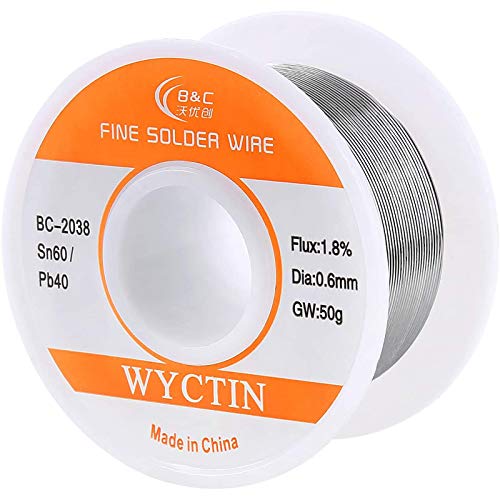
WYCTIN 60/40 Rosin Core Solder Wire 0.6mm

findmall E71T-GS Gasless Flux Core Wire 0.035″

findmall E71T-GS Gasless Flux Core Wire 0.045″

HengTianMei 60/40 Rosin Core Solder Wire 1.0mm
The Picks, Examined More Closely
Canfield’s two-pack spool is the kind of solder stained glass artists stockpile. Each roll carries one pound of solid-core 60/40, which melts across roughly 361 to 376°F, so it flows smoothly over copper foil seams without scorching the tape underneath. The two-pound total means longer runs between swaps, which matters when you’re working through a large window or a stack of suncatchers.
The trade-off shows up for anyone doing fine electronics. With no rosin core, you’ll add flux separately, and the heavier wire profile rewards an iron with enough thermal mass rather than a small pencil. For traditional glass work, though, the flow quality and the doubled spool size earn their keep.
What Makes Sense
- Two one-pound rolls mean fewer mid-project spool changes during long stained glass sessions.
- 60/40 ratio melts around 361 to 376°F, ideal for smooth beads over copper foil seams.
- Solid-core design produces clean, bright joints that take patina and polish evenly.
- Bulk format lowers cost per pound compared to small craft spools.
Trade Offs To Consider
- No rosin core means electronics users must add flux separately.
- Heavier spool storage takes up more shelf space than a single 1 lb roll.
- Not the right pick for fine circuit-board pads where a thinner wire feeds better.
Who It Suits Best
Stained glass artists working through panels or suncatchers who want a generous supply of a familiar, easy-flowing 60/40 alloy.
A Better Fit Elsewhere
Electronics hobbyists rebuilding circuits should reach for the findmall 60/40 Rosin Core Solder Wire, which feeds cleanly through a soldering pencil without separate flux.
findmall’s rosin-core spool sits squarely in electronics territory. The 0.031 inch (0.8mm) wire feeds predictably through standard soldering pencils, while the integrated rosin flux (rosin is a natural resin that helps solder bond cleanly to metal) cuts down on the extra flux bottle cluttering the bench. The 60/40 ratio melts around 361 to 374°F, so it wets pads and through-holes quickly without dragging heat across sensitive components.
At a full pound, this spool suits someone with a steady queue of repairs rather than a single weekend project. Owners commonly find it a good match for cable TV connectors, stereo gear, and small appliance fixes where a mid-gauge wire hits the sweet spot.
Benefits That Matter
- Rosin core eliminates a separate flux step for most basic electronics joints.
- 0.8mm diameter balances feed control with enough mass for general pads and wires.
- One-pound spool handles long repair runs without frequent replacement.
- Lower 40% lead content keeps the working temperature gentler on small components.
Points To Note
- Wider than the fine 0.6mm WYCTIN wire, which can feel bulky on tiny SMD pads.
- Spool unwind can tangle if the end isn’t secured between sessions.
Made For
DIYers and hobbyists tackling home electronics, cable work, and toy repairs who want one dependable rosin-core spool on the bench.
Consider Something Else When
Stained glass artists building panels will prefer the Canfield 60/40 Solder for Stained Glass two-pack, which flows as a solid bar-style wire over copper foil.
For glass workers who prefer a single one-pound spool rather than a paired bulk option, this Canfield roll keeps the same 60/40 chemistry in a more compact footprint. It’s made from virgin material rather than remelted scrap, which tends to produce a smoother, more consistent flow when you iron across long seams. Melting runs from about 360 to 376°F, comfortably within range for both copper foil and lead came construction.
Compared to the two-pack above, you’re trading volume for a smaller storage profile, which matters if your studio space is already crowded with grinders, glass racks, and pattern cutters.
What Earns Its Place
- Virgin material feedstock generally flows more cleanly than remelted alternatives.
- Single 1 lb spool fits on smaller workbenches and storage shelves.
- Compatible with both copper foil and lead came seams.
- Bright, consistent bead appearance reduces rework on visible joints.
Honest Caveats
- Higher cost per pound than the two-pack version for heavy-volume work.
- Solid core still requires separate flux for any non-glass soldering.
Best Suited To
Traditional stained glassers working on a single project or a series of smaller pieces who value virgin material and a manageable spool size.
Look Elsewhere When
Anyone powering through multiple large panels may save by stepping up to the Canfield two-pack, since the same alloy arrives in a doubled supply.
WYCTIN ships a thin 0.6mm (0.0236 inch) wire in a small 50-gram spool that suits precision electronics. The fine diameter gives much better control on small surface-mount pads, tight connector pins, and repair work where a heavier wire would flood the joint. Melting starts around 361°F, so it joins quickly under a modest soldering pencil.
The compact size makes this a low-commitment choice. At roughly 0.11 pounds, it’s the kind of spool you keep in a drawer for occasional fixes without dedicating shelf space to a full pound.
Bright Spots
- 0.6mm wire gives precise feed on small pads and connector pins.
- Rosin core handles typical electronics joints without added flux.
- Tiny 50g spool fits easily into a parts drawer or mobile toolkit.
Things To Consider
- Small spool runs out fast on bigger projects like wiring harnesses.
- Thin wire can kink if fed too aggressively through a worn pencil tip.
Right Fit For
Anyone doing detailed circuit work, headphone cable repairs, or hobby electronics where fine control matters more than bulk supply.
Skip It When
Long repair sessions or larger soldering jobs will drain this spool quickly, in which case the findmall 0.8mm rosin-core option offers a deeper reserve.
This findmall spool steps out of the soldering category and into flux-core welding wire. The E71T-GS designation means it’s a self-shielded tubular wire, so you can weld mild steel without dragging a shielding gas tank around the garage. The 0.035 inch diameter feeds well through most home MIG welders (wire-feed welding machines) set up for flux-core, and the 10-pound spool keeps serious fabricators stocked for a while.
It shares shelf space with 60/40 solder because both show up in the same welding and soldering search results. For automotive patch panels, trailer repairs, and light structural steel, it’s a practical option.
Standout Benefits
- Gasless design removes the need for a shielding gas cylinder or regulator setup.
- 0.035 inch diameter runs cleanly through most hobby MIG welders.
- 10 lb spool supports extended repair and fabrication projects.
- Self-shielded flux core simplifies outdoor and drafty shop work.
A Few Limitations
- Flux-core spatter requires more post-weld grinding than solid wire with gas.
- Produces more smoke than MIG with shielding gas, so ventilation matters.
Whose Shelf It Belongs On
Home welders handling automotive patches, farm repairs, and outdoor metalwork where portability outweighs the clean finish of gas-shielded MIG.
Reach For A Different Pick When
Cleaner cosmetic welds on thinner sheet metal call for the slightly heavier 0.045 inch findmall wire later in this list, which lays down a wider bead.
The 0.045 inch version of findmall’s gasless flux-core wire suits heavier welding tasks. The larger diameter carries more current, which means deeper penetration on thicker steel plate and faster travel speeds across long seams. It’s still self-shielded, so there’s no gas tank to manage, and the spool arrives vacuum-sealed in aluminum foil to keep moisture out of the flux core.
Compared to the 0.035 spool above, this wire trades finesse for deposition rate, which is the right call when you’re filling gaps, welding structural joints, or working on equipment frames.
Key Advantages
- Thicker 0.045 inch wire delivers deeper penetration on heavy steel.
- Vacuum-sealed foil packaging protects the flux core from moisture pickup.
- 10 lb net weight supports multi-day fabrication projects.
- Self-shielded format works in outdoor or breezy shop environments.
Where It May Fall Short
- Heavier wire can distort thin sheet metal if heat isn’t managed carefully.
- Requires a welder capable of the higher amperage this diameter demands.
Built With In Mind
Garage welders and fabricators working on thicker steel where deposition rate and penetration matter more than cosmetic finish.
Another Choice May Suit
Thinner sheet metal and patch repairs usually flow better with the 0.035 inch findmall spool, which gives finer control on lighter stock.
HengTianMei offers a beginner-friendly take on rosin-core solder with a 1.0mm wire and a 50-gram spool. The slightly thicker wire is easier to feed through a pencil tip without kinking, which helps newcomers get consistent beads on their first few joints. The 1.8% rosin flux content is built into the core, so there’s no need to juggle a separate flux pen on basic electronics work.
Melting sits around 361°F, which keeps the heat gentle enough for typical components. The small spool size keeps the commitment low for anyone exploring soldering for the first time.
Reasons It Performs
- 1.0mm wire feeds easily for users still learning tip control.
- Built-in rosin flux simplifies first projects by removing extra steps.
- Compact 50g spool suits starter kits and small repair batches.
Less-Strong Areas
- Thicker wire floods tiny SMD pads if the user isn’t careful with feed rate.
- Small spool size runs out quickly on continuous project work.
Who Should Grab It
Newcomers to electronics soldering who want a forgiving, easy-feeding wire for learning joints on through-hole components and simple repairs.
Swap It Out When
More precise pad work calls for the thinner 0.6mm WYCTIN rosin-core spool, which offers finer control on dense circuit boards.
Choosing the Right 60/40 Solder and Welding Wire for Your Projects
Match the Wire to the Job
Solder for stained glass and solder for electronics look similar on the shelf but behave differently in use. Stained glass work benefits from solid-core wire that flows in thick, controllable beads over copper foil. Electronics work calls for rosin-core wire (wire with a flux-filled center) that feeds through a pencil tip and bonds to small pads without extra flux. Picking the wrong format usually means frustration, not failure, but it does cost time.
Diameter Changes How the Solder Feels
Wire thickness, measured in millimeters or inches, affects how fast solder flows onto a joint. A 0.6mm wire gives precision on small pads but feels slow on larger connections. A 1.0mm wire floods pads quickly, which is great for stained glass seams but risky on tiny components. For most electronics benches, 0.8mm lands in the practical middle. For glass work, thicker profiles or bar solder tend to dominate.
Spool Size Reflects Real Workload
A 50-gram spool makes sense for occasional fixes or learning sessions. A one-pound spool suits regular hobbyists who run through projects every weekend. Two-pound bundles and ten-pound welding spools serve ongoing studios and shops. Buying too little means constant reordering. Buying too much means solder sitting on a shelf past its usable window, since flux-core solder can slowly oxidize once opened.
Don’t Confuse Solder with Welding Wire
The two flux-core welding wires in this list (E71T-GS designations) appear in the same searches but serve a different purpose. They weld steel, not copper or circuit boards. Anyone shopping for stained glass or electronics should skip past those entries unless they actually run a MIG welder. The chemistry, the equipment, and the safety considerations don’t overlap.
Key Considerations Across These Picks
Common Shopping Slip Ups
The biggest mistake I see is grabbing a flux-core welding spool when the project calls for electronics solder. The wire diameters overlap, but the equipment and technique don’t transfer at all. Another trap is choosing wire that’s too thick for fine circuit work just because it costs less per ounce. A flooded pad is harder to repair than the time saved on a cheaper spool.
What The Higher Tier Buys
The Canfield two-pack and the heavier 0.045 inch welding wire cost more per spool, but they buy you fewer interruptions and better results on demanding projects. Virgin material in the single Canfield spool usually means cleaner joints with less rework, which matters when the solder lines are visible in a finished panel. For welding wire, the thicker diameter pays off in penetration and travel speed on heavy steel, which shortens the time spent on big repairs.
Frequently Asked Questions
What does the 60/40 ratio mean in solder?
The 60/40 ratio refers to the alloy composition: 60% tin and 40% lead. This blend melts at a relatively low temperature, which makes it easier to work with than higher-lead alternatives.
Can I use 60/40 solder for electronics?
Yes, 60/40 solder works for electronics, especially when it’s a rosin-core wire. The rosin flux inside the wire helps the solder bond cleanly to pads and component leads.
What’s the difference between solder and flux-core welding wire?
Solder joins electronics and metal at lower temperatures, while flux-core welding wire welds steel using an electric arc. They serve different equipment, different materials, and different skill sets.
Is lead-free solder better than 60/40?
Lead-free solder is required in some commercial and consumer contexts due to regulations, and it avoids lead exposure. For hobby and stained glass work, 60/40 remains easier to use because of its lower melting point.
How should I store solder to keep it usable?
Store solder in a dry, room-temperature space and reseal opened spools. Moisture exposure can degrade flux-core solder over time, so a sealed bag or container helps preserve flow quality.
Closing Remarks
The best 60/40 solder really depends on what sits on your workbench. Glass artists want the smooth flow of Canfield’s stained glass spools, electronics hobbyists want a rosin-core wire that matches their pencil tip, and welders need a flux-core spool sized for their machine. Match the format to the job, and the rest falls into place. Whatever direction you head, the picks above cover the most common situations you’re likely to face.
