

I spend a lot of time at my workbench with LED strips, security cameras, and small electronics, and a dependable 5V supply is the difference between a project that hums along and one that flickers into frustration. Picking the wrong adapter can mean dim pixels, tripped protection circuits, or a mysteriously dead Raspberry Pi on a Sunday morning. This guide walks through six solid options that cover everything from a single low-power sensor to a full workshop’s worth of pixel lighting, so the right match is easier to spot.
An Overview Of The Picks

ALITOVE 5V 60A 300W Power Supply LED Driver

JAMECO RELIAPRO DDU050100M2270 Wall Adapter 5V 1A

ALITOVE 5V 5A Power Supply Adapter 5.5×2.5mm

ALITOVE 5V 15A Power Supply Transformer 5.5×2.5mm
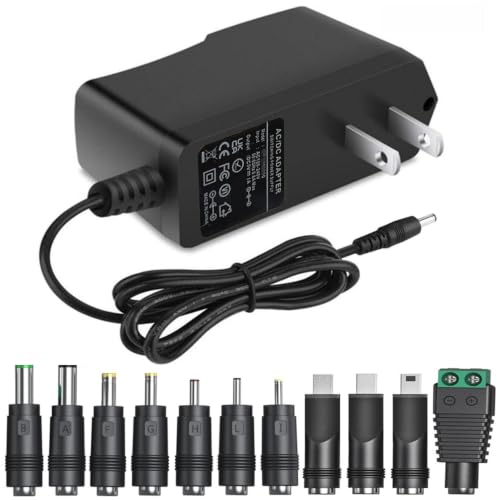
5V 1A AC Adapter with 11 Plug Tips

UpBright 5V AC/DC Adapter for OttLite Task Lamps
A Closer Look At Each Pick
When a project stretches beyond a short LED run, the ALITOVE 5V 60A 300W supply steps in with serious headroom. It takes 110V or 220V AC from the wall and delivers up to 60 amps at 5V DC, which means a long string of WS2812B pixels can finally light up without dimming halfway down the line. A built-in cooling fan handles the heat that comes with pushing that much current, and the chassis has slots for screw terminals so wiring stays tidy.
This is the kind of supply that fits on a garage shelf and feeds an entire workbench setup. Compared to the smaller 1A and 5A picks below, this one is genuinely industrial in feel, so hobbyists with only a few feet of strip are paying for capacity they won’t use.
The Upside
- 300W total handles long pixel runs and CCTV arrays without brownouts
- Three output channels let you split loads across separate screw terminals
- Adjustable output voltage (around 10%) helps compensate for voltage drop on longer runs
- Built-in cooling fan keeps thermals in check during sustained loads
- Automatic overload, over-voltage, thermal, and short-circuit protections
Things To Consider
- The fan produces noticeable noise, which matters in a quiet home office
- Enclosure is larger and heavier than a typical wall wart, so it wants shelf space
- Wiring requires basic comfort with screw terminals rather than a simple plug
Key Specs
Made For
Makers running long WS2812B pixel installations or multi-camera security rigs who need sustained 5V power without flicker.
Skip It When
You only need to power a small sensor or a couple of LEDs, and the smaller JAMECO RELIAPRO DDU050100M2270 wall adapter is a quieter, lighter fit.
Sometimes the right adapter is the smallest one. The JAMECO RELIAPRO DDU050100M2270 is a single-out 5V 1A wall wart with a no-frills 5W ceiling, which makes it perfect for tiny projects like a single-board computer, a small sensor, or a basic electronics learning kit. The package dimensions stay roughly at 4 by 4 by 2 inches, so it tucks behind a desk or shelf without dominating the outlet strip.
It carries the kind of understated reliability that hobbyists appreciate when they need a steady low-current feed. The catch is that 1 amp is genuinely limiting, so anyone running addressable LEDs or multiple cameras will outgrow it fast.
Useful Touches
- Compact 4 x 4 x 2 inch form fits easily behind furniture
- Simple wall-plug design needs no extra cabling
- Reliapro is a Jameco house brand known for steady electronics-grade components
- Lightweight at roughly one pound, so it does not stress wall plates
Trade Offs
- 1A output rules out anything beyond very low-draw projects
- Single fixed output means no flexibility for higher-current devices
- Basic design without extra protections listed, so pairing with sensitive gear calls for care
Feature Snapshot
Who It Suits Best
Students and beginners building breadboard projects or running a single low-draw microcontroller who want a tidy, no-fuss wall supply.
Reach For A Different Pick When
The project calls for more than an amp or two of current, in which case the ALITOVE 5V 5A Power Supply Adapter offers headroom without jumping to a fan-cooled chassis.
The middle of the lineup is where many real-world projects actually live, and the ALITOVE 5V 5A Power Supply Adapter lands right in that sweet spot. It accepts 100V to 240V AC and delivers a steady 5V at up to 5 amps, which is enough to drive a moderate WS2812B run, a small CCTV camera, or a desk full of accessories. The 5.5 by 2.5mm barrel jack is backward-compatible with the common 5.5 by 2.1mm size, so older gear still plugs in.
A included female DC connector with screw terminals lets you wire bare leads without touching a soldering iron. This is the pick I tend to recommend first to anyone whose project outgrew a phone charger but does not need the fan-cooled heavy hitter above.
Points In Its Favor
- 25W output suits medium LED runs and security cameras
- 5.5×2.5mm jack works with both 2.5mm and 2.1mm barrel sizes
- Screw-terminal DC connector saves a soldering step
- Overload, over-voltage, thermal, and short-circuit protections included
Points To Note
- 5A is plenty for many builds, but pixel-heavy installations will still need more
- The adapter body can run warm at sustained full load, so airflow around it matters
Quick Facts
Best Suited To
Hobbyists running modest pixel installations or powering a couple of low-wattage security cameras who want flexibility without overkill.
Consider Something Else When
The plan is a long pixel run or a multi-camera security hub, which is where the ALITOVE 5V 60A 300W Power Supply LED Driver really earns its place.
For projects that genuinely pull serious current, the ALITOVE 5V 15A Power Supply Transformer is the single-jack answer. It accepts 100V to 240V AC and offers 5V DC at up to 15 amps, which covers anything from a long WS2811 strip to a multi-camera setup that still wants one tidy barrel-jack connection. The same 5.5 by 2.5mm barrel works with 2.1mm sockets, so cable compatibility stays easy.
It does not have the three output channels or the active cooling of the 60A flagship, so it sits in a comfortable middle ground. Owners commonly report that running it well below its 15A ceiling (around 12A or 80%) keeps things cool and quiet.
Everyday Perks
- 75W of headroom for substantial pixel and camera loads
- Single 5.5×2.5mm jack keeps wiring simple and clean
- Works with any device drawing up to 15A, from 1A sensors up
- Overload, over-voltage, thermal, and short-circuit protection
Honest Caveats
- Best operated below 15A to keep temperatures comfortable
- Single output means splitting loads requires extra wiring hardware
- No fan, so very long full-load sessions demand some ventilation
Feature Rundown
Who Will Love This
Makers pushing long WS2811 or WS2801 strips who want one supply and one cable instead of splitting power mid-run.
A Better Fit Elsewhere
Anyone running three or four separate LED channels in parallel will find the ALITOVE 5V 60A 300W Power Supply LED Driver more convenient with its built-in terminal channels.
For a household drawer full of gadgets that each lost their original charger, the GuanTing 5V 1A adapter with eleven swappable tips is a quiet lifesaver. It runs on 100V to 240V AC and outputs 5V at 1A maximum, compatible with anything drawing 1A, 800mA, 500mA, 400mA, 300mA, 200mA, or 100mA. A 6-foot cord reaches across the room, and the included tips cover baby monitors, Graco swings, cameras, Raspberry Pi boards, and USB Type-C devices.
The tradeoff is real: you must match polarity (inner positive, outer negative) and DC socket size before plugging in, or the device simply will not work. Treat it as a multi-tool rather than a primary supply, and it earns its spot fast.
The Value In It
- Eleven interchangeable tips cover a wide range of legacy and current devices
- Universal 100V-240V input works for travel or international outlets
- Compatible current ratings from 100mA up to 1A
- Long 6-foot cord adds placement flexibility
Where It Is Less Suited
- 1A ceiling rules out LED strips and other higher-current projects
- Polarity and tip sizing must be confirmed before use to avoid damage
- Manufacturer suggests staying below 80% output for long sessions, so steady loads should not exceed about 800mA
Whose Shelf It Belongs On
Parents and home office workers who need one universal charger for baby monitors, swings, routers, and small electronics that lost their original supplies.
Not Your Match When
The goal is driving LED strips or a security camera array, where the ALITOVE 5V 15A Power Supply Transformer handles the same projects at a much higher current tier.
When an OttLite task lamp dies because the original adapter finally gave up, the UpBright 5V replacement fills the gap with a purpose-built solution. It targets 4.5V to 5.0V devices across OttLite model numbers like CDO-007, 290089, 4050, 290G59, 290009, and the 259WBC series. The 100V to 240V AC input means it works anywhere, and built-in OVP, OCP, and SCP protections guard against the usual failure modes.
Two adapters ship in the box, which is a nice touch if the household owns more than one OttLite lamp. Compatibility is the catch, since UpBright is explicit that this is not for 6V, 9V, 12V, 13V, or 13.2V variants, so double-check the original label before ordering.
Good Reasons To Consider
- Compatible with a wide range of OttLite handheld and task lamp models
- Over-voltage, over-current, and short-circuit protections included
- Two adapters per pack covers multiple lamps or a backup
- Universal 100V-240V input suits travel and international outlets
What To Weigh
- Not suitable for 6V, 9V, 12V, 13V, or 13.2V lamp variants
- Niche compatibility means limited usefulness outside OttLite gear
Perfect Match For
OttLite owners whose original charger failed and who want a plug-and-play replacement rather than rewiring the lamp.
Look Elsewhere When
The project needs a general-purpose supply, in which case the ALITOVE 5V 5A Power Supply Adapter covers more devices with a similar footprint.
Picking The Right 5V Supply for Real Projects
Match Current To The Load
The single most important number on any 5V adapter is the amp rating, because underpowering a device is the fastest path to flickering LEDs, rebooting cameras, or a board that never boots. A small sensor might only need 200mA, while a string of WS2812B pixels can draw 60mA per LED at full white, so a 60-pixel run wants a real 4A supply. Always check the device’s spec sheet first, then pick an adapter that meets or slightly exceeds that draw. Staying around 80% of the adapter’s rated capacity is a common practice that reduces heat and extends the supply’s working life.
Consider Connector And Polarity
Two adapters with identical voltage and current ratings can still be wrong for the project if the barrel size or polarity does not match. The 5.5 by 2.5mm barrel is widespread, and many supplies also accept 5.5 by 2.1mm plugs, but smaller devices often use 3.5 by 1.35mm or micro-USB tips. Polarity (inner positive versus negative) is the silent killer: a mismatched polarity can damage the device before anything lights up. A quick visual check on the original charger, or a peek at the device’s label, prevents that outcome.
Think About Cooling And Noise
A fan-cooled supply like the 60A ALITOVE handles sustained loads easily, but the fan is audible in a quiet room. Fanless supplies run silent but rely on passive cooling, so they want a bit of clearance around the chassis and benefit from being mounted on a hard surface rather than buried in insulation. For workshop or garage use, fan noise is a non-issue; for a bedside lamp or office, silent operation is worth the smaller current ceiling.
Decide Between General And Specialty
A general-purpose supply like the ALITOVE 5V 5A or the swappable-tip GuanTing adapter handles a wide range of gear, which makes it the right pick for a mixed household or workbench. A specialty supply like the UpBright OttLite adapter trades flexibility for guaranteed compatibility with one brand, which is exactly what someone replacing a lost charger wants. The honest read is that most projects benefit from a general-purpose supply on hand, with a specialty replacement reserved for the specific device that needs it.
Key Considerations Across These Picks
Pitfalls Shoppers Hit
The most common mistake is grabbing a 5V adapter based on voltage alone and ignoring the amp rating, which leads to dim LEDs or a security camera that reboots under night-time infrared load. Another trap is assuming polarity is always the same, since some devices use center-negative wiring that can fry sensitive electronics if guessed wrong. Buyers also tend to overlook connector size, so a 5.5 by 2.5mm adapter will not help a device that needs a 3.5 by 1.35mm tip.
Where The Extra Money Goes
Higher-tier supplies earn their keep with active cooling, multiple output channels, and tighter voltage regulation under load. A premium 60A unit like the ALITOVE flagship can sustain its full rating without thermal throttling, while a budget 1A wall wart will sag and overheat if pushed. The upgrade is worth it when the project runs for hours at a time or feeds gear that reboots when voltage dips; for occasional use on a small device, a basic supply is plenty.
