

A well pump pressure switch is one of those parts nobody thinks about until the shower goes cold mid-rinse. The 40/60 range remains the most common residential setting because it delivers strong flow without overworking the pump motor. I put together this list for homeowners, rural property owners, and anyone maintaining a jet, submersible, or reciprocating pump who wants a switch they can trust to cycle cleanly for years.
How The Shortlist Stacks Up

FanWayer Water Pump Pressure Switch 20-40 PSI (2-Pack)

Telemecanique 9013FYG2J24 Air-Pump Pressure Switch

Telemecanique 9013FSG2J24 Air-Pump Pressure Switch

Schneider FSG2J24CP Pumptrol Water Pressure Switch

Square D 9013GSG2J24 40-60 PSI Heavy Duty Switch
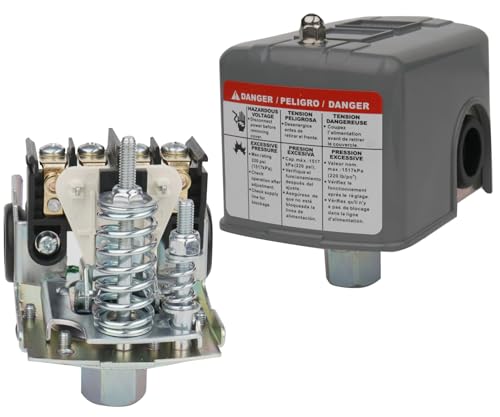
WHK Water Pressure Switch for Well Pump 40-60 PSI

Merrill MPS4060 Water Well Pressure Control Switch
More On The Choices That Made The List
The FanWayer 20-40 PSI set stands out for shoppers who want a spare on hand without overspending. Cut-in pressure sits at 20 PSI and cut-off at 40 PSI, which makes it a better match for low-pressure residential setups than the 40-60 norm. The 1/4″-18 NPT female connection fits standard pump manifolds, so installation rarely demands extra fittings.
I see this working well for a cabin, an irrigation shed, or a second property where the plumbing runs are short. Two switches in one box means you can replace a failing unit and still have a backup waiting on the shelf, which is honest peace of mind for anyone maintaining their own well system.
Where It Delivers
- Two-pack value keeps a spare ready for the next failure.
- Standard 1/4″-18 NPT female thread fits common pump manifolds.
- Simple 20-40 PSI range suits shallow wells and low-pressure homes.
- Reasonable price point for property owners on a tight repair budget.
Things To Consider
- 20-40 PSI is below the 40-60 standard most households expect.
- Brand recognition trails behind Schneider Electric and Square D.
Made For
Owners of low-pressure well systems who want a budget two-pack and a backup on the shelf.
Where Another Pick Suits Better
The Schneider FSG2J24CP is a smarter grab for standard 40-60 residential plumbing where higher recognition matters.
The Telemecanique 9013FYG2J24 is the kind of switch I lean toward when the system has unusual demands. The cut-out range stretches from 20 to 65 PSI and the adjustable differential spans 15 to 30 PSI, which gives installers room to tune the cycling behavior around a specific pump rather than forcing the pump into a preset window.
It works with electrically driven water or air pumps, and pairs well with motors up to 2 hp. The NEMA 1 enclosure keeps the internals protected indoors, and the screw clamp terminals make wiring approachable for anyone comfortable with a basic multimeter.
The Upside
- Adjustable differential gives fine control over short-cycling prevention.
- Wide cut-out window handles pumps that need extra headroom.
- Compatible with both water and air systems, which adds versatility.
- Backed by Telemecanique’s industrial-grade build reputation.
Points To Note
- More tuning knobs mean more time spent dialing settings in.
- Higher capability than the average 40-60 setup actually needs.
Feature Snapshot
Built With In Mind
Installers who want to fine-tune cycling behavior on pumps with unusual pressure demands.
Swap It Out When
Stick with the Telemecanique 9013FSG2J24 if a standard 40-60 PSI residential install is all you need.
The 9013FSG2J24 is the workhorse I’d pick for a typical suburban home. The factory on/off setting lands right on 40/60 PSI, so most installations are essentially a swap-and-go. The DPST (double-pole, single-throw) contact form handles the kind of loads a 2 hp residential pump draws without complaint, and the temperature range covers nearly any climate a house might sit in.
It works with jet, submersible, and reciprocating pumps, which covers virtually every common residential configuration. UL 1 compliance and the NEMA 1 enclosure make it a safe pick for indoor utility rooms, and the screw terminals keep wiring familiar.
What Pays Off
- Factory-preset 40/60 PSI removes tuning for most installs.
- DPST contact form handles standard residential pump loads.
- Broad pump type compatibility across jet, submersible, and reciprocating setups.
- UL 1 listed for documented safety compliance.
- Wide operating temperature range for varied climates.
Honest Caveats
- No grey cover option for visibility preferences.
- Limited adjustability compared to the FYG2J24 sibling.
Perfect Match For
Homeowners with a standard 40-60 PSI well pump who want a proven, swap-friendly replacement.
Look Elsewhere When
The Merrill MPS4060 is worth a look if you want larger contacts and slightly different internal geometry.
The FSG2J24CP sits in the same Pumptrol family as the 9013FSG2J24 above, but it swaps the standard cover for a grey one. That visual difference is small on paper, yet in a dim utility room or basement it makes the switch easier to spot during inspection or troubleshooting. Functionally, the 40-60 PSI range and 1/4″ connection match the family tradition.
Standard-action contacts open on rising pressure, which mirrors the behavior most homeowners expect from a residential switch. It suits jet, submersible, and reciprocating pumps equally well, and the Schneider Electric name gives it solid aftermarket recognition.
Everyday Advantages
- Grey cover improves visibility in dark utility spaces.
- Standard 40-60 PSI covers typical residential plumbing.
- Schneider Electric branding adds service and parts familiarity.
- Pumptrol pedigree ties it to a long-running proven design.
Soft Spots
- Functionally very close to the FSG2J24 sibling, so the cover may not justify a premium for everyone.
Whose Shelf It Belongs On
Property owners with dim utility rooms who appreciate a high-visibility grey cover.
Reach For A Different Pick When
Choose the Telemecanique 9013GSG2J24 if your pump runs hotter or demands a higher pressure ceiling.
The Square D 9013GSG2J24 earns the “heavy duty” label for a reason. The maximum permissible pressure reaches 220 PSI, which sits well above typical residential cycling, and the operating temperature window stretches from negative 33°F up to 257°F. That range covers unheated pump houses in cold winters and sun-baked equipment closets in summer.
The 1/4″ female thread connection matches standard plumbing, and UL/CSA standards back the build. I see this switch making sense on properties where the pump sees hard service, the ambient temperature swings hard, or the installer simply wants extra headroom.
Real Benefits
- 220 PSI maximum permissible pressure handles surging systems.
- Wide temperature range survives harsh climates.
- UL and CSA compliance confirm the build for code-conscious installs.
- Square D reputation for rugged industrial components.
- Drop-in 1/4″ connection for standard residential plumbing.
A Few Limitations
- Higher capability than most homes actually require.
- NEMA 1 rating means indoor installation only.
Who It Suits Best
Property owners with high-demand pumps or extreme climate exposure who want extra pressure headroom.
Consider Something Else When
Stick with the Telemecanique 9013FSG2J24 for a more typical suburban well system without the heavy-duty envelope.
The WHK 40-60 PSI switch fits comfortably in the “first replacement” category. The cut-in at 40 PSI and cut-off at 60 PSI match what most homeowners already have, so swapping an old switch for this one keeps the rest of the system unchanged. The auto-electrical control keeps cycling predictable once installed.
It works as a universal replacement across jet, submersible, and reciprocating pump types, which removes the guesswork for someone staring at a failed switch and wanting a single part that should fit. The build is straightforward, and the brand has been quietly building a presence in the well pump parts category.
Features That Help
- Standard 40-60 PSI range matches typical residential tanks.
- Universal fit across jet, submersible, and reciprocating pumps.
- Auto electrical control keeps cycling consistent.
- Approachable for first-time installers.
Less Ideal Details
- Brand recognition lags behind Schneider and Square D.
- Fewer tuning options than the Telemecanique switches offer.
The Right Fit
First-time installers replacing a failed switch who want a straightforward, no-tuning-required part.
Another Choice May Suit
The Schneider FSG2J24CP is worth considering if brand pedigree carries weight in your decision.
The Merrill MPS4060 closes out the list with a design choice I appreciate: large silver contacts. Silver conducts well and resists the pitting that shortens contact life under repeated cycling, so the claim of longer service life isn’t just marketing language. The 40-60 PSI range and 1/4″ female NPT connection match what most homes already have in place.
It works with jets, submersibles, and reciprocating pumps, and ships individually boxed for clean shelf storage. A 2 HP rating at 115VAC handles most residential pumps, which is the realistic ceiling for this category anyway.
Practical Pluses
- Large silver contacts aim for longer electrical service life.
- Individual boxing keeps the switch clean until install day.
- OEM replacement positioning for direct fit on common setups.
- Standard 1/4″ female NPT for typical residential plumbing.
Worth Bearing In Mind
- Adjustable differential range is narrower than the Telemecanique FYG2J24.
- Less widely known than the Square D or Schneider alternatives.
Feature Snapshot
Best Suited To
Homeowners focused on long contact life and a clean OEM-style replacement.
Skip It When
Reach for the Telemecanique 9013FYG2J24 if your situation needs broader tuning and differential adjustment.
Matching The Right Switch To Your Pump And Plumbing
A 40-60 PSI pressure switch controls when your pump turns on and off, so the wrong match shows up fast as short-cycling, weak showers, or a motor that never shuts off. The cut-in pressure is the lower number where the pump kicks on, and cut-off is the higher number where it shuts down. Differential is the gap between the two, and a wider gap means fewer starts per day, which generally extends pump motor life.
Start by confirming your existing switch’s pressure range and connection size. Most residential setups use a 1/4″ NPT female connection, which nearly every switch on this list matches. Jet pumps typically tolerate standard residential switches, while submersibles in deeper wells sometimes need a switch rated for higher maximum permissible pressure, like the Square D 9013GSG2J24.
Next, think about climate and location. An unheated pump house in a northern winter or a sun-baked utility closet in a southern summer will test the temperature limits of any switch. The Square D switch on this list earns its heavy-duty label largely through that temperature envelope. If your switch lives in a conditioned space, you have more flexibility on specs.
Finally, look at pump type. Jet, submersible, and reciprocating pumps each have slightly different electrical demands, though most residential switches cover all three. The Merrill MPS4060 positions itself as a universal OEM-style replacement, which removes guesswork for homeowners who don’t want to dig into pump-specific compatibility charts.
Key Considerations Across These Picks
Pitfalls Shoppers Hit
The most common mistake is grabbing a switch with the wrong pressure range. A 20-40 PSI unit like the FanWayer will leave showers feeling weak in a home calibrated for 40-60. The second trap is overlooking the connection size, since a 1/4″ NPT male won’t seat properly on a 1/4″ NPT female port without an adapter. Finally, ignoring the enclosure rating leads to early failures in outdoor or damp installations, since NEMA 1 is an indoor rating and outdoor setups need higher protection.
Where The Extra Money Goes
Stepping up to a Telemecanique or Square D switch generally buys broader adjustment ranges, higher maximum permissible pressure, wider temperature tolerance, and stronger brand-backed service support. For a typical suburban home, the standard Pumptrol-style switches handle everything well. The upgrade pays off when the pump runs hot, the climate swings hard, or the installation demands certification beyond the basic UL listing.
Frequently Asked Questions
What PSI should a residential well pump switch be set to?
Most homes run a 40-60 PSI setting because it balances strong flow with reasonable cycling frequency. Lower settings can feel weak at the shower, while higher settings add wear to the pump motor.
Can I install a 40-60 pressure switch myself?
Homeowners comfortable with basic electrical work and plumbing can usually handle the swap. Shut off power at the breaker, relieve tank pressure, and follow the wiring diagram inside the switch cover before restoring power.
How do I know my pressure switch is failing?
Common signs include the pump cycling rapidly, the pump failing to shut off, no water pressure building, or visible corrosion on the contacts. Any of these usually means replacement rather than repair.
Is NEMA 1 enough for outdoor installation?
NEMA 1 is rated for indoor use only. Outdoor installations need a higher NEMA rating, such as NEMA 3 or NEMA 4, to keep moisture and dust out of the switch internals.
How long does a well pump pressure switch last?
Most residential switches last somewhere between 5 and 10 years depending on cycling frequency, water quality, and electrical load. Heavy cycling shortens life, while stable pressure extends it.
Closing Thoughts
A reliable 40-60 pressure switch keeps the water flowing and the pump motor happy for years at a stretch. Match the pressure range, connection, and enclosure to your existing setup first, then consider whether your climate or pump demands anything beyond the standard residential pick. Take your time during install, label the wires before disconnecting, and your new switch should pay for itself in steady showers and quiet cycling.
