

A dead HVAC capacitor is one of those quiet failures that turns a 90-degree day into an uncomfortable one. I know the feeling: the fan won’t spin, the compressor hums but never starts, and suddenly you are searching for a 40/5 dual run capacitor at 9 PM. This list pulls together six solid options from the marketplace that match what most air handlers, heat pumps, and condenser units actually need, so you can swap in the right part without guessing twice.
The Leading Options At A Glance

Buck 45+5uF Dual Run Round Start Capacitor 370/440VAC
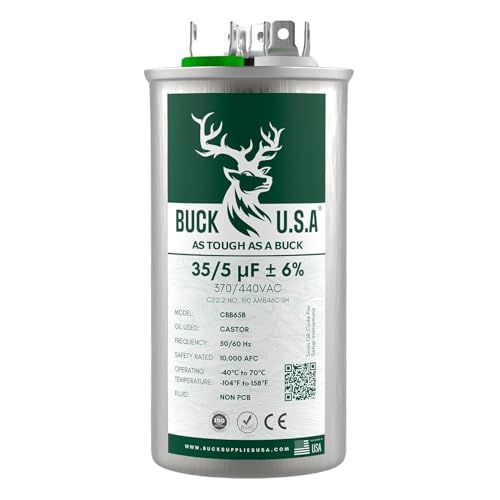
Buck 35+5uF Dual Run Round Start Capacitor 370/440VAC

VEXUNGA 2PCS 40+5uF Dual Run Start Round AC Capacitor

Genteq 97F9838/C4405R Round Capacitor 40 5 MFD 440V

Buck 40+5uF Dual Run Round Start Capacitor 370/440VAC

40/5 MFD 370V/440V Dual Run Start Round AC Capacitor
The Picks, Examined More Closely
This Buck unit steps slightly above the standard 40/5 rating, which makes it useful when the nameplate on your compressor or fan motor calls for a bit more capacitance than the textbook spec. It is a dual run capacitor, meaning one can serves both the compressor and the fan motor inside the same round can, which is how most modern condensing units are wired.
The body is rated for both 370 and 440 volt operation, so you can match it to common residential systems without second-guessing. Labeled terminals (Herm for compressor, Fan for the fan, Common for the shared line) make wiring straightforward when you are staring at three posts on top of an old can in a tight condenser cabinet. For anyone swapping in a part on a heat pump or a straight-cool condenser where the old spec was close but a touch under, this is a comfortable choice.
What Makes Sense
- The 45/5 rating gives a small margin if your original spec was borderline at 40/5
- Dual voltage rating (370/440 VAC) covers most residential condensing units
- Labeled terminals simplify matching to the existing wiring
- Wide operating temperature range suits outdoor cabinet placement
Trade Offs
- Slightly higher capacitance than a strict 40/5 spec, so it does not suit systems that require exact original ratings
- Round form factor may not fit tighter oval-mount brackets in some older units
Made For
Homeowners with residential condenser units whose original spec drifts between 40 and 45 microfarads and who want a single part that bridges both.
Look Elsewhere When
If your system strictly calls for a 35/5 rating, the Buck 35+5uF Dual Run Round Start Capacitor will be a closer match without oversizing the capacitance.
Smaller compressors and many residential fan motors do not need the full 40 microfarad range. This Buck 35+5uF unit targets that lower-demand end, which keeps the inrush current reasonable and avoids over-driving a motor that was designed around a more modest capacitance value.
The shared 370/440 dual voltage body matches the rest of the Buck HVAC line, so technicians who already stock Buck parts can keep inventory simple. The same Herm, Fan, and Common labeling applies, so swapping from a failed part to this one is a matter of moving three wires from old posts to new. It is the kind of capacitor that quietly does its job in a smaller window unit or a compact condenser where space and load are both limited.
Real-World Strengths
- Right-sized capacitance for smaller motors that would be over-driven by a 40/5
- Shared body style with other Buck CBB65B units simplifies stocking
- Labeled terminals reduce wiring mistakes during rushed repairs
Worth Noting
- Not a drop-in for systems that specifically call for 40/5
- Owners of larger condensing units should verify the motor nameplate before substituting
- Round shape may need a strap adapter in cabinets built for oval cans
Quick Facts
Right Fit For
Anyone maintaining a smaller fan-and-compressor setup, including many window units and compact condensers where a 35/5 spec is on the nameplate.
Swap It Out When
Stick with the Buck 40+5uF Dual Run Round Start Capacitor if your compressor data plate clearly lists 40 microfarads rather than 35.
The VEXUNGA two-pack is built for the kind of person who wants a spare capacitor on the shelf before the next failure. Capacitors are wear items: they dry out, lose capacitance, and fail most often during the hottest stretch of summer when they are working hardest. Having a second can waiting in the garage means a future no-cool call does not turn into a multi-day wait for a part.
Each unit is rated for both 370 and 440 volt systems and carries the same Herm, Fan, and Common terminal arrangement used across this category. The listed dimensions, roughly 60 millimeters in diameter and 85 millimeters tall, land comfortably inside the standard round can footprint. For a property owner juggling more than one AC or a small rental portfolio, a single order covers multiple sites.
Where It Delivers
- Two units per order means an immediate spare for the next failure
- Matches both 370 and 440 volt applications
- Standard three-terminal layout for straightforward wiring
Small Caveats
- Buyers who only need one capacitor end up with an extra can they must store properly
- Confirm dimensions against your existing strap and bracket before ordering
Who It Suits Best
DIYers and small property managers who want a backup on hand and value getting two units from a single order.
Reach For A Different Pick When
If you only want one replacement can and prefer an OEM-style part, the Genteq 97F9838/C4405R Round Capacitor is a leaner single-unit option.
Genteq carries a long-standing reputation in OEM HVAC components, and the 97F9838 (cross-referenced as C4405R) is a 40/5 round can built for that crowd. It is the kind of part a service tech reaches for when matching the original equipment in a Carrier, Trane, or GE-built condensing unit matters.
The voltage rating is the higher 440 volt spec, which gives extra headroom above the running voltage of most residential systems. The footprint is compact, roughly 5.6 centimeters per side, which makes it friendly to the crowded electrical compartments of newer high-efficiency condensers. For someone whose maintenance philosophy is “swap to the same thing that came out,” this is a direct-fit answer.
What Works In Its Favor
- OEM-spec construction for matched replacements
- 440 volt rating gives margin above standard running voltage
- Compact size fits tight electrical compartments
Honest Caveats
- Priced higher than generic aftermarket alternatives
- Single-unit count means no spare for the next failure
Best Suited To
Technicians and homeowners who want an OEM-grade replacement and are willing to pay a premium for that lineage.
A Better Fit Elsewhere
If you would rather keep a second can on hand for the next failure, the VEXUNGA 2PCS 40+5uF Dual Run Start Round AC Capacitor covers that scenario.
This is the textbook 40/5 part in the Buck HVAC line, and for most residential condenser and heat pump swaps it is the spec that matches the data plate. The can sits in the middle of the Buck range: not the higher-output 45/5, not the smaller 35/5, just the standard combination that the majority of dual-run installations call for.
It runs across 370 and 440 volt systems, so a technician working in mixed residential stock only needs to grab one part. Labeled terminals and the same CBB65B construction as its siblings keep the installation familiar. For the homeowner who has just confirmed the failed part is a 40/5 and wants a direct replacement, this is the can to reach for.
A Few Highlights
- Standard 40/5 spec matches the most common residential data plate readings
- Compatible with both 370 and 440 volt systems
- Same labeling system as other Buck CBB65B units for quick swaps
Points To Keep In Mind
- Single-unit count, so a second one means a second order
- Confirm voltage on the original can before ordering in case of 370V-only systems
Feature Snapshot
Perfect Match For
Homeowners and technicians performing a textbook 40/5 capacitor swap on a residential condenser or heat pump.
Not Your Match When
If your data plate reads 35/5, the Buck 35+5uF Dual Run Round Start Capacitor is the better fit.
This aftermarket 40/5 round capacitor targets the simplest replacement scenario: a failed can in a residential condenser, an at-home repair on a weekend, and a budget that prefers value over a recognized OEM label. It runs at both 370 and 440 volts and uses the standard three-terminal layout shared across this whole category.
The dual-run construction means a single can supports both the compressor and the fan motor, just like the other options on this list. For someone who needs the AC back online tonight and is comfortable verifying the failed part’s label before ordering, this is a no-frills path back to a working system. It is the kind of part you keep one of in a drawer, ready for the next summer.
What Stands Out
- Direct replacement for the most common 40/5 residential spec
- Dual 370/440 VAC compatibility
- Standard Herm, Fan, Common terminal layout
Practical Considerations
- Generic aftermarket brand without OEM heritage
- Always discharge the old capacitor safely before handling, since stored energy can deliver a real shock
Who Should Grab It
Homeowners handling a straightforward 40/5 swap who want a cost-effective replacement and are comfortable with basic electrical safety.
Consider Something Else When
For an OEM-grade match, the Genteq 97F9838/C4405R Round Capacitor is the closer fit.
Matching 40 5 Capacitors to Your HVAC System
The most important number on any round capacitor is the microfarad rating, shown as two values like 40/5. The larger number (40 µF) runs the compressor, and the smaller number (5 µF) runs the fan motor inside the same can. A dual run capacitor combines both jobs into a single component, which simplifies the wiring inside the condensing unit. Always match the original spec from the data plate on the failed part or the motor rather than guessing, since compressors and fan motors are designed around a specific capacitance window.
Voltage rating comes next. A 370 volt capacitor handles standard residential systems, while a 440 volt unit gives extra margin above the running voltage and is common on higher-efficiency equipment. For most residential swaps, a dual 370/440 volt capacitor is the safest choice because it works in both worlds without overthinking the comparison.
Physical size and terminal layout matter more than people expect. Measure the diameter and height of the old can and compare against the replacement, since a slightly larger body may not fit the existing mounting strap. The three terminals on top should be labeled (Herm, Fan, Common) so the wiring moves over cleanly from the old unit to the new one. A quick photograph of the wiring before removal makes reassembly painless.
Operating temperature range is worth checking for outdoor cabinets. A unit rated from around -40°C to 70°C handles both winter cold and the heat of an August afternoon at the compressor. For coastal or humid climates, look for a sealed metal can that resists moisture ingress over multiple seasons.
Common Shopping Slip Ups
The biggest mistake I see is substituting a 35/5 or 45/5 can where the data plate clearly calls for 40/5. Even small capacitance shifts push the motor outside its designed envelope and shorten its life. Another trap is choosing a 370 volt capacitor for a system that runs closer to 440 volts: the part may survive, but its lifespan drops noticeably under higher stress.
Failing to discharge the old capacitor before handling is a safety issue, not just a preference. Even with the power off, a dual run capacitor holds enough stored energy to deliver a nasty shock. A simple resistor discharge tool or a screwdriver with an insulated handle across the terminals (while wearing gloves) handles it safely.
What The Higher Tier Buys
Spending more on a capacitor usually buys one of three things: tighter capacitance tolerance, a more robust internal construction, or an OEM-grade lineage that matches the original equipment in your unit. For most homeowners with a single failed part, a quality aftermarket 40/5 at a modest cost is plenty. The premium tier makes more sense for service technicians who want predictable, repeatable results across many service calls, or for anyone replacing capacitors in higher-end condensing units where the original part was sourced from a recognized manufacturer.
Wrap Up
A 40 5 capacitor is a small, inexpensive part that makes a huge difference on a hot day. Match the microfarad rating from your data plate, choose a 370/440 dual voltage can for flexibility, and verify the physical size and terminal layout before you order. With those boxes checked, any of the six options above will get your condenser humming again and keep it that way through the next stretch of summer.
Frequently Asked Questions
What does a 40/5 dual run capacitor do?
A dual run capacitor supports both the compressor and the fan motor inside a residential condensing unit. The 40 µF side runs the compressor, while the 5 µF side runs the fan motor, all from one can.
Can I use a 45/5 capacitor in place of a 40/5?
Substituting a different microfarad rating is not recommended, even by a small margin. The motor is designed for a specific capacitance window, and going outside that window can shorten its life or cause nuisance tripping.
Is a 440 volt capacitor better than a 370 volt?
A 440 volt capacitor simply provides more voltage headroom above the running system voltage. It is not inherently “better,” but it tends to last longer on systems that run closer to the upper edge of a 370 volt rating.
How do I safely replace an HVAC capacitor?
Always turn off power at the disconnect before opening the cabinet, then discharge the old capacitor by bridging its terminals with an insulated resistor or screwdriver. Photograph the wiring before you remove the old can so the new one wires up identically.
How long does a 40/5 capacitor usually last?
Most run capacitors last somewhere between five and ten years under normal residential use. Heat, humidity, and constant summer cycling tend to shorten that window, which is why failures cluster during the hottest weeks of the year.
