

A new dryer in a laundry room that sits too far from the outlet is a familiar headache. Most 30-amp electric dryers need a 4-wire hookup (the modern post-1996 standard), and the cord that ships in the box rarely covers awkward layouts. A dependable 4 prong dryer extension cord bridges that gap, carrying the full 240V load without resorting to risky workarounds like power strips or undersized cables.
I put this roundup together for anyone rewiring a laundry area, replacing a chewed-up cord, or simply stretching service to where the dryer actually lives. Every pick below earns its place by handling the real 30A load, fitting a standard NEMA 14-30 outlet, and standing up to the heat and moisture that build up behind a running dryer.
How The Shortlist Stacks Up

PlugSaf 10FT 4 Prong Dryer Cord 10/4

PlugSaf 10 FT 4 Prong Dryer Extension Cord

PlugSaf 6FT 4 Prong Dryer Cord 10/4
RVMATE 4 Prong SRDT Dryer Cord 5 ft

Cable Matters 10 AWG 30A 3 Prong Dryer Cord 10ft
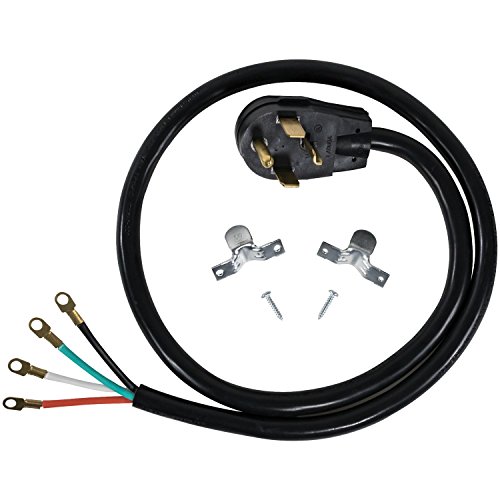
Certified Appliance Accessories 4 Prong Dryer Cord 4ft

Elecan 4-Prong Dryer Power Cord 4 ft
A Breakdown Of The Leading Choices
The PlugSaf 10-foot cord is the kind of choice that just makes sense for most laundry setups. It runs a pure copper 10-gauge 4-wire build rated for the full 125/250V load a 30A dryer pulls, which means it isn’t a flimsy workaround masquerading as an extension. The SRDT jacket (a tough, heat-resistant thermoset rubber sheath) shrugs off the warmth that builds up behind a running dryer, and the ETL listing (a third-party safety certification recognized across North America) gives some assurance that the cord has been tested to a real standard rather than a homemade one.
Ten feet covers most basement, garage, and second-floor laundry layouts where the dryer outlet sits on the opposite wall from the appliance. For homeowners doing a one-time install or a clean swap after a move, this length strikes a nice middle ground between too short and unwieldy. It also tends to be a slightly safer pick than generic imports because the certification is verifiable.
Key Advantages
- ETL-listed for independent safety verification on a 30A circuit.
- Pure copper 10 AWG wiring handles the full 7500W dryer load without voltage drop.
- SRDT thermoset jacket resists heat and moisture behind the appliance.
- 10-foot length covers most mid-sized laundry rooms with outlet-to-dryer spacing.
- NEMA 14-30 plug fits the modern 4-wire outlet found in homes built after 1996.
Things To Consider
- Ten feet may run short in basements where the outlet is on a far wall, so measure first.
- SRDT jackets are stiffer than PVC, which can make routing behind the dryer slightly tricky in tight spaces.
Key Product Details
Whose Laundry Room It Belongs In
Homeowners with a standard post-1996 dryer outlet and a moderate run between wall and machine.
Skip It When
The PlugSaf 10 FT 4 Prong Dryer Extension Cord is a smarter call for tight spaces where the right-angle plug helps the dryer sit closer to the wall.
This second entry from PlugSaf is essentially the same heavy-duty 10-gauge copper cable as the first pick, but with one practical twist: a right-angle plug (a 90-degree NEMA 14-30P that exits parallel to the wall rather than straight out). For laundry closets where every inch counts, that single design choice can be the difference between the dryer sitting flush against the wall or sticking out a frustrating two extra inches.
The flat profile also helps in narrow side-by-side setups where a straight plug would block access to the adjacent washer. Same 125/250V, 7500W rating, same 30A NEMA 14-30R receptacle on the dryer end, so the electrical performance matches the first pick. The honest read is that this is the better option for cramped closets, while the first pick is slightly easier to route in open basements.
Strong Points
- Right-angle plug keeps the appliance closer to the wall.
- Flat profile fits tight side-by-side washer-and-dryer pairings.
- Grip tab on the plug body helps with safe unplugging.
- Same 10 AWG copper electrical rating as the longer PlugSaf option.
Trade Offs
- Right-angle heads can be harder to find in a dark utility closet if you ever need to unplug by feel.
- Manufacturer guidance specifically warns against using the cord for EV charging, so keep it dedicated to the dryer.
Whose Laundry Closet It Belongs In
Apartment dwellers and homeowners with shallow laundry closets who want the dryer pushed all the way back.
A Better Fit Elsewhere
The RVMATE 4 Prong SRDT Dryer Cord 5 ft suits folks who only need a short hop to the outlet and value a high-temperature jacket.
Sometimes the best dryer cord is the shortest one that still reaches. The PlugSaf 6-foot cord keeps the same pure copper 10/4 build and the same ETL safety listing as the 10-foot sibling, just in a tidier package. Less cable coiled behind the dryer means less dust trap and less chance of someone bumping a loop when pulling the appliance forward for cleaning.
For laundry setups where the outlet sits directly behind or just to the side of the dryer, six feet is plenty. The shorter run also helps keep the cable cooler since there is less bundled length trapping heat. Where it falls short, literally, is anywhere the outlet sits more than a few feet from where the dryer lives.
Where It Helps
- Short length reduces clutter behind the dryer.
- Same copper 10 AWG and ETL listing as longer PlugSaf options.
- Easier to route cleanly through tight cabinetry.
- Less bundled cable means better airflow and cooling around the plug area.
Points To Note
- Six feet is too short for laundry rooms where the outlet sits on the opposite wall.
- Limited slack can make pulling the dryer out for vent cleaning slightly awkward.
Quick Facts
Right Fit For
Anyone whose dryer outlet sits just a step or two from where the appliance lives.
Reach For A Different Pick When
The PlugSaf 10FT 4 Prong Dryer Cord 10/4 covers longer runs between wall outlet and machine.
The RVMATE cord leans into heat resistance more than most of the picks on this list. Its SRDT jacket is rated to handle temperatures up to 140°F, which matters in tight laundry closets where the dryer, water heater, and furnace all share airspace. If you’ve ever pulled a dryer forward and felt the back of the cord warm to the touch, you understand why that headroom is worth having.
At five feet, the run is short enough for setups where the outlet is almost directly behind the dryer. The 10 AWG copper conductors still carry the full 7500W at 250V, and the flame-retardant PVC sheath adds a second layer of safety around the conductors. For warmer utility rooms or garages where the dryer runs through long, hot cycles, the thermal tolerance is the main reason to grab this one.
A Few Highlights
- SRDT jacket rated for sustained 140°F operation.
- Flame-retardant PVC sheath over 100% copper conductors.
- NEMA 14-30P plug fits standard modern 4-wire dryer outlets.
- Five-foot length keeps the install tidy when the outlet is close.
Room For Improvement
- Five feet is on the short side for laundry rooms with a wide outlet gap.
- Heat-resistant jackets are slightly stiffer, so routing around corners takes a bit more patience.
Technical Highlights
Best Suited To
Homeowners in warm climates or poorly ventilated laundry rooms where heat dissipation is a real concern.
Consider Something Else When
The PlugSaf 10 FT 4 Prong Dryer Extension Cord is a smarter grab for shallow closets that benefit from a right-angle plug.
I want to flag something important here before diving in: this Cable Matters cord is a 3-prong model, not a 4-prong. It only belongs on a shortlist for readers whose homes still have the older NEMA 10-30R outlet, which is the three-slot configuration common in houses built before 1996. Plugging a 4-prong dryer into a 3-prong outlet (or vice versa) is not a fixable mismatch, so getting this right at the wall matters more than any feature on the cord itself.
If the outlet is the older 3-wire style, this Cable Matters cord is a solid, sensible choice. The 10 AWG conductors handle the full 30A draw, the 10-foot length covers most basement and garage layouts, and the build quality from Cable Matters tends to be consistent. For anyone renovating an older home where updating the outlet isn’t on the table, this keeps the dryer safely connected without an adapter.
Notable Gains
- Proper fit for NEMA 10-30R outlets in older homes.
- 10 AWG wiring rated for the full 30A dryer load.
- Ten-foot reach covers most pre-1996 basement layouts.
- Compatible with many newer dryers that ship without a cord.
Honest Caveats
- Will not fit modern 4-wire dryer outlets, which limits it to legacy wiring situations.
- Older 3-wire setups lack a dedicated ground, so a ground retrofit is worth discussing with an electrician if you have the option.
Made For
Owners of pre-1996 homes with existing 3-wire dryer outlets who aren’t ready to upgrade the receptacle.
Look Elsewhere When
The PlugSaf 10FT 4 Prong Dryer Cord 10/4 is the right match for anyone with a modern NEMA 14-30 outlet.
The Certified Appliance Accessories cord earns its spot by making the install itself less intimidating. The four leads terminate in eyelet connectors (ring-shaped lugs that slip over the dryer’s terminal screws) instead of bare wire, which means a first-timer doesn’t have to perfectly twist and tuck strands under a screw head. Color-coded wires keep the four connections straight, so the black, red, white, and green leads land on the right terminals without guesswork.
The right-angle head sits flush against the wall once plugged in, which is a nice touch for tight laundry closets. At four feet, the run stays short, so this cord suits installations where the dryer outlet is right behind the machine. It’s the cord I’d hand to a friend who’s never wired one before and wants the lowest chance of a mistake.
Everyday Wins
- Eyelet connectors simplify the dryer-side wiring.
- Color-coded leads reduce install errors.
- Right-angle plug keeps the dryer close to the wall.
- Four-foot length is tidy for compact laundry areas.
Small Caveats
- Four feet is too short for most basement or garage layouts with a far outlet.
- Eyelet terminals require matching screws on the dryer block, so a vintage machine with different posts may need adaptation.
Built With In Mind
First-time installers who want a forgiving, clearly marked cord for their initial dryer hookup.
Swap It Out When
The PlugSaf 10FT 4 Prong Dryer Cord 10/4 makes more sense for longer cable runs in open basements.
The Elecan cord rounds out the list with a small but thoughtful detail: side clips on the plug body that give your fingers something to grab onto. Anyone who has wrestled with a stiff dryer plug in a tight closet will appreciate how much easier that grip makes unplugging for cleaning or relocation.
The four color-coded wires and eyelet connectors on the dryer end keep the install straightforward, and the flat plug design keeps the head from sticking out into the room. At four feet, this is another short-run cord, best for outlets that sit close to where the dryer lives. The ETL listing rounds out the safety picture. Where the first PlugSaf cord earns its slot for reach, this one earns it for everyday handling comfort.
A Favorable Mix
- Side clips on the plug give a real grip for unplugging.
- Flat plug profile suits shallow closet installs.
- Color-coded leads with eyelets ease the dryer-side wiring.
- ETL listed for third-party safety verification.
Points To Keep In Mind
- Four feet is too short for any setup where the outlet is more than arm’s reach away.
- Short cords leave little slack for pulling the dryer out, depending on your floor layout.
Feature Snapshot
Who Should Grab It
Anyone who regularly pulls the dryer out for cleaning or maintenance and wants a plug that’s easy to handle.
Where A Sibling Pick Shines
The Certified Appliance Accessories 4 Prong Dryer Cord 4ft is a comparable pick with eyelet connectors and a similar footprint, depending on which install details matter more to you.
What Matters Most Before Choosing 4 Prong Dryer Extension Cords
Match The Outlet First, Not The Dryer
The single biggest decision happens before the cord ever comes out of the box. Modern homes built after 1996 use a NEMA 14-30R outlet, a four-slot receptacle with two hots, a neutral, and a ground. Older homes often have a NEMA 10-30R, which has only two hots and a neutral with the ground tied to the neutral. Counting the slots before ordering saves the frustration of unboxing the wrong cord.
For a 4-prong cord on this list, you’re choosing NEMA 14-30 on both ends, a male plug that fits the wall outlet and a female receptacle that matches the back of the dryer. If your dryer was made in the last twenty years and your home is relatively modern, a 4-prong 30A cord is almost certainly the right call. A quick look at the existing outlet tells the whole story.
Wire Gauge And Ampacity
Most electric dryers pull around 24 to 30 amps at 240V, which is why 10 AWG copper is the standard gauge for these cords. AWG (American Wire Gauge) works on an inverse scale, meaning a lower number means a thicker wire. Thicker wires carry more current safely. Going thinner than 10 AWG for a 30A dryer circuit creates a real fire risk, especially over long runs where the cable sits bundled behind the machine.
Look for SRDT (a thermoset rubber jacket rated for hard service) or comparable jackets if the laundry area runs warm. PVC jackets are common too and fine for most setups, but SRDT tolerates the sustained heat of an enclosed closet where the dryer, water heater, and furnace share airspace.
Length, Routing, And Slack
A good rule of thumb is to measure the path from outlet to the dryer’s terminal block, add about a foot of slack for the connection itself, and pick the next standard length up. A little extra cable is far easier to manage than a stretched cord pulling on the outlet. For most layouts, that lands somewhere between 4 and 10 feet.
Also think about routing. A cable that has to bend around a tight corner or pass behind a water line needs a jacket flexible enough to handle the bend without kinking. SRDT cords are tougher but stiffer, while PVC-jacketed cords route more easily but run warmer. Picking the right one depends on where the cable physically has to go.
Safety Certifications And Build Quality
ETL and UL (Underwriters Laboratories) listings both indicate third-party safety testing, and either is a reasonable sign that the cord meets North American safety standards. Unmarked cords are not automatically unsafe, but a certified cord comes with documentation, traceability, and a clearer path if anything ever goes wrong. Copper conductors are also worth preferring over copper-clad aluminum for a 30A circuit, since copper handles the sustained load with less resistance and heat buildup.
Key Considerations Across These Picks
Where Shoppers Go Wrong
The most common mistake is matching the cord to the dryer instead of the outlet. A brand-new dryer with a modern 4-prong terminal block will not plug into a 3-prong wall outlet without a configuration change that goes against current code in most places. Equally common is grabbing a lighter-duty 12 or 14 AWG cord because it looks similar and feels cheaper. For a 30A dryer, those thinner gauges simply do not belong in the circuit. Measure the wall outlet first, then buy the matching cord with the right gauge.
What Separates Premium From Basic
Higher-tier cords in this category tend to add SRDT jackets, third-party safety certifications, and copper-only conductors where cheaper options cut corners with copper-clad aluminum or unmarked insulation. The right-angle plug, side grip clips, and eyelet terminals are comfort features that make installs and unplugging easier. For most laundry rooms, a certified 10 AWG copper cord is the meaningful baseline, and the extras earn their place when the install gets awkward or the cord gets handled often.
Frequently Asked Questions
Can I use a 4 prong dryer extension cord permanently?
Yes, as long as the cord is the correct gauge (10 AWG for a 30A dryer), rated for the full 7500W load, and matches a proper NEMA 14-30 outlet. Treat it as a permanent appliance cord rather than a temporary fix.
How long can a dryer extension cord safely be?
Most manufacturers and electricians recommend staying within 10 feet for a 30A dryer circuit to avoid voltage drop (the loss of electrical pressure that happens over long cable runs) and excess heat buildup. Longer runs should be evaluated by an electrician.
Is 10 AWG required for a 30 amp dryer?
Yes. A 30A circuit calls for at least 10 AWG copper wire, which is why every cord on this list uses that gauge. Smaller gauges overheat under sustained dryer loads and create a real safety risk.
Are 3 prong and 4 prong dryer cords interchangeable?
No. The 3-prong NEMA 10-30 setup was standard before 1996, while the 4-prong NEMA 14-30 became the modern code. Adapters exist, but converting between them usually means updating the outlet, not just swapping the cord.
Do I need an electrician to install a dryer cord?
Most homeowners comfortable with a screwdriver can swap a dryer cord safely by following the dryer’s wiring diagram. Anyone uncertain about the outlet type, the breaker rating, or local code should bring in a licensed electrician.
Wrap Up
The right 4 prong dryer extension cord depends almost entirely on the outlet behind the wall and the path the cable has to travel. For most modern laundry rooms, a certified 10 AWG copper cord with an SRDT jacket covers the safety basics, and the rest comes down to length, plug shape, and install details. Match the outlet, measure the run, and pick the cord that fits the space and the hands that will plug it in.
