

I spent weeks digging through listings, spec sheets, and owner feedback to put together this shortlist. Picking the wrong cable means voltage drop, melted insulation, or a cable that won’t reach your battery. The seven options below cover tight budget runs, heavy-duty inverter hookups, and full amplifier installs, so you can match the wire to the job.
A Closer Look At The Lineup

KEDAKEJI 4 AWG Battery Cables with 5/16″ Lugs, 2FT

KEDAKEJI 2 AWG Pure Copper Battery Inverter Cables, 3FT
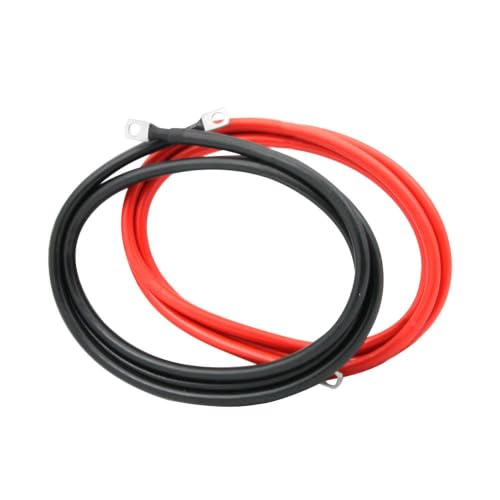
KEDAKEJI 4 AWG Battery Cables Pure Copper, 6FT, 3/8″ Lugs

GEARit 4 Gauge Wire CCA Amp Battery Power Cable, 25FT Each

MOOKEERF 4 AWG Welding Cable, 3FT Red + 3FT Black

Cablectric 14 Gauge Primary Wire, 4 Roll Assortment Pack

KnuKonceptz Kolossus Flex Kable 4 Gauge Power Wire, Blue OFC
What Each Pick Brings To The Table
Short battery runs are where most DIYers trip up. A cable that’s too long invites messy routing, while one that’s too short forces you into awkward stretches near heat sources. KEDAKEJI’s 2-foot pair solves that exact problem with a tidy red-and-black set that fits neatly between an inverter and a battery bank on a bench or inside a tight engine bay.
The set ships with one positive (red) and one negative (black) cable, each pre-crimped with 5/16-inch ring terminals. The jacket is rated to resist oil, gasoline, saltwater, battery acid, heat, abrasion, and sunlight, which is more protection than you typically see at this level. For anyone running a compact inverter, a lawn mower swap, or a small solar rig, this is a low-fuss starting point.
Where It Delivers
- Pre-crimped 5/16″ lugs on both ends remove any guesswork for first-timers.
- 2-foot length is genuinely useful for compact inverter hookups where excess cable becomes a routing headache.
- Chemical- and heat-resistant jacket holds up in engine bays, bilges, and battery boxes.
- Includes both red and black conductors, so polarity stays obvious during install.
Trade Offs
- The 2-foot length is too short for trunk-mounted amplifiers or rear-battery solar setups.
- Not OFC (oxygen-free copper), so conductivity trails true OFC wire over longer runs.
Who It Suits Best
DIYers hooking up a small inverter, a lawn tractor replacement, or a compact solar box who want a no-tools-required install.
Consider Something Else When
Anyone needing more reach for a rear-battery install should look at the KEDAKEJI 4 AWG 6FT set instead, since the longer cable removes the need to splice.
When current demands climb, wire thickness becomes a safety issue, not just a convenience. This KEDAKEJI set steps down to 2 AWG, which means a noticeably thicker copper conductor than the 4 AWG options. It’s built for inverters pulling serious amperage where undersized cable would heat up fast.
Inside the jacket, oxygen-free copper strands carry the load, and the copper lugs carry a tinned finish that resists corrosion in marine and outdoor environments. The 3-foot length lands in a sweet spot for most under-seat or compartment-mounted inverter installs. For anyone running a 1000W to 2000W inverter on a boat, RV, or off-grid setup, the thicker gauge pays for itself.
What It Does Well
- 2 AWG conductor handles high-amperage inverter loads without significant voltage drop.
- Tin-plated copper lugs slow corrosion in damp marine and outdoor spaces.
- Oxygen-free copper strands improve conductivity compared to CCA alternatives.
- 3-foot length fits the most common inverter-to-battery distances.
Worth Noting
- The 2 AWG thickness is stiff, so routing through tight channels takes more patience.
- Heavier than 4 AWG cable, which can stress small mounting points.
Right Fit For
Boat and RV owners running mid-to-large inverter banks who need the current headroom that 4 AWG cannot deliver.
A Better Fit Elsewhere
Smaller projects that only need 4 AWG will find the MOOKEERF 4 AWG stranded pair easier to route and lighter to mount.
Six feet of cable opens up a lot more project types than the shorter pairs. Solar arrays, RV battery banks, and marine house-bank setups all live or die on reach, and the KEDAKEJI 6-foot set lands right in that working zone. The 3/8-inch lugs also match larger terminal posts, which smaller cables can’t always reach.
The copper conductor keeps resistance low, and the pre-attached ring terminals on both ends remove crimping from the to-do list. For anyone wiring an MPPT controller to a battery bay or a trolling motor to a bow-mounted pack, this set covers the typical run with a little slack to spare.
Practical Advantages
- 6-foot length handles most vehicle-to-battery and controller-to-bank distances.
- 3/8″ lugs fit larger studs found on many marine and solar terminals.
- Pre-crimped terminals save a trip to the hardware store for a die set.
- Pure copper conductor keeps voltage drop modest at 4 AWG.
Minor Gripes
- Longer runs require careful cable management to avoid rubbing on chassis edges.
- Heavier than the 2-foot option, so small mounting tabs may need reinforcement.
Who Will Love This
Solar and RV installers who need a longer reach with terminal hardware pre-installed for common 3/8-inch studs.
Reach For A Different Pick When
Anyone wiring an audio amplifier should skip ahead to the KnuKonceptz Kolossus Flex Kable, which comes in longer bulk lengths designed for amp racks.
Quick Facts
Bulk wire changes the math for anyone wiring a full amplifier setup. The GEARit set gives you 25 feet each of red and black 4 gauge conductor, which covers a long run from a trunk-mounted amp back to the battery, or a multi-amp install where you cut custom lengths to fit. Fine-strand construction keeps the cable flexible enough to route through door grommets and around seat rails.
The wire is CCA (copper-clad aluminum), which weighs less than pure copper but carries slightly less current at the same gauge. For typical car audio runs under about 15 feet, that trade-off rarely matters. Pair it with your own ring terminals and heat shrink, and you can build out a custom harness that fits your vehicle exactly.
The Helpful Details
- 25-foot rolls give enough length for full-vehicle amp runs and custom harnesses.
- Fine-strand design stays flexible through tight bends in dashboards and trunks.
- Separate red and black conductors make polarity easy to track during a multi-amp install.
- Bulk format lets you cut exact lengths to minimize slack behind panels.
Points To Note
- CCA construction has higher resistance than OFC over the same distance.
- No terminals included, so you need to source ring lugs and a crimper separately.
Best Suited To
Car audio installers building custom amp racks who want bulk wire at a manageable weight and don’t mind adding their own terminals.
Swap It Out When
Anyone prioritizing maximum conductivity should pick the KnuKonceptz Kolossus Flex Kable, which uses tinned OFC for cleaner current flow.
Feature Snapshot
Cold mornings and stiff battery cable don’t mix well. MOOKEERF leans into welding-cable construction with 469 fine copper strands, which keeps the cable pliable even when temperatures drop well below freezing. The 3-foot red-and-black pair fits the typical short battery-to-inverter or battery-to-ground jumper scenario.
Rated for 600V and a working temperature range from -40°F to +221°F, the jacket shrugs off solvents and resists flame. For mobile setups, generator hookups, or marine battery banks, the stranded OFC design is the kind of detail that pays off over years of vibration and flex.
Strong Points
- 469-strand OFC conductor stays flexible in cold weather and under vibration.
- 600V rating covers automotive, solar, and inverter use cases.
- Wide temperature range (-40°F to +221°F) suits engine bays and outdoor boxes.
- Flame- and solvent-resistant jacket adds safety around batteries and welders.
Honest Caveats
- 3-foot length runs short for rear-battery or trunk-amp installations.
- No terminals included, so you’ll need ring lugs and a crimper to finish the install.
Perfect Match For
Mobile technicians, marine owners, and cold-climate DIYers who want a flexible, cold-rated cable for short battery runs.
Another Choice May Suit
Anyone needing a plug-and-play install with terminals already attached will find the KEDAKEJI 4 AWG 6FT set more convenient.
At A Glance
Not every project needs the heavy stuff. Remote starts, signal wiring, accessory leads, and trailer harnesses run on much smaller wire, and Cablectric’s 14-gauge four-roll pack keeps those jobs organized. Each roll is a different color, so you can color-code circuits without buying separate spools.
The PVC insulation resists sunlight, abrasion, and chemical corrosion, which makes these rolls useful inside engine bays or under dashboards where heat and vibration are routine. For hobbyists, garage builders, and anyone adding accessories to an existing rig, this is the kind of low-cost kit that earns its keep.
A Favorable Mix
- Four color-coded rolls simplify circuit tracking in complex harnesses.
- 14 AWG fits remote starts, lighting, and accessory circuits under typical loads.
- PVC insulation resists abrasion, sunlight, and chemical exposure.
- Compact rolls store easily in a toolbox or garage drawer.
Things To Consider
- 14 AWG is too thin for battery power runs; pair it with a heavier 4 AWG cable.
- Color list should be confirmed before purchase if you need a specific circuit code.
Made For
Hobbyists and garage builders adding lighting, remote starts, or accessory circuits to vehicles, trailers, and small projects.
Skip It When
Anyone running battery power should pick a true 4 AWG cable like the KEDAKEJI or MOOKEERF pairs instead.
Competition-grade audio builds live or die on the wire behind the amp rack. KnuKonceptz built the Kolossus line around 2058 strands of tinned oxygen-free copper wrapped in a soft-touch matte PVC jacket, and the result is a cable that bends easily and resists corrosion far better than bare copper. It’s sold in 5-foot increments, so you buy exactly the length your install needs.
Beyond the spec sheet, the cable carries an American Wire Gauge standard rating, which means it actually meets or exceeds the 4 AWG claim, unlike some off-brand wire that runs undersized. For car audio competitors, custom marine builds, and anyone who wants the cleanest power delivery possible, this is the wire you reach for.
What Helps Most
- 2058 strands of tinned OFC keep conductivity high and corrosion low.
- Ultra-flex matte PVC jacket routes easily through tight bends.
- Exceeds AWG standards, so the gauge claim matches the actual conductor size.
- Sold in 5-foot increments, which cuts down on waste for custom runs.
Practical Considerations
- Higher cost per foot than CCA or basic copper options.
- Blue jacket may not match vehicles where you want the wire out of sight.
Built With In Mind
Audio competitors and marine installers who want tinned OFC conductivity and a true-to-gauge conductor in their high-end builds.
Look Elsewhere When
Budget-conscious shoppers building a basic amp install will find the GEARit 25-foot set more economical for the same gauge.
Quick Technical Notes
What Matters Most When Shopping for 4 Gauge Wires
Gauge isn’t the only number that matters. The conductor material (OFC versus CCA), strand count, and insulation rating all change how the cable performs once it’s installed behind a panel or under a chassis.
Conductor material. OFC (oxygen-free copper) carries current more cleanly than CCA (copper-clad aluminum) at the same gauge. For short runs under 10 feet, CCA usually gets the job done. Over longer distances, or in high-amperage inverter setups, OFC keeps voltage drop under control.
Strand count and flexibility. Fine-stranded cable bends easily around tight routes, which matters when you’re fishing wire through door grommets, battery trays, or amp racks. A stiff cable forces ugly bends and stresses the copper inside.
Insulation and jacket rating. Look for jackets rated for the environment: oil and gas resistance for engine bays, saltwater resistance for marine use, and UV resistance for solar arrays. Temperature ratings matter too, especially in cold climates where stiff jackets crack.
Length and terminal hardware. Match length to the actual distance plus a small service loop. Pre-crimped lugs save time, but make sure the lug size (5/16-inch, 3/8-inch, M10) matches your studs before you buy.
Where Shoppers Go Wrong
Pitfalls Shoppers Hit
The most common mistake is treating gauge as the only spec. Two cables labeled 4 AWG can perform very differently depending on conductor material and strand count. A cheap CCA cable may run hot where an OFC equivalent runs cool, especially on longer runs.
Another slip-up is buying the wrong lug size. A 5/16-inch ring terminal won’t fit a 3/8-inch stud, and forcing it creates a poor connection that generates heat. Always check stud size before ordering pre-crimped cable.
The Case For Spending Up
Higher-tier 4 gauge wire earns its price through tinned OFC conductors, denser strand counts, and jackets that exceed basic temperature and chemical ratings. For a daily-driver amp install, mid-tier wire is plenty. For competition audio, marine saltwater exposure, or off-grid solar where cable replacement is a hassle, the upgrade pays off in longer service life and steadier current delivery.
Frequently Asked Questions
What does AWG mean in 4 gauge wire? AWG stands for American Wire Gauge, a standardized system where smaller numbers mean thicker conductors. A 4 AWG cable is roughly the thickness of a pencil eraser and is commonly used for battery-to-inverter and amplifier power runs.
How long can a 4 gauge cable run be without losing too much voltage? For most 12V automotive and inverter setups, 4 AWG is efficient up to about 15 to 20 feet. Beyond that, voltage drop climbs noticeably, and stepping up to 2 AWG is the typical fix.
Can I mix OFC and CCA cables in the same install? Technically yes, but it’s not ideal. The two materials have different resistance profiles, which can lead to uneven current flow. Sticking to one conductor type throughout the run keeps performance predictable.
Do I need different cable for marine versus automotive use? Marine environments add saltwater exposure, so tinned copper (TPC) or tinned OFC jackets are worth the upgrade. Standard automotive cable holds up fine under the hood but corrodes faster on a boat.
What’s the difference between welding cable and battery cable? Welding cable uses finer stranding for extra flexibility and a wider temperature range. Battery cable is often stiffer but typically costs less. For mobile or cold-climate installs, welding cable’s flexibility is the main draw.
Wrap Up
The right 4 gauge wire depends on the length of your run, the environment it lives in, and whether you want to crimp your own terminals. Short inverter jobs favor pre-crimped pairs, while full amp builds need bulk wire with fine stranding. Pick the cable that matches your project, and the install will thank you later.
