

I’ve been the person staring at a wall of battery cable options, wondering which spool actually belongs in my truck or trailer. 4 gauge copper wire sits in that sweet spot where it’s hefty enough for serious DC loads yet still bendable enough to route cleanly behind a panel. The wrong cable here means voltage drop, heat buildup, or a connection that fights you every step of the way.
I put this roundup together for DIYers wiring a sound system, off-grid builders running solar banks, and weekend mechanics replacing corroded battery leads. What follows are six solid options I think cover the most common scenarios, with honest notes on where each one fits and where another pick may serve you better.
A Closer Look At The Lineup
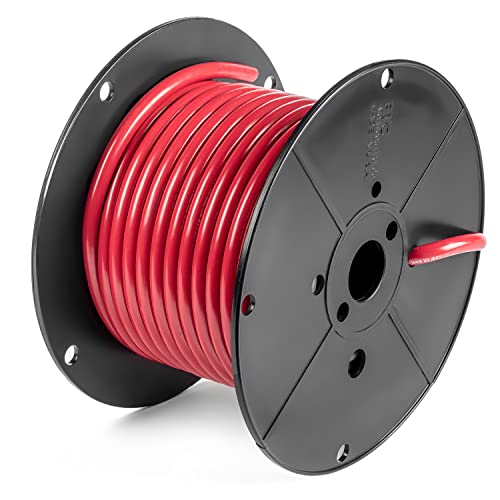
Spartan Power Battery Cable, Pure Copper Wire, Made in USA

Spartan Power Heavy Duty Jumper Cables, 1/0 AWG, 10 ft
WotyWire 1/0 Gauge Battery Cable, 5FT Red + 5FT Black

KnuKonceptz Kolossus Flex Kable OFC 4 Gauge (15 ft)

MOOKEERF 4 Gauge Battery Cable, 3FT Red + 3FT Black

Cablectric 14 Gauge Primary Wire, 4 Roll Assortment
A Breakdown Of The Leading Choices
This Spartan Power cable earns its spot for one simple reason: it’s genuine copper, built for the kind of heavy DC loads that CCA (copper-clad aluminum) wire struggles with. The PVC jacket stays flexible in cold weather, which matters when you’re routing cable under a chassis in January. Available in lengths from 10 to 50 feet, it fits everything from a quick battery relocation to a full camper rewire.
Compared to the jumper cables coming up next, this is raw wire, no terminals attached, so it’s the right starting point when you need custom lugs or specific routing. It suits RV owners, off-grid solar builders, and anyone running an inverter or MPPT controller who wants a cable made in the USA with no shortcuts in the conductor.
Reasons It Performs
- 100% pure copper conductor means lower resistance and cooler operation under sustained load.
- Flexible rugged PVC jacket holds up in cold garages and outdoor engine bays.
- Multiple length options (10, 15, 20, 25, 50 ft) cover most automotive and RV runs.
- Made in USA manufacturing offers tighter quality control than many imports.
- Versatile across automotive, marine, solar, and trailer DC applications.
Things To Consider
- No terminals or lugs included, so you’ll need to source and crimp your own connectors.
- For very tight engine bay bends, the heavier jacket can feel stiffer than ultra-fine strand cables.
Key Specs
Best Suited To
RV owners, trailer builders, and solar installers who want raw copper cable they can terminate to their own specs.
Skip It When
The Spartan Power Heavy Duty Jumper Cables make more sense if you need a ready-to-clamp setup for emergency boosting instead of a custom install.
These jumpers step up to 1/0 AWG, which is heavier than the 4 gauge cable above, so they handle big diesel starters and deeply discharged banks where thinner cable would struggle. The alligator clips arrive already attached, which removes the guesswork for someone who just wants to boost a dead battery without buying a crimper. They’re also built in the same USA facility as the raw cable in pick one.
Where the Spartan Power Battery Cable in pick one is a blank canvas for installers, this set is the finished tool for emergency use. It belongs in a truck bed, a farm shop, or a tow rig, and it’s overkill for casual compact car boosting.
Positive Takeaways
- 1/0 AWG pure copper carries the cranking amps needed for large diesel engines.
- Pre-attached insulated alligator clips save setup time in a roadside emergency.
- Available in 10, 15, and 20 ft lengths for different vehicle spacing.
- Made in USA assembly with professional-grade materials.
Trade Offs
- Bulkier than typical consumer jumper cables, so storage in a small trunk takes planning.
- Pricier than light-gauge alternatives and not necessary for small four-cylinder boosters.
- Clamp insulation can stiffen in extreme cold if left in an unheated cab.
Whose Shelf It Belongs On
Truck drivers, farmers, and fleet owners who routinely boost heavy equipment and want cables that won’t flinch at a 1000-amp draw.
Consider Something Else When
The MOOKEERF 4 Gauge Battery Cable is the better match when you need short flexible leads for a permanent inverter hookup rather than an emergency clamp setup.
WotyWire’s standout spec is the strand count: 1703 strands of 0.2mm oxygen-free copper. That dense fine-strand construction gives this cable a noticeably soft feel, which makes routing it through grommets and around sharp bends far less of a wrestling match. Oxygen-free copper also resists corrosion better in marine and humid environments than standard copper. The 5-foot red plus 5-foot black pairing suits typical inverter or second-battery installs where short, clean runs matter.
For comparison, the Spartan Power cable in pick one uses fewer, thicker strands, which is durable but less pliable. Pick this WotyWire option when flexibility in tight compartments is the priority.
Points In Its Favor
- 1703-strand OFC conductor delivers exceptional flexibility for tight routing.
- High-purity oxygen-free copper reduces resistance and resists corrosion.
- Matched red and black 5 ft lengths simplify positive and negative runs.
- Suitable for marine, solar, and high-current automotive applications.
Points To Note
- 5 ft per side is short for long chassis runs; plan your routing carefully.
- No terminals included, so you’ll need lugs and a proper crimping tool.
Feature Snapshot
Who Should Grab It
Off-grid solar installers and marine electricians who need short, ultra-flexible leads for battery banks and inverters in cramped compartments.
A Better Fit Elsewhere
The Spartan Power Battery Cable in pick one is the stronger choice when you need longer raw cable runs and don’t mind a slightly stiffer jacket.
KnuKonceptz built the Kolossus line for car audio installers, and the 2058 strands of tinned oxygen-free copper make that intent obvious. Tinning (a thin coating of solder-like material on each strand) helps the cable resist oxidation, which is useful in trunk-mounted amp racks that see temperature swings. The matte soft-touch PVC jacket feels premium and stays pliable during install.
This is the only item in the roundup at true 4 gauge that’s positioned specifically for amplifier wiring, so it’s the natural pick for SQ (sound quality) builds. Heavy battery runs are better served by the larger 1/0 options from picks one through three.
Advantages To Know
- 2058 strands of tinned OFC copper give top-tier flexibility and oxidation resistance.
- True 4 AWG sizing that exceeds standard wire gauge tolerances.
- Matte soft-touch PVC jacket is easy to grip and route through tight cabin spaces.
- Works across auto, truck, marine, and solar applications, though it’s tuned for audio.
Room For Improvement
- 4 gauge is undersized for high-amperage inverter banks; it’s audio-focused, not heavy-duty DC.
- Red only in this listing, so you’ll need a separate black cable from another source.
Quick Facts
Right Fit For
Car audio enthusiasts running mid-to-high power amplifiers who want clean current delivery without voltage drop on long trunk runs.
Look Elsewhere When
The WotyWire 1/0 gauge cable in pick three handles serious inverter loads better, while the Cablectric 14 gauge pack in pick six covers light accessory wiring.
MOOKEERF’s cable leans into the welding-cable category with 469 strands of 0.24mm oxygen-free copper, rated for 600V and a working temperature range from -40°F up to +221°F. That temperature rating is unusually wide, which makes this cable a candidate for engine bay runs and generator hookups where heat is a real concern. The 3-foot red and 3-foot black pairing is sized for tight inverter-to-battery links.
Compared to the KnuKonceptz audio-focused cable in pick four, this one trades strand density for a wider thermal envelope. It’s the practical pick for short, hot-environment DC runs.
The Good Stuff
- Stranded OFC conductor gives solid conductivity and corrosion resistance.
- 600V rating with operating temps from -40°F to +221°F handles extreme environments.
- Resistant to most solvents and rated fire resistant for added safety.
- Compact 3 ft + 3 ft pairing fits typical compact inverter and battery installs.
Honest Caveats
- 3 ft per side limits use to short jumpers or battery-to-inverter links.
- Strand count is lower than the KnuKonceptz in pick four, so it feels slightly stiffer.
Made For
Compact inverter, generator, and solar installers who need short flexible leads rated for high-heat engine bay or compartment conditions.
Not Your Match When
The Spartan Power Battery Cable in pick one is a smarter pick when you need long runs of raw cable for trailer or RV battery relocation projects.
Cablectric’s assortment breaks from the heavy battery cable pattern with four rolls of 14 gauge primary wire in assorted colors. At 14 AWG (about 2mm²), this isn’t the cable to feed a 1000-watt inverter, but it’s the right size for remote start leads, accessory taps, lighting circuits, and signal wiring in automotive and marine projects. The color variety helps keep circuits organized, which matters once you’re tracing three or four wires through a loom.
This picks up where the heavier cables leave off. Think of it as the finishing wire, not the main feeder, so it complements rather than replaces picks one through five.
Real Benefits
- Four color-coded rolls simplify organizing multi-circuit installs.
- PVC insulation resists sunlight, abrasion, and chemical corrosion.
- Fire-resistant jacket adds a layer of safety in enclosed spaces.
- Versatile for remote starts, lighting, and accessory wiring in vehicles and boats.
Factors To Consider
- 14 gauge is undersized for any high-amperage battery or inverter feed, so it’s a complement, not a replacement for heavier cable.
- Owners commonly report the rolls arriving loosely coiled, so a spool box helps storage.
Core Features
Perfect Match For
Hobbyists and installers wrapping up a project with remote starts, LED lighting, or auxiliary accessory wiring who want color-coded organization.
Reach For A Different Pick When
The MOOKEERF 4 Gauge Battery Cable in pick five is the right call whenever the circuit actually carries significant current, like a battery-to-inverter link.
What Matters Before You Choose 4 Gauge Copper Wires
Gauge vs. Real Current Demand
Gauge describes the cross-sectional area of the conductor, and lower numbers mean thicker wire. 4 AWG handles moderate DC loads, like a single amplifier or a small inverter, while 1/0 AWG is the right call for big inverters and engine starting. Choosing too thin a gauge leads to voltage drop and heat, so match the cable to the amps the circuit will actually draw, not the amps you might draw someday.
Copper Quality: OFC, Tinned, and CCA
Pure copper, often labeled oxygen-free copper (OFC), offers the best conductivity and corrosion resistance. Tinned copper adds a thin coating that protects against oxidation, which is helpful in marine or trunk-mounted audio environments. Copper-clad aluminum (CCA) costs less but carries less current per gauge and corrodes more easily at terminations, so it’s a budget pick with real trade-offs.
Strand Count and Flexibility
More, finer strands mean a more flexible cable, which matters when routing through grommets and around corners. Fewer, thicker strands are stiffer but often more abrasion-resistant. Welding-style cable like the MOOKEERF in pick five and audio cable like the KnuKonceptz in pick four both lean on high strand counts for easier handling in tight spaces.
Jacket, Temperature, and Environment
The jacket determines where the cable can safely live. PVC handles most automotive and marine installs, while wider temperature ratings (the MOOKEERF spans -40°F to +221°F) suit engine bays and generator compartments. For outdoor solar runs, look for UV resistance to prevent the jacket from cracking over years of sun exposure.
Key Considerations Across These Picks
Pitfalls Shoppers Hit
A common trap is buying cable by gauge alone without checking the actual copper content, since some sellers mix in aluminum to hit a lower price. Another mistake is choosing wire that’s too long for the run, since extra length adds resistance. Skipping proper lugs and crimping tools leaves you with a cable you can’t actually terminate, so plan the whole install before you order.
When Paying More Pays Off
Premium cable earns its keep in strand count, jacket quality, and pure-copper content. That matters when you’re routing through tight spaces, running high sustained current, or installing in a heat-prone engine bay. For a quick, low-current accessory tap, the budget end is plenty, but for any load that draws real amps over time, the upgrade usually pays for itself in reliability and safety.
Frequently Asked Questions
What is 4 gauge wire typically used for?
4 gauge copper wire is commonly used for car audio amplifier power runs, small-to-moderate inverter connections, and short battery relocation projects where the current draw is moderate but the run length demands a thicker conductor.
Is OFC copper really better than standard copper?
Oxygen-free copper has fewer impurities, which gives it slightly better conductivity and corrosion resistance over time. For most home and automotive projects, the difference is modest, but in marine and high-humidity environments, OFC tends to last longer at the terminations.
Can I use 4 gauge wire for a 2000-watt inverter?
That depends on the run length, but 4 gauge is generally too small for a 2000W inverter over any meaningful distance. Most installers step up to 1/0 AWG, like the picks from WotyWire or Spartan Power, to keep voltage drop within an acceptable range.
How do I know what length of cable I need?
Measure the actual routing path with a tape, then add roughly 10 to 15 percent for slack, bends, and service loops. It’s better to round up slightly and trim to fit than to come up short mid-install and splice in a junction you didn’t want.
Do I need special connectors for battery cable?
Yes, battery cable needs properly sized copper lugs crimped with a real crimping tool, not pliers. For high-current connections, heat-shrink tubing over the lug adds strain relief and helps keep moisture out of the termination.
Final Verdict
The right 4 gauge copper wire really depends on what you’re trying to power and where it lives. For pure flexibility in tight compartments, the WotyWire 1/0 gauge cable is hard to beat. For audio builds, the KnuKonceptz Kolossus line is purpose-built for the job. And for general automotive and RV battery work, the Spartan Power cable made in the USA is a reliable starting point. Pick the one that matches your current draw and your routing reality, and the rest usually falls into place.
