

Anyone who has rolled into a campsite with a 50-amp coach, only to find a 30-amp pedestal waiting, knows the quiet panic of the moment. A reliable 30 Amps To 50 Amp Adapter turns that mismatch into a non-issue, letting you run essential appliances from a generator or older campground outlet without rewiring anything. I put together this list for weekend campers, full-time RVers, and anyone building out a backup power kit who needs a dependable way to bridge that gap.
A Snapshot Of The Selections

Tellegloww 15 FT 30 Amp to 50 Amp RV Cord (TT-30P to SS2-50R)

Tellegloww 10 FT 30 Amp to 50 Amp RV Cord (TT-30P to SS2-50R)

Tellegloww 25 FT 30 Amp to 50 Amp RV Cord (TT-30P to SS2-50R)

Camco Camper/RV Dogbone Electrical Adapter 15A to 30A
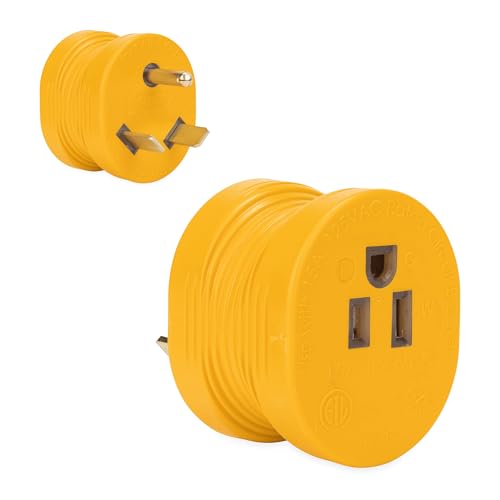
Camco PowerGrip 30AM/15AF RV Electrical Adapter

AOWEITOUR 30A to 15A RV Adapter Cord 12-Inch Dogbone

EyGde 30A to 15A 110 RV Adapter with Surge Protector
The Details Behind The Selections
The 15-foot Tellegloww sits in the sweet spot for most campground layouts, where the pedestal is rarely exactly where you want it. The TT-30P (a standard 30-amp RV plug with one hot, one neutral, one ground) male end feeds into a generator or older camp post, while the SS2-50R female side accepts the larger 50-amp shore cord found on bigger coaches. For weekend trips in mid-size RVs, that combination covers the realistic spacing problem without leaving yards of cord coiled on the ground.
The 10 AWG (American Wire Gauge, where lower numbers mean thicker wire) STW jacket is the same heavy-duty, outdoor-rated insulation you find on quality shore cords, so it handles sun, dew, and gravel pads without complaint. Owners commonly report the grip body on the male end makes it easier to yank out of a tight pedestal box after a long stay, when fingers are tired and the plug feels fused in place.
Everyday Advantages
- 15-foot length covers the typical awkward pedestal distance
- STW-rated jacket holds up to weather and rough ground
- Ergonomic male-end grip simplifies unplugging
- 10 AWG conductors match the gauge used on quality shore cords
- True dogbone form factor keeps the cord flexible and tidy in storage bays
Things To Consider
- 15 feet can run short at very long pull-through sites with the pedestal far forward
- The jacket, while tough, still benefits from a storage reel to prevent kinks over time
Key Specs
Built With In Mind
Weekend RVers running a 50-amp coach into mixed-age campgrounds where 30-amp posts are still common.
Look Elsewhere When
You routinely park where the pedestal sits at the back of a long site; the Tellegloww 25 FT 30 Amp to 50 Amp RV Cord gives you the extra reach.
Shorter cords earn their place when the generator sits a few feet from the coach or when a campground pedestal is positioned right behind the service bay. The 10-foot Tellegloww keeps the run clean, which matters more than people expect, since coiled slack is one of the leading causes of cable memory and eventual jacket wear.
You get the same STW 10 AWG build as the 15-footer, just in a tidier package. It pairs nicely with portable inverter generators in the 3,000 to 4,000-watt range where you want the rig close enough to monitor at a glance, but far enough to dodge exhaust. Compared to the 15-foot version, this one trades reach for storage convenience, so it works best as a dedicated short-run piece.
Where It Delivers
- 10-foot length keeps the cable path short and easy to inspect
- Coils neatly in a small bay without fighting cable memory
- Same rugged STW 10 AWG construction as the longer Tellegloww cords
- Ideal distance for tail-of-RV generator setups
Points To Note
- Won’t bridge a pedestal set more than a few feet from the coach
- Adding a longer shore cord on the other end becomes necessary at sprawling sites
Whose Shelf It Belongs On
RVers who run a portable generator right behind the coach and want a fuss-free short adapter dedicated to that setup.
Consider Something Else When
You camp in unfamiliar parks with unpredictable pedestal placement; the Tellegloww 15 FT 30 Amp to 50 Amp RV Cord offers more breathing room.
Some sites hand you a pedestal set far enough forward that a 15-foot cord leaves you crawling on the ground. The 25-foot Tellegloww solves that mismatch without forcing you to daisy-chain two adapters, which is a real convenience and a real safety upgrade since every extra joint is one more potential failure point in the rain.
The longer run uses the same STW 10 AWG / 3C construction as the shorter Tellegloww siblings, so gauge and insulation match across the family. For larger coaches or pull-through sites with the power post tucked near the front, this is the version that lets you back in without doing math first. The trade-off is weight and storage volume, both of which climb with every added foot.
Advantages To Know
- 25-foot length handles distant pedestals without extra adapters
- Single-piece design removes one failure point versus chained cords
- Same 10 AWG conductors preserve voltage under longer runs
- Useful as a primary adapter for big coaches in unfamiliar parks
Trade Offs
- Heavier and bulkier in the storage bay than the 10 or 15-foot options
- Longer runs require careful coiling to avoid pinching the jacket over time
Feature Snapshot
Who Will Love This
Owners of larger motorhomes and fifth wheels who travel between parks with inconsistent pedestal placement.
A Better Fit Elsewhere
You park the same generator five feet from the rig every trip; the Tellegloww 10 FT 30 Amp to 50 Amp RV Cord keeps the cable path shorter and lighter.
The Camco Power Grip dogbone works the other direction from the Tellegloww cords, taking a standard 15-amp household outlet (NEMA 5-15P) and stepping it up to a 30-amp RV inlet (NEMA TT-30R). That makes it the right tool for garage pre-cooling, loading the fridge before a trip, or running the coach through winter storage without dragging out a generator.
It uses 10/3-gauge copper conductors with a flame-retardant PVC sheath rated for 125 volts and 1875 watts, so it handles the realistic load ceiling of a 15-amp home circuit. The Power Grip body shape gives you something solid to pull on during unhook, and the 12-inch length keeps it well clear of the wall outlet so nothing hangs at a stress angle.
Notable Upsides
- Flame-retardant PVC sheath adds weather and wear resistance
- Contoured grip body simplifies plug removal
- Compact 12-inch length stores easily in any bay
- Trusted Camco build used widely in the RV community
Worth Noting
- Capped at the 15-amp circuit’s wattage, so it cannot power 50-amp coach features
- Home circuits in older garages may need inspection before sustained draws
Quick Facts
Right Fit For
RV owners who want a simple, well-built way to keep the fridge cold and the batteries topped off from a household outlet between adventures.
Skip It When
You need to feed a 50-amp coach from a 30-amp source; the Tellegloww 15 FT 30 Amp to 50 Amp RV Cord handles that exact scenario.
This Camco adapter flips the script from the previous pick: it has a 30-amp male end (NEMA TT-30P) that plugs into a camp pedestal, with a 15-amp female receptacle (NEMA 5-15R) on the other side. The practical use is running a household tool, fan, or lamp at a 30-amp site, which sounds small until you actually need it.
The non-slip grooves on the molded body are the standout touch here. They give your fingers real purchase, especially with gloves on in cold weather, and that matters more than the spec sheet suggests. Rated for 125 volts and 1875 watts, it handles the standard 15-amp appliance ceiling without complaint, and the compact head fits easily in an outside storage cubby.
Key Advantages
- Non-slip grooves deliver confident grip during plug and unplug
- Palm-sized head stores almost anywhere in the coach
- Lets a 30-amp pedestal feed a regular household tool or appliance
- Camco reliability in a piece you’ll toss in a bin and forget about
Honest Caveats
- Limited to the 15-amp appliance’s actual draw, despite the 30-amp input
Best Suited To
Campers who regularly run a household accessory from a 30-amp pedestal and want a small, grippy adapter that disappears into a storage bin.
Reach For A Different Pick When
You actually need to power a 30-amp RV from a household outlet; the Camco Camper/RV Dogbone Electrical Adapter 15A to 30A does that instead.
The AOWEITOUR dogbone adapter mirrors the Camco Power Grip concept with a 30-amp male (TT-30P) on one end and a 15-amp female (5-15R) on the other, and adds an ETL safety listing for shoppers who care about third-party certification. The molded grip handle on the male end takes the strain off your wrist when you unplug after a hot afternoon in the sun.
The 10/3 STW heavy-duty cable jacket handles outdoor use without complaint, and the 12-inch span keeps the connection well clear of the pedestal box. It also runs a 10 AWG copper conductor core, which holds up under the kind of sustained draws you get from running a roof AC in storage mode. In a category where many dogbones look interchangeable, the certification is the differentiator here.
The Case For It
- ETL safety listing offers an extra layer of verification
- Grip handle on the male plug reduces unplug strain
- 10 AWG copper conductors handle sustained 15-amp loads
- STW jacket stands up to outdoor and storage conditions
Small Caveats
- Outputs are limited to whatever a 15-amp appliance can draw
- Brand recognition sits below more established names in the category
Feature Card
Perfect Match For
RVers who pre-cool the fridge at home and want a certified, grip-equipped dogbone to do it with.
Another Choice May Suit
You prefer an adapter with a long-standing brand reputation; the Camco Camper/RV Dogbone Electrical Adapter 15A to 30A carries that history.
The EyGde adapter stands out because it does more than reshape the plug, it also guards what’s plugged in. A built-in surge protector rated at 4200 joules (a unit of energy absorption; higher joules mean the protector can absorb larger spikes before failing) absorbs the kind of voltage spikes that come from aging campground wiring, lightning activity on the grid, or a generator that stumbles on startup.
It also includes a circuit analyzer, which flags wiring faults at the pedestal before your RV electronics see them, a genuinely useful layer of protection in older parks where reversed polarity or open ground is not unheard of. The 5-15P male to TT-30R female configuration lets you feed your coach from a regular household outlet, just like the Camco and AOWEITOUR options above, with the added insurance.
A Strong Showing
- 4200-joule surge rating shields sensitive coach electronics
- Circuit analyzer flags pedestal wiring faults before they reach the RV
- Patented form factor sets it apart from generic dogbones
- Plugs a 30-amp coach into a standard household outlet
Points To Keep In Mind
- Output still capped at the 15-amp household circuit limit
- Bulkier head than a plain dogbone, so it needs a bit more storage space
- Physically adapts plugs only; it cannot raise voltage from 110V to 240V
Made For
RVers with sensitive electronics who plug into older parks or unreliable generators and want surge protection plus fault detection in one piece.
Swap It Out When
You just need a simple, no-frills 15-amp household adapter; the Camco Camper/RV Dogbone Electrical Adapter 15A to 30A keeps things basic and proven.
What Matters Most Before Choosing 30 Amps To 50 Amp Adapter
Match The Plug Types To Your Coach And Source
The single biggest decision is the plug pair on each end. A TT-30P to SS2-50R adapter takes a 30-amp camp post or generator and feeds a 50-amp coach inlet. The reverse direction, 5-15P to TT-30R, takes a household outlet and feeds a 30-amp coach. Picking the wrong direction is the most common frustration I hear about, so check the labels on your shore cord and the outlet you plan to use before clicking through.
Pick The Right Length For Real Sites
A 10-foot cord stays neat for generator setups. A 15-foot cord is the everyday middle ground. A 25-foot cord rescues you from distant pedestals at pull-through sites. Going longer than you need adds weight and storage hassle; going shorter than you need forces you to park in awkward spots just to reach the post.
Gauge And Jacket Outdoors
Look for STW (a thermoplastic jacket rated for hard service and wet locations) and at least 10 AWG conductors. Lower gauge numbers mean thicker wire, which holds voltage better across longer runs and stays cooler under sustained loads. The jacket matters too, since UV and gravel will punish a thin cover over a season of trips.
Decide If Surge Protection Earns Its Place
If you plug into older campground wiring or run a generator that stumbles under load, a built-in surge protector with a circuit analyzer is worth the extra weight. Newer parks with well-maintained pedestals may not justify the premium, since their power is generally clean. The honest read is that surge protection pays for itself the first time a fault would have cooked a control board.
Key Considerations Across These Picks
Common Shopping Slip Ups
The first trap is treating all dogbone adapters as identical, when the gauge, jacket rating, and connector brand vary more than the listings suggest. A second slip is buying a 10-foot cord for a coach you park at unfamiliar parks, only to find yourself short on a pedestal set 20 feet forward of the service bay. Third, shoppers sometimes assume any adapter can boost voltage, which it cannot, since these devices only re-pin the plug.
What The Higher Tier Buys
The jump from a generic dogbone to a name-brand adapter usually shows up in the molded body, the strain relief where the cable meets the plug, and the third-party safety listing on the packaging. Surge-protected options cost more because they bundle joule-rated MOVs (metal-oxide varistors, the components that absorb voltage spikes) and diagnostic circuitry into the same head. For frequent travelers, that upgrade tends to pay off in fewer nuisance trips and longer electronics life.
Frequently Asked Questions
What does a 30 Amps To 50 Amp Adapter actually do?
It re-shapes the plug so a 50-amp RV shore cord can physically connect to a 30-amp camp pedestal or generator outlet. It does not increase the available current beyond what the 30-amp source can deliver.
Can I run my air conditioner through one of these adapters?
A roof AC on a 30-amp pedestal is fine, since it typically draws well within 30 amps. Two AC units on a 50-amp coach fed by a 30-amp adapter will trip the pedestal breaker; you need a 50-amp source for that load.
Is 10 AWG thick enough for an RV adapter cord?
Yes, 10 AWG copper is the standard for 30-amp RV cords at reasonable lengths. For longer runs approaching 25 to 50 feet, some owners step up to 8 AWG for extra voltage margin, but the cords on this list are sized appropriately for their stated lengths.
Are surge-protected adapters worth the extra cost?
For campers who plug into older parks or run a portable generator, the surge protection and circuit analyzer are worth it. For those who mostly stay at modern resorts with newer pedestals, a plain dogbone handles the job without the added cost.
How should I store an RV adapter cord to make it last?
Coil it in loose loops rather than tight wraps, keep it out of standing water, and store it in a dry bay. Avoid sharp bends at the plug ends, since that is where the conductors and jacket take the most stress over time.
Final Verdict
A 30 Amps To 50 Amp Adapter is one of those small pieces of gear that quietly saves a trip when the campground gives you less than you expected. For most RVers, the Tellegloww 15 FT 30 Amp to 50 Amp RV Cord hits the right balance of length, build, and price, while the household-side picks earn their spot in the bay for pre-trip fridge duty. Match the adapter to your coach’s inlet and the source you actually plug into, and the rest is easy.
