

Most laundry rooms weren’t designed with the dryer outlet where you’d actually want it. Behind the appliance, around a corner, three feet short of the nearest wall socket. A proper heavy-duty extension cord bridges that gap without throttling the machine, and the right one stays cool, stays grounded, and doesn’t kink behind the drum for the next decade.
A Snapshot Of The Selections
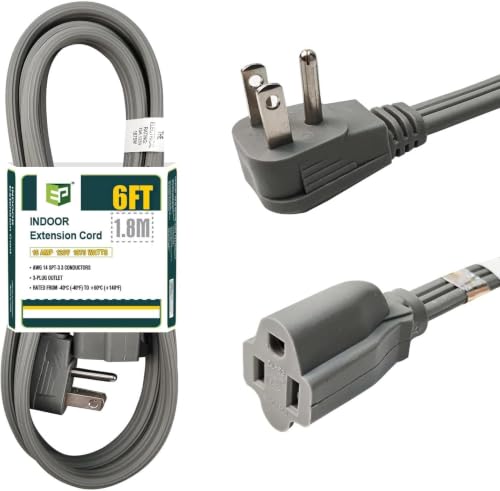
EP 6 Ft Heavy Duty Appliance Extension Cord (Gray)

EP 15 Ft Heavy Duty Appliance Extension Cord (White)

EP 3 Ft Heavy Duty Appliance Extension Cord (Black)
Adoreen 14/3 Flat Appliance Power Extension Cord 7 Ft

POWTECH 9 FT Heavy Duty Appliance Extension Cord

LifeSupplyUSA 50ft 10/3 SJTW Outdoor Extension Cord
RVMATE 4 Prong SRDT Dryer Cord 5 Feet
A Breakdown Of The Leading Choices
When the dryer outlet sits on the wall directly behind the appliance, every extra inch of cord just becomes slack to tuck. This 6-foot EP cord is sized for exactly that arrangement, which is most laundry closets in newer homes. The flat plug lies flush against the wall so the dryer can slide back the full depth of its footprint without gouging the outlet.
It’s built with 14 AWG wire and carries a 15-amp rating, which is what most North American dryers actually draw under typical loads. The gray jacket blends with the appliance back panel in dim utility rooms, and the three-prong grounded configuration matches older dryer receptacles still common in homes built before the late 1990s.
Notable Gains
- Flat-plug body hugs the wall, letting the dryer push back fully without bending pins
- 14 AWG conductor supports sustained 15-amp loads typical of standard dryer cycles
- Compact 6-foot length keeps excess cable off the floor, reducing trip points
- Neutral gray finish stays visually quiet behind silver, white, or black dryers
- Three-prong grounded format fits legacy dryer outlets still found in older homes
Things To Consider
- Six feet is genuinely short: a setup where the outlet sits across the room needs something longer
- The jacket can scuff if dragged repeatedly across concrete basement floors
Whose Shelf It Belongs On
A homeowner whose dryer outlet sits within a few feet of the appliance and who wants a tidy, flush-against-the-wall plug profile.
Reach For A Different Pick When
The EP 15 Ft model is the better match for dryers positioned further from the receptacle or for laundry closets with the outlet on a side wall.
For laundry rooms where the outlet lives on a side wall or under a window, a six-foot cord falls painfully short. EP’s 15-foot white version solves the reach problem without forcing you to daisy-chain two shorter cords. That extra length also gives you room to pull the dryer forward for lint-tray cleaning without unplugging and re-plugging each time.
Compared to the 6-foot EP I covered above, the trade is purely physical reach: same flat plug, same 14 AWG wire and 15-amp rating, just longer jacket. The white color reads cleanly against most interior wall paint, which matters in finished laundry areas where the cord is visible.
The Upside
- Fifteen feet of reach handles outlets positioned on adjacent walls or across wider rooms
- Flat plug stays flush, so the cord exits the wall without sticking out into foot traffic
- White jacket blends with most wall paints and trim in finished laundry spaces
- 14 AWG conductors handle typical dryer draw without noticeable voltage drop at this length
Trade Offs
- Extra length means more slack to bundle and route, which can collect lint behind the dryer
- For an outlet directly behind the appliance, the leftover cable creates a storage headache
Made For
Anyone installing a dryer in a renovated space where the outlet ended up on a far wall or in a closet layout that doesn’t match the appliance depth.
Where Another Pick Suits Better
The EP 6 Ft cord is the better shelf-mate when the outlet sits directly behind the dryer and any extra length just becomes a tangled mess.
Some dryers need just a few extra inches to clear a raised outlet box, a baseboard heater, or a thick plaster wall behind the appliance. The 3-foot EP cord solves those micro-distance problems without leaving a heap of cable coiled on the floor. Black jacket disappears nicely against dark appliances or in basement utility rooms.
It uses the same 14 AWG internal wire as its longer siblings in this lineup, so the electrical performance carries over. The flat plug profile also stays consistent, which is helpful if you’re matching it with the 6-foot gray version for a two-appliance setup.
A Few Strong Suits
- Compact 3-foot length clears small obstacles like raised outlet boxes or thick trim
- Flat plug allows the dryer to slide back into a tight closet recess without strain
- Black jacket conceals well behind dark appliances or in low-light utility spaces
Worth Noting
- Three feet is too short for any outlet positioned more than a couple of feet from the dryer
- Commonly reported as too rigid in cold basement temperatures, so uncoil it before plugging in during winter months
Best Suited To
Laundry closets where the outlet sits unusually high, low, or slightly offset and only a small reach extension is needed.
Skip It When
The EP 15 Ft cord is the right call when the outlet lives more than a few feet from where the dryer actually ends up.
Studio apartments and older condo buildings tend to have the dryer outlet in awkward spots: behind a stackable unit, beside a water heater, or under a window. The Adoreen 7-foot cord sits in a useful middle ground between EP’s 6-foot and 15-foot options, which is often exactly what tighter urban layouts need. The flat plug sits at a 90-degree angle and is about 1.1 inches at its widest point.
It’s labeled SPT-3, which is a thicker, more rugged jacket rating than the SPT-2 found on lighter indoor cords. For a heavy draw appliance that runs for 30 to 45 minutes at a stretch, that beefier jacket translates to better heat dissipation behind the dryer. The 15A / 125V / 1875W rating lines up with standard residential dryer circuits.
Well-Handled Touches
- SPT-3 jacket rating handles sustained high-load dryer cycles without softening
- Slim flat plug profile passes behind baseboards and tight against window trim
- Seven-foot length bridges most apartment outlet placements without leaving coiled slack
Honest Caveats
- Rated 15A / 125V: confirm your dryer draws within this before relying on the cord for full electric dryer heat cycles
- The white finish shows scuffs more readily than gray or black versions in dusty utility rooms
Who It Suits Best
Renters and condo owners with non-standard dryer outlet placement who want a medium-length cord that doesn’t fight tight closet dimensions.
Not Your Match When
The POWTECH 9 FT cord is worth considering for anyone needing a slightly longer reach with a similar 14-gauge build for heavier continuous loads.
Garages, basements, and detached workshops rarely have outlets placed conveniently next to where you’d actually want a dryer sitting. The POWTECH 9-foot cord gives enough slack to run the cable along a wall or under a workbench without stretching the plug at a sharp angle. It carries a UL safety listing, which is meaningful for shop environments with mixed tool loads.
Compared to the indoor-targeted EP and Adoreen cords above, POWTECH leans toward heavier general-purpose use. Same 14 AWG conductors and 15-amp / 125V / 1875W capacity, but framed more for multi-appliance flexibility. The grounded three-prong format covers dryers, AC units, and power tools on the same circuit type.
What Makes Sense
- Nine-foot length bridges garage and basement outlet placements without leaving tangled slack
- UL listing adds confidence in workshop environments with multiple power tools on shared circuits
- 14-gauge construction supports sustained loads typical of dryer and AC units alike
Things To Weigh
- The jacket is functional rather than decorative: in a finished laundry room, the EP or Adoreen cords look cleaner
- For purely outdoor job site use, the LifeSupplyUSA 50-foot cord offers more reach and weather resistance
The Right Fit
Shoppers running a 240V dryer outlet isn’t the use case here, but homeowners with a 125V dryer setup in a basement or garage will find the reach and rating appropriate.
Look Elsewhere When
The LifeSupplyUSA 50ft 10/3 cord is the better match for outdoor job sites, yard work, or any setup requiring weatherproof construction beyond what an indoor extension can offer.
Some dryer placements sit at the far end of a long porch, a detached outbuilding, or a jobsite trailer where no nearby outlet exists. The LifeSupplyUSA 50-foot cord covers that kind of distance in a single run, eliminating the need to splice two shorter cords together (which is unsafe on a 15-amp dryer circuit). The bright yellow jacket is also hard to miss in grass or gravel, which prevents trip incidents on busy workdays.
SJTW is the jacket rating here: the “W” indicates weatherproofing, and the 10/3 gauge means three 10 AWG conductors inside, which is heavier than the 14 AWG used in the indoor-focused cords above. That thicker copper translates to lower voltage drop across long runs, which matters when you’re pushing a dryer motor 50 feet from the panel.
Practical Advantages
- 50-foot reach handles detached outbuildings and outdoor jobsite placements in a single cable
- SJTW jacket is waterproof and cold-resistant, so the cord stays flexible in freezing temperatures
- 10/3 gauge minimizes voltage drop across the long run, keeping the dryer motor at proper speed
- High-visibility yellow reduces trip hazards on grass, gravel, or cluttered deck surfaces
Where It Is Less Suited
- Fifty feet of cable is genuinely excessive for indoor laundry rooms and creates a storage problem
- For a 4-prong dryer outlet on a newer electric dryer, this is the wrong cord type entirely: the RVMATE 4-prong cord is the proper replacement part
Feature Snapshot
Who Should Grab It
Contractors, homesteaders, and homeowners with detached laundry buildings or outdoor appliance setups where a single weatherproof run is the practical answer.
A Better Fit Elsewhere
The EP 6 Ft cord is the right shelf-mate for indoor laundry rooms where 50 feet of cable would be absurd.
Modern dryers sold in the last twenty-plus years typically ship without a power cord, because the manufacturer doesn’t know whether your outlet is 3-prong or 4-prong. The RVMATE 5-foot cord covers the 4-prong side of that equation: it’s a NEMA 14-30P plug rated for 30-amp, 250-volt circuits, which is what most newer US dryers actually need.
This isn’t an extension cord in the traditional sense: it replaces the missing cord on a new dryer, rather than extending an existing one. SRDT cable construction handles high temperatures up to 140°F, which matters in the heat soak behind a running dryer. The flame-retardant PVC jacket and 100% copper conductors point toward a longer service life than cheaper imported alternatives.
Positive Takeaways
- NEMA 14-30P configuration fits standard 4-prong 30-amp dryer outlets on newer home circuits
- 10 AWG / 4 conductor cable handles 30A at 250V (7500W) without overheating during long cycles
- SRDT jacket rated for high temperatures, important behind a heat-generating appliance
Points To Keep In Mind
- This is a replacement dryer cord, not an extension cord: it doesn’t help with outlet placement problems
- Homes with older 3-prong dryer outlets need an EP cord or a 3-prong replacement instead
Quick Facts
Built With In Mind
Anyone who just bought a new electric dryer that arrived without a power cord and has a 4-prong 30-amp wall outlet ready to go.
Consider Something Else When
For an older 3-prong dryer outlet, the EP 6 Ft cord is the more appropriate match, since RVMATE’s 4-prong configuration simply won’t fit that receptacle.
Factors To Consider When Choosing 3 Prong Dryer Extension Cords
Wire gauge sets the floor. Anything labeled 14 AWG or thicker (lower AWG number) can handle the sustained current a dryer motor draws over a 30 to 45 minute cycle. Thinner 16 AWG cords run hot under load and shorten the lifespan of both the cord and the appliance motor.
Outlet type matters as much as length. Older homes use 3-prong dryer outlets; newer homes use 4-prong. A 3-prong extension cord fits only the older receptacle, and forcing a mismatch is both a code violation and a fire risk. Confirm which outlet style you actually have before measuring reach.
Length is a reach calculation, not a “longer is better” decision. Measure the path from outlet to the back of the dryer, add a foot of slack for pulling the unit forward, and that’s your minimum. Extra length becomes coiled slack that traps lint and creates trip hazards behind the appliance.
Jacket rating determines where the cord can safely live. SPT-3 works indoors. SJTW handles outdoor, cold, and wet conditions. Using an indoor-only cord in a damp basement or outdoor setting is a common failure point owners report after the first season.
Key Considerations Across These Picks
Where Shoppers Go Wrong
The most common slip-up is grabbing whatever extension cord is on the workbench without checking the wire gauge. A 16 AWG lamp cord looks identical to a 14 AWG appliance cord from across the room, but it cannot safely carry a dryer load. The second mistake is using an indoor-only cord in a basement, garage, or outdoor setting, where moisture and temperature swings degrade the jacket over time.
When Paying More Pays Off
Higher-tier cords in this category usually buy heavier copper, better jacket compounds, and verifiable safety certifications. For a once-in-a-decade installation behind a dryer you run three times a week, the upgrade pays for itself in cooler operation, longer service life, and confidence that the cord isn’t the weak link in the circuit. For a temporary reach fix in a rental, the value picks make more sense.
Frequently Asked Questions
Can any extension cord handle a dryer?
No. Dryers need a 14 AWG or heavier cord rated for 15 amps (or 30 amps for 4-prong outlets). Lighter lamp cords overheat under sustained dryer loads.
Are 3-prong dryer cords still safe to use?
They’re safe when matched to a 3-prong outlet, which is what older homes typically have. Newer homes use 4-prong outlets, which require a different cord entirely.
How long can a dryer extension cord be?
Practically, 15 to 25 feet is the common range. Going much longer requires thicker wire to compensate for voltage drop, which is where 10-gauge cords like the LifeSupplyUSA 50-footer become appropriate.
Is the flat plug important?
It allows the dryer to slide back fully against the wall without bending the plug pins. In tight laundry closets, this is the difference between a flush fit and a gap you can see from across the room.
Do I need 4-prong or 3-prong?
Check the outlet: three slots means 3-prong; four slots means 4-prong. They are not interchangeable without an adapter, and adapters are not recommended for dryer circuits.
Closing Remarks
The right 3 prong dryer extension cord is the one that matches your outlet, covers your reach without excessive slack, and uses wire heavy enough to run cool over full dryer cycles. Most homeowners end up happiest with a 14 AWG cord in the 6 to 15 foot range, and only need to step into specialty territory for detached buildings or 4-prong installations.
