

A 12V lithium battery charger sits in the corner of a garage for years, mostly forgotten, until a motorcycle, ATV, or classic car refuses to start on a cold morning. Picking the right one matters because lithium chemistries, especially LiFePO4, demand a different charging profile than flooded lead-acid or AGM packs. I’ve gone through seven strong options spanning everyday maintainers, high-output workhorses, and even a McLaren-specific cable. Each one solves a different ownership problem, and the right choice depends on what you’re charging, how often, and whether you need portability or a permanent install.
The Lineup, Simplified
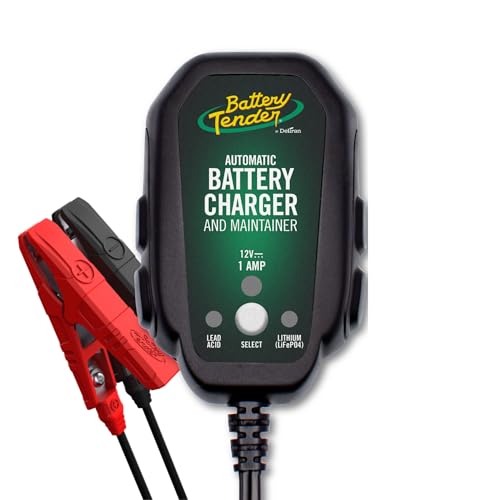
Battery Tender Junior 12V Lithium Charger & Maintainer
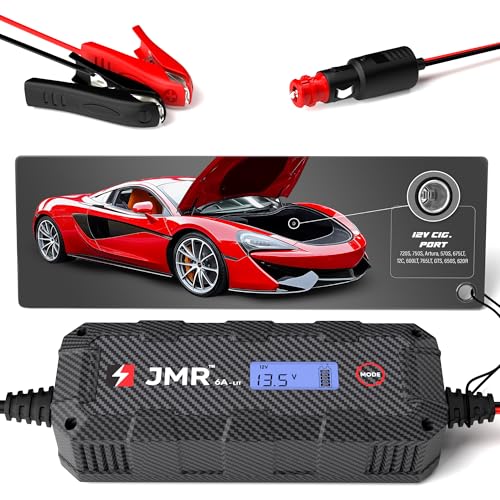
JMR 12V Battery Charger for McLaren, Cig. Port

NOCO GENIUS1 1A 6/12V Smart Battery Charger

NOCO GENIUS10 10A 6/12V Smart Battery Charger

LiTime 12V 20A Lithium Battery Charger, 14.6V Output

NOCO GENIUS5 5A 6/12V Smart Battery Charger

NOCO GENPRO10X1 12V 10A OnBoard Marine Charger
More Details On Our Top Picks
The Battery Tender Junior earns its spot for people who own a powersports vehicle that sits for weeks at a time. The 800mA output is gentle enough to nurse a tired battery back to health without cooking it, and the push-button chemistry switch means you can move between lead-acid and lithium packs without buying two separate units.
For most weekend riders storing a bike or ATV over winter, this little white box does the job without a lot of fuss. The ring-terminal and alligator-clip combo lets you leave it connected indefinitely in float mode.
Reasons It Performs
- Switchable between lead-acid (AGM, flooded, gel) and lithium (LiFePO4) chemistries
- Four-step charging program that finishes with a low-current float stage
- Spark-proof connector design that doesn’t bite when you touch the clips
- Compact shell that fits inside a saddlebag or under a workbench
Things To Consider
- 800mA output means a deeply discharged motorcycle battery takes many hours to recover
- Not built for large automotive banks; this is a maintainer first, a recovery tool second
Key Specs
Right Fit For
Beginner riders and seasonal storage owners who want a low-cost, set-and-forget maintainer for motorcycles, scooters, and small ATVs.
Swap It Out When
Shoppers needing fast recovery on larger batteries should reach for the NOCO GENIUS10, which delivers ten times more amperage.
JMR’s McLaren-specific cable solves a problem most universal chargers can’t touch. Instead of pulling panels to reach the battery, you plug into the 12V cigarette lighter port and let the charger maintain the system through the existing wiring harness.
Compared with the Battery Tender Junior’s clip-style hookup, this unit trades universality for elegance in a single-use case. Owners who have swapped their factory lead-acid battery for a lithium LiFePO4 pack will appreciate the dedicated lithium mode.
What Stands Out
- Plug-and-play access via the factory 12V cigarette port, no panel removal required
- Dedicated lithium mode for LiFePO4-swapped McLarens
- Compatible with AGM, lead-acid, wet, gel, EFB, MF, and calcium battery types as well
Worth Noting
- Charging speed is limited by the cigarette port’s internal wiring gauge
- Compatibility is narrow; only confirmed for specific McLaren non-electric models
- Not a recovery tool for severely discharged batteries
Made For
McLaren owners who store their car for extended periods and want a tidy maintenance solution that doesn’t require lifting frunks or removing trim panels.
Reach For A Different Pick When
Drivers of mainstream vehicles will get more flexibility from the NOCO GENIUS5, which covers six-volt and twelve-volt systems across many battery chemistries.
The GENIUS1 is the smallest NOCO of the bunch, but it punches well above its weight for everyday maintenance. At 1 amp, it handles small batteries up to about 30 amp-hours, which covers most riding mowers, motorcycles, and lawn tractors.
The big draw versus the Battery Tender Junior is dual-voltage support. Working on a six-volt vintage tractor and a twelve-volt modern ATV? This unit handles both without separate chargers. Built-in thermal compensation adjusts the charge profile based on ambient temperature, which matters in unheated garages.
Real Benefits
- Compatible with 6V and 12V lead-acid and lithium-ion batteries up to 30Ah
- Force mode can push a charge into a deeply discharged pack that most chargers refuse to touch
- Built-in desulfation mode helps recover older batteries with surface sulfate buildup
Honest Caveats
- 1A output is too slow to recover a dead car battery in any reasonable timeframe
- Not intended for batteries above roughly 30 amp-hours
Who It Suits Best
Homeowners maintaining a fleet of small vehicles like riding mowers, motorcycles, and classic six-volt tractors in a single garage.
Look Elsewhere When
Anyone maintaining a full-size car or pickup should consider the NOCO GENIUS5, which delivers five times the current for faster top-ups.
The GENIUS10 is the workhorse of the NOCO lineup, delivering ten amps of charging current in a unit that still fits on a workbench shelf. It scales up to batteries around 230 amp-hours, which covers everything from motorcycles to diesel pickups.
Where it really earns its keep is in the diagnostic side. Overcharge protection, a desulfation routine, and a temperature-compensated profile all run automatically. The force mode lets you coax a deeply discharged pack back from zero volts, something most entry-level chargers won’t attempt.
The Upside
- 10A output handles large automotive batteries up to 230Ah
- Force mode recovers deeply discharged batteries other chargers abandon
- Six-volt and twelve-volt compatibility in a single unit
- Repair mode for sulfated lead-acid batteries that have sat too long
Trade Offs
- Bulkier than the GENIUS1 or GENIUS5, though still portable
- Fan noise can be audible during heavy bulk-charge phases
- Cord length may require an extension in larger workshops
Feature Snapshot
Whose Shelf It Belongs On
Shops, fleet operators, and serious DIYers who maintain multiple vehicles and need a single charger capable of handling anything from a lawn tractor to a dual-battery diesel.
A Better Fit Elsewhere
Shoppers only maintaining a single motorcycle or lawn tractor will find the NOCO GENIUS1 more practical and easier to stow.
LiTime’s 20-amp unit sits in a different category from the NOCO lineup. Built specifically for LiFePO4 batteries, it pushes a 14.6-volt charging profile that brings a 100Ah lithium bank from empty to full in roughly five hours.
Unlike the NOCO chargers that split their attention across multiple chemistries, this one focuses entirely on lithium. That focus pays off with a 0V activation feature that can wake a battery whose protection circuit has tripped it into a dead state, a common issue with deeply discharged LiFePO4 packs.
Advantages To Know
- 20A output cuts charging time dramatically compared to 5A or 10A units
- Anderson connector is standard in RV and off-grid lithium installations
- Six built-in safety protections including overvoltage and overtemperature cutoffs
- 0V activation can revive lithium packs other chargers abandon
Points To Keep In Mind
- Not waterproof, so marine installs require a dry compartment
- Designed for LiFePO4 only; using it on lead-acid batteries will damage them
Best Suited To
RVers, off-grid solar owners, and anyone running a deep-cycle LiFePO4 battery bank who wants the fastest reasonable charge time from a shore-power outlet.
Not Your Match When
Garage owners charging a mix of chemistries will find the NOCO GENIUS10 more flexible, since it handles both lead-acid and lithium on one unit.
The GENIUS5 sits in the middle of the NOCO family, and for most everyday households, it’s the sweet spot. Five amps handles batteries up to around 120 amp-hours, which covers virtually every car and SUV on the road.
Versus the GENIUS1, the GENIUS5 charges three to five times faster on the same battery. Versus the GENIUS10, it’s lighter, quieter, and cheaper, with enough current for daily-driver maintenance without overkill.
Benefits That Matter
- 5A output suits standard car and SUV batteries (up to 120Ah)
- Compatible with 6V and 12V lead-acid and lithium-ion batteries
- Compact shell relative to the GENIUS10, easy to stash in a trunk
- Repair mode can sometimes recover sulfated lead-acid batteries
Small Caveats
- Not the fastest option for very large deep-cycle banks
- Cable is shorter than some users prefer for garage layouts
Perfect Match For
Daily drivers and small-shop owners maintaining one or two vehicles who want a single charger that covers most situations without paying for heavy-duty output.
Where A Sibling Pick Shines
RVers running large lithium banks will see shorter charge times with the LiTime 12V 20A charger, which is purpose-built for that use case.
The GENPRO10X1 is purpose-built for the marine environment, which is why it earns the last slot. Fully sealed and waterproof, it’s designed to mount permanently on a boat and survive splash, salt spray, and engine-room heat.
Compared with the GENIUS10, this unit trades portability for ruggedness. It runs ten amps into a single 12-volt bank, supports flooded, AGM, gel, and LiFePO4 chemistries, and can be left connected indefinitely without worrying about moisture intrusion.
A Few Strong Suits
- Fully sealed, waterproof housing rated for marine installation
- 10A charging output suitable for trolling-motor and house banks
- Compatible with flooded, AGM, gel, and LiFePO4 battery types
- Onboard mounting frees up deck space and prevents charger theft
Less Ideal Details
- Hardwired install requires basic electrical comfort or a marine technician
- Single-bank design means separate units are needed for multi-battery setups
Technical Highlights
Built With In Mind
Boat owners who want a permanent, set-and-forget charger mounted in the bilge or engine room that can handle harsh marine conditions.
Consider Something Else When
Garage-based users will prefer the NOCO GENIUS10, which offers similar charging power in a portable form factor without the marine-rated sealing.
What Matters Most Before Choosing a 12V Lithium Battery Charger
Amperage and Battery Size
A charger’s amp output determines how quickly it tops up a battery, but bigger isn’t always better. Small batteries (under 30Ah) like those in motorcycles can be damaged by high-current chargers running at full blast. Match the charger’s max current to roughly 10 to 20 percent of the battery’s amp-hour rating. A 100Ah lithium bank handles a 10A or 20A charger comfortably, while a 10Ah motorcycle battery wants something gentler like the 800mA Battery Tender Junior or the 1A GENIUS1.
Chemistry Compatibility
Not every charger speaks lithium correctly. LiFePO4 batteries need a higher absorption voltage (around 14.6V) than lead-acid, and pushing the wrong profile into them shortens lifespan. Look for explicit LiFePO4 support in the specs, not just vague “lithium” mentions. The NOCO lineup and the LiTime unit both handle lithium correctly, while the McLaren-specific JMR charger adds the dedicated lithium mode for owners who’ve swapped their factory pack.
Onboard vs Portable
Portable chargers live in a trunk or on a workbench and travel to the battery. Onboard chargers, like the GENPRO10X1, mount permanently and live with the boat or vehicle. The right pick depends on whether you want one charger for everything or a dedicated install that runs unattended for months.
Recovery and Repair Modes
Batteries left sitting can sulfate, drop to zero volts, or trip their protection circuits. Chargers with force mode, desulfation routines, or 0V activation can sometimes bring these “dead” batteries back from the brink. The GENIUS10 and LiTime 20A units both include this kind of recovery feature, which is worth having if you store vehicles long-term.
Key Considerations Across These Picks
Pitfalls Shoppers Hit
The most common mistake is grabbing a high-amperage automotive charger for a small motorcycle battery. That kind of current can warp plates and shorten lifespan. Another trap is assuming any charger with “lithium” on the box actually delivers a proper LiFePO4 profile; some legacy units only handle lithium-ion consumer cells and will damage a deep-cycle LiFePO4 pack. Always confirm the absorption voltage matches your battery type.
When Paying More Pays Off
Spending more usually buys three things: faster charging, better diagnostics, and rugged construction. A 20A charger like the LiTime unit cuts charge times dramatically compared to a 1A maintainer, which matters for off-grid users cycling batteries daily. Marine-rated sealing, as on the GENPRO10X1, costs more but pays back in years of unattended service in a wet bilge environment.
Frequently Asked Questions
Can I use a 12V lithium charger on a lead-acid battery?
No, not safely. Lithium chargers push a higher absorption voltage (around 14.6V) than lead-acid batteries are designed to handle. Using one will boil off electrolyte and shorten the battery’s life. Choose a chemistry-switching unit like the NOCO GENIUS series or the Battery Tender Junior if you need to charge both types.
How long does it take to fully charge a dead lithium battery?
Charge time depends on the charger’s amperage and the battery’s capacity. A 100Ah LiFePO4 battery at 20 amps takes roughly five hours from empty, while the same battery on a 5A charger needs around twenty hours. Lead-acid batteries charge slower still because of their absorption stage.
Do I need a special charger for LiFePO4 batteries?
Yes. LiFePO4 (lithium iron phosphate) batteries require a specific charging profile with higher absorption voltage and a different float behavior than lead-acid or standard lithium-ion cells. Chargers that explicitly list LiFePO4 support, like the NOCO GENIUS10 or LiTime 20A, will manage this profile correctly.
Can I leave a lithium battery charger connected all winter?
Most modern smart chargers with float or maintenance modes can stay connected indefinitely. They reduce output to a trickle once the battery reaches full charge, then top it up as needed. Units like the Battery Tender Junior and the NOCO GENIUS series are designed for exactly this kind of long-term connection.
What does “force mode” do on a smart charger?
Force mode bypasses the charger’s usual safety check that refuses to start on a battery reading zero volts. It’s useful for recovering deeply discharged packs that the charger would otherwise consider unrecoverable. The GENIUS10 includes this feature, as does the LiTime unit’s 0V activation function.
Wrap Up
A reliable 12V lithium battery charger is one of those tools that quietly pays for itself the first time it saves a dead battery on a cold morning. Match the charger’s amperage to your battery size, confirm it speaks LiFePO4 fluently, and decide whether portability or permanent install fits your setup. Any of these seven picks will keep a battery happy; the right one just depends on what you’re charging and where.
