

Most homes run on a 120 volt backbone, and the outlets scattered across every wall quietly decide what runs well and what doesn’t. Older receptacles wear out, loose plugs trip breakers, and a kitchen drawer full of wall warts is usually a sign it’s time to upgrade. I put together this roundup to cover the practical angles: a tester to diagnose what’s already on the wall, fresh tamper-resistant receptacles for a remodel, and USB-equipped outlets that cut the clutter around nightstands and kitchen counters. There’s also a surge-protecting plug-in for anyone worried about brownouts zapping a fridge.
A Snapshot Of The Selections

Klein Tools RT250 GFCI Outlet Tester with LCD

TG 10 Pack Decorator Wall Outlet 15A 125V
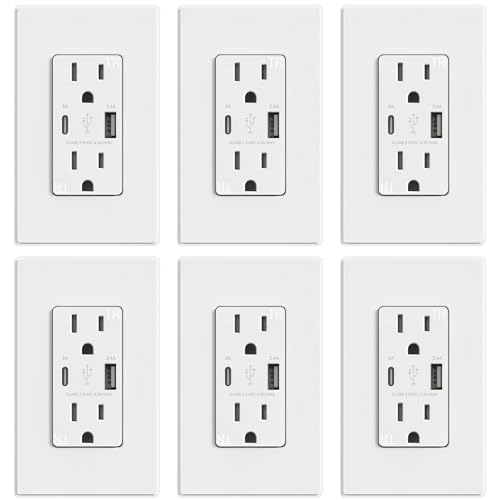
ELEGRP USB Outlets 15A with Type A & C (6 Pack)

ELEGRP USB C Wall Outlets with 3-Ports 15A

ELEGRP 20A USB Outlets with 3 Ports

Leviton 102-5325-WSP 15 Amp AC Receptacle

BSEED Electronic Surge Protector for Home Appliance
The Strengths Of Each Pick
When an outlet starts acting up, a tester beats guessing every time, and the RT250 is the kind of tool I wish I’d owned years ago. It plugs into a standard North American three-wire 120V receptacle and immediately reads the wiring condition on its built-in LCD, so I can see at a glance whether hot, neutral, and ground are properly connected. A GFCI (Ground Fault Circuit Interrupter) is the safety outlet you find in bathrooms and kitchens, designed to cut power fast if it senses current going where it shouldn’t, like through a person, and this unit checks that the GFCI trips within spec too.
For homeowners tackling small electrical projects, the screen removes the usual guesswork of interpreting a row of blinking lights. Tradespeople who already own basic plug-in testers may find the LCD simply more pleasant to read in a dark basement.
A Favorable Mix
- Shows voltage, wiring faults, and GFCI trip time on one screen
- Built specifically for North American 3-wire 120V outlets
- Compact body slips into a tool pouch or kitchen drawer
- Clearer read than older light-only testers in tight spots
Honest Caveats
- More expensive than basic three-light testers in the same aisle
- Only covers 120V receptacles, not 240V dryer or range outlets
Key Specs
Made For
DIYers and homeowners who want to confirm an outlet is safe before plugging in a new appliance.
Where Another Pick Suits Better
Someone replacing worn outlets room by room should pair the RT250 with the TG 10 Pack Decorator Wall Outlet for the actual swap.
A remodel moves fast when you buy outlets in bulk, and this TG pack delivers ten decorator-style receptacles rated for 15 amps at 125 volts. The decorator shape is the flat, rectangular face you see in newer homes, with two parallel slots and a rounded ground pin below. The matte finish hides fingerprints better than glossy alternatives, which matters in a kitchen where every smudge shows under the lights.
Builders, landlords, and homeowners replacing every outlet in a house will appreciate that the shallow body fits a standard junction box without crowding the wires. Each unit is tamper resistant (TR), meaning the slots only open when equal pressure is applied to both, a child-safety feature that’s required in most new residential builds.
A Few Highlights
- Ten outlets in one pack handles a full room or small house
- Matte face resists fingerprints and scuffs
- Shallow back body fits standard electrical boxes
- Tamper-resistant shutters meet modern code for residential use
Points To Keep In Mind
- Wall plates are not included, so plan to source those separately
- Basic 15A rating is not suited for heavy-draw appliances like space heaters on long circuits
- Installation requires the breaker to be off and basic wiring comfort
Who Should Grab It
Homeowners and small landlords replacing every receptacle in a house or apartment at once.
Skip It When
Anyone needing USB charging should skip this pack and pick the ELEGRP USB Outlets instead.
Wall warts and plug-in chargers crowd nightstands fast, and that’s where a USB-equipped receptacle earns its keep. This ELEGRP unit combines two traditional 120V plugs with one USB Type A and one USB Type C port on the same face. The Type A port is the classic rectangular USB you’ve used for a decade; Type C is the smaller, reversible connector found on most newer phones and tablets.
Total USB output lands at 21 watts combined, with each port using built-in protocol chips that read the connected device and deliver what it asks for. For a guest bedroom or a hallway charging station, that means one less adapter on the dresser. The matte white finish matches most trim, and tamper-resistant shutters keep curious kids out.
Everyday Perks
- Frees up the two 120V receptacles by moving charging to the USB ports
- Both USB-A and USB-C cover older cables and newer phones
- Tamper-resistant shutters meet residential code
- Wall plate ships in the box so install is one trip
- Six-pack covers most of a small home at once
Trade Offs
- 21W shared output means charging two tablets simultaneously slows each one down
- Fast-charging protocols above basic USB are not supported
- 15A rating means very heavy loads still need a standard receptacle
Key Specs
Right Fit For
Families upgrading bedrooms and guest rooms where phones, tablets, and e-readers all need a nightly charge.
A Better Fit Elsewhere
Anyone running a kitchen counter full of devices should grab the ELEGRP USB C Wall Outlets with 3 Ports for an extra charging slot.
Three USB ports on a single wall plate sounds like overkill until a household full of devices piles up at the kitchen island. This ELEGRP design adds two Type A and one Type C port to the standard duplex 120V receptacle, and the matching screwless wall plate gives the install a clean, modern look without visible screws.
Each port has its own protocol chip, so a phone, a smartwatch, and a tablet all negotiate the right draw simultaneously. The total shared output still lands at 21 watts, meaning very power-hungry laptops won’t fast-charge here, but everyday phones and earbuds will top off without complaint. A matte white finish and tamper-resistant shutters round out the package.
A Few Strong Suits
- Three USB ports handle a busy counter without adapter sprawl
- Two Type A and one Type C covers most cable drawers
- Screwless wall plate ships included for a clean finish
- Per-port protocol chips protect battery health
Minor Gripes
- Fast-charging protocols above standard USB are not supported
- Two-pack is less convenient than the six-pack option for whole-home upgrades
Quick Facts
Best Suited To
Home offices and kitchen counters where multiple devices need to charge side by side through the day.
Look Elsewhere When
Shoppers needing 20-amp capacity for heavier plug-in appliances should pick the ELEGRP 20A USB Outlets instead.
Garages, workshops, and laundry rooms routinely pull more current than a 15-amp branch can safely deliver, and that’s where a 20-amp receptacle changes the conversation. This ELEGRP unit pairs the higher rating with three USB ports, including two Type C and one Type A, so power tools and modern phones share the same wall plate without a tangle of adapters.
Each USB C port supports up to 3 amps and the USB A up to 2.4 amps, all governed by per-port protocol chips. The 21-watt combined ceiling is the same as the 15A siblings, so charging speed is similar, but the underlying circuit can handle heavier 120V loads at the same time. The included wall plate and tamper-resistant shutters make code compliance straightforward in a residential setting.
The Upside
- 20-amp rating tolerates heavier plug-in tools and appliances
- Two USB C ports support newer phones and tablets natively
- Tamper-resistant shutters meet modern residential code
- Wall plate included for a complete install
Worth Bearing In Mind
- Still does not support higher-wattage fast-charging protocols
- 20A circuits require compatible wiring, not always present in older homes
Built With In Mind
Workshops, garages, and laundry rooms where tools and devices share wall space on a 20-amp branch.
Another Choice May Suit
Bedrooms and living areas on standard 15-amp circuits are better served by the ELEGRP USB Outlets 15A six-pack.
Sometimes a basic, brand-name receptacle is exactly what the job calls for, and the Leviton 102-5325-WSP fits that brief. It’s a standard 15-amp, 125V duplex outlet in white, the kind an electrician reaches for when a single worn receptacle needs swapping. Leviton has been making residential wiring devices for decades, and the consistent fit and finish shows.
Because it’s sold as a single unit rather than a multi-pack, this is the right call when one outlet cracked or stopped gripping plugs and the rest of the house is fine. Compared with the TG 10-pack, there’s no bulk discount, but the Leviton name tends to reassure anyone hesitant about off-brand hardware.
Useful Strengths
- Established brand with consistent residential fit
- Single-unit purchase matches one-off replacements
- Standard 15A/125V rating fits typical branch circuits
- White finish blends with most residential trim
Softer Spots
- Single-pack price is higher per outlet than the TG multi-pack
- No USB ports or smart features, plain replacement only
Whose Shelf It Belongs On
Homeowners replacing one or two worn outlets in a house where the rest of the receptacles still have years left.
Consider Something Else When
A whole-room upgrade is more cost-effective with the TG 10 Pack Decorator Wall Outlet.
A fridge or freezer doesn’t need a fancy smart plug, but it does need protection from the kind of voltage swings that quietly kill compressors. The BSEED surge protector plugs into a standard 120V outlet and passes power through to one appliance, rated up to 15 amps and 1800 watts. When it senses a spike, surge, brownout (a momentary drop in voltage that stresses motors), or sustained over- or under-voltage event, it cuts the circuit automatically.
The delay function is the part I appreciate most: after a power event, the unit waits before reconnecting, giving the grid a moment to stabilize so the compressor isn’t hammered the instant electricity returns. The four-pack makes sense for a kitchen with a fridge and freezer, plus a basement sump pump or garage wine cooler.
Where It Excels
- Automatic cut-off during surges, brownouts, and over-voltage events
- Delay reconnect protects compressor-driven appliances on power return
- 1800-watt rating covers most household refrigerators and freezers
- Four-pack covers multiple appliances at once
Practical Considerations
- Single-outlet pass-through means each appliance needs its own unit
- Printed instructions ship in Spanish only, so plan to source English guidance if needed
Feature Card
Perfect Match For
Homeowners protecting expensive compressor-driven appliances in areas with unstable power.
Not Your Match When
Anyone who already owns a quality surge-protector power strip for electronics is better served there.
Matching The Right Outlet To The Job
A 120 volt outlet looks simple, but the right choice depends on where it lives and what’s plugged into it. Think about three angles before picking: the circuit rating, the room’s use pattern, and whether USB charging would actually reduce clutter.
For most living areas, a 15-amp receptacle is the safe default, and that covers lamps, TVs, and small kitchen appliances. Garages and laundry rooms often run 20-amp circuits to handle window AC units, power tools, or space heaters. Matching the receptacle to the circuit keeps wiring safe and prevents nuisance breaker trips. Tamper-resistant shutters matter most in homes with children, and most modern code requires them anyway.
USB-equipped outlets make sense in bedrooms, kitchens, and home offices where multiple devices charge at once. Plain receptacles still win for one-off replacements or rooms where a single lamp or TV plugs in.
Key Considerations Across These Picks
Mistakes Worth Dodging
The most common slip is buying 20-amp outlets for a 15-amp circuit, which doesn’t improve performance and can mask wiring issues. Another trap is assuming every USB outlet supports fast charging; many cap at standard USB speeds and won’t quick-charge modern laptops. Finally, skipping the tester when an outlet acts up leads to guesswork that a $30 tool eliminates in seconds.
When Paying More Pays Off
Higher-tier outlets tend to add build quality, better internal contacts, and UL or ETL safety listing from a recognized testing lab. For a kitchen remodel or a child’s bedroom, that extra cost buys peace of mind. For a single garage outlet behind a workbench, a basic model does the job without straining the budget.
Frequently Asked Questions
Are all 120 volt outlets the same?
No. Standard 15-amp and 20-amp receptacles differ in prong shape and capacity, and decorator styles offer a slimmer, modern look versus the older duplex shape.
Do USB outlets replace the regular plugs?
No. They add USB ports alongside the two standard 120V receptacles on the same face, so you don’t lose plug space.
Can I install a 120V outlet myself?
Homeowners with basic wiring comfort can swap receptacles with the breaker off. For new circuits or unfamiliar wiring, an electrician is the safer call.
What’s the difference between 15-amp and 20-amp outlets?
The 20-amp version has a T-shaped neutral slot to accept higher-draw plugs and matches 20-amp circuits. Putting a 20-amp outlet on a 15-amp circuit is allowed but pointless.
Do surge protectors help with brownouts?
Yes, dedicated appliance surge protectors cut power during brownouts and reconnect after a delay, protecting motors from low-voltage stress.
Bottom Line
A house full of working, well-chosen 120 volt outlets is one of those quiet upgrades you stop noticing after a week, and that’s the goal. Match the receptacle to the circuit, add USB where charging piles up, and keep a tester handy for anything that feels off. Any of the picks above will serve a specific room well; the right one depends on how that room is actually used.
