

A 100 amp meter socket is one of those unglamorous but essential pieces of electrical hardware. Homeowners replacing a worn-out service entrance, small workshops pulling power for tools, and rural properties running modest single-phase loads all run into the same question: which socket actually holds up? I sorted through six options that cover the most common scenarios. Some lean toward utility brands with decades of spec sheets behind them, while others prioritize budget-friendly installs for straightforward jobs.
How The Shortlist Stacks Up

Eaton Cutler-Hammer 100A Ringless Meter Socket

JINDOUZI 100A Ring Type Meter Socket
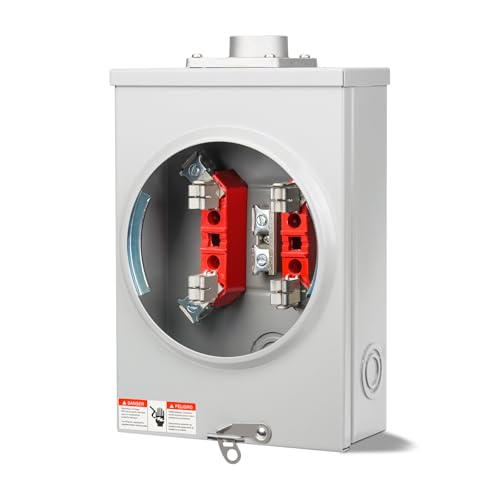
JINDOUZI 125A Ringless Meter Socket

Lovnewmax 100A 240V Single Phase Socket

Milbank U3499-XL-100 Ringless Meter Socket
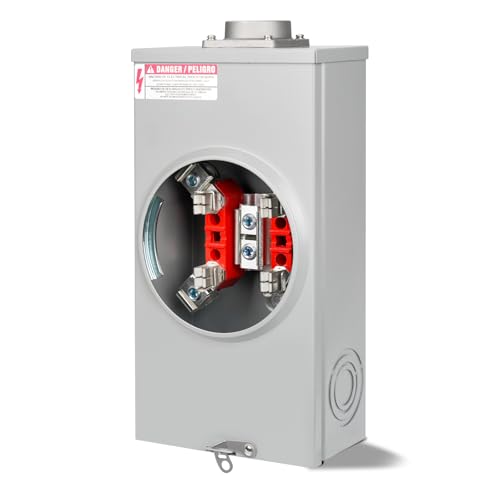
JINDOUZI 200A Ringless Meter Socket
Taking A Closer Look At The Options
Eaton’s Cutler-Hammer line has long been a familiar name on utility trucks, and this 100A ringless socket carries that reputation into residential service entrances. The ringless design means the meter itself locks into place without a separate sealing ring, which simplifies installation for electricians working on overhead or underground feeds. For homeowners replacing an aging socket after a storm or a remodel, the brand familiarity often smooths the path with local inspectors who recognize the specs on sight.
Where this socket earns its keep is in standard single-family homes drawing typical residential loads. Compared to the budget JINDOUZI options below, this Eaton unit leans on decades of documented fit and finish rather than novel features. The build feels closer to what an electrician would expect from utility-spec hardware, though you trade the lower cost of newer imports for that legacy reliability.
The Upside
- Ringless cover design removes the sealing ring step during installation.
- Compatible with both overhead and underground service feeds.
- 100A rating covers typical single-family residential loads comfortably.
- Brand recognition can speed up permit and inspection workflows.
Points To Note
- Costs more than newer budget imports with similar amp ratings.
- Heavier steel enclosure may need two people for mounting.
- Spec sheets emphasize residential use over commercial duty cycles.
Who It Suits Best
Homeowners doing a straightforward residential service swap who value brand familiarity and a clean inspection experience.
Consider Something Else When
Shops running heavier equipment may want the JINDOUZI 200A Ringless Meter Socket instead, since it offers more amp headroom for larger draw profiles.
This JINDOUZI socket stands out by going ring-type rather than ringless, which is a meaningful distinction for installers. A ring-type socket uses a separate metal ring to secure and seal the meter, and that design remains common in areas where utilities prefer the traditional sealing method. At 100A with a 600V 3-wire rating, it covers most single-phase residential drops without complaint.
Where this pick earns its keep is on tight budgets where every dollar of materials matters. Contractors building spec homes or homeowners doing a permitted self-install in jurisdictions that accept ring-type hardware will find the horn bypass cover plate useful for utility-side testing. Compared to the Eaton above, you’re trading brand pedigree for a noticeably lower entry point, though the core copper terminal construction remains a selling point for current transmission.
Noteworthy Benefits
- Lower cost than name-brand ringless alternatives.
- Ring-type sealing matches utility preferences in many regions.
- 600V rating handles standard residential voltage with room to spare.
- Horn bypass cover plate aids utility-side meter swaps.
- 4-jaw base fits standard residential meters.
Trade Offs
- Ring-type installs add a sealing step versus ringless designs.
- Newer brand with a thinner track record in North American markets.
- Steel enclosure may need extra grounding attention during install.
Feature Snapshot
Made For
DIY homeowners on a budget and contractors running multiple spec installs who need a reliable ring-type socket at a sensible entry point.
A Better Fit Elsewhere
For an all-in-one breaker-ready setup, the Milbank U3499-XL-100 Ringless Meter Socket is a stronger match since it includes built-in provisions for a breaker.
The 125A rating on this JINDOUZI ringless socket gives it a noticeable edge over the 100A picks on this list. That extra headroom matters in homes planning to add larger appliances, electric vehicle chargers, or workshop equipment down the line. The ringless cover skips the sealing ring step, which shaves a few minutes off install time and reduces one more part to keep track of on the jobsite.
This is the pick I lean toward for homeowners who know their electrical demands are likely to grow. Compared to the budget ring-type JINDOUZI above, this version trades a small cost increase for a meaningfully higher amp ceiling. The horn bypass cover plate still allows utility-side testing, which keeps it friendly with local power companies during meter swaps.
What Pays Off
- 125A rating provides headroom for future load additions.
- Ringless design simplifies the cover sealing process.
- Horn bypass aids utility meter testing and swaps.
- Works for both overhead and underground service feeds.
Small Caveats
- Higher amp rating costs more than basic 100A alternatives.
- Enclosure dimensions run slightly larger than compact 100A units.
Right Fit For
Homeowners planning future load growth who want to size up the service entrance now rather than replace it again in five years.
Look Elsewhere When
Anyone running heavier 200A-class equipment should step up to the JINDOUZI 200A Ringless Meter Socket instead, which carries that higher capacity natively.
Lovnewmax leans hard into the 240V single-phase category with this 100A socket, which is a common setup for detached garages, outbuildings, and accessory dwelling units. The 4-jaw base paired with 3-wire configuration matches the standard residential meter form factor, and the horn bypass cover plate keeps utility-side access straightforward. Galvanized steel construction is the spec worth noting here, since it tends to hold up against corrosion in outdoor installations.
This is the socket I would point a homeowner toward if they were adding a subpanel to a detached garage or wiring up a small workshop. Compared to the JINDOUZI options above, the Lovnewmax takes a similar approach to internal copper terminals but wraps them in a galvanized exterior for tougher outdoor duty. Whether you’re running overhead triplex or pulling an underground lateral, the unit accepts both feed types.
The Good Stuff
- 240V single-phase rating suits garage and outbuilding subpanels.
- Galvanized steel shell resists corrosion in outdoor installs.
- Horn bypass aids utility testing without removing the meter.
- Compatible with overhead and underground service feeds.
- 4-jaw base fits standard residential meters.
Honest Caveats
- 100A limit caps it for shops running heavy machinery.
- Limited brand recognition compared to Eaton or Milbank.
- Mounting hardware and lug sizing should be verified against local code.
Key Product Details
Best Suited To
Homeowners wiring a detached garage, workshop, or accessory structure who need a corrosion-resistant 240V single-phase service entrance.
Reach For A Different Pick When
For a fully residential main service entrance, the Eaton Cutler-Hammer 100A Ringless Meter Socket is the stronger match given its long-standing inspection history.
Milbank has been in the meter socket business for decades, and the U3499-XL-100 brings that legacy to the table in a single-phase ringless design with a 4-jaw, 1-position layout. What sets this socket apart is the provision for a main breaker right at the meter base, which means the disconnect lives outside rather than buried inside a load center. For installers who want a clean service entrance with everything in one enclosure, that detail matters.
Compared to the Eaton above, the Milbank targets a more contractor-driven audience thanks to its breaker-ready approach. Electricians replacing an old combo meter-main unit often reach for this model because the layout matches what they’re already pulling out of the wall. The trade-off is a heavier, more expensive enclosure, which is a fair exchange for properties where the inspector wants to see the disconnect in plain sight.
Everyday Perks
- Built-in breaker provision keeps the disconnect at the meter.
- Single-phase, 4-jaw layout matches standard residential meters.
- Ringless cover eliminates the sealing ring step.
- Milbank’s catalog reputation among utility crews.
Things To Weigh
- Heavier enclosure requires solid mounting and two-person handling.
- Costs more than comparable 100A ringless imports.
- Breaker sold separately depending on configuration.
Feature Rundown
Who Should Grab It
Contractors and homeowners who want the main breaker integrated with the meter base rather than buried inside an interior panel.
Swap It Out When
For a budget-first install without an integrated breaker, the JINDOUZI 100A Ring Type Meter Socket offers a more economical path.
This JINDOUZI 200A socket sits at the top end of the residential envelope, where larger homes, accessory buildings with heavy equipment, and small commercial outbuildings tend to land. The ringless cover, 4-jaw base, and 600V 3-wire configuration mirror the smaller 125A sibling above, but the doubled amp capacity opens up service to properties running welders, large compressors, or multiple EV chargers.
I include it on the list because some readers shopping for 100A sockets may not realize their actual needs push toward 200A. Comparing this to the Milbank above, the JINDOUZI skips the integrated breaker but delivers the raw capacity at a lower cost. Whether that trade makes sense depends on whether the homeowner plans to mount a separate disconnect or already has one elsewhere on the structure.
Reasons It Performs
- 200A capacity handles heavy residential and light commercial loads.
- Ringless design simplifies cover sealing.
- Works with both overhead and underground feeds.
- Horn bypass allows utility testing without full meter removal.
Factors To Consider
- Larger enclosure footprint needs more wall space.
- Overkill for homes that genuinely only need 100A service.
- No integrated breaker means a separate disconnect is required.
Spec Overview
Built With In Mind
Larger homes, properties with EV chargers, and small workshops running equipment that exceeds the 100A threshold for normal residential service.
Where A Sibling Pick Shines
For a 100A-only install in a modest home, the Eaton Cutler-Hammer 100A Ringless Meter Socket is a tighter fit without paying for unused capacity.
What Matters Most Before Choosing 100 Amp Meter Sockets
Match The Socket To Your Service Entrance
A 100 amp meter socket only makes sense if the upstream feed and downstream panel both align with that rating. Ringless vs ring type is the first fork. Ringless skips the sealing ring, while ring type adds that step but matches older utility preferences in some regions. Both designs are widely accepted, so check with your local inspector before locking in a choice.
Plan For Future Load Growth
Sizing up slightly today can save a full replacement later. A 125A socket costs a little more than a 100A but opens headroom for an EV charger or a small workshop addition. For homes planning major electrical expansions, a 200A socket removes the service entrance from the upgrade equation entirely. The honest read is that most modest homes stay within 100A, but growth plans tilt the math.
Think About Installation Logistics
Overhead vs underground feed determines which knockouts and hubs you need. The JINDOUZI and Lovnewmax options on this list cover both feed types, while the Milbank leans toward overhead-friendly layouts. Heavier enclosures like the Milbank’s often require two people to mount safely, so factor that into your scheduling.
Material And Build Quality
Copper internal terminals and a galvanized or powder-coated steel shell are the two specs worth scrutinizing. Copper inserts handle current transmission with less resistance over time, while a corrosion-resistant shell holds up in outdoor service entrance conditions. Some imports skip the galvanized layer, so verify before mounting in exposed locations.
Key Considerations Across These Picks
Mistakes Worth Dodging
A common slip is ordering a 100A socket for a home that has already grown past that capacity. Another trap is choosing ring-type hardware in a region where the utility only accepts ringless designs. Skipping the local permit and inspection step can also derail a perfectly fine install, since inspectors may flag unfamiliar brands or missing bonding lugs.
When Paying More Pays Off
Higher-tier sockets earn their premium through integrated breaker provisions, heavier gauge steel, and brand-name pedigree that inspectors recognize instantly. The Milbank on this list is the clearest example. For most modest residential jobs, the budget JINDOUZI and Lovnewmax options cover the core requirements well. Step up to premium when the disconnect needs to live at the meter, or when the install will face strict inspection scrutiny.
Frequently Asked Questions
What is the difference between ringless and ring type meter sockets?
A ringless socket uses a cover that locks directly onto the meter base without a separate sealing ring, while a ring type socket requires a metal ring to secure and seal the meter in place.
Can I install a 100 amp meter socket myself?
In many jurisdictions, homeowners can pull their own electrical permits for service entrance work, but the utility company typically still handles the final meter installation and connection.
Are 125A and 200A sockets compatible with standard residential meters?
Yes, most 125A and 200A ringless sockets use the same 4-jaw base configuration as 100A units, which means they accept standard residential meters without adapter hardware.
Do I need a separate disconnect with a 100 amp meter socket?
Most meter sockets do not include a main breaker, so a separate disconnect is often required either at the meter or inside the main load center.
How do I know if my home needs a 100A or 200A service?
Homes with central air, electric heat, large workshops, or multiple EV chargers typically need 200A service, while smaller homes with gas appliances and modest electric draws usually stay within 100A.
The Takeaway
The right 100 amp meter socket comes down to matching your service entrance layout, load expectations, and local inspection preferences. Eaton and Milbank offer name-brand familiarity, the JINDOUZI lineup delivers budget flexibility, and Lovnewmax covers the outdoor subpanel use case. Run the numbers on your actual load profile before deciding, and confirm your choice with a licensed electrician if any part of the install feels uncertain.
