

A 100 amp main breaker does heavy lifting in any marine or mobile electrical setup. It sits between the battery and the rest of the system, ready to cut power the moment something goes wrong. The picks below cover common trolling motor and accessory circuits, with a few higher and lower amp options that round out a complete setup. I’ve grouped them so the right amp rating is easy to spot at a glance.
A Snapshot Of The Selections

50 Amp Marine Circuit Breaker DC 12V-48V IP67 Waterproof
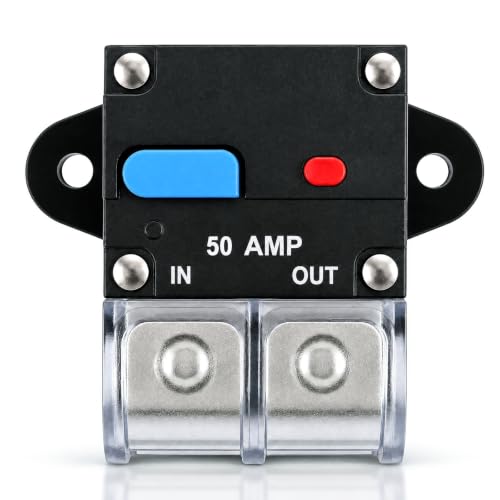
Automotive Circuit Breaker 50amp Trolling Motor Breakers Marine DC 12v-48v
150 Amp Marine Circuit Breaker DC 12V-48V IP67 Waterproof
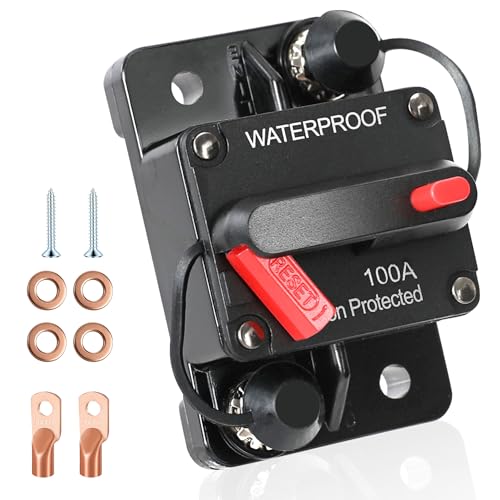
100 Amp Marine Circuit Breaker DC 12V-48V IP67 Waterproof

60 Amp Marine Circuit Breaker DC 12V-48V IP67 Waterproof

40 Amp Marine Circuit Breaker DC 12V-48V IP67 Waterproof

Marine Trolling Motor Circuit Breaker 12v-48v DC 50 Amp Boats
A Closer Look At Each Pick
Fifty amps covers most mid-sized trolling motors and accessory circuits, which is why this Sezbaifles unit tends to show up in a lot of builds. It runs on DC systems from 12V up through 48V, so it handles single-battery setups and higher-voltage banks alike.
The manual reset switch is a small detail that pays off. Instead of carrying replacement fuses, you flip the lever back on and keep going. For a weekend angler, that kind of reliability is what keeps the day on the water.
A Strong Showing
- Wide DC voltage range from 12V through 48V for flexible bank setups.
- Manual reset switch eliminates the need for spare fuses on board.
- IP67 rated sealed housing, which means splashes and rain won’t get inside.
- Meets marine ignition protection standards for safer engine bay mounting.
Points To Keep In Mind
- The 50A rating is specific to mid-tier loads, not high-amperage main lines.
- Panel mounting requires drilling and may need a weatherproof backing plate in saltwater setups.
Key Product Details
Best Suited To
Anglers and RV owners running a single trolling motor or moderate accessory bank at 12V to 24V.
Skip It When
You should reach for the 100 Amp Marine Circuit Breaker DC 12V-48V IP67 Waterproof if your bank pulls more than 50 amps continuously.
This Sezbaifles breaker is built for the worst-case spots on a boat. Engine bays and fuel vapor areas demand components that won’t spark under fault conditions, and the IP67 sealed housing keeps moisture away from the internals.
It carries the same 50A rating and 12V to 48V range as the previous pick, but the certification focus is different. For installations near fuel tanks or in tight engine compartments, this matters more than raw amperage.
Where It Delivers
- Marine-grade ignition protection for engine bay and fuel vapor areas.
- Sealed housing rated IP67 against water and dust intrusion.
- Compatible with 12V, 24V, and 48V DC systems.
- Wide operating temperature range from -32°C to 82°C.
Honest Caveats
- Same 50A ceiling as the first pick, so larger main lines need a different model.
- Installation in cramped bilge spaces may call for custom bracket fabrication.
Whose Shelf It Belongs On
Boat owners rewiring an engine bay or running a trolling motor near fuel lines who value certified ignition protection.
Reach For A Different Pick When
The 60 Amp Marine Circuit Breaker DC 12V-48V IP67 Waterproof fits better when a slightly higher rating is needed for a larger accessory circuit.
When the system pulls serious current, the 150A Sezbaifles unit steps in. It targets the main feed between the battery bank and the heavy loads, like inverters or multiple trolling motors running in parallel.
The same IP67 sealing and ignition-safe certifications carry over from the smaller Sezbaifles models. The higher rating just means it stays closed during normal operation and only trips when something is genuinely wrong.
Strong Points
- 150A rating handles large inverter feeds and parallel trolling motor setups.
- IP67 sealed housing for marine and outdoor exposure.
- Operates across DC 12V to 48V systems.
- Manual reset lever avoids fuse replacement downtime.
Some Limits To Know
- Larger terminals require heavier gauge cable than smaller breakers.
- Overkill for single-motor setups, where the 100A model is usually enough.
Feature Snapshot
Right Fit For
Owners running a multi-battery bank with an inverter or stacked trolling motors pulling sustained high current.
Where Another Pick Suits Better
The 100 Amp Marine Circuit Breaker DC 12V-48V IP67 Waterproof is the better match for single-motor systems that don’t need this much overhead.
The 100A rating sits in a useful middle spot. It handles a single large trolling motor or a multi-load accessory bank without the bulk of a 150A unit. For many boat owners, this is the sweet spot.
Sezbaifles keeps the build consistent with the rest of the line. IP67 sealing, ignition-safe certification, and a manual reset lever all carry over. That consistency matters when you’re mixing breakers across a single panel.
Why It Works Well
- 100A rating covers most single-motor main feeds comfortably.
- Manual reset switch means no spare fuses to track on board.
- IP67 sealed housing for marine and outdoor installations.
- Meets SAE and UL ignition protection standards for engine bay use.
- Works across DC 12V, 24V, and 48V system voltages.
Trade Offs
- Panel cutout dimensions may require careful measurement before purchase.
- Not suited to multi-motor parallel setups where 150A is the safer ceiling.
Made For
Boat and RV owners running a single high-draw trolling motor or a moderate accessory bank at 12V to 48V.
A Better Fit Elsewhere
The 150 Amp Marine Circuit Breaker DC 12V-48V IP67 Waterproof makes more sense for systems with parallel motors or a large inverter feed.
The 60A Sezbaifles breaker sits between the 50A and 100A models in this lineup. That gap matters more than it sounds, because some accessory banks draw right around 55A under peak load. A 50A breaker can nuisance-trip there.
You get the same sealed housing, ignition-safe certification, and manual reset lever. The difference is purely in the trip threshold, which gives you more headroom for moderately heavy accessory circuits.
Strengths Worth Knowing
- 60A trip threshold gives headroom over the 50A base model.
- IP67 sealed housing for splash-prone installations.
- DC 12V to 48V voltage compatibility.
- Manual reset switch reduces downtime during fault clearing.
Worth Bearing In Mind
- Commonly reported as a less common rating, so panel cutouts may need adapting.
- Not a substitute for a true main breaker on high-amperage banks.
Core Details
Who Should Grab It
Owners running moderately heavy accessory banks between 50A and 60A who want fewer nuisance trips.
Not Your Match When
The 50 Amp Marine Circuit Breaker DC 12V-48V IP67 Waterproof is the more typical choice for standard trolling motor circuits under 50A.
The 40A Sezbaifles unit targets the smaller end of the load spectrum. Bilge pumps, light runs, and accessory feeds all sit comfortably below 40A, which is exactly where this breaker fits in.
Compared to the 50A model reviewed earlier, you trade 10 amps of headroom for a tighter fit on low-draw circuits. In a multi-breaker panel, that distinction keeps each circuit properly protected.
Positive Takeaways
- 40A rating suits pumps, lighting, and small accessory feeds.
- Manual reset switch simplifies fault clearing.
- IP67 sealed housing for marine environments.
- Compact body fits tight panel spaces.
Practical Considerations
- Too small for trolling motors or inverter circuits.
- Owners with mixed-load panels may need several units to cover all circuits.
Who It Suits Best
Boat owners wiring dedicated low-draw circuits for pumps, lights, or electronics.
Swap It Out When
The 50 Amp Marine Circuit Breaker DC 12V-48V IP67 Waterproof is the better call for any circuit pulling above 40A under normal load.
Rounding out the list is a Sezbaifles 50A unit focused specifically on portable trolling setups. It runs the same 12V to 48V range and carries the IP67 sealed housing you’d expect for on-the-water use.
The build leans toward anglers who move between boats or rigs. The sealed housing shrugs off spray, and the manual reset keeps you from hunting for spares mid-trip.
A Few Highlights
- Marine-grade sealed housing rated IP67.
- Ignition protection certification for engine bay placement.
- Operating temperature range from -32°C to 82°C.
- Manual reset switch for quick fault recovery.
Things To Weigh
- Same 50A ceiling as other 50A models in this list, no extra headroom.
- Wiring pigtails may not be included, so plan for terminal connectors separately.
Perfect Match For
Kayak and jon boat anglers running a portable trolling motor who want sealed, marine-rated protection.
Look Elsewhere When
The 100 Amp Marine Circuit Breaker DC 12V-48V IP67 Waterproof fits larger boats with heavier main feeds and more accessory circuits.
What Matters Most Before Choosing 100 Amp Main Breakers
Matching Amperage To Your Load
Pick a breaker rated slightly above your circuit’s normal draw, but below the wire’s safe ampacity (the maximum current a cable can carry without overheating). For a typical 12V trolling motor pulling 40 to 45 amps at full thrust, a 50A breaker gives headroom without nuisance-tripping. Underrating is a common mistake that leads to constant resets, while overrating can let a real fault go unprotected.
Voltage Range And System Compatibility
Marine and RV systems span 12V, 24V, and 48V DC. A breaker rated across that full range handles a single-battery setup today and a higher-voltage bank tomorrow. Match the breaker’s voltage rating to your system’s nominal voltage, and confirm polarity before wiring.
Sealing And Ignition Protection
IP67 (an ingress protection rating meaning dust-tight and submersible to one meter) keeps water out during splashes and brief submersion, which matters on any open boat. Ignition protection standards like SAE J1171 and UL1500 mean the breaker won’t spark under fault conditions. For engine bay or fuel-line-adjacent installs, that certification is non-negotiable.
Reset Style And Maintenance
Manual reset switches save you from carrying spare fuses, but they require access to the breaker to restore power. Remote-reset or automatic breakers exist for harder-to-reach spots. Whichever style you choose, leave room around the unit for fingers, tools, and future service.
Key Considerations Across These Picks
Where Shoppers Go Wrong
The biggest trap is matching breaker rating to the motor’s peak label rather than its sustained draw. A motor rated “60A max” may pull 35A on a normal day, which means a 40A breaker fits. Going bigger feels safer, but it leaves the wiring unprotected during a real fault.
When Paying More Pays Off
Higher-rated breakers, like the 150A model in this list, cost more because they carry heavier internal contacts and larger terminals. For a single-motor weekend boat, that’s wasted overhead. For an inverter-fed cabin or a parallel motor setup, that overhead is exactly what keeps the system safe during sustained high draw.
Frequently Asked Questions
What Does A 100 Amp Main Breaker Actually Protect?
A 100 amp main breaker sits between the battery and the rest of the system, cutting power when sustained current exceeds its rating. It protects the wiring from overheating, not the devices plugged into it.
Can I Use A 50A Breaker On A 100A Main Feed?
No. A 50A breaker on a 100A feed will nuisance-trip constantly, leaving the system unusable. Match the breaker rating to the wire and load it actually serves.
Is IP67 Sealing Really Necessary?
For open boats and outdoor RV panels, yes. IP67 sealing handles spray, rain, and brief submersion, all of which happen regularly on the water. For dry, enclosed cabins, a lower rating may suffice.
What Is Ignition Protection And Why Does It Matter?
Ignition protection means the breaker won’t produce sparks that could ignite fuel vapors. Standards like SAE J1171 and UL1500 certify this. Engine bays and fuel-tank-adjacent installs require it.
How Do I Reset A Tripped Breaker?
Flip the manual lever to the off position first, then back to on. If it trips again immediately, there’s still a fault downstream, and the system needs inspection before you restore power.
Bottom Line
A 100 amp main breaker is the right anchor for most mid-sized marine and RV electrical systems, and the picks above cover that anchor plus the lower and higher amp options that round out a complete panel. Match the rating to your actual load, confirm the sealing and certifications fit your install location, and leave room for service access. That combination keeps the system protected and the day on schedule.
