

I built this guide for anyone wrestling with video signal runs: broadcast techs, security installers, studio owners, AV hobbyists, and homeowners trying to push a clean 4K or 8K picture across a tricky distance. A 75 ohm coax cable is the standard impedance for SDI video and most residential video gear, and picking the wrong one quietly wrecks your signal. Below, I break down six solid options across different lengths, use cases, and budgets, so you spend on what your setup actually needs.
The Essentials At A Glance

Talmosal 12G SDI Cable 25 ft RG11 Coax
Talmosal 12G SDI Cable 50 ft RG11 Coax
Talmosal 12G SDI Cable 100 ft RG11 Coax

Custom Cable Connection Belden 1694A 10 ft
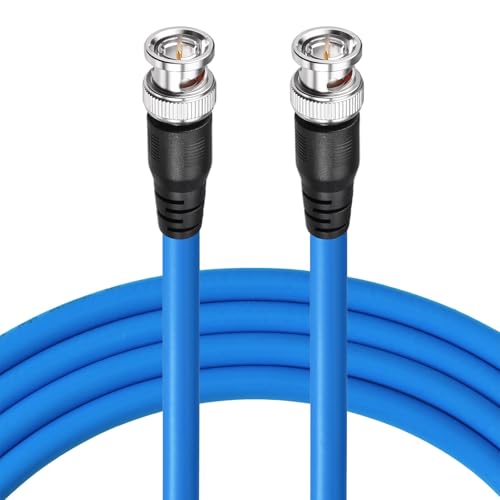
Superbat BNC SDI Cable 6ft Belden 1694A

trueCABLE RG6 Dual Shield Coax 1000ft
The Strengths Of Each Pick
I like this Talmosal cable for homeowners who want a tidy 25-foot outdoor pull without ordering custom lengths. It carries BNC connectors on both ends, uses an RG11 coax design, and supports 12G-SDI signals so 4K and 8K video travel cleanly within its reach. Direct-burial rated means it can sit in a shallow trench without an extra conduit, which simplifies a backyard camera job.
The build pairs a gas-injected foam polyethylene insulator with a tinned copper braid shield, and the double-shielded layout resists interference from nearby power lines. For most setups running a single camera back to a recorder or a Blackmagic converter, this length hits the sweet spot between slack and excess coil.
Noteworthy Benefits
- Direct-burial rated jacket saves installers from running extra conduit outdoors.
- Double shielding with tinned copper braid reduces EMI pickup from power cables.
- Handles 12G-SDI, so 4K and 8K footage stay clean across shorter runs.
- RG11 gauge keeps attenuation low, preserving signal strength at 25 feet.
Things To Consider
- 25 feet may leave little slack in larger properties with long conduit paths.
- RG11 is thicker and less flexible than RG6, so tight corner pulls need patience.
Who It Suits Best
Homeowners running a single outdoor security camera or small studio feed over a short-to-medium distance.
Consider Something Else When
The Talmosal 12G SDI Cable 50 ft RG11 Coax fits better when you need extra slack without stepping up to bulk cable.
The 50-foot sibling of my first pick earns its spot because it covers the awkward middle distance that most residential jobs land in. I see people lose signal quality at exactly this length with cheaper RG6 cables, but the Talmosal stays steady thanks to its RG11 core. The double-shielded construction helps when the cable runs alongside HVAC lines or Romex in the basement ceiling.
Same feature set as the 25-foot model: BNC-to-BNC termination, direct-burial jacket, foam polyethylene dielectric. For someone wiring a detached garage, a long driveway camera, or a basement-to-attic studio feed, this is the practical middle ground.
A Strong Showing
- 50-foot length bridges most detached-structure camera runs without splices.
- RG11 design holds signal integrity better than RG6 over the same stretch.
- Double shielding defends against noise from household electrical wiring.
- Direct-burial jacket handles both attic heat and outdoor trenching.
Points To Keep In Mind
- Heavier than RG6, so staple runs through wood framing require wider clamps.
- Stiff jacket can fight tight bends inside existing conduit.
Right Fit For
Installers wiring a single camera across a moderate property or a multi-room studio patch.
Not Your Match When
The Custom Cable Connection Belden 1694A 10 ft fits better for someone who just needs a tidy in-rack patch lead.
At 100 feet, the signal-loss game gets serious, and this Talmosal is built for it. The RG11 construction matters most here, because thinner coax at this length starts dropping the higher frequencies that 4K and 8K need. It pairs that low-attenuation core with the same double shielding found on the shorter siblings, so the cable still resists interference across a barn, a parking lot, or a backyard outbuilding.
I see this length chosen for rural security setups and small broadcast shoots, where one camera lives far from the rest of the rig. Direct burial rated, so it can sit in a shallow trench without conduit, which simplifies outdoor pulls across long spans.
The Practical Payoff
- RG11 conductor preserves 12G-SDI bandwidth across a 100-foot pull.
- Double shielding maintains picture stability near electrical interference sources.
- Direct-burial jacket removes the need for separate conduit on outdoor runs.
- BNC connectors match professional broadcast and security gear out of the box.
Honest Caveats
- RG11 thickness makes it heavier, so ceiling and wall runs need sturdy supports.
- 100 feet of slack can be tricky to coil neatly inside equipment closets.
- Stiff jacket requires wider bend radii through existing conduit runs.
Key Specs
Made For
Property owners or small studio operators running a single camera to a remote recorder across a long stretch.
A Better Fit Elsewhere
The trueCABLE RG6 Dual Shield Coax 1000ft makes more sense when you need to wire multiple rooms off one bulk pull.
When the job calls for a patch inside an equipment rack, I lean toward Belden 1694A cable, and Custom Cable Connection terminates it cleanly. Belden 1694A is a long-time broadcast staple, and this assembly gives you a 75 ohm RG6 coax rated for 3G and 6G HD-SDI signal work in a short, tidy 10-foot lead. The blue jacket helps when tracing cable paths inside dense racks.
This is the right kind of cable for tying a Blackmagic device, a video router, or a capture card back to a patch bay. Custom Cable Connection has been building assemblies in-house for years, and the Belden core gives the cable a tighter spec tolerance than generic RG6.
Everyday Wins
- Belden 1694A core is a broadcast industry standard for precision SDI work.
- 10-foot length fits typical rack-to-device patch paths without excess slack.
- Blue jacket stands out in cable bundles for easier tracing during service.
- 75 ohm impedance matches professional SDI equipment without adapters.
Small Caveats
- 10 feet is too short for any cross-room run, so it only fits in-rack duties.
- Rated to 6G-SDI, not 12G, so newer 8K pipelines may need a different cable.
Best Suited To
Studio engineers and broadcast techs wiring patch bays and short rack runs with proven Belden cable.
Skip It When
The Talmosal 12G SDI Cable 25 ft RG11 Coax is a smarter grab for outdoor security work where you need direct burial.
The Superbat 6-foot jumper lives in the same Belden 1694A family as my previous pick, just trimmed for tighter rigs. I find 6 feet useful when devices stack closely in a flypack or a small editing bay, where a longer cable would just coil behind the desk. Gold-plated BNC connectors and an 18 AWG conductor pair up for solid 75 ohm performance.
It covers SD-SDI all the way up through 12G-SDI, so the same cable can move standard definition footage today and 4K or 8K tomorrow. For anyone building a modular rig with limited desk depth, this is a clean little patch lead.
The Case For It
- 6-foot lead keeps flypack setups neat without surplus coil behind racks.
- Supports SD-SDI through 12G-SDI for full backward and forward compatibility.
- Gold-plated BNC connectors reduce oxidation over years of plugging and unplugging.
- Belden 1694A core matches the broadcast-standard spec used in larger facilities.
Trade-Offs To Consider
- Too short for any patch across a room or through a wall.
- A single-unit pack means separate purchases for multi-cable setups.
Who Will Love This
Mobile videographers and small studio owners who need a tidy, short jumper between closely stacked devices.
Another Choice May Suit
The Custom Cable Connection Belden 1694A 10 ft works better when you want a bit more slack inside the same rack.
For whole-home or office wiring, pulling bulk 75 ohm coax beats buying pre-terminated lengths every time, and trueCABLE delivers a tidy 1,000-foot reel. RG6/U construction supports cable TV, digital HDTV, satellite, antenna, and AV runs, and a 3 GHz sweep test backs the spec. The dual shielding pairs aluminum bonded foil with a 60% aluminum braid for solid everyday interference rejection.
Riser-rated jacket meets CMR, CATVR, and CL2 classifications, which matters when running through walls and between floors in a residential or light commercial setting. The bare copper conductor supports clean signal transmission, and the tangle-free reel spools smoothly during pulls.
Reasons It Performs
- 1,000-foot reel covers whole-home or small office pulls in one buy.
- Riser-rated jacket meets common code requirements for in-wall residential runs.
- Dual shielding cuts everyday interference from appliances and electrical runs.
- 3 GHz sweep testing confirms the spec holds across the usable bandwidth range.
Possible Compromises
- Bulk format means buying termination tools and connectors separately.
- RG6 loses more signal than RG11 over very long single runs.
Key Specs
Perfect Match For
Homeowners and AV installers wiring cable TV, antenna, or general video distribution through walls.
Look Elsewhere When
The Talmosal 12G SDI Cable 100 ft RG11 Coax suits someone who wants a single pre-terminated outdoor security run.
Picking The Right 75 Ohm Coax Cable For Your Setup
Match The Cable To The Signal Standard
The first decision is which SDI standard, or general video standard, your gear uses. SDI (Serial Digital Interface) is the family of digital video connections carried over 75 ohm coax. Older HD-SDI and 3G-SDI signals travel happily on RG6, but 6G and 12G-SDI push higher frequencies that punish thinner cable. If your converter or camera handles 4K or 8K, an RG11 build like the Talmosal cables preserves bandwidth over distance. For traditional cable TV, antenna, and HDTV, RG6 like the trueCABLE reel is plenty.
Think About Run Length And Signal Loss
Every foot of coax eats a little signal, and that loss stacks up fast at higher frequencies. RG11 holds signal better than RG6 across long pulls, which is why the Talmosal 100-footer uses it. For short in-rack patches under 10 feet, precision cable like Belden 1694A gives you a tighter spec and cleaner impedance matching, which matters when broadcast gear is watching the waveform.
Plan For The Environment
Indoor studio work favors flexible RG6 or Belden patch leads. Outdoor security pulls demand a direct-burial jacket so the cable survives moisture and soil contact. Walls and riser shafts call for a CMR or CL2 rated jacket to meet common code requirements. Picking the wrong jacket for the environment leads to degraded signal or, worse, a code problem down the road.
Don’t Skip Connector Quality
The connector matters as much as the cable. Gold-plated BNC connectors resist oxidation and keep contact resistance low over years of service cycles. Generic crimp-on ends can work, but precision-terminated assemblies from Custom Cable Connection or Superbat give a more consistent 75 ohm match, which protects your signal integrity at the equipment port.
Key Considerations Across These Picks
Common Shopping Slip Ups
The most frequent mistake is grabbing cheap RG6 for a long 12G-SDI run, then wondering why the picture breaks up at 80 feet. Pick the cable rating for the highest signal standard and longest run in your setup, not the cheapest option that “should work.” Skipping direct-burial rating for outdoor pulls is another common trap, since standard jackets break down quickly when buried. Always match the jacket rating to where the cable actually lives.
Where The Extra Money Goes
Premium coax earns its higher price through tighter impedance tolerance, better shielding geometry, and quality conductor materials. Belden 1694A cables, for instance, are spec-controlled for broadcast use, which means consistent performance across batches. RG11 builds cost more than RG6 because of the thicker dielectric and conductor, but that thickness is exactly what saves your signal over distance. Pay for the build that matches your signal standard, and your gear gets the clean signal it expects.
Frequently Asked Questions
What Does 75 Ohm Mean On A Coax Cable?
It refers to the cable’s characteristic impedance, the resistance it presents to a signal traveling through it. Most video gear, including SDI equipment, cable TV, and antennas, is designed around this standard so signal reflections stay minimal.
Can I Use RG6 Instead Of RG11 For SDI Video?
For short patches under about 25 feet, RG6 works fine. Over longer distances, especially with 6G or 12G-SDI, RG11 keeps attenuation low enough to preserve the signal. Choose based on your longest run and highest signal standard.
Is 12G-SDI Cable Backward Compatible?
Yes. A 12G-SDI rated cable carries HD-SDI, 3G-SDI, and 6G-SDI signals without issue. Buying higher-rated cable future-proofs your setup when you upgrade cameras or converters.
Do I Need Special Connectors For SDI Cable?
You need 75 ohm BNC connectors, ideally gold-plated for corrosion resistance. Generic connectors work, but precision ones hold tighter impedance matching, which protects signal integrity at the equipment port.
How Far Can SDI Run On 75 Ohm Coax?
It depends on the standard. HD-SDI can run several hundred feet on good RG6. 12G-SDI typically tops out around 300 feet on RG11, with shorter runs on RG6. Always check your equipment manufacturer’s distance specs.
Closing Remarks
A solid 75 ohm coax cable is one of those quiet upgrades that pays off every time you switch on the feed. Match the cable to your signal standard, pick the right length for your run, and respect the environment it lives in. With any of these six options in your toolkit, the picture stays clean and the signal stays honest.
