

Most people I talk to want solar for one of three reasons: an RV weekend rig, a small off-grid cabin, or a tinkering project on the workbench. The “60 cell” label matters here because that cell count points to a specific size class: panels that sit between compact 36-cell units and full residential 72-cell modules. They hit a sweet spot for mobile installs and moderate rooftop arrays where weight and footprint matter as much as raw output. Picking the right one comes down to matching the panel’s wattage, dimensions, and cell chemistry to where it’ll actually live.
A Closer Look At The Lineup

ZOUPW 440W N-Type 16BB Bifacial Solar Panel

ZOUPW 360W N-Type 16BB Bifacial Solar Panel

ZOUPW 220W Solar Panel Kit with PWM Controller

SUNYIMA 10-Pack Mini Monocrystalline Cells

ZOUPW 180W N-Type 16BB Bifacial Solar Panel
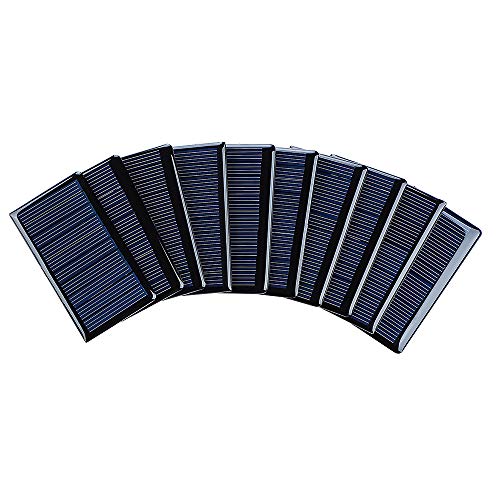
SUNYIMA 5V 60mA Polycrystalline Cells (10-Pack)
More On The Choices That Made The List
The 440-watt ZOUPW sits at the top of this list by a wide margin on raw output, and that matters when you have a fixed roof with limited square footage. The N-Type cells with 16 busbars (thin conductive strips that collect electricity from each cell) are designed to pull more current per cell while reducing shading losses, so partial shade from a vent pipe doesn’t kill the whole string. For a small cabin or a permanent rooftop array, fewer panels mean fewer mounting brackets and less wiring.
The panel is heavier and larger than the 360-watt and 180-watt siblings later in the roundup, so it’s not the friendliest choice for a van or RV roof where weight adds up fast. For stationary installs with a sturdy mount, though, this is the kind of wattage that actually offsets real appliance loads over a season.
Features That Help
- Highest single-panel wattage in the roundup, so fewer panels cover the same load
- N-Type 16BB cells squeeze more output from the same footprint compared to older PERC designs
- Bifacial design captures reflected light from the rear, a useful bonus on lighter-colored rooftops
- Built for permanent rooftop, cabin, and shed installations where mounting once and forgetting it matters
Things To Consider
- Heavier than the 360W and 180W options, which complicates RV and boat roofs
- You’ll likely need a compatible MPPT (Maximum Power Point Tracking) controller to get the rated output
Made For
Stationary off-grid cabins, sheds, and home rooftop arrays with sturdy mounting.
Swap It Out When
You need a lighter panel for an RV or boat roof; the ZOUPW 360W N-Type 16BB Bifacial Solar Panel handles mobile installs more gracefully.
The 360-watt ZOUPW is the in-between pick, and for a lot of people it’s the right pick. It uses the same N-Type 16BB cell tech as the 440-watt, so you’re not giving up on efficiency; you’re giving up some raw output in exchange for a noticeably smaller and lighter frame. That’s a meaningful trade on an RV where every pound on the roof lowers your center of gravity concerns just a little.
Compared to the 220W kit reviewed later, this is a single panel without a charge controller, so you’ll need to match it with your own MPPT unit and battery bank. That’s more work upfront but more flexibility long-term, especially if you’re growing a system piece by piece.
The Case For It
- Same N-Type 16BB cell tech as the heavier 440W panel, so efficiency stays high
- Lighter and more compact than the 440W option, friendlier for RV and boat roofs
- Bifacial gain adds a few percentage points on reflective surfaces like white RV roofs
Trade Offs
- No charge controller included, so budget for a separate MPPT unit and cabling
- Still heavier than the 180W sibling if you’re working with strict weight limits
Feature Snapshot
Right Fit For
RVers, boaters, and small cabin owners who want real wattage without the bulk of a 440W panel.
Look Elsewhere When
You want a turnkey kit with a charge controller included; the ZOUPW 220W Solar Panel Kit with PWM Controller comes ready to wire.
The 220W kit is the most beginner-friendly pick in this roundup, and it’s not close. You get two 110W monocrystalline panels, a 30A PWM (Pulse Width Modulation) charge controller with an LCD readout, Y-branch connectors, Z-brackets for mounting, and the PV and battery cables you’ll need. For someone wiring their first off-grid setup, having everything in one box eliminates the parts-list anxiety that derails a lot of first projects.
PWM controllers are simpler and less efficient than MPPT units, but for two 110W panels feeding a 12V or 24V battery bank, the gap in harvested energy is small. Owners commonly report the included controller is straightforward to set up, and the LCD screen makes it easy to confirm the panels are actually pushing current.
What Helps Most
- Complete kit removes the guesswork of matching a controller, brackets, and cables separately
- Two-panel split gives you wiring flexibility: series for higher voltage or parallel for shaded mornings
- Compact panel size fits smaller RV rooftops and camper vans where a single big panel won’t
- LCD charge controller lets you confirm charging status at a glance
Honest Caveats
- PWM controller wastes some potential output compared to an MPPT unit, especially in cold weather
- Two-panel setup means more mounting points and seal checks than a single rigid panel
Key Product Details
Best Suited To
First-time off-grid installers on RVs, boats, and small cabins who want a complete wiring kit without sourcing parts piecemeal.
A Better Fit Elsewhere
You need higher output from fewer panels; the ZOUPW 360W N-Type 16BB Bifacial Solar Panel delivers more watts in a single rigid frame.
These SUNYIMA mini cells are a completely different category from the ZOUPW panels earlier in the roundup. Each cell is 50mm square and outputs roughly 2V at 160mA, so ten of them soldered together give you enough power to drive a small motor, light an LED string, or charge a tiny battery in a classroom or workshop project. They’re popular for solar toys, science fair builds, and hobby electronics where real panel sizing would be overkill.
The cells are fragile, sold as raw epoxy-coated units, and meant to be soldered into a circuit. That’s the whole point, but it also means this isn’t a plug-and-play panel for someone who just wants to charge a phone on a hike. Treat it like the electronic component it is.
Positive Points
- 10-pack gives you spares, since broken cells are a normal part of the soldering learning curve
- Monocrystalline chemistry offers better low-light performance than older polycrystalline hobby cells
- Standard 2V output makes series and parallel combinations predictable for school projects
- Tiny size lets them fit into scale models, miniature houses, and small science kits
Worth Bearing In Mind
- Epoxy coating scratches easily and the underlying cell cracks if bent during soldering
- Not weatherproof: owners commonly seal finished projects with a clear resin or enclosure
Whose Shelf It Belongs On
Hobbyists, teachers, and parents running STEM projects where students build a working solar circuit from scratch.
Not Your Match When
You want a finished panel to mount outdoors; the ZOUPW 180W N-Type 16BB Bifacial Solar Panel is a real weather-rated panel instead.
The 180W ZOUPW is the smallest of the rigid N-Type 16BB panels in the roundup, and it’s the one I’d point a van builder or a sailboat owner toward first. The same cell tech shows up here as in the 360W and 440W siblings, so you’re not trading efficiency for size: you’re trading wattage, plain and simple. For tight roof space, that trade usually makes sense.
At this output, expect to run modest loads: LED lighting, phone and laptop charging, a small 12V fridge in summer. For most weekenders, that’s the whole off-grid wishlist, and pairing two of these gives you serious flexibility without dominating the roof.
Notable Gains
- Most compact rigid panel in the ZOUPW N-Type lineup, ideal for vans, teardrops, and small boats
- Lighter than the 360W and 440W options, easier to mount solo without a second set of hands
- Bifacial design still captures rear-side reflected light, even on small footprints
Small Caveats
- Single panel at 180W won’t cover heavy appliance loads without paralleling additional panels
- Charge controller not included, so factor that into your system budget separately
At A Glance
Who It Suits Best
Van lifers, weekend RV travelers, and boat owners with limited roof space who still want modern N-Type cell efficiency.
Where A Sibling Pick Shines
You need higher output from a single panel; the ZOUPW 360W N-Type 16BB Bifacial Solar Panel doubles the wattage in one rigid frame.
The SUNYIMA 5V 60mA poly cells are the gentlest entry into the list. Each cell is small enough to fit in a palm, and the 5V output lines up nicely with USB charging circuits and small battery trickle chargers. They’re a great fit for someone teaching themselves how to wire solar into a project without the cost or fragility concerns of higher-end cells.
Compared to the SUNYIMA 2V monocrystalline cells reviewed earlier, this poly version trades a touch of low-light performance for a slightly higher per-cell voltage. That simplifies wiring when you want a 5V output without stacking three or four cells in series.
The Good Stuff
- 5V output suits small USB-style projects without complex series wiring
- Polycrystalline build is more forgiving of imperfect angles than older hobby cells
- 10-pack gives enough cells to experiment, fail, and try again
Points To Note
- Output drops noticeably in low light, which is normal for small poly cells but worth knowing
- Epoxy surface scratches during handling, so plan to seal finished builds
Who Should Grab It
Beginners practicing soldering on solar circuits, and anyone building a small solar string light or display.
Consider Something Else When
You want better low-light response; the SUNYIMA 10-Pack Mini Monocrystalline Cells run more efficiently in shaded conditions.
What Matters Most Before Choosing 60 Cell Solar Panels
Wattage versus footprint is the first call to make. The 440W, 360W, and 180W ZOUPW panels all use the same N-Type 16BB cell platform, so efficiency per square inch is comparable; the real choice is how much roof or ground space you can spare. A van builder with two square meters of usable roof will get more out of a 360W or 180W panel than a single 440W that overhangs the edge.
Cell chemistry matters more than most shoppers expect. N-Type cells (a newer silicon formulation) resist light-induced degradation better than older P-Type PERC cells, which matters on panels you’ll leave outside for years. Monocrystalline cells in general outperform polycrystalline ones in low light and at high temperatures, which is why the ZOUPW lineup has moved entirely to mono.
Charge controller choice quietly decides how much power you actually harvest. MPPT controllers extract more energy from higher-voltage panels, especially in cold weather, while PWM controllers are simpler and cheaper but leave watts on the table. The 220W ZOUPW kit ships with PWM, which is fine for that size; anyone stepping up to the 360W or 440W panels should plan on adding an MPPT unit.
Mounting and sealing deserve more attention than the spec sheet gives them. RV and boat owners commonly report that the long-term failure point isn’t the panel, it’s the brackets and the cable gland where water gets in. Stainless hardware, UV-rated sealant, and a drip loop on the cable make a real difference over years of road vibration.
Key Considerations Across These Picks
Pitfalls Shoppers Hit
The most common mistake is sizing the array for advertised wattage instead of real-world output. Panel wattage is measured under ideal lab conditions, so a 360W panel in your latitude, season, and roof angle may produce closer to 240W on a typical afternoon. Building in a 30% buffer avoids the “my battery never fills” frustration.
Another trap is mixing panel voltages in the same series string. The ZOUPW 180W, 360W, and 440W panels all use the same N-Type platform and can be combined, but the 220W kit’s two 110W panels are sized for a 12V/24V battery system. Mixing kits across strings without a common MPPT controller often leads to underperformance.
Where The Extra Money Goes
Paying more for higher-wattage rigid panels gets you three things: more output per square inch, longer physical lifespan (the 16BB N-Type cells degrade more slowly than older 5BB or PERC designs), and bifacial gain that pays back slowly over years of reflected light. For a permanent cabin or rooftop install, that upgrade usually pencils out.
For hobby projects, the calculus flips. The SUNYIMA mini cells are inexpensive enough that breakage during soldering is a feature, not a failure, and the cost of stepping up to a full weather-rated panel for a string light project rarely makes sense.
Frequently Asked Questions
What does “60 cell” actually mean on a solar panel?
It refers to the physical cell count in the panel’s layout, typically 10 rows of 6 cells or similar arrangements. Sixty-cell panels sit between compact 36-cell units and full residential 72-cell modules, which makes them a common size for RV, boat, and small off-grid installs.
Are N-Type 16BB cells worth the upgrade over older panels?
For permanent outdoor installs, yes. The 16BB busbar layout reduces shading loss and improves current collection, and N-Type silicon resists light-induced degradation better than older P-Type cells. For a one-season hobby project, the difference rarely shows up.
Can I mix the ZOUPW 180W, 360W, and 440W panels on the same system?
Generally, yes, as long as the panels share the same cell platform and voltage characteristics. Use an MPPT controller rated for the combined wattage, and confirm the panels’ Voc (open-circuit voltage) stays within the controller’s input limit.
Do I really need an MPPT controller for a small off-grid system?
For systems under about 200W feeding a 12V battery, PWM is often good enough. Above that, an MPPT controller harvests noticeably more energy, especially in cold weather or when panels run at higher voltages than the battery bank.
Are the SUNYIMA mini cells weatherproof out of the package?
No. The epoxy-coated hobby cells are meant to be sealed inside an enclosure or finished project. Exposed cells degrade quickly when moisture gets under the epoxy layer.
Final Verdict
Choosing a 60 cell solar panel really comes down to matching the panel’s wattage, weight, and cell chemistry to the roof or workbench it’ll live on. For permanent installs with space to spare, the 440W ZOUPW earns its place at the top. Mobile setups typically do better with the 360W or 180W siblings, and the 220W kit is the smoothest way in for first-time builders. The SUNYIMA cells aren’t competing with any of that; they’re a different category entirely, and a good one for hobbyists learning the craft.
