

Whether I’m running a campsite fridge, topping off a power station at a tailgate, or building out a van electrical system, I need panels that pull serious wattage without weighing me down. The 400W class sits in a sweet spot: enough surface area to charge hungry battery banks in a few hours of midday sun, yet still foldable or compact enough to toss in a trunk or mount on a roof. I’ve spent time digging through the spec sheets and use-case feedback on the six strongest options below, matching each to the kind of off-grid work I think most people actually do.
A Quick View Of The Lineup

ZOUPW 450W Portable Solar Panel N-Type 16BB

ZOUPW 450W PRO Bifacial Portable Solar Panel

JJN 200W 2PCS Bifacial Rigid Solar Panel 400W
ZOUPW 230W Bifacial Portable Solar Panel N-Type

Renogy 400W N-Type 16BB Solar Panels
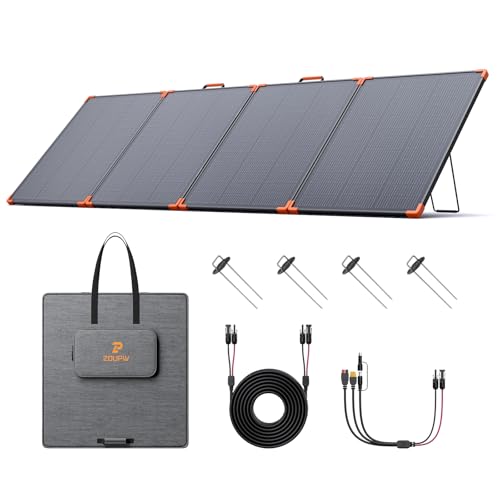
ZOUPW 350W Portable Solar Panel N-Type 16BB
A Deeper Look At The Lineup
This foldable panel sits at the high end of the 400W class, and in real terms it behaves like a small suitcase of power. The N-type monocrystalline cells with 16 busbars (the thin metal strips that carry current across each cell) push efficiency up around 25%, and they hold up better than older P-type designs against a slow loss in output called Light Induced Degradation. For my kind of weekend use, where I’m chasing the sun on a deck or a clearing, that translates into noticeably fuller batteries by sundown.
Where I think it shines is for power station owners who want one panel that does most of the work. It pairs naturally with mid-size stations, and the kickstand layout makes angle adjustments quick when the sun moves. For beginners stepping up from a 100W starter panel, this feels like a real upgrade without jumping into a permanent rooftop install.
Useful Highlights
- 25% cell efficiency keeps output strong even when clouds roll in or the sun sits low at dawn and dusk
- 16BB cell design reduces the chance of micro-cracks forming, which can quietly sap output over years
- Foldable form factor with integrated kickstand for fast, one-person setup in camp or driveway
- Generates noticeably more power than standard panels under partial shade, useful for wooded campsites
Things To Consider
- At 450W it is bulkier than lighter travel panels, so solo backpackers may find it overkill for the trail
- Owners commonly report wiping dust and pollen off the surface every few hours during peak pollen season
Who It Suits Best
Anyone running a mid-to-large portable power station for weekend trips, tailgates, or backup charging at home will find this panel hits a comfortable balance of size and output.
Look Elsewhere When
Strict backcountry hikers who count every ounce should look at the ZOUPW 230W Bifacial Portable Solar Panel instead, since its lighter frame travels more comfortably in a pack.
The PRO version of ZOUPW’s 450W panel adds bifacial capability, meaning the rear side of the panel also captures reflected light and pushes extra wattage into your battery. In practical terms, set it over a light-colored surface like a white truck bed liner or pale concrete and you can pull meaningful bonus energy. It also runs cooler than the standard model, which matters during long summer afternoons when heat quietly saps efficiency.
Compare that to the original ZOUPW 450W I just covered: same wattage class, but the PRO is engineered for users who want every possible watt from a foldable footprint. Off-grid cabin owners, full-time van dwellers, and anyone running a larger station will appreciate the extra headroom.
Positive Takeaways
- Bifacial rear-side gain turns reflective ground surfaces into bonus power without adding panel size
- X-wide bus ribbon lowers electrical loss and keeps the panel cooler, preserving output on hot days
- 25.6% cell efficiency sits at the top of the portable category right now
- Strong choice for users running 1000Wh+ stations that need fast daytime refills
Honest Caveats
- Real-world rear gains depend heavily on ground reflectivity, so darker grass or dirt gives smaller bonuses than expected
- The PRO build is heavier than the standard ZOUPW 450W, making solo carry over distance more tiring
- Premium pricing means it is worth weighing against two mid-tier panels wired together
Feature Snapshot
Made For
Off-grid cabin owners and full-time van dwellers who want the strongest foldable output per square foot and don’t mind the extra cost.
Where A Sibling Pick Shines
Shoppers who plan to mount panels permanently on a van roof should consider the Renogy 400W N-Type 16BB instead, since its rigid format is better suited to fixed installations.
Unlike the foldable picks earlier in this list, JJN ships a pair of rigid 200W panels that together deliver a full 400W setup. That changes who this kit is for: it’s aimed at permanent or semi-permanent installs on a shed roof, a cabin, an RV, or a ground-mounted array. The bifacial cells grab bonus energy from the rear when mounted over light surfaces, and the slim 30mm depth keeps the profile low for wind-prone spots.
For someone building out a small off-grid system that lives outside year-round, rigid panels like these typically outlast foldable designs. The trade-off shows up when you actually have to move them. These aren’t the panels I would grab for a Saturday camping trip.
Useful Strengths
- Two-panel kit reaches a real 400W class output without needing extra wiring purchases
- Rigid aluminum-frame construction handles weather exposure longer than soft-fold designs
- Bifacial cells add useful rear gain when mounted above reflective roofing or light gravel pads
- Compatible with common 12V and 24V battery banks for straightforward system integration
Points To Note
- Two rigid panels require careful transport and a vehicle with roof or cargo space
- Mounting hardware and wiring are typically sold separately, adding to total setup cost
- Not designed for fold-and-go use; the value only shows up in fixed installations
Best Suited To
Homeowners and property owners planning a permanent rooftop or ground-mount array on a shed, cabin, or small outbuilding will get the most from this kit.
Skip It When
Anyone wanting grab-and-go power should reach for the ZOUPW 350W Portable Solar Panel N-Type 16BB, which folds up and travels without a roof rack.
At 230W this is the smallest panel in the lineup, but it’s also the one I’d grab for actual travel. The foldable design packs down tight, the weight stays manageable for a hike-in campsite, and the bifacial cells still deliver useful rear-side gain. Pair two of these and you land in the 400W-plus class without committing to one giant suitcase of glass.
The honest read is that single-panel output tops out below the larger ZOUPW models earlier in this list. For a small power station topping off a couple of lights and a phone, that is plenty. For a residential fridge, it would feel thin.
What Stands Out
- Lower weight and tighter folded footprint suit car-camping and overlanding trips
- Bifacial rear cells add bonus wattage from sand, snow, or pale ground cover
- 25% efficient N-Type 16BB cells keep up with the bigger panels in low light
- Easy to chain two units together for a real 400W+ portable array
Minor Gripes
- Single-panel output is modest for users with energy-hungry loads like AC units or kettles
- Reaching the 400W class means buying two panels and managing two cables at camp
- The smaller folded size still needs a clear sunny spot, which can be tricky in dense woods
Quick Facts
Who Will Love This
Car campers, overlanders, and anyone prioritizing pack-down size over maximum single-panel output will appreciate this model’s travel-first design.
Swap It Out When
Full-time van dwellers needing roof-mounted power should consider the Renogy 400W N-Type 16BB Solar Panels, which is engineered specifically for permanent van installs.
Renogy’s 400W kit is built for permanent rooftop mounting, and the headline feature is the smaller footprint. Renogy shrank the panel compared to the previous generation while keeping output the same, which matters in tight Class B van roofs where every inch of surface area is contested. The N-Type 16BB cells with 25% efficiency handle the energy conversion side well.
For someone retrofitting an existing van electrical build, the size savings may matter more than peak wattage. Compare that to the JJN rigid pair I covered earlier: similar 400W territory, but Renogy’s panels fit where space is genuinely tight.
Points In Its Favor
- Compact form factor fits tighter roof layouts without sacrificing output
- 25% efficient N-Type cells match the top tier of portable panels for energy conversion
- 16BB architecture reduces micro-crack risk during transport and vibration on the road
- Renogy is an established name in off-grid solar, which simplifies warranty support
Practical Considerations
- Rigid format means it works best as a permanent install, not a travel companion
- Roof mounting hardware and wiring typically add to total project cost
- For ground-mount or shed installations the smaller footprint is less of an advantage
Key Product Details
Perfect Match For
Class B van owners and mobile builders who need to maximize roof space will find the compact footprint genuinely useful.
Reach For A Different Pick When
Buyers who want a portable kit to move between a cabin, a shed, and a campsite should consider the ZOUPW 450W PRO Bifacial Portable Solar Panel, which folds up and travels.
The 350W version of ZOUPW’s portable panel lands in a useful middle ground: lighter and more compact than the 450W models earlier in the article, but still pushing serious wattage for a foldable unit. The N-Type 16BB cells with 25% efficiency are the same proven design used across ZOUPW’s lineup, and they hold up well against Light Induced Degradation, a slow loss in output that plagues older P-type cells after their first year in the sun.
For someone running a mid-size power station on weekend trips or short overlanding adventures, this is the kind of panel that disappears into the trunk and pulls more than enough juice in a few hours of sun. The trade-off shows up when you’re powering energy-hungry loads: 350W won’t refill a large station as fast as a 450W unit.
Reasons It Performs
- Mid-range wattage hits a sweet spot for users who find 450W panels overkill
- N-Type 16BB cells match the efficiency of the higher-wattage ZOUPW siblings
- Foldable form factor stores easily in a trunk or cargo area
- Strong low-light performance keeps charging alive on cloudy mornings
Worth Bearing In Mind
- Lower output than the 450W models means longer refill times for large stations
- Surface dust and debris cut into output more noticeably at 350W, so it benefits from periodic wiping
Built With In Mind
Weekend trip users and small-station owners who want solid output without committing to the largest foldable panel will find this a sensible middle-of-the-road choice.
Consider Something Else When
Full-time off-grid users should consider the ZOUPW 450W Portable Solar Panel N-Type 16BB, since the extra 100W per panel adds up meaningfully across long days in the field.
What Matters Most Before Choosing 400 Watt Portable Solar Panels
Match Form Factor To Your Mounting Plan
The first real fork in the road is whether you need something that folds or something that mounts permanently. Foldable panels shine for camping, tailgating, emergency backup, and any situation where the panels travel with you. Rigid panels pay off when they live on a roof, a ground frame, or a shed for years, because aluminum-framed glass typically outlasts soft-fold designs in constant sun and weather. Decide how the panels will spend most of their life before chasing peak wattage.
Cell Efficiency And Wattage Per Square Foot
Cell efficiency, expressed as a percentage, tells you how much sunlight each cell converts to electricity. The N-Type monocrystalline cells with 16 busbars in this lineup hit 25% or slightly higher, which is the current top tier for portable formats. Higher efficiency means more watts per square inch, and that matters when roof space or trunk space is limited. If your layout has room to spare, slightly lower efficiency at a friendlier price can still be the smarter play.
Bifacial Gain And Ground Reflectivity
Bifacial panels capture light on both sides, pulling extra energy from the rear when mounted over snow, pale sand, light gravel, or a reflective surface. The actual gain depends heavily on what’s underneath. In real backyard conditions on grass, you might see only modest bonus output, while a white-painted RV roof or a desert campsite can push rear-side contributions noticeably higher. If your setup sits over light surfaces, bifacial pays off; if it sits over dark soil or shadow, the premium is harder to justify.
Compatibility With Your Battery And Charge Controller
Before committing, confirm the panel’s voltage range matches your charge controller and battery bank. Most portable panels in this class work with common 12V and 24V systems, but pairing high-voltage panels with the wrong controller can waste energy or trigger safety cutoffs. Matching connector types matters too, since adapters are cheap but add another failure point in the field.
Key Considerations Across These Picks
Pitfalls Shoppers Hit
The most common trap I see is chasing the highest wattage number without checking the actual daily energy yield in your location. A 450W panel under heavy tree cover can produce less than a 350W panel in open sun. Another frequent slip is overlooking mounting hardware costs on rigid kits, which can quietly add hundreds to a project. Always match the panel choice to the real-world conditions where it’ll live, not just the spec sheet.
When Paying More Pays Off
The jump from standard panels to bifacial or PRO-tier designs buys two real things: more watts per square inch, and slower degradation over years. For users running daily off-grid power, that extra efficiency compounds across seasons and pays back the price difference. For occasional weekend users, a mid-tier standard panel often delivers everything that matters without the premium.
Frequently Asked Questions
What Can A 400 Watt Portable Solar Panel Actually Power?
A 400W panel typically refills a 1000Wh portable power station in roughly three to five hours of strong midday sun, and it can run small devices like laptop chargers, LED lights, and phone chargers directly during sun hours. Larger loads like microwaves and AC units still need a battery buffer, since solar output fluctuates with cloud cover.
Are Bifacial Panels Worth The Extra Cost?
Bifacial panels earn their premium when mounted over light, reflective surfaces like pale gravel, sand, or snow. On grass or dark soil, the rear-side gain shrinks and the extra cost takes longer to pay back. Match the panel type to your actual mounting surface.
How Long Do Portable Solar Panels Typically Last?
Quality portable panels with N-Type cells commonly deliver strong output for a decade or longer, especially when stored out of harsh weather between uses. Rigid panels generally outlast foldable designs in permanent installations because they avoid the folding stress that soft panels endure.
Do I Need A Special Charge Controller For 400W Panels?
Most 400W panels work fine with standard MPPT charge controllers (devices that optimize the voltage and current coming from panels to top off batteries efficiently). The key is matching the controller’s input voltage and current ratings to the panel’s open-circuit voltage and short-circuit current, both of which appear on the spec sheet.
Can I Leave Portable Panels Outside In The Rain?
Most foldable panels handle rain on the cells without damage, but the junction boxes and connectors benefit from being kept dry. For permanent exposure, rigid panels with sealed junction boxes handle weather better over years. Either way, drying panels before storage helps extend their lifespan.
The Takeaway
For power station owners who want one strong foldable panel, the ZOUPW 450W N-Type 16BB is the easiest place to start. Permanent installers should weigh the Renogy 400W for tight roof spaces or the JJN 200W pair for broader off-grid setups. And travelers who count ounces will find the ZOUPW 230W Bifacial surprisingly capable when paired up. Match the form factor to your actual life, then let efficiency and build quality guide the rest.
