

A new range often arrives with a flimsy cord in the box, or sometimes none at all. Picking the right 4 prong oven cord turns a sweaty install into a quick swap, and it matters more than most people expect. A mismatched amp rating or a too-short length can stop a kitchen remodel in its tracks.
I pulled together five solid options covering genuine 4-prong replacements, 3-prong adapters, and extension cords for awkward layouts. Each entry below fits a slightly different scenario, so matching your outlet, breaker, and distance to the wall helps more than chasing specs for the sake of it.
A Quick View Of The Lineup

HiFind 50 Amp Range Power Cord 15 Ft NEMA 14-50P
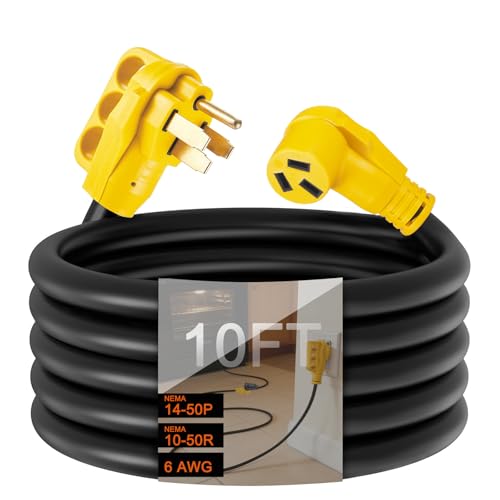
Suplevel 10ft NEMA 14-50P to 10-50R Adapter Cord
Eastman 3-Prong Electric Range Cord 40 Amp 6 Ft

Parkworld 10-50 Extension Cord 20FT 50 Amp

Smart Choice 3 Prong 50 Amp Range Power Cord 6 Ft
The Picks, Examined More Closely
This HiFind cord stretches 15 feet and handles a true 50 amp load, which is the rating most modern ranges expect. The 6/2 plus 8/2 AWG SRDT construction (SRDT means a hard service cable with two conductors plus a ground) gives it the heft to sit behind a range without kinking. Molded ring terminals on the appliance end make the wiring step less fussy, especially in tight cabinet spaces.
Unlike the Eastman’s modest 40 amp rating, this one is sized for full-size ovens and heavy cooktops running multiple burners at once. The jacket is rated for cold and heat swings, so it works in a garage outlet feeding an EV charger or a backyard generator setup. For most kitchen swaps the 15 foot length is generous, leaving slack for pulling the range out without yanking the plug.
Real Benefits
- 15 foot run gives real slack for pulling a range out to clean behind it
- Color coded conductors speed up a confident wiring job
- Ring terminals mean no loose strands slipping out of the terminal block
- Handles the full 50 amp load expected by larger ovens and EV chargers
- ETL listed for safety assurance on high-draw appliances
Things To Consider
- The longer 15 foot cable can coil awkwardly behind shorter kitchen runs
- Eyelet terminals require a Phillips or nut driver during install, not just a push-on fit
- Overkill for older 40 amp ranges that don’t need this much headroom
Key Specs
Made For
Homeowners wiring a modern 50 amp range in a kitchen with a tight outlet position or anyone powering an EV charger from a range-style outlet.
Consider Something Else When
The Suplevel adapter is the better match if your outlet is 4-prong but your older stove has a 3-prong tail you don’t want to rewire.
The Suplevel adapter solves a specific headache: a 4-prong outlet in the wall, but a 3-prong cord on the appliance. Plugging the 14-50P end into the wall gives back a 10-50R outlet (a 50 amp, 3-prong range receptacle) ready to accept the range. STW 6/3 cable (STW is a hard service thermoplastic jacket rated for hard usage) means the adapter tolerates the same garage floor treatment a welder cord gets.
This is a niche tool, and compared to the direct replacement HiFind above, it adds a connection point rather than replacing a cord. For someone moving a range into a shop with an RV-style 4-prong outlet, it sidesteps a panel swap entirely. The 10 foot length works for most range-to-wall gaps, though you may want extra slack behind slide-in units.
Everyday Perks
- Adapts a 4-prong RV outlet to power a 3-prong range without rewiring
- 6 AWG conductors handle the full 50 amp circuit safely
- STW jacket survives scuffs on shop or garage floors
- ETL listed for confidence on a high-load connection
Points To Note
- Only works one direction, so the 3-prong end can’t be repurposed elsewhere
- Not for dryers or other appliances that need a true neutral path
- An extra adapter joint is one more thing to inspect over time
Right Fit For
Anyone with a 4-prong RV or generator outlet who wants to plug in a standard 3-prong range for occasional or workshop use.
Skip It When
The Smart Choice cord is the simpler swap if your wall already has a 3-prong receptacle and you just need a fresh cord.
The Eastman 61269 cord is the basic-but-correct answer for older kitchens still rocking a 3-prong receptacle. Rated at 40 amps, it pairs with smaller ranges that don’t demand the 50 amp circuit most modern installs need. The 6 foot length matches what most manufacturers ship in the box, so it slots in as a clean replacement without re-routing.
Compared to the longer Parkworld extension below, this cord is meant to plug directly into the wall with no slack gymnastics. Older homes from the 80s and 90s often have 3-prong outlets that were never updated, and swapping in this cord avoids an electrician visit for owners who already have the matching receptacle. The grey jacket stays neutral against appliances and cabinets.
The Case For It
- 6 foot length mirrors standard range placement, no cable coil behind the unit
- 40 amp rating suits mid-size electric ranges without overspending
- Direct wall plug design avoids extra adapter joints
Honest Caveats
- 3-prong configuration isn’t compliant with current NEC code for new range installs
- Short cable leaves no room to pull the range out for deep cleaning
- Underrated for large ovens drawing near 50 amps at peak
Feature Snapshot
Who It Suits Best
Owners of older homes with existing 3-prong receptacles who want a no-fuss replacement cord without rewiring the wall outlet.
A Better Fit Elsewhere
The HiFind 4-prong replacement is the smarter pick if your outlet is already a 4-prong and your new range expects the modern NEMA 14-30 or 14-50 plug.
The Parkworld 20 foot extension cord exists for layouts where the range outlet is on the wrong wall. A kitchen island, a basement shop, or a range tucked into an unusual alcove all benefit from a real extension rather than a tense cord stretched to its limit. Rated at 50 amps and 250 volts, it carries the same load the wall circuit expects.
Unlike the short Eastman replacement above, this cord is a 10-50P to 10-50R extension, meaning both ends are 3-prong plugs and outlets. The nickel-plated brass pins resist oxidation in humid basement air, which matters more than people think for a connection that sits untouched for years. UL listing on top of cUL gives it dual coverage for residential and Canadian code.
What Pays Off
- 20 foot length handles unusual kitchen and shop layouts without straining the wall plug
- Nickel-plated pins resist corrosion in humid or outdoor-adjacent spaces
- UL plus cUL listed for both US and Canadian code compliance
- 6 AWG stranded copper supports sustained 50 amp draw without voltage drop
Trade Offs
- 3-prong configuration doesn’t satisfy current code for new construction
- Length is excessive for compact kitchens, leaving slack to manage
- Outdoor PVC jacket helps, but it’s still a removable extension rather than a permanent install
Whose Shelf It Belongs On
Workshop owners, basement kitchen builders, or anyone running a range from a distant 3-prong outlet that can’t be moved easily.
Reach For A Different Pick When
The Smart Choice cord makes more sense if you only need a 6 foot replacement and your outlet is already in the right spot behind the range.
The Smart Choice cord handles the common case of replacing a worn-out or missing range cord in a 3-prong kitchen. The 90 degree flat plug is the small detail that matters most, because it tucks against the wall behind the range instead of poking out and catching on the floor. 50 amp rating covers most full-size electric ranges without strain.
Compared to the Eastman, this cord supports a heavier 50 amp load where many newer ranges pull closer to that limit during self-clean cycles. The 6 foot length is the standard range distance, so it doesn’t bunch up behind short cabinet runs. Owners with universally compatible appliances get a swap that works across brands without compatibility guesswork.
Strong Points
- 90 degree angled plug saves inches behind tight range installations
- Compatible with every major brand of 50 amp electric range
- 50 amp rating handles modern ranges including self-clean cycles
- 6 foot length matches standard range-to-wall distances cleanly
Worth Bearing In Mind
- 3-prong configuration isn’t suitable for newer 4-prong code-compliant outlets
- No extra slack for pulling the range away from the wall for service
- Flat grey cable shows scuffs more than black-jacketed alternatives
Quick Facts
Perfect Match For
Homeowners replacing a damaged cord on a 50 amp range in a kitchen with an existing 3-prong outlet behind the appliance.
Not Your Match When
The HiFind 4-prong replacement is the right call if your home has been upgraded to a modern NEMA 14-50 outlet and your new range ships without a cord.
What To Weigh Before Choosing A Range Cord
The single most important step before buying is matching the plug to the wall receptacle. Newer homes have 4-prong NEMA 14-30 or 14-50 outlets, while older properties often still rely on 3-prong 10-50 receptacles. Buying the wrong configuration means a frustrating return trip, so a quick look at the wall outlet pays off.
Amp rating is the next gate. A 40 amp cord is fine for older or compact ranges, but most full-size modern ovens pull closer to 50 amps during heavy use like self-cleaning. Sizing up is reasonable, sizing down risks tripped breakers and overheated wire jackets.
Length matters more than people expect. A 6 foot cord suits most direct wall installs, but anything from a kitchen island to a basement shop may need 10 to 20 feet of slack. Buying longer than needed leaves coil to manage, while buying short can stress both the wall outlet and the appliance terminal block.
What Separates A Basic Cord From A Heavy-Duty One
Common Slip Ups With Range Cords
The biggest mistake is ignoring the plug configuration entirely. A 4-prong cord into a 3-prong wall outlet, or the reverse, simply won’t seat and forcing it risks bent prongs or damaged terminals. Match first, then worry about length and gauge.
Another trap is chasing the cheapest cord without checking the amp rating. A 30 amp cord on a 50 amp range can overheat under sustained load, which is a real safety hazard. The jacket may look fine on the outside while the copper inside struggles.
Where The Extra Money Goes In A Premium Cord
Paying more usually buys heavier copper, third-party safety listings like UL or ETL, and better strain relief at the plug ends. These features add up to a cord that survives years of being pushed, pulled, and bent behind a heavy range. For most homes the upgrade is worth it for the safety listing alone, since that means an outside lab verified the cord meets published standards.
Frequently Asked Questions
What is the difference between a 3-prong and 4-prong range cord? A 3-prong cord combines the neutral and ground into one wire, while a 4-prong cord separates them into a dedicated neutral and a separate ground wire for added safety.
Can I use a 4-prong cord on an older 3-prong outlet? No, the plugs are physically different and won’t seat correctly. You would need to either replace the wall receptacle or use a proper adapter rated for the load.
How long should a range cord be? Most kitchens work with a 4 to 6 foot cord, but runs to islands, basements, or shop spaces often need 10 to 20 feet of length to avoid strain on the outlet.
Do all range cords work with any brand of oven? Most cords are designed to fit standard NEMA configurations, so they work across major brands as long as the amperage matches the oven and the wall outlet type matches the plug.
Is it safe to install a range cord without an electrician? Many homeowners handle a direct cord swap safely, but any change to the wall receptacle or circuit should be done by a licensed electrician to meet local code.
Wrap Up
A new range cord is one of the cheaper parts of any kitchen upgrade, but it sits at the center of the install. Matching the plug to the outlet, sizing the amp rating to the appliance, and giving yourself enough slack are the three small decisions that prevent big headaches. The picks above cover the most common scenarios, from a direct swap to an awkward island run, so the right cord is usually within this list.
