

Buying a range or dryer outlet sounds simple until you open the panel and stare at NEMA codes you’ve never seen before. Most households only replace an outlet once every decade or two, so the learning curve feels steep the first time around. I pulled together six solid options across 30A and 50A configurations, flush-mount and surface-mount styles, and modern 4-prong grounding setups. The goal: help you match the right outlet to your appliance, your panel, and your comfort level with electrical work.
A Side-By-Side Look

HYDUUU 30A Dryer Receptacle 4-Prong NEMA 14-30R Flush Mount Outlet
HYDUUU NEMA 14-30R 220V Outlet Box Installation Kit
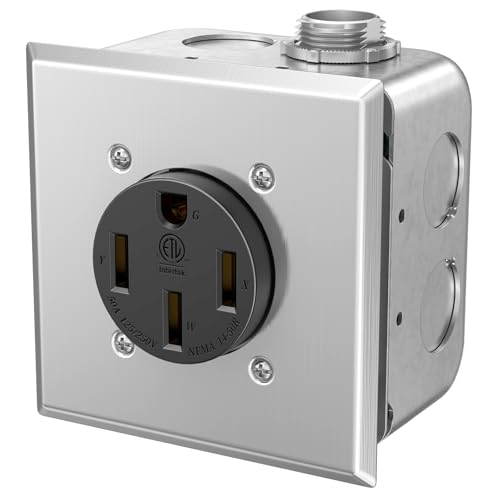
HYDUUU NEMA 14-50 240V Range Outlet Box Installation Kit

Eaton WD112 50-Amp Surface Range Power Receptacle

FLRBAGSTO NEMA 10-50 Outlet 3-Pole 50 Amp Surface Mount Receptacle

HYDUUU 50 Amp EV Outlet NEMA 14-50R Receptacle
More On The Choices That Made The List
Anyone rewiring a laundry room for a modern dryer will hit the NEMA 14-30R socket first. NEMA is the National Electrical Manufacturers Association, and the 14-30R code simply means a 30-amp, 125/250-volt, 4-prong receptacle, which is the current standard for dryers built after 2000. This flush-mount HYDUUU unit drops into a standard gang box, so it sits nearly level with the wall once installed. The galvanized steel strap and impact-resistant nylon body feel more like commercial hardware than residential.
The honest read is that for most homeowners replacing a worn dryer outlet, this is the workhorse pick. It’s not flashy, and the spec sheet is straightforward, but every detail lines up with what an electrician would expect. Anyone living in an older home upgrading from a 3-prong setup should find the grounding path much more reassuring. Just confirm your breaker panel actually runs 30 amps to the laundry area before swapping parts.
Bright Spots
- Modern 4-prong grounded design meets current dryer wiring codes
- Flush-mount format keeps the wall profile clean and snag-free
- Galvanized steel strap resists corrosion in humid laundry rooms
- Compatible with standard 30A dryer cords sold at any home center
Things To Consider
- Rated for indoor dry locations, so outdoor installs need a weatherproof cover
- Will not accept older 3-prong dryer plugs without a separate adapter
Feature Snapshot
Best Suited To
Homeowners upgrading a laundry outlet to current 4-prong code with a matching 30A breaker.
Consider Something Else When
Shoppers who want every mounting accessory in one box should look at the HYDUUU NEMA 14-30R 220V Outlet Box Installation Kit instead.
Compare that to the bare HYDUUU 30A receptacle above: this version bundles the outlet with a 4-inch 2-gang metal box, plaster ring, faceplate, and clamp connector. For anyone running wire from scratch in a basement or garage, that kit approach means one shopping trip instead of three or four. The 14-30R rating matches what most modern dryers expect, and the included cover plate keeps the finished install looking clean.
DIYers who feel hesitant about sourcing matching parts separately tend to appreciate this format most. You may find the metal box slightly deeper than older residential boxes, which can complicate tight stud bays. Still, having ETL (Edison Testing Laboratories) certification on the receptacle and UL (Underwriters Laboratories) certification on the box parts gives peace of mind when the inspector shows up.
Practical Pluses
- Everything needed for a fresh 14-30R install ships in one box
- ETL-listed receptacle plus UL-listed metal box parts
- 2-gang design allows future expansion without re-buying the box
- Includes clamp connector for clean cable entry
Worth Noting
- Deeper 4-inch metal box may not fit shallow stud walls without drywall rework
- Surface-mount cover included, but exposed-work routing still needs careful planning
Made For
First-time installers running a new 30A dryer circuit who want to skip the parts-matching game.
Look Elsewhere When
Anyone wiring a 50A range or RV outlet should pick up the HYDUUU NEMA 14-50 240V Range Outlet Box Installation Kit for the right amperage.
Same story as the 30A kit, but scaled up: this HYDUUU package centers on a NEMA 14-50R receptacle, which is the 50-amp, 240-volt, 4-prong socket used by modern electric ranges and most RVs. It arrives with the same 4-inch 2-gang metal box, plaster ring, cover plate, and clamp connector. People setting up an RV pad in the driveway or replacing a 1990s range outlet will find the format familiar.
The included components feel like they were selected by someone who has actually wired a kitchen, not someone picking random SKUs. The exposed-work cover makes surface-mount installs in basements and workshops much simpler. Depending on your local jurisdiction, the inspector may ask for the ETL mark on the receptacle specifically, and it’s printed right on the body.
Where It Excels
- Full kit format covers box, cover, and receptacle in a single order
- 50A NEMA 14-50R handles electric ranges and most RV shore power
- Metal 2-gang box accepts standard plaster rings for flush drywall work
- Clamp connector keeps cable secure at the entry point
Minor Gripes
- Requires a 50A double-pole breaker, which not all older panels have spare slots for
- Heavier gauge wire pulls make this less friendly for tight attic runs
Quick Facts
Who It Suits Best
Homeowners installing a new electric range outlet or adding RV shore power in a garage or driveway.
Skip It When
Anyone wiring a dedicated EV charger setup may prefer the HYDUUU 50 Amp EV Outlet NEMA 14-50R Receptacle, which targets charging specifically.
Eaton has been making electrical hardware long enough that their catalog numbers carry weight with electricians. The WD112 is a 50-amp, 125-volt surface-mount receptacle with a glass-reinforced nylon body and a heavy galvanized steel mounting strap. Unlike the 14-50R kits above, this is a 2-pole, 3-wire configuration, which makes it a non-grounding setup designed for specific older appliance matches.
Workshop owners running a welder, compressor, or older range tend to gravitate toward this style because the surface-mount form factor handles exposed conduit gracefully. For most residential kitchens, the lack of a dedicated ground wire is a deal-breaker, so I’d steer new construction toward a 4-prong option. Where the WD112 really earns its keep is in utility rooms where metal conduit is already running.
Strong Points
- Glass-reinforced nylon body handles high-amperage heat cycles
- Heavy galvanized steel strap resists corrosion over decades
- Surface-mount format pairs cleanly with metal conduit runs
- Trusted name recognized by professional electricians
Trade Offs
- Non-grounding 3-wire design won’t meet code for modern 4-prong appliances
- Surface-mount housing sticks out further than flush-mount alternatives
Right Fit For
Workshops, garages, and older utility rooms running high-amperage tools on existing 3-wire circuits.
Reach For A Different Pick When
Anyone replacing a kitchen range outlet should pick the HYDUUU NEMA 14-50 240V Range Outlet Box Installation Kit for current 4-prong code compliance.
The NEMA 10-50 is the older sibling to the 14-50. It’s a 3-pole, 3-wire, 125/250-volt, 50-amp outlet that was standard for electric ranges before the 1996 code change pushed grounding. This FLRBAGSTO unit uses thermoplastic nylon construction with knockouts on the back and bottom, and the terminals accept wire up to #4 AWG (American Wire Gauge, a standard thickness measurement). It serves one specific purpose: matching older appliances that still ship with a 3-prong cord.
Anyone inheriting a mid-century home with a functioning 10-50 outlet may find this is the only way to keep a vintage range or welder running without rewiring the wall. The source explicitly cautions against using it for EV charging, and that warning is worth taking seriously. For new kitchens, the safer move is upgrading to a 14-50R, but for legacy replacement work, this format fills a narrow gap nicely.
Everyday Advantages
- Matches older appliances still using 3-prong 50A cords
- Thermoplastic nylon housing holds up to daily plug cycles
- Back and bottom knockouts offer flexible conduit entry
- Terminals accept up to #4 AWG copper wire
Points To Keep In Mind
- Non-grounding format does not satisfy current code for new range installs
- Not suitable for electric vehicle charging applications
- Requires copper wiring, so aluminum wire homes need different connectors
Who Should Grab It
Owners of pre-1996 homes replacing a worn 10-50 outlet to keep an existing 3-prong range or welder operating.
Not Your Match When
Anyone planning a kitchen remodel or installing a modern range should reach for the HYDUUU NEMA 14-50 240V Range Outlet Box Installation Kit instead.
Electric vehicle chargers have quietly become the most common reason households shop for a 50A outlet. This HYDUUU NEMA 14-50R receptacle is built specifically for Level 2 EV charging at 240 volts, and the same socket also serves larger RVs and high-draw appliances. The industrial-grade housing looks similar to the kit version above, but the focus here is on a single heavy-duty outlet without bundled box parts.
People who already have a gang box and cover from a previous install will appreciate buying just the receptacle. The source warns that other 50A plug types, including 6-50P, 10-50P, and 11-50P, won’t fit, so double-check the cord on your charger before committing. For indoor garage installs, this outlet checks every box the average commuter needs.
The Case For It
- Industrial-grade construction aimed at repeated charge cycles
- 240V Level 2 charging cuts typical overnight fill times significantly
- Same NEMA 14-50R format works for RVs and large appliances too
- ETL-listed for residential code compliance
Room For Improvement
- Does not include a gang box, cover plate, or clamp connector
- Won’t accept non-14-50P plugs, so mismatched EV cords simply won’t seat
Key Specs
Whose Shelf It Belongs On
EV owners and RV travelers setting up a dedicated 50A charging outlet in a garage or carport.
Swap It Out When
Shoppers who still need a box and cover plate should consider the HYDUUU NEMA 14-50 240V Range Outlet Box Installation Kit for a one-order install.
Matching The Right Outlet To Your Setup
Start with the appliance cord. A modern dryer or range uses a 4-prong plug (NEMA 14-30 or 14-50), while older units may still carry a 3-prong plug (NEMA 10-30 or 10-50). Mismatching these means the plug literally won’t seat, which is a built-in safety feature rather than a hassle.
Amperage And Breaker Sizing
Every outlet must match its breaker. A 30A receptacle on a 40A breaker creates a real fire risk because the wiring can overheat before the breaker trips. Check the panel label, and if the breaker slot is full, an electrician can usually free up space or add a subpanel for a moderate cost.
Flush Versus Surface Mount
Flush-mount outlets sit nearly level with the wall and look clean in finished drywall. Surface-mount outlets protrude but install faster on concrete, brick, or exposed framing. Garage workshops usually tolerate the surface look better than kitchens do.
Indoor Versus Outdoor Locations
Most receptacles on this list are rated for dry indoor locations. Outdoor or garage installs exposed to moisture need a weatherproof cover or a wet-location-rated housing. Skipping that step is one of the most common code violations in DIY electrical work.
Smart Choices Before You Buy
Pitfalls Shoppers Hit
The single biggest mistake is grabbing a 3-prong outlet for a 4-prong appliance cord, or vice versa. The plug won’t fit, and any workaround adapter is a code violation in most jurisdictions. Double-check the cord shape before clicking order.
Another common slip is underestimating wire gauge. A 50A circuit requires #6 AWG copper or larger, and using thinner wire for a long run creates voltage drop that makes chargers and ranges run inefficiently. Match the wire to the breaker to the outlet, and the system stays safe.
What The Higher Tier Buys
Premium outlet kits add bundled boxes, plaster rings, and cover plates that match the receptacle brand and certification. That sounds minor, but inspectors flag mismatched or uncertified parts more often than people expect. Spending a bit more upfront usually saves a return trip to the supply house.
Heavier-gauge steel straps and glass-reinforced nylon bodies also show up in higher-tier options. They matter most in humid laundry rooms, unconditioned garages, and anywhere the outlet gets plugged and unplugged frequently. For a once-a-decade kitchen outlet, basic builds are usually fine.
Frequently Asked Questions
What does NEMA mean on a range outlet?
NEMA stands for the National Electrical Manufacturers Association, which sets the standardized shape and rating for electrical plugs and receptacles in North America. A NEMA 14-50R, for example, is a 50-amp, 4-prong, 125/250-volt receptacle. The codes exist so any matching plug seats correctly and safely.
Can I install a 4-prong range outlet myself?
Homeowners with solid electrical experience often replace like-for-like outlets themselves, but running a new circuit from the panel typically requires a permit and inspection. Local codes vary, so check with your building department before starting. A licensed electrician is the safer path for new circuits.
Why are older range outlets 3-prong instead of 4?
Before the 1996 National Electrical Code update, ranges were allowed to use the neutral wire as a ground, which meant 3-prong cords were standard. Newer code requires a separate ground wire for safety, so modern outlets use 4 prongs. Adapters exist, but they don’t satisfy current code.
Do I need a special outlet for an electric vehicle charger?
Most Level 2 home chargers use either a NEMA 14-50 or 14-30 plug, which match the same outlets listed above. A dedicated 50A circuit is typical, and the outlet should be mounted in a weatherproof box for outdoor or garage use. Confirm your charger’s plug type before choosing the receptacle.
What wire gauge do I need for a 50A range outlet?
A 50A circuit requires #6 AWG copper wire, or #4 AWG aluminum if your panel and outlet accept it. Going thinner than this creates overheating risk and may fail inspection. When in doubt, an electrician can size the wire run for the exact distance from your panel.
Wrap Up
Choosing a 4-prong range outlet comes down to matching the NEMA code to your appliance, your breaker, and your wire gauge. The HYDUUU kits make sense for fresh installs, the Eaton WD112 fits legacy workshop setups, and the FLRBAGSTO 10-50 keeps older appliances running safely. Pick the configuration that lines up with what you already have, and the rest of the install tends to fall into place.
