

A 4 prong plug isn’t glamorous, but the moment you need one (a new dryer, a transfer switch, a tight spot behind furniture) the right cable or connector can save an afternoon. The category covers everything from household appliance cords to industrial generator terminations, so the picks below lean toward real ownership scenarios. I’ve focused on options that suit both common home installs and heavier-duty backup power needs.
The Picks In Brief

ADCAUDX 6FT Heavy Duty Right-Angle Extension Cable 12AWG

Kxable 4FT 3-Prong Extension Power Cord Right-Angle 16AWG
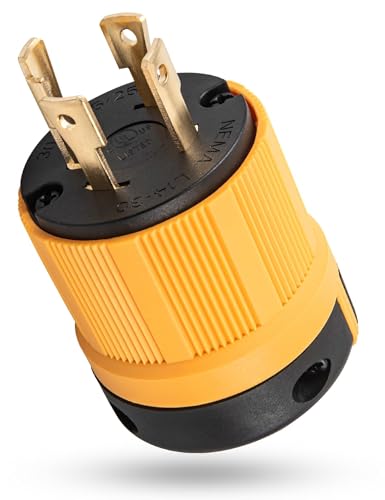
MECMO L14-30P Generator Locking Plug 30Amp 125/250V

Ultra Explorer 10 Gauge Heavy Duty Extension Cord 15FT Orange

MECMO L14-30R Generator Locking Connector Female 30Amp 125/250V
RVMATE 4 Prong SRDT Dryer Cord 5FT NEMA 14-30P
A Breakdown Of The Leading Choices
Most extension cords stick straight out of the wall, which is fine until you push a bookshelf or media console flush against the outlet. This ADCAUDX cable solves that with a 90-degree right-angle head that lays flat against the baseboard, keeping furniture close to the wall without bending the cord into a stress point.
It uses 12AWG wiring and is built as a 4-in-1 NEMA 5-15P (the standard 3-prong household plug) to 5-15R (the matching receptacle) cable, which is the rating you’d see on a typical indoor wall outlet. The yellow SJTW jacket (a thermoplastic jacket rated for outdoor hard service) makes it easy to spot in a cluttered garage or workshop, and the six-foot length gives enough slack for behind a TV stand or under a desk without leaving a tangled coil on the floor.
What It Does Well
- Right-angle plug keeps furniture flush against the wall without pinching the cable.
- 12AWG conductors handle demanding loads like space heaters or small power tools without voltage drop.
- High-visibility yellow jacket helps you avoid tripping over it in dim basements or shop corners.
- Compact 6-foot length reduces excess slack that collects dust behind furniture.
Things To Consider
- The fixed 90-degree orientation only exits one direction, so the outlet side may need to be flipped depending on which way your wall socket faces.
- The 15A rating is plenty for most household gear, but heavy benchtop tools that draw sustained current will still benefit from a thicker 10AWG cord like the Ultra Explorer pick further down.
Feature Snapshot
Made For
Apartment dwellers and home office users wrestling with tight gaps behind TVs, desks, and bookshelves where a straight plug simply won’t fit.
Skip It When
You’d rather step up to a longer outdoor-rated cord; the Ultra Explorer 15-foot 10AWG extension handles bigger tools and longer runs.
Short cables rarely get attention, but anyone who has tried to plug a chunky wall wart behind a nightstand knows the frustration. This Kxable cord keeps things tight with a four-foot run and a 45-degree plug head that slips into shallow outlet cavities, the kind you find mounted behind desks or mounted under floating shelves.
The 16AWG conductors (a thinner gauge suited for lighter loads) and 13A rating make it a sensible pick for low-to-moderate draw electronics rather than heavy heaters. Owners commonly use it for HDTV power, ceiling-mounted projectors, desk lamps, and laptops, anywhere a clean, short extension trims clutter without leaving visible cable droop. The included 25 cable ties are a quiet bonus for anyone trying to tame a tangled entertainment center.
The Practical Payoff
- 45-degree plug fits shallow outlet boxes behind mounted furniture and tight AV cabinets.
- Short 4-foot length reduces visible cable sag between outlets and devices.
- Comes with 25 reusable cable ties for tidying up AV and desk setups.
- Flexible jacket bends easily around corners and through cable raceways.
Worth Noting
- The 16AWG wire and 13A ceiling are fine for TVs and lamps but not for high-draw heaters or shop tools.
- Four feet may feel restrictive if your outlet sits farther from the device than expected, so measure first.
Right Fit For
Home office and entertainment center owners who need a tidy, short extension for low-draw gear and hate visible cable mess.
Consider Something Else When
You’re powering high-draw appliances across a longer run; the ADCAUDX right-angle cable handles 15A loads with more headroom.
Replacing a damaged plug on a generator cord is not a job for a generic household replacement, and the L14-30P standard exists exactly for that reason. This MECMO locking male plug carries the proper NEMA L14-30P configuration, which is the four-prong twist-lock style used on most portable generators feeding a home transfer switch.
The twist-lock design, where you insert the prongs and rotate the collar to seat them, resists vibration and accidental pull-out, which matters when a generator sits on a trailer or a concrete pad. Rated for 30 amps at 125/250 volts, it handles the typical whole-home or sub-panel feed that homeowners rely on during outages. For anyone whose existing cord end has melted or cracked, this is a sensible field repair rather than replacing the entire cable.
Strong Points
- Twist-lock mechanism prevents the plug from vibrating loose during generator operation.
- 30A, 125/250V rating matches the standard NEMA L14-30 generator outlet found on most portable units.
- Industrial-grade construction suits outdoor and weather-exposed installations.
- Replacement plug saves the cost of buying an entirely new generator cord when only the end is damaged.
Trade Offs
- Replacement requires basic wiring skill; if you are not comfortable terminating a cord, a pre-assembled cable is safer.
- The locking collar adds bulk, so plan for extra clearance inside any inlet box or power inlet housing.
Quick Facts
Whose Shelf It Belongs On
Homeowners with a portable generator who need to repair or rebuild a generator cord without buying a brand-new cable.
A Better Fit Elsewhere
You need a ready-to-use cord instead of a replacement end; pair this plug with the matching MECMO L14-30R female connector below for a complete custom cable.
When a miter saw bogs down or a pressure washer sputters mid-job, the cause is usually an undersized cord. This Ultra Explorer cable uses 10-gauge pure copper conductors (a thick wire size that carries current with minimal resistance) so it can deliver the full 15 amps and 1875 watts a tool expects without measurable voltage drop, the gradual loss of power that happens over long, thin wire runs.
The bright orange jacket is hard to miss on a lawn or driveway, and the 15-foot length covers most garage and patio setups. Owners commonly rely on this style for miter saws, pressure washers, and space heaters, where consistent power matters more than flexibility. If the cord end includes a power indicator light, that’s a small convenience for confirming live power before troubleshooting a tool.
What Stands Out
- 10-gauge pure copper wire carries a full 15A load with minimal voltage drop.
- Bright orange jacket improves visibility in yards and workshops to reduce trip hazards.
- 15-foot length bridges typical garage-to-driveway or shed-to-yard distances.
- Outdoor-rated construction handles weather exposure during pressure washing or lawn work.
Honest Caveats
- The thicker 10-gauge cable is stiffer to coil than lighter cords, so storage in tight shop drawers takes planning.
- At 15 feet it covers most home projects, but longer driveways or large yards may still need a 25 or 50-foot version.
Best Suited To
DIYers, weekend woodworkers, and homeowners who run demanding tools like miter saws, pressure washers, or large space heaters.
Reach For A Different Pick When
Your project lives indoors behind furniture; the Kxable right-angle cable handles tight indoor outlet gaps far more cleanly.
Every generator cord has two ends, and the female receptacle (the end that accepts the male plug from the generator) often takes the worst abuse because it sits exposed to weather. This MECMO locking connector is the L14-30R (the matching female half to the L14-30P covered above), so it pairs cleanly with most portable generator outputs.
The twist-lock collar matches the same vibration-proof design as the male plug above, and the 30A, 125/250V rating is consistent with whole-home and sub-panel backup feeds. For anyone building a custom-length generator cord, buying this connector plus the matching L14-30P male end gives you exactly the length your yard or transfer switch location requires, without paying for excess cable.
The Case For It
- Twist-lock design mirrors the male plug above for a matched, vibration-resistant connection.
- 30A/125/250V rating covers standard portable generator and transfer switch loads.
- Industrial-grade housing stands up to weather and rough handling at the generator end.
- Lets you build a custom-length cord rather than overpaying for a longer pre-made cable.
Points To Note
- Wiring a new female end requires basic electrical skill and a proper strain relief; novices should choose a pre-assembled cord.
- The locking body is bulky, so plan inlet box clearance before terminating the cable.
Feature Rundown
Perfect Match For
Homeowners building a custom-length generator cord and needing a durable, weather-tolerant female end for outdoor use.
Look Elsewhere When
You’d rather skip the wiring and buy a finished cord; the RVMATE dryer cord below offers a pre-made 4-prong option for similar household setups.
Modern dryers almost always ship without a power cord, which is intentional, since homes built before the mid-1990s often have three-prong outlets and newer homes have four-prong. This RVMATE cord fills that gap with the standard NEMA 14-30P plug, the four-prong configuration that matches nearly every dryer outlet installed in the last 25 years.
It uses 10AWG SRDT cable (a flexible, heat-resistant cable type common in appliance cords) rated for 30 amps and 250 volts, with a flame-retardant PVC jacket around copper conductors. For anyone installing a new dryer in a home with a four-prong receptacle, this is the kind of straightforward, code-appropriate cord that gets the laundry room running the same afternoon.
Real-World Strengths
- NEMA 14-30P plug fits the standard 30A four-prong dryer outlet found in most modern homes.
- 10AWG copper conductors handle sustained dryer loads without overheating.
- SRDT jacket tolerates the heat behind a running dryer better than generic PVC.
- Five-foot length bridges the typical gap between a wall outlet and a dryer alcove.
Less Ideal Details
- Only fits four-prong outlets; if your laundry room still has a three-prong receptacle, you will need a different cord or an outlet upgrade.
- Five feet may run short if the dryer sits far from the wall outlet, so measure the alcove before ordering.
Who Should Grab It
Anyone installing a new dryer in a home with a four-prong 30A outlet and needing a code-appropriate cord in one purchase.
Swap It Out When
Your home still has an older three-prong dryer receptacle; in that case consult an electrician about an outlet conversion before selecting a cord.
Picking The Right 4 Prong Plug For Your Setup
Start with the outlet, not the device. The shape and amperage of the receptacle you have (or plan to install) decides everything else. A standard 30A four-prong dryer outlet accepts a NEMA 14-30 plug, while most portable generators use the locking NEMA L14-30 configuration. Mismatched plugs do not physically fit, and adapters can introduce real safety concerns if used casually.
Match the cord gauge to the load. A 10AWG cord handles sustained high-draw tools and dryers comfortably. A 12AWG cord suits most household electronics and 15A appliances. A 16AWG cord belongs on lamps, projectors, and AV gear, never on heaters or saws.
Length matters more than people expect. Longer cords introduce voltage drop, the gradual loss of power as electricity travels through wire, which causes dim lights and weak motors. Choose the shortest cord that comfortably reaches the device, and step up to a thicker gauge if you need extra length.
Outdoor use changes the rules. A cord rated SJTW or higher is built for weather and abrasion. Indoor-rated cords (SJT or lower) belong inside, even if they technically work outdoors for a single afternoon.
Key Considerations Across These Picks
Wrong Turns To Avoid
Buying a three-prong dryer cord for a four-prong outlet is a common slip-up for anyone replacing an older appliance. Check the wall receptacle carefully before ordering, and confirm the amperage stamped on the outlet matches the cord rating. For generator cables, never substitute a household cord end for a locking plug; the twist-lock exists specifically because vibration can walk a regular plug out of its socket.
The Upgrade Payoff
Higher-tier cords earn their keep with copper conductors, weather-rated jackets, and locking terminations. For a dryer cord used twice a week, a basic model is fine. For a generator cord that lives outside and may run for hours during an outage, the locking connector and heavier jacket reduce the risk of melted ends or accidental disconnection when you need power most.
Frequently Asked Questions
What is the difference between a 3-prong and 4-prong dryer plug?
A 3-prong plug combines the neutral and ground into one wire, while a 4-prong plug separates them for added safety. Modern electrical codes require the 4-prong configuration in homes built or rewired after the mid-1990s.
Can I use an extension cord with a 4-prong dryer plug?
Dryers draw so much current that a standard extension cord is not appropriate. If the dryer outlet is too far from the appliance, the safer fix is relocating the outlet or moving the dryer, not adding an extension.
What does NEMA L14-30 mean?
NEMA is the National Electrical Manufacturers Association, the group that defines plug and receptacle standards. The L14-30 designation refers to a specific locking, 30-amp, 125/250-volt configuration used for portable generators and transfer switches.
Are locking plugs required for generators?
Locking is not strictly mandated, but it is strongly recommended. The twist-lock design prevents the plug from vibrating loose during generator operation, which is a real safety and reliability concern outdoors.
How do I know what gauge cord I need?
Check the amperage of the device and the length of the run. Heavier loads or longer runs demand thicker wire; a 10AWG cord handles most 30A appliance and tool needs, while 12 or 14AWG suits lighter household electronics.
Final Verdict
For most home setups, the RVMATE dryer cord or the MECMO generator connectors solve the common 4-prong problem without overthinking it. Workshop owners and DIYers will lean toward the Ultra Explorer 10-gauge cord for tool-heavy days, and tight indoor installs benefit from the ADCAUDX or Kxable right-angle options. Match the plug to the outlet first, the gauge to the load second, and the rest tends to take care of itself.
