

Picking the right electrical box keeps a renovation on track instead of stalling it on day two. Most DIYers hit the same snag: they buy a box that looks right in the photo, then realize at the wall it doesn’t fit four devices or hold the wires they need. The picks below cover new construction boxes with nails for stud mounting, plus old-work versions for existing walls. I’ve sorted them by interior volume, mounting style, and certification so the choice stays simple.
A Quick View Of The Lineup
4-Gang New Work Electrical Box, 60 cu in, Blue (ETL Listed)

Southwire MSB4G Four Gang Device Box (Gray)

4-Gang PVC New Work Electrical Box, 60 cu. in.

Carlon B468R Work Outlet Box, 4 Gang, Blue
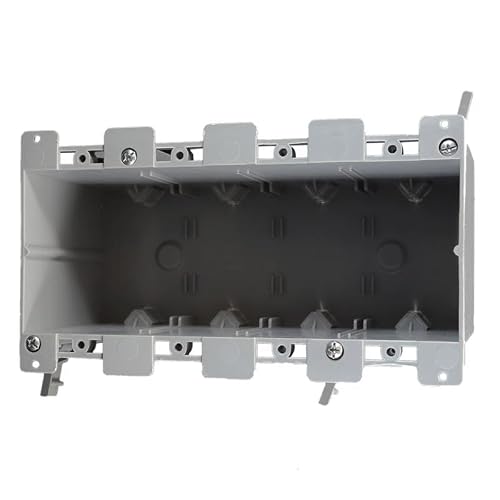
Cantex 3012631 68 cu. in. Old Work Outlet Box (Gray)

4-Gang Plastic Electrical Box, Grey, 55 cu in

4 Gang Old Work Electrical Box, 71 Cu.in., Blue
The Picks, Examined More Closely
For a first-time rough-in, this XGGYA box reads like a friendly handshake: nails ready to drive, PVC body that won’t fight back. It carries an ETL listing, which tells me the manufacturer submitted it to a third-party safety lab rather than self-certifying. Compared with the Southwire that follows, it trades heavy-duty mounting hardware for a friendlier DIY install and a slightly thinner wall profile.
I see this working well in a bedroom remodel where four devices need to sit on one wall plate. New-construction nails cut the install time considerably, and the thermoplastic build resists rust in basement or bathroom humidity. The box looks well matched to standard 14-gauge wiring runs for typical residential circuits.
Everyday Advantages
- Captive side nails speed rough-in to studs without separate brackets.
- ETL listing gives inspectors and code officers an easy approval path.
- PVC thermoplastic body shrugs off rust in damp locations.
- Non-conductive walls add a layer of safety around live conductors.
- 60 cubic inches of interior space handles a healthy bundle of wires.
Points To Keep In Mind
- Lighter PVC walls can flex slightly under heavy wire packing.
- No depth adjustment means the box sits at one fixed position.
Quick Facts
Who Should Grab It
First-time DIYers framing out a bedroom, kitchen, or home office who want a clean, code-friendly install.
Reach For A Different Pick When
Commercial electricians running heavier gauge wire might prefer the Southwire MSB4G for its 42-pound mount screws and depth adjustment.
Where the XGGYA feels approachable, the Southwire MSB4G feels like it means business. Extra-thick PVC walls and 42-pound-rated screws give this box the kind of mechanical grip you want when a wall plate eventually gets yanked. Depth adjustability lets the installer fine-tune position against uneven drywall.
I picture this on a commercial job, a workshop, or anywhere the wall sees real abuse. The depth-adjustable feature helps when the drywall thickness isn’t perfectly standard. Compared with the lighter PVC options earlier, this one trades a touch of install friendliness for long-haul durability.
The Value In It
- 42 lb rated mounting hardware resists pull-out under stress.
- Depth-adjustable design adapts to varied drywall thicknesses.
- Reinforced PVC walls handle heavier wire bundles without flex.
- Southwire brand backing offers solid US supply-chain support.
Some Limits To Know
- Gray PVC may not match common blue-box expectations on site.
- Slightly heavier to handle on ladder work.
- Depth adjustment can loosen over years if not properly seated.
Right Fit For
Licensed electricians and serious pros who run commercial or high-traffic residential jobs.
Where Another Pick Shines
Homeowners doing a simple bedroom addition may find the Airmont Products box easier to handle for a one-off project.
The YQXIUTE 4-gang box matches the editor’s choice on paper, with 60 cubic inches of interior room and an ETL mark to back it up. Where it differs is in the source data calling out 30 14-gauge wires of capacity, which signals a slightly more generous build for tight wire packing.
For a budget-minded homeowner running multiple smart switches or a kitchen layout with a disposal switch, GFCI, and two standard switches, this covers the bases without forcing a step up. Compared with the XGGYA on the previous page, the dimensions are nearly identical.
Noteworthy Benefits
- ETL listing provides a clear code compliance path.
- Generous wire-fill capacity for four-device clusters.
- Compact footprint fits standard stud spacing.
- PVC body resists moisture in utility areas.
Trade-Offs To Consider
- Brand recognition is lower than Southwire or Carlon.
- Mounting nails can occasionally arrive slightly bent in shipping.
Feature Snapshot
Made For
Budget-focused DIYers wiring a kitchen island or multi-switch hallway on a single rough-in day.
Skip It When
Pros running commercial conduit may want the Southwire MSB4G for its heavier-duty mounting system.
Carlon has been in non-metallic electrical boxes longer than most brands have existed, and the B468R shows why. The 3.56-inch depth is the deepest on this list, which is a real luxury when you’re stuffing in GFCI devices or back-to-back switch loops. It’s an old-work box, so it clamps into an existing wall rather than nailing to studs.
For a retrofit where drywall is already up, this is the kind of box that makes the cut feel deliberate. Compared with the smaller new-work picks earlier, it trades a shallower profile for the room four-gang retrofits usually demand.
Practical Advantages
- Deep 3.56-inch cavity fits bulky GFCI and smart devices.
- PVC construction compatible with 90-degree connectors.
- Old-work design clamps cleanly into existing drywall.
- Carlon brand brings decades of field-tested reputation.
Worth Noting
- Old-work clamps require a precise drywall cutout.
- Smaller width than some competitors, so device spacing is tighter.
Core Details
Best Suited To
Homeowners adding a four-switch bank to a finished wall without ripping out drywall.
Not Your Match When
New construction pros framing walls would do better with the XGGYA New Work box and its stud-mounted nails.
Cantex is one of those names you see on every distributor shelf, and this 68 cubic-inch rectangle shows why the brand has staying power. That extra volume over a standard 60-cu-in box matters when a homeowner wants dimmer stacks, GFCIs, and USB receptacles all sitting on one wall plate.
The gray PVC body fits old-work installs where the wall is already closed up. Compared with the deeper-but-narrower Carlon B468R, this trades depth for sheer interior width. I see this working in a media room where four control devices share one tidy cluster.
Notable Upsides
- 68 cubic inches handles dense, multi-device layouts.
- PVC build suits humid or utility-room installs.
- Old-work clamps grip existing drywall cleanly.
- Cantex is widely stocked at electrical supply houses.
Honest Caveats
- Not as deep as the Carlon B468R, so very bulky GFCIs may sit tight.
- Gray color blends in but can be hard to spot in dim basements.
Whose Shelf It Belongs On
Homeowners building out a media room, dining room switch bank, or anywhere four devices share one location.
Consider Something Else When
The XGGYA 71 cu in Old Work box offers even more capacity for tight-fill retrofits with bulky smart switches.
The Airmont Products box is the only one here calling out a 2-hour fire-rated wall rating, which puts it in a different conversation for code-conscious electricians. Captive nails on the side speed rough-in, and the gray PVC body keeps the install clean.
The 55 cubic-inch volume is the smallest in this list, so I wouldn’t lean on it for four GFCIs in one wall. Where it shines is a workshop, garage, or basement where fire rating matters more than device bulk.
Strong Points
- 2-hour fire-rated wall approval for stricter code zones.
- Captive nails cut rough-in time on studs.
- PVC body meets non-metallic sheathed cable requirements.
- Compact footprint fits tight framing situations.
Practical Considerations
- 55 cu in is snug for four large GFCIs.
- 2-hour rating only matters where local code enforces it.
Key Product Details
Built With In Mind
Pros and serious DIYers working on multi-family, garage, or basement projects where fire rating comes into play.
Swap It Out When
Homeowners running only standard switches should consider the YQXIUTE 60 cu in box for more wire-fill room.
The XGGYA 71 cubic-inch old-work box is the largest by volume on this list, and that extra space shows up the moment you start stuffing in smart switches. The source calls out AWG support for 14, 12, and 10 gauge wire, plus a 472-gram heft that suggests a thicker wall section.
For a retrofit where you don’t know exactly what devices will land later, room to grow matters. The trade-off is a wider wall cutout, so plan the drywall opening carefully before pulling the saw out.
What Works In Its Favor
- 71 cubic inches leaves breathing room for dense wire bundles.
- Supports 14, 12, and 10 gauge wire configurations.
- ETL compliance gives inspectors a clean approval path.
- Old-work design clamps into existing drywall.
Factors To Consider
- Larger footprint means a bigger drywall cutout.
- Heavier body may feel like overkill for simple switch setups.
Perfect Match For
Homeowners upgrading a finished wall to four smart switches or a dimmer-heavy media-room layout.
Look Elsewhere When
Pros on a tight new-construction timeline should reach for the Airmont Products 4-Gang with its stud-mounted captive nails.
What To Weigh Before Picking A 4 Gang Box
The first decision is new work versus old work. New-work boxes nail to studs before drywall goes up, while old-work boxes clamp into existing finished walls using swing-out ears. Mixing the two leads to a box that won’t sit flush against the wall surface.
Interior volume matters more than exterior size. A 60 cubic-inch box holds roughly four standard devices with healthy wire fill, while anything below 55 cubic inches can feel cramped with four GFCIs. The National Electrical Code specifies box-fill calculations based on wire gauge and device count, so checking the math before buying prevents a return trip.
Material choice is straightforward in this category. PVC boxes handle most residential interior installs and resist corrosion in damp spaces. Metal boxes still earn a place in certain commercial settings, but every pick here is non-metallic.
Certifications tell you who reviewed the safety claim. ETL and UL both indicate third-party testing, which simplifies the inspection conversation. A box without a certification mark may face pushback from local code officers.
Key Considerations Across These Picks
Mistakes Worth Dodging
The most common slip-up is buying a shallow box for a wall that ends up holding four GFCIs, because those devices eat interior space quickly. Running the box-fill math before checkout avoids a return. Another pitfall is assuming any 4-gang cover plate fits any 4-gang box. Standardized spacing helps, but toggle, decorator, and combination plates each have their own device layout, so matching the box to the intended plate style keeps trim work clean.
Why Top Tier Costs More
A premium box often earns its price through thicker PVC walls, heavier mounting hardware, or a deeper cavity that swallows bulkier devices without crowding. The Southwire MSB4G’s 42-pound-rated screws cost more than basic nails but pay off on walls that see regular use. Stepping up to a fire-rated model only matters where the local code enforces it, so that upgrade is situational rather than universal.
Frequently Asked Questions
What does “4 gang” mean on an electrical box?
A 4 gang box holds four separate devices, such as switches, outlets, or a mix, under one cover plate. It’s the right size when you want four controls grouped on a single wall.
Can a 4 gang box replace a 2 gang box?
It can, but the wall opening will need to be enlarged, and the cover plate will be wider. Most DIYers only swap gang counts when rewiring the wall, not as a cosmetic update.
Is PVC OK for residential electrical boxes?
Yes. PVC is non-conductive, resists rust, and is widely accepted by code for residential non-metallic sheathed cable runs. Metal boxes still earn a place in some commercial and fire-rated assemblies.
How do I know if I need new work or old work?
If the studs are exposed and drywall isn’t up, choose new work. If the wall is finished, old work clamps into the existing drywall cutout.
How many wires can a 60 cubic inch box hold?
Roughly four 14-gauge device loops with their grounds, depending on the box-fill calculation. Running heavier gauges or more conductors requires stepping up to a deeper or wider box.
Final Thoughts
The right 4-gang box comes down to whether you’re framing or retrofitting, how much wire you’re packing in, and whether local code expects a fire-rated wall. The picks above cover the common scenarios without forcing a one-size-fits-all choice. Match the box to the wall, and the rest of the rough-in tends to fall into place.
