

Picking the right 350 watt solar panels feels harder than it should be. The wattage number tells you only part of the story, because real-world output hinges on cell type, build quality, and how the panel talks to your power station. I’ve sorted through six current options, including cables and full panels, so anyone running a portable power station can match gear to their actual setup without overpaying or under-speccing.
A Snapshot Of The Selections

Gonifeto Solar Panel to XT60 Charging Cable for EcoFlow Power Station (12AWG 15ft)

WindyNation 10 AWG Solar Panel Extension Cable Pair 100ft Black + 100ft Red

ZOUPW 450W Portable Solar Panel N-Type 16BB for Power Station

ZOUPW 450W PRO Bifacial Portable Solar Panel N-Type 16BB
ZOUPW 230W Bifacial Portable Solar Panel N-Type 16BB
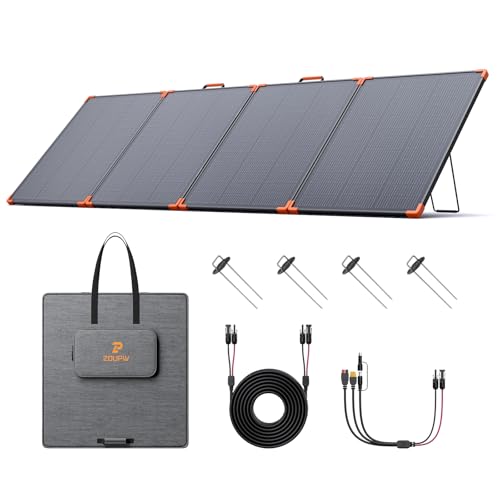
ZOUPW 350W Portable Solar Panel N-Type 16BB for Power Station
More Details On Our Top Picks
Kicking off the list with a cable rather than a panel might feel unexpected, but the Gonifeto XT60 extension is the kind of accessory that quietly solves panel placement headaches. Anyone who has set up a portable station knows the included cord sometimes falls just a few feet short of where the sun actually hits. At 15 feet with 12AWG thickness, this cable bridges that gap without choking current flow.
The molded XT60 connector adds peace of mind in damp conditions, which matters when dew shows up on early morning trips. For EcoFlow owners specifically, the connection is plug-and-play with no adapter juggling. It is a small piece of gear, but it makes the difference between a panel that sits in the shade and one that actually pulls usable wattage.
Useful Touches
- 15-foot length frees up panel placement in tight campsites or shaded yards
- 12AWG wire thickness keeps voltage drop minimal over the run
- Molded XT60 ends resist moisture better than basic soldered versions
- Designed to fit EcoFlow stations without needing extra adapters
Points To Keep In Mind
- Only useful for setups already using XT60 connectors, so other brands need a different cable
- Storage can get tangled if not coiled properly between trips
Right Fit For
EcoFlow owners who need a few extra feet of reach without sacrificing current flow on a portable setup.
A Better Fit Elsewhere
Anyone running Anderson or MC4-style connections should skip this and consider a different adapter cable entirely.
Where the Gonifeto cable handles short portable runs, the WindyNation pair steps in for serious distance. With 100 feet of black and 100 feet of red 10AWG wire, this set is built for permanent or semi-permanent arrays where panels sit far from the charge controller. Pure copper strands mean lower resistance, which translates directly into less energy lost along the way.
The included PV connectors save a trip to the hardware store, and the jacket is rated for outdoor sunlight exposure. Off-grid cabins, shed workshops, and ground-mounted arrays all benefit from the reach. Compared to the Gonifeto’s 15-foot convenience cable, this is the heavier infrastructure option.
A Few Strong Suits
- Pure copper conductors reduce voltage drop across long cable runs
- 200 feet total gives flexibility for remote panel placement
- Pre-terminated PV connectors speed up installation
Trade-Offs To Consider
- 100-foot length is overkill for small portable power stations, leading to excess bulk
- 10AWG wire is stiffer than thinner gauges and harder to route around tight corners
- More cable than needed creates storage challenges in small RVs or apartments
Feature Snapshot
Whose Shelf It Belongs On
Off-grid homeowners and installers building permanent or semi-permanent solar arrays where panel-to-controller distance runs long.
Reach For A Different Pick When
Casual campers and apartment dwellers will find the ZOUPW 230W panel far more practical for their smaller scale.
For shoppers focused on the 350 watt range who want a bit more headroom, the ZOUPW 450W lands as a natural step up. N-Type monocrystalline cells, meaning solar cells made from negatively charged silicon that degrades more slowly than older P-Type versions, form the backbone here, paired with a 16-busbar layout (the thin metal strips that collect current from each cell). More busbars mean each cell loses less energy to resistance.
Real-world output gains show up most on cloudy mornings or in low-angle late-afternoon light, where older panels tend to slack off. The foldable design keeps transport reasonable for a panel this large, and the kickstand hardware makes angle adjustments quick. Anyone running a mid-size power station will appreciate the faster recharge times.
Strong Points
- 16-busbar cell design reduces internal resistance across the panel
- N-Type cells hold efficiency longer than traditional P-Type panels
- Foldable format with integrated stand for field positioning
- Stronger low-light performance compared to older 9-busbar designs
Honest Caveats
- Larger folded footprint than the 230W sibling takes up more cargo space
- Weight can challenge solo backpackers on long treks
Who Should Grab It
RVers and overlanders who prioritize recharge speed and have room to spare in their rig.
Look Elsewhere When
Lightweight travelers who count every gram should opt for the ZOUPW 230W panel instead.
The PRO version of the ZOUPW 450W adds bifacial capability, which means the panel collects light from both sides instead of just the front. Reflected light off a bright surface, such as a white RV roof or sunlit ground, feeds extra energy into the rear cells. Combined with the X-Wide bus ribbon design, the panel runs cooler under direct sun, and cooler cells tend to produce more power.
For setups where the panel can sit angled above reflective terrain, the rear-side harvest adds meaningful wattage without adding footprint. The 25.6 percent efficiency rating puts it among the stronger performers in the portable class. Compared to the standard 450W model, the bifacial gain is most noticeable on bright, open terrain.
Everyday Perks
- Rear-side capture adds wattage from reflected light on bright surfaces
- Cooler operating temps under direct sun preserve output on hot days
- Higher efficiency rating than most portable competitors in this size
Where It Is Less Suited
- Bifacial gains depend on having a reflective surface or open ground beneath the panel
- Higher cost than the standard 450W may not pencil out for casual weekend use
- Heavier than single-sided panels at the same wattage
Feature Card
Best Suited To
Off-grid cabin owners and serious van-lifers who set up on bright, open ground and want every available watt.
Swap It Out When
Campers in forested or shaded sites will see minimal bifacial benefit and should pick the standard ZOUPW 350W instead.
At 230 watts, this ZOUPW panel trades raw output for a lighter carry, which matters more than most shoppers expect on a long hike or a tight vehicle setup. The same N-Type 16BB cell tech from the larger models carries over, so smaller size does not mean older silicon. Bifacial capture still applies, though the absolute rear-side gain is naturally lower at this scale.
The folded footprint fits behind a car seat or strapped to a pack, which is where the real-world value lives. Campers running a 500Wh to 1000Wh station get a balanced recharge without hauling a full-size suitcase. It pairs naturally with the larger 450W as a travel companion for shorter trips.
Positive Takeaways
- Compact folded size fits in tight cargo areas and small RVs
- Lighter carry weight than 350W and 450W siblings
- Same N-Type 16BB efficiency as larger ZOUPW panels
Some Limits To Know
- Lower total output means slower recharge for large-capacity power stations
- Bifacial gain is modest compared to the 450W PRO model
Made For
Backpackers and weekend campers running smaller power stations who value portability over raw wattage.
Consider Something Else When
Anyone running a 2000Wh or larger station will see frustratingly slow recharge and should pick the ZOUPW 350W instead.
Landing right in the middle of the wattage scale, the ZOUPW 350W sits where most portable power station owners end up shopping. N-Type monocrystalline cells with a 16-busbar layout carry the same DNA as the 450W and 230W siblings, so efficiency is consistent across the lineup. The 25 percent conversion efficiency keeps it competitive without the higher cost of the bifacial PRO model.
For home backup, garage workshops, or van-life builds running a 1000Wh to 2000Wh station, 350W strikes a usable middle ground. Folded dimensions stay manageable, and the integrated kickstand makes positioning painless. Compared to the 230W, recharge times roughly halve for mid-size stations. Compared to the 450W, the trade-off is less raw power in exchange for easier handling.
Everyday Advantages
- Right-sized wattage for the most common portable power station capacities
- N-Type cells resist light-induced degradation, meaning the slow power loss that hits older panels in their first hours of sunlight, for years of service
- Foldable design with kickstand for fast field setup
Possible Compromises
- No bifacial rear capture, so reflected light goes unused on bright ground
- Slower recharge than the 450W for users with very large stations
Quick Facts
Perfect Match For
Home backup users and van-lifers running 1000Wh to 2000Wh stations who want a balanced daily panel without overpaying for premium.
Not Your Match When
Off-grid households needing maximum harvest should consider the ZOUPW 450W PRO for its bifacial advantage.
What To Weigh Before Picking 350 Watt Solar Panels
Match The Wattage To The Station
Panel wattage only matters if it lines up with what the power station can accept. A 350W panel feeding a 500Wh station will throttle down to whatever the station’s input limit allows, so anyone with smaller stations may be paying for wattage they cannot use. In my view, mid-size stations from 1000Wh upward benefit most from the 350W range.
Understand N-Type Versus P-Type
N-Type cells, which carry a negative silicon charge, hold efficiency longer than older P-Type cells, the older positively charged standard, because they avoid a slow initial power loss called Light-Induced Degradation (LID). For shoppers planning to keep the panel five years or longer, N-Type panels tend to age more gracefully. Buyers replacing panels every few seasons may not notice the difference.
Portability Versus Output
Folded size and weight matter as much as raw wattage for travelers. A 450W panel sounds appealing until it does not fit in the vehicle. Backpackers, in particular, should weigh the 230W option before jumping to 350W or higher.
Connector Compatibility
Make sure the panel’s output plug matches the station’s input port, whether MC4, XT60, or Anderson. The Gonifeto cable on this list solves the XT60 gap specifically, but other connector types may need their own adapters.
Key Considerations Across These Picks
Mistakes Worth Dodging
The most common slip-up in the 350 watt range is chasing peak wattage without checking the station’s actual input limit. I have seen shoppers pair a 450W panel with a station that caps at 200W input, wasting most of the panel’s capacity. Always confirm the maximum solar input wattage before buying.
Another trap is ignoring cable length and connector type. Even a great panel underperforms if the included cord cannot reach sunny ground from where the station sits. Pre-planning the cable run saves frustration on the first setup day.
Where The Extra Money Goes
Stepping up from a standard 350W to a bifacial PRO model adds rear-side light capture, higher efficiency cells, and cooler operating temperatures. In my view, the upgrade pays off most for off-grid users on bright, open terrain with reflective surfaces. Campers parked under tree cover rarely see enough rear light to justify the premium.
For most home backup and van-life setups, the standard 350W panel delivers the best balance of cost and capability.
Frequently Asked Questions
How Many 350 Watt Solar Panels Do I Need To Run A Typical Home Backup Station?
For a 1000Wh to 2000Wh portable power station, one 350W panel is usually enough for daytime recharge. Larger home backup systems often need two or more panels in parallel to keep up with sustained loads.
Are 350 Watt Solar Panels Enough For Off-Grid Living?
A single 350W panel handles modest off-grid needs like charging devices, running lights, and keeping a small fridge topped up. Full-time off-grid households typically combine multiple panels with a stationary array rather than relying on portable units alone.
Can 350 Watt Solar Panels Work In Cloudy Weather?
Yes, though output drops compared to full sun. N-Type 16BB panels handle low-light conditions better than older designs, but cloudy-day harvest may fall to 20 to 40 percent of rated output.
What Is The Difference Between Monocrystalline And Polycrystalline Cells?
Monocrystalline cells, made from a single silicon crystal, generally offer higher efficiency and longer life than polycrystalline cells, which use multiple silicon fragments melted together. Most modern portable panels, including all four ZOUPW models on this list, use monocrystalline construction.
Do 350 Watt Solar Panels Need A Special Charge Controller?
Yes, panels of this size require a solar charge controller between the panel and the battery to regulate voltage and prevent overcharging. Most portable power stations have built-in controllers, but stationary battery banks need an external MPPT or PWM controller.
Bottom Line
Anyone running a mid-size portable power station should give the ZOUPW 350W serious attention for its balanced wattage and proven cell technology. Travelers who count every ounce lean toward the 230W, while off-grid users with bright terrain benefit from the 450W PRO bifacial. Match the panel to the station, not the other way around, and the rest falls into place.
