

I keep a mental list of RV and air conditioning accessories that solve tiny problems most people only notice after the power goes out. A reliable adapter or surge device sits at the top of that list. The right 30 Amp Air Conditioner Plugs can mean the difference between a cool cabin and a fried compressor on a bad campground pedestal. I’ve pulled together seven solid options across adapters, cords, and protection gear, each matched to a real-world scenario. Below, you’ll find what each one does well, where it stumbles, and which profile it fits best.
An Overview Of The Picks

OPL5 30 Amp to 110 Volt RV Adapter Cord, NEMA 5-15P to TT-30R

Kohree RV Adapter Plug 30 Amp to 15 Amp 110V
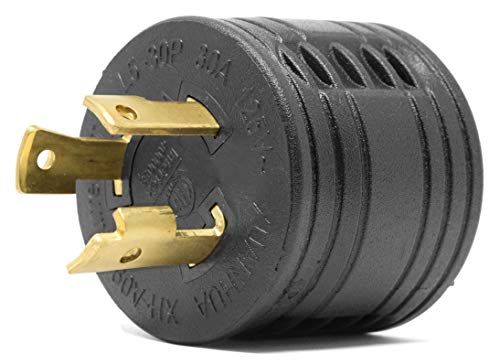
WEN GNA030 NEMA L5-30P to TT-30R Adapter

Nilight 30 Amp to 30 Amp RV Generator Adapter Cord

ELEGRP LCDI Power Cord Plug for A/C Air Conditioner
Parkworld NEMA 6-20 Extension Cord 50FT

Kohree RV Surge Protector 30 Amp 12000J
More On The Choices That Made The List
OPL5’s 12-inch adapter sits at the top of my list because it solves the most common 30A problem without overcomplicating things. A standard household outlet (NEMA 5-15P) feeds into a TT-30R female end, the same receptacle found on most RVs. In practical terms, you can keep batteries topped off or run a few low-draw devices in the driveway without firing up campground power.
The 10/3 STW wire jacket holds up to outdoor use, and the molded grip handle keeps fingers away from the plug body when unplugging in tight spaces. Owners commonly note it stores flat in a small compartment. Compared to the Kohree unit below, this one trades the twist-lock for pure simplicity.
Strong Points
- ETL listed for verified safety standards
- Compact 12-inch length fits tight RV storage bays
- Grip handle reduces strain during unplug cycles
- 10-gauge wire handles the full 1875W rating cleanly
Honest Caveats
- No locking mechanism, so vibration can loosen it
- Not designed to run high-draw appliances like roof AC
- Cord stiffness in cold weather is commonly reported
Right Fit For
Owners who need a short, dependable adapter for occasional driveway or storage-yard power on a 30A RV.
Swap It Out When
The Kohree RV Adapter Plug 30 Amp suits someone running on loose outlets where a twist-lock connection matters more.
The Kohree adapter earns its place by adding two real-world features to a basic 15A-to-30A adapter. A built-in LED power indicator tells you at a glance whether the household outlet is actually delivering current, and the twist-lock receptacle grips the RV plug so a passing tire or curious foot won’t yank it loose. For people parking on gravel pads or uneven driveways, that lock is a quiet upgrade.
Like the OPL5 above, the body uses 10/3 STW wiring rated for 1875W loads, so runtime limits are identical. The bigger shell does add some bulk. In our view, the tradeoff is worth it for anyone who’s tired of replugging after a stiff breeze.
Positive Points
- Twist-lock female end resists accidental disconnection
- LED indicator confirms live power without testing tools
- Same 10AWG STW jacket as premium cords
- 12-inch length keeps the adapter tidy in storage
Points To Note
- Slightly bulkier head than basic adapters
- LED draws a tiny parasitic load when left plugged in long-term
Quick Facts
Made For
RVers who plug into loose household outlets or older campground pedestals where vibration tends to work plugs free.
A Better Fit Elsewhere
The OPL5 30 Amp adapter is the simpler choice for someone who only plugs in occasionally and doesn’t need the locking feature.
WEN’s GNA030 is a different beast from the household adapters above. It’s a short pigtail that converts a generator’s twist-lock outlet (NEMA L5-30P) into a standard RV-ready TT-30R receptacle. For anyone who already owns a compatible WEN generator, this little plug is the missing link between portable power and the camper.
The molded non-slip grooves on the body make plugging and unplugging less of a knuckle-buster, and at 3600W capacity it comfortably handles most RV roof air conditioners plus a handful of smaller loads. It’s not a long cord, it’s basically a shape-changer.
Everyday Perks
- Bridges generator twist-lock to RV receptacle instantly
- Non-slip grip grooves ease connection and removal
- Compact form factor disappears in a storage bin
- Handles up to 3600W for AC and accessories together
Trade Offs
- Useless without a compatible L5-30P generator outlet
- No surge protection built in
Best Suited To
Owners of compatible WEN portable generators who want the cleanest path to powering their RV or trailer.
Look Elsewhere When
The Nilight 30 Amp to 30 Amp RV Generator Adapter suits someone with a 4-prong L14-30P generator instead of the L5-30P twist-lock.
The Nilight adapter steps up where the WEN leaves off, handling the larger 4-prong twist-lock outlets (L14-30P) found on many heavier portable generators. You get a clean shot of generator power to the RV’s 30A service, ready to feed the air conditioner, microwave, and fridge without juggling circuits. For tailgates, remote work sites, or storm-outage scenarios, that’s a real advantage.
Compared to the WEN above, this cord assumes your generator outputs split-phase 120/240V and you’re stepping down to the RV’s single-leg 120V service. The cord body is built for temporary outdoor use rather than permanent installation, so owners commonly store it in the RV’s basement when not deployed.
Real-World Strengths
- Matches 4-prong L14-30P generators to TT-30R RV inlets
- Powers high-draw appliances like rooftop AC units
- Plug-and-play format needs no rewiring
- Reasonable length gives setup flexibility
Practical Considerations
- Rated for temporary use, not permanent wiring
- Does not regulate voltage, so a stable generator matters
- Bulky plugs need a bit of storage space
The Right Fit
RVers running larger portable generators with 4-prong twist-lock outlets who need a no-fuss 30A RV feed.
Consider Something Else When
The Kohree RV Surge Protector 30 Amp fits anyone who also wants diagnostic power checking and surge protection at the pedestal.
ELEGRP’s LCDI cord shifts the conversation from RV adapters to residential window air conditioners, where fire risk from damaged cords is a documented concern. The Leakage Current Detection Interrupter (LCDI) is a built-in module that monitors the shielded conductors inside the cable and cuts power instantly when it senses fault leakage. For older units with brittle insulation, that’s a meaningful safety layer.
The 7.5-foot length fits most window A/C setups without needing an extension, and the 14AWG conductors handle the full 1800W draw a 15A window unit can pull. Owners commonly replace factory cords that have cracked from sunlight exposure. It’s a different category from the RV adapters earlier in this list, but worth including for apartment dwellers and bedroom A/C owners.
Reasons It Performs
- LCDI module detects leakage before it becomes a fire risk
- UL certified construction adds confidence in older wiring
- 7.5-foot length suits typical window installations
- NEMA 5-15P plug fits any standard 120V outlet
Things To Weigh
- Only rated for 15A circuits, not 30A RV service
- LCDI module adds some bulk near the plug end
Who It Suits Best
Apartment and bedroom window A/C owners who want a drop-in replacement cord with active fault protection.
Not Your Match When
The OPL5 RV Adapter Plug is the better fit for anyone needing RV-specific 30A hookups rather than residential A/C replacement.
The Parkworld extension cord is the odd duck of this roundup, a 240V NEMA 6-20P-to-6-20R cable rated for 20A and 5000W. The T-blade female end also accepts 6-15P plugs, so it bridges some workshop and generator use cases too. For anyone running a 240V window A/C, a welder, or a level-2 charger adapter, 50 feet of reach solves layout headaches that shorter pigtails can’t.
It’s not an RV product, and it’s not a 30A plug in the strict sense. Still, it earns a slot because it covers the 250V side of the air conditioning world that other adapters ignore. The nickel-plated brass terminals resist corrosion, and the 12AWG copper core keeps voltage drop reasonable over the full 50-foot run.
The Good Stuff
- 50-foot reach reaches distant outlets without splicing
- T-blade female accepts both 6-20 and 6-15 plugs
- 5000W capacity covers 240V A/C and tool loads
- Nickel-plated terminals fight corrosion over time
Some Limits To Know
- 20A rating, not a true 30A replacement for high-draw RV gear
- Bulky cable coil needs dedicated storage space
Perfect Match For
Shop owners and homeowners running 240V window units, welders, or large workshop tools at a distance from the outlet.
Another Choice May Suit
The ELEGRP LCDI Power Cord Plug covers 120V window A/C replacement needs for smaller residential setups.
The Kohree surge protector rounds out the list by addressing what none of the adapters above touch: bad campground power. Diagnostic LEDs check the pedestal for correct wiring, open ground, reverse polarity, and other faults before any current reaches the RV. The 12000-joule rating absorbs the kind of surge that can silently destroy an air conditioner’s control board in a single spike.
Compared to the OPL5 and Kohree adapter earlier, this is a much bigger device with a longer body. It plugs directly between the pedestal and the RV cord, and the clear LED labels make troubleshooting fast. For full-time RVers and anyone who plugs in at unfamiliar parks, that diagnostic feedback is worth the extra size.
What Makes Sense
- 12000J surge capacity absorbs serious spikes
- Diagnostic LEDs flag common pedestal wiring faults
- Direct plug-in format needs no extra wiring
- Peace of mind for frequent travelers at unfamiliar parks
Potential Drawbacks
- Larger and heavier than a basic adapter
- No twist-lock, so a padlock is recommended at busy parks
Who Should Grab It
Full-time RVers and seasonal campers who plug into varied, sometimes questionable campground power sources.
Where Another Pick Suits Better
The Nilight 30 Amp to 30 Amp RV Generator Adapter fits someone who runs on stable generator power and doesn’t need pedestal diagnostics.
Picking The Right Plug For Your Power Plan
A NEMA rating tells you the exact geometry and amperage a plug handles, and matching it to your source and destination is the first filter. A TT-30R is the standard RV 30A receptacle, while L5-30R adds a twist-lock collar and L14-30P is the 4-prong generator outlet. Mismatched ratings create loose connections, tripped breakers, or worse.
Wire gauge matters more than people expect. 10AWG carries a full 30A load over typical adapter lengths without overheating, and 12AWG is fine for shorter 20A runs. For RV adapters, look for STW-rated jackets, which means the insulation resists both outdoor weather and oil exposure. The 30A to 110V adapters on this list all use 10/3 STW, which is the right call for the job.
Match The Plug To The Source
Household outlets deliver 15A at 120V. Plugging an RV into one requires a step-down adapter that limits what you can run, mostly battery charging and small devices. Campground pedestals typically offer the full 30A TT-30R outlet, and portable generators add their own twist-lock flavors. Match the male end of your adapter to whatever is on the wall or generator, and the female end to whatever your RV or appliance expects.
Think About Locking Vs. Friction-Fit
Twist-lock receptacles cost a little more but they stay put on uneven ground or in moving vehicles. Friction-fit plugs are simpler but work loose under vibration. For RV use especially, that small extra cost buys real reliability.
Plan For Surge Protection
Campground wiring isn’t always clean. A surge protector with diagnostic LEDs catches bad wiring before it reaches your air conditioner, and a single absorbed spike can pay for the device. For full-time travelers, it’s a sensible add-on after the basic adapter.
Key Considerations Across These Picks
Where Shoppers Go Wrong
The most common mistake is grabbing an adapter based on amperage alone without checking the NEMA configuration. A 30A plug isn’t a 30A plug: TT-30R, L5-30R, and L14-30P all carry 30A but fit completely different receptacles. Reading the plug face carefully before ordering prevents the frustrating return cycle.
Another trap is underestimating load. Plugging a roof air conditioner into a 15A-to-30A step-down adapter looks fine until the compressor kicks on and the breaker trips. These adapters are for low-draw gear, not full climate control.
Where The Extra Money Goes
Higher-end models earn their premium through better materials and added safety. Twist-lock collars, surge protection modules, LCDI fault detection, and corrosion-resistant terminals all show up in pricier units. For occasional weekend use, the basics are fine. For full-timing or frequent travel, the upgrade pays for itself the first time it prevents a fried control board.
Frequently Asked Questions
What is the difference between TT-30R and L5-30R?
TT-30R is the standard RV 30A receptacle with a simple friction-fit design, while L5-30R adds a twist-lock collar that grips the plug against vibration. Both run 120V at 30A, but the lock makes L5-30R more secure for travel.
Can I run my RV air conditioner on a 15A household adapter?
No, not safely. A typical 15A-to-30A adapter handles battery charging and small electronics, but a roof AC unit draws close to the full 15A limit on startup and will trip the household breaker. Use a proper 30A pedestal or generator feed for AC loads.
Do I need a surge protector for my RV?
Yes, especially in unfamiliar campgrounds. Pedestal wiring can be mis-wired or unprotected, and a single surge can damage an air conditioner’s control board. A surge protector with diagnostic LEDs pays for itself quickly.
What does LCDI mean on an air conditioner cord?
LCDI stands for Leakage Current Detection Interrupter. It’s a module that monitors the cord’s shielded conductors and cuts power instantly when it senses fault current, reducing fire risk from damaged insulation.
How long should an RV adapter cord be?
For most RVs, 12 to 18 inches is the sweet spot. Short pigtails keep storage tidy and reduce voltage drop, while longer cords are useful when the pedestal sits awkwardly far from the RV inlet.
The Takeaway
The right adapter depends on your power source, your RV or appliance setup, and how often you travel. For most weekend campers, a basic 15A-to-30A adapter covers storage and short visits. For full-timers and long-haul travelers, layering in twist-lock security and surge protection keeps expensive gear safe through unpredictable campground wiring. Pick the configuration that matches your reality, and you’ll avoid the most common power headaches before they start.
