

A dead riding mower on the first Saturday of spring is one of those little headaches that derails a whole morning. I’ve been there, watching the engine click and nothing turn over, and the fix is almost always a battery that quietly gave up over the winter. The seven options below span starting batteries for lawn tractors, sealed lead-acid replacements for mobility and backup gear, and a beefy lithium upgrade for rigs that need serious deep-cycle stamina.
A Snapshot Of The Selections

WEIZE 12V 300CCA BCI Group U1 SLA Battery

WEIZE 12V 200CCA BCI Group U1 SLA Battery

Mighty Max 12V 35AH SLA Battery 2-Pack
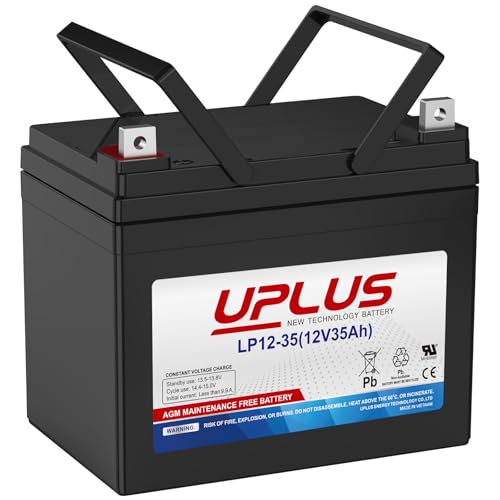
UPLUS LP12-35 12V 35Ah Deep Cycle Battery

WEIZE 12V 350CCA BCI Group U1 SLA Battery

Redodo 12V 165Ah LiFePO4 Bluetooth Battery
Mighty Max 12V 35AH SLA Battery 2-Pack
More On The Choices That Made The List
This Group U1 SLA battery drops into most common riding mower and lawn tractor trays without modification. The positive terminal sits on the left and the negative on the right, which matches the layout of many John Deere, Toro, Cub Cadet, and Craftsman machines, so most installations are a direct swap. At 300 cold cranking amps, the unit gives a confident turnover on cool spring mornings when an older battery might just click.
The AGM construction (Absorbent Glass Mat, a sealed design that suspends the electrolyte in fiberglass mats, making the battery spill-proof and maintenance-free) means owners don’t have to top up cells or worry about orientation. For suburban yards with a mid-size tractor used weekly, that combination of fit, sealed design, and proven terminal layout makes this an easy starting point.
The Helpful Details
- Direct-fit Group U1 case for popular mower brands
- Sealed AGM means no acid top-ups during ownership
- 300CCA supports reliable cold-start crank
- Standard nut-and-bolt terminals accept common cable ends
Things To Consider
- Slightly heavier than compact alternatives at 18.68 lbs
- Starting-focused design is not intended for deep-cycle trolling
Who It Suits Best
Homeowners with a standard riding mower who want a no-fuss, drop-in replacement that starts reliably through spring and fall.
Where Another Pick Suits Better
Anyone running colder mornings or a larger garden tractor with heavier electrical loads should reach for the WEIZE 12V 350CCA BCI Group U1 SLA Battery, which delivers more starting punch.
For compact lawn tractors used in milder climates, 200 cold cranking amps is often plenty to spin the starter without strain. The case shares the same 7.68 by 5.12 inch footprint as its 300CCA sibling, so the physical swap is identical, and the square-hole nut-and-bolt terminals accept the same cable hardware. It’s a practical option for small-to-medium flat lawns where the engine never has to fight stiff oil.
Compared to the 300CCA model above, this battery weighs a touch more at 21.5 lbs but spends that mass on internal plate design tuned for lighter cranking loads. The trade-off shows up only when temperatures plunge or accessories pull extra current during startup.
The Value In It
- Same proven Group U1 footprint as higher-CCA siblings
- Sealed AGM means zero routine electrolyte checks
- Solid fit-and-forget option for warm-season mowing
Worth Noting
- Lower CCA may feel sluggish below freezing
- Not built for deep-cycle accessory loads on RVs or marine use
Right Fit For
Suburban gardeners with a smaller engine who mow frequently and store equipment in a climate-controlled shed.
Look Elsewhere When
Cold-climate owners should consider the WEIZE 12V 350CCA BCI Group U1 SLA Battery for firmer cold-weather cranking.
Two batteries in one box is a useful arrangement for anyone needing matched replacement cells in a scooter, UPS, or alarm backup. Each ML35-12 unit delivers 35 amp-hours at 12 volts, which means a scooter drawing roughly 3 amps can roll through a full day before needing a charge. The SLA/AGM chemistry (sealed lead-acid using absorbent glass mats) is genuinely spill-proof and tolerates mounting at awkward angles in tight compartments.
Compared to the WEIZE mower batteries above, this pair leans toward steady discharge rather than engine cranking. Owners commonly appreciate that these recover from deep discharge cycles without losing much capacity, which matters for mobility gear and solar setups where the battery is the load.
What Stands Out
- Two batteries share the box, simplifying matched replacements
- Wide temperature tolerance extends seasonal usability
- Mountable in any orientation thanks to sealed AGM build
- High discharge rate handles brief motor surges
Trade Offs
- Listing ships only the batteries and screws, no wiring harness included
- Heavier than lithium equivalents with the same capacity
Feature Snapshot
Made For
Owners of mobility scooters, UPS backup units, and alarm panels who want a matched pair of replacement SLA cells ready to install.
Consider Something Else When
RV or marine users chasing high cycle life should look at the Redodo 12V 165Ah LiFePO4 Bluetooth Battery, which offers far greater usable capacity in a similar footprint.
The LP12-35 earns its place as a true deep-cycle unit rather than a starting battery, meaning it’s built to handle repeated drains and recharges without losing plate integrity. The 7.68 by 5.12 inch case footprint matches the Mighty Max twin-pack above, but the internal design targets float service and cyclic conditions where the battery drops well below full charge before being topped back up.
That focus on cyclic duty makes it well suited to small solar arrays, electric scooters, and portable trolling setups. Owners commonly report steady voltage under sustained draw, and the nut-and-bolt terminals support heavier-gauge wiring for higher-current accessories.
What Makes Sense
- Tuned for repeated deep discharge cycles
- Sealed AGM construction resists vibration damage
- Standard nut-and-bolt terminals accept heavier cable gauges
Room For Improvement
- At roughly 23.59 lbs it is the heaviest 35Ah option here
- Not intended as a high-amp engine cranking battery
Best Suited To
DIY solar users and scooter owners who cycle their battery daily and want longer service life than a generic SLA cell.
Skip It When
Mower owners needing a direct crank battery should consider the WEIZE 12V 300CCA BCI Group U1 SLA Battery, which is purpose-built for engine starting.
This is the strongest crank in the WEIZE lawn-and-garden line, rated at 350 cold cranking amps for tractors that sit outside in winter or run power-hungry accessories. The BCI Group U1 case is identical to its 200CCA and 300CCA siblings, which keeps installation simple across the trio. Owners in northern zones who fire up equipment after a hard frost tend to appreciate the extra amperage headroom.
At 21.45 lbs the unit is moderately heavy, but that mass supports thicker internal plates that handle repeated engine starts without rapid wear. Compared to the UPLUS deep-cycle unit above, this battery favors short high-current bursts over long steady drains, which is exactly what a starter needs.
Bright Spots
- Highest CCA in the WEIZE U1 family for cold starts
- Sealed AGM eliminates watering and terminal corrosion
- Square-hole terminals simplify cable hookup
Points To Keep In Mind
- Overkill for warm-climate hobby farms
- Starting-focused design is not suited to deep-cycle loads
Feature Snapshot
Who Will Love This
Northern homeowners and small-acreage owners who start cold tractors often and want a battery that does not hesitate in deep winter.
A Better Fit Elsewhere
Truck campers and marine boaters wanting deep-cycle stamina should look at the Redodo 12V 165Ah LiFePO4 Bluetooth Battery for far greater usable capacity.
This is the only lithium option on the list, and the chemistry shift (LiFePO4, lithium iron phosphate) brings a real-world step change in usable capacity versus the SLA units above. The Group 31 case packs 165 amp-hours, enough to run a small RV fridge, lights, and water pump through a quiet evening without needing a generator. Bluetooth monitoring is a useful touch for owners who want to check state of charge from a phone.
Compared to the WEIZE and Mighty Max batteries, the Redodo weighs noticeably less for the capacity delivered and tolerates many more charge cycles before meaningful degradation. The trade-off is price, and owners should confirm their charging system supports lithium chemistry before installing.
Well-Handled Touches
- Massive 165Ah capacity in a standard Group 31 footprint
- Bluetooth monitoring for at-a-glance state of charge
- Lithium chemistry tolerates deep discharge without damage
Honest Caveats
- Charging system must support lithium profiles
- Premium price tag versus SLA alternatives
Quick Facts
Perfect Match For
RVers, van-lifers, and off-grid cabin owners who want a lightweight, long-life battery with enough capacity to skip the generator for a night.
Not Your Match When
Tractor owners on a budget will find more direct value in the WEIZE 12V 300CCA BCI Group U1 SLA Battery, which suits engine cranking at a fraction of the cost.
This twin-pack serves as a direct drop-in for the Sail 6-GFM-33 footprint, which makes it a familiar choice among owners of older electric bikes, floor scrubbers, and UPS systems built around that 33Ah-class cell. The pair matches the dimensions of the Mighty Max twin-pack reviewed earlier, sharing the same 7.76 by 5.12 by 7.01 inch case and spill-proof AGM internals.
Compared to the UPLUS LP12-35 deep-cycle option above, these batteries lean toward general-purpose replacement rather than premium cyclic use. Owners commonly pair them with a smart SLA charger rated for the 35Ah size, which keeps cells topped up without overcooking them.
Notable Gains
- Direct replacement fit for Sail 6-GFM-33 gear
- Matched pair ensures balanced performance in series setups
- Spill-proof AGM tolerates mounting in tight compartments
Less Ideal Details
- Heavier than a single lithium equivalent
- Standard SLA cycle life is shorter than deep-cycle premium lines
The Right Fit
Workshop owners and repair techs who need a trustworthy matched pair for a Sail-based scooter or backup system.
Another Choice May Suit
Those wanting maximum cycle life in the same footprint should consider the UPLUS LP12-35 12V 35Ah Deep Cycle Battery, which is tuned for repeated discharges.
What Matters Most Before Choosing a 12v 35ah Battery
Match The Battery Type To The Job
Starting batteries like the WEIZE U1 line deliver high cold cranking amps for short engine bursts, while deep-cycle SLA cells like the UPLUS LP12-35 trade cranking power for sustained discharge. Mixing them up leads to either a sluggish crank or a battery that wears out within a season. Pick the chemistry that matches the workload first, then narrow down by capacity.
Size And Terminal Layout Matter
A battery that does not physically fit is a non-starter. Group U1, Group 24, and Group 31 each describe a standardized footprint, but the terminal orientation (positive left or right) varies. Confirming the position before ordering prevents a frustrating return, especially on John Deere and Cub Cadet tractors where the wiring harness reaches only one direction.
Climate And Storage Conditions
Cold-climate owners should target higher CCA numbers (300 or above) because oil thickens and starter motors draw more current at low temperatures. Hot-climate owners should consider sealed AGM or LiFePO4 (lithium iron phosphate) chemistries that lose less water through evaporation and tolerate deep discharge better.
Weight And Charging Compatibility
Lithium batteries cost more but weigh roughly half of comparable SLA units, which matters for RVs and marine use. The catch is that lithium requires a compatible charger profile; connecting to a basic lead-acid charger can damage the cells over time. Verify the charging system before committing.
Key Considerations Across These Picks
Where Shoppers Go Wrong
A common slip is picking the cheapest SLA cell without checking the terminal layout, only to find the cables will not reach once mounted. Another pitfall is using a starting battery as a deep-cycle unit, which wears the plates out far faster than expected. Measure the tray, confirm the polarity, and decide on the duty cycle before clicking through.
Where The Extra Money Goes
Stepping up to the Redodo 12V 165Ah LiFePO4 Bluetooth Battery buys lighter weight, much longer cycle life, and a monitoring app that takes the guesswork out of charge status. For RV or off-grid use where the battery cycles daily, the lithium premium pays for itself over a few seasons. For a simple mower swap, the AGM units already on this list offer plenty of value.
Frequently Asked Questions
How long does a 12v 35ah battery typically last?
Most sealed lead-acid batteries in this capacity range last three to five years with regular charging and moderate discharge. Lithium iron phosphate equivalents can stretch well beyond that with proper care.
Can I use a 35Ah battery to replace a smaller 35Ah-rated lawn mower battery?
The Group U1 models are designed for riding mowers, while the SLA 35Ah packs target mobility and backup gear. Check the tray dimensions and terminal orientation before swapping to avoid cable reach issues.
Do I need a special charger for a 12v 35ah battery?
Standard SLA chargers work for the lead-acid options on this list. Lithium batteries require a charger with a lithium or LiFePO4 profile to avoid long-term cell damage.
What is the difference between CCA and amp-hours?
Cold cranking amps (CCA) measure how much current a battery can deliver for a short engine start, while amp-hours (Ah) measure how much energy the battery can supply over time. CCA matters for starting; Ah matters for sustained loads.
Are these batteries safe to mount on their side?
The sealed AGM options can be mounted in any orientation without leaking, which helps in tight compartments. Even so, upright mounting is the most common choice and keeps terminals easy to inspect.
Closing Remarks
The right 12v 35ah battery depends entirely on where it lives and what it powers. Mower owners can stop reading at the WEIZE Group U1 options, mobility and backup users will get the most from a Mighty Max or UPLUS pair, and RV or marine setups with serious cycle demands belong with the Redodo lithium unit. Pick by use case, confirm the tray and terminal layout, and the rest usually takes care of itself.
