

A garden that glows after sunset starts with the right transformer humming quietly behind the hedges. I’ve spent years sorting through low-voltage gear, and the gap between a so-so setup and a great one almost always traces back to that single box. Pick the wrong one and you fight dim bulbs, tripped breakers, and lights that stay on at noon. Pick well and the system just disappears into the routine, doing its job through rain and frost while you focus on the rest of your weekend.
The Main Contenders

DEWENWILS 600W Low Voltage Landscape Transformer 6 Outputs

SUNVIE 200W Low Voltage Landscape Transformer with Timer
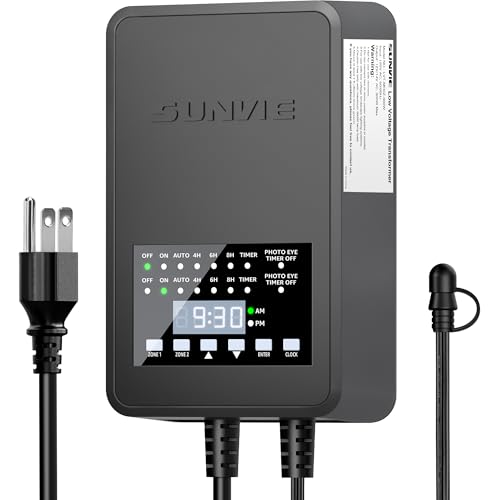
SUNVIE 300W Low Voltage Landscape Transformer with Timer

Best Pro Lighting 150W Transformer Photocell Timer Black Case

SUNVIE 300W Low Voltage Transformer with 3 Zones

inShareplus 12V 60W Power Supply LED Driver IP67 Waterproof
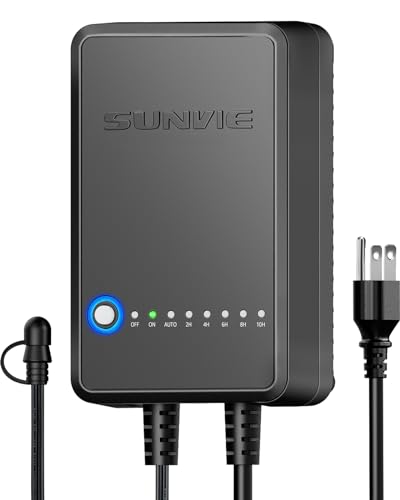
SUNVIE 60W Low Voltage Landscape Transformer DC Output
A Breakdown Of The Leading Choices
When the yard sprawls across multiple flower beds, the driveway, and the back fence, a single-zone transformer runs out of ideas fast. The DEWENWILS 600W unit splits the system into six independent outputs, two banks of three, which means you can light the front path on its own schedule without waking the patio lights. In a busy suburban yard, that separation is the difference between a tidy plan and a tangle of jumpered circuits.
It steps 120V household current down to 12V or 14V safe AC, so it accepts both LED and halogen fixtures. The onboard photocell handles dusk-to-dawn timing, while a built-in timer offers overrides. Compared with the smaller SUNVIE units ahead, this one trades a smaller footprint for genuine multi-zone flexibility.
Useful Highlights
- Six independent outputs let you zone the yard by purpose and schedule, which simplifies any future expansion.
- Delivers full 600W without the typical 80% derating rule that constrains many competing transformers.
- Compatible with 12V and 14V LED and halogen fixtures, so existing parts stay useful during a swap.
- Photocell plus timer combine for fully automatic nightly runs, freeing you from manual switching.
Things To Consider
- The larger case demands a sheltered mounting spot, which can complicate tight utility-side installs.
- Owners of modest front-yard-only systems may find six zones more capacity than the layout truly needs.
Who It Suits Best
Homeowners running extensive multi-zone landscape plans with mixed fixture counts benefit most from this transformer.
A Better Fit Elsewhere
For a single-zone suburban front yard, the SUNVIE 200W model ahead is a simpler, lower-wattage match.
The SUNVIE 200W is the kind of transformer most homeowners end up needing once they actually count their fixtures. Two independent outputs cover the typical split between a front path and a back patio, and the unit downshifts 120V household AC into safe 12V or 14V AC that works with both LED and halogen bulbs. For a standard suburban lot, this lands in the comfortable middle.
The included photocell detaches and connects through a 6.8-foot UL-listed cord, which is the small detail that makes outdoor placement far less fussy. You can park the sensor where light reads correctly without relocating the whole transformer. Compared with the 600W DEWENWILS above, you give up raw wattage but gain a tidier, more focused package.
Bright Spots
- Two independent zones handle the front-and-back layout that defines most residential installs.
- External photocell cord (about 6.8 feet) frees the sensor from the transformer’s mounting spot.
- Compatible with both LED and halogen low-voltage fixtures for flexible replacement parts.
- Compact footprint suits garage walls, porch corners, and shed exteriors where space runs tight.
Worth Noting
- 200W caps the total wattage you can run, so any future expansion may push past the unit.
- Common user reports suggest the photocell cord should be routed away from direct irrigation spray.
Key Specs
Made For
Suburban homeowners with two clearly defined lighting zones, plus a garage or shed to mount it beside.
Look Elsewhere When
If you need three or more independent schedules, the SUNVIE 300W three-zone unit covered later is a cleaner fit.
Some yards aren’t really two-zone, but they’re not quite small enough for a 60W box either. The SUNVIE 300W fills that awkward middle with the same dual-output control as its 200W sibling but adds breathing room for longer cable runs and a few more fixtures. In practice, the extra capacity absorbs voltage drop (the gradual brightness loss that happens along long wire runs) when path lights stretch far from the house.
It carries the same removable photocell on a 6.8-foot UL-listed cord, which keeps installation forgiving. You get dusk-to-dawn automation plus the option to override with the onboard timer. Compared with the 200W version, this is the wiser pick when you suspect you’ll add another path light next year.
Advantages To Know
- 300W handles mixed LED and halogen layouts without forcing you to ration fixtures.
- External photocell cord keeps the sensor position flexible.
- Two zones still suit most homes that don’t need full multi-bank complexity.
- Weatherproof construction handles outdoor mounting on a wall or post.
Trade Offs
- Larger than the 200W model, so it requires a slightly more spacious mounting area.
- Those running only a handful of small LEDs may find the headroom underused.
Whose Yard It Belongs On
Mid-size properties with two lighting zones and a longer total wire run benefit most from this model’s extra capacity.
Swap It Out When
Anyone planning a third independent schedule should reach for the SUNVIE 300W three-zone transformer ahead instead.
Best Pro Lighting leans into commercial-grade construction with this 150W unit, and that shows in details like the push-button circuit breaker that resets without tools. In a yard where a tripped breaker used to mean prying open the housing, that single feature pays for itself the first time it saves a Saturday afternoon. The black powder-coated case is built for permanent outdoor mounting.
The onboard photocell and timer can be overridden with a plug-in timer for indoor or dark-room installations, which adds versatility beyond the typical residential setup. Compared with the SUNVIE 200W above, you trade independent zones for a heavier-duty enclosure and a faster reset path when something shorts downstream.
Practical Advantages
- Push-button circuit breaker resets in seconds, no fuses to keep on hand.
- Heavy-duty enclosure suits permanent outdoor mounting in exposed spots.
- Photocell plus timer combo handles dusk-to-dawn and override scenarios.
- Compatible with 12V LED and halogen landscape fixtures for flexible sourcing.
Points To Note
- Single-zone output means no independent front-versus-back scheduling.
- 150W caps total fixture load, so larger plans will outgrow this transformer.
Quick Facts
Right Fit For
Compact residential setups that value commercial-grade durability and a tool-free reset over multi-zone control.
Consider Something Else When
Households wanting two independent schedules should look at the SUNVIE 200W model covered earlier in this list.
Three-zone control is the quiet luxury of landscape lighting: front path stays on all night, patio lights dim at 11, and the back garden flickers off at midnight, all from one box. The SUNVIE 300W three-zone transformer makes that schedule possible without stacking multiple transformers. For layered designs where each area has its own purpose, it removes a lot of manual switching.
It carries the same removable photocell on a 6.8-foot UL-listed cord found on the smaller SUNVIE units, so outdoor placement stays flexible. Compared with the two-zone 300W version earlier, you gain an extra independently controlled circuit at the cost of slightly more programming time during setup.
Points In Its Favor
- Three independent zones cover front, side, and rear schedules from a single transformer.
- Removable photocell lets you mount the sensor where light actually reads correctly.
- 300W headroom tolerates long cable runs without obvious dimming at the far fixtures.
- Compatible with 12V and 14V LED and halogen landscape systems.
Honest Caveats
- Three zones add a learning curve during the initial timer setup that simpler units avoid.
- Larger case footprint demands a more deliberate mounting location than compact models.
Feature Card
Who Should Grab It
Homeowners designing layered landscape lighting with distinct schedules per area benefit most from three-zone control.
Reach For A Different Pick When
For a single straightforward zone, the SUNVIE 60W DC model later in this list is a more appropriate scale.
The inShareplus 60W unit sits in a different category from the rest of this list: it’s a sealed DC driver, not a multi-zone AC transformer with a timer. That makes it ideal for tightly focused DC LED runs where weather sealing matters more than scheduling. An IP67 rating (full dust protection plus water-submersion resistance up to a meter) means it can sit low on a wall, under an eave, or even in a damp corner without complaint.
It accepts a wide 90-265V AC input range, so it tolerates the voltage swings found in older homes or long feeder runs. The aluminum housing helps shed heat, which extends driver life. Compared with the SUNVIE 60W AC unit later, this trades timer features for a tougher sealed enclosure.
What Helps Most
- IP67-rated sealed housing handles direct outdoor exposure and damp locations.
- Wide 90-265V AC input range tolerates real-world voltage variation on older circuits.
- Aluminum body pulls heat away from internal components for longer service life.
- Compact 60W capacity suits focused DC LED runs like sign lights or small path sets.
A Few Limitations
- DC output only, so it does not pair with standard AC low-voltage fixtures or halogen lamps.
- No onboard photocell or timer, which means external controls for any automated schedule.
Spec Snapshot
Perfect Match For
Small DC LED installations in exposed outdoor spots where a sealed driver matters more than scheduling features.
Skip It When
Anyone running standard AC low-voltage landscape lighting should choose the SUNVIE 60W transformer covered next.
For someone lighting a single path, a few garden accents, or an entryway set of fixtures, a 60W box is often exactly right. The SUNVIE 60W steps 120V AC household current down to 12V DC for low-voltage LED landscape lights, with a built-in photocell and timer that handle dusk-to-dawn scheduling right out of the box. In a small garden, that combination removes the need for any external smart plug or controller.
The weatherproof case suits outdoor mounting on a porch post or shed wall. Compared with the inShareplus DC driver earlier, this unit adds a timer and photocell but lacks the IP67 sealed rating, so placement matters more. It’s a comfortable starting point for a first landscape lighting project.
Real-World Strengths
- Photocell and timer built in for fully automatic nightly operation with no extra parts.
- Compact 60W capacity suits small gardens, decks, and entryway lighting without excess.
- Simple install path for first-time low-voltage DIYers setting up a basic layout.
- DC output pairs with common low-voltage LED landscape fixtures from mainstream brands.
Points To Keep In Mind
- Designed for LED fixtures only, so it does not drive halogen landscape lamps.
- Total connected load should stay under about 80% of capacity to avoid nuisance tripping.
- Single zone, so any future expansion would require a second transformer or an upgrade.
Built With In Mind
First-time installers lighting a small garden, entryway, or deck with low-voltage LEDs benefit most from this simple setup.
Where Another Pick Suits Better
For exposed outdoor mounting in wetter locations, the inShareplus IP67 driver covered earlier is a tougher sealed choice.
What To Weigh Before Picking Your Transformer
Total wattage is the first filter. Add up the watt rating of every fixture you plan to run, then keep that number comfortably below the transformer’s rated capacity. Industry habit suggests staying under 80%, which gives you headroom for that extra path light you inevitably add next spring. For a four-fixture path, 60W is plenty. For a layered yard with twenty fixtures, 300W or 600W reads more honest.
Voltage drop is the silent killer of landscape lighting. Long cable runs bleed brightness off the fixtures farthest from the transformer, and the fix is either thicker gauge wire or a higher-wattage transformer that maintains voltage better at distance. In yards where the back fence sits eighty feet from the garage outlet, choosing a 300W unit to power a 200W load makes practical sense.
Zone count matters once the system grows past a single area. Independent outputs let you run the front path all night while the patio shuts off at 10pm, and that scheduling flexibility is hard to fake with a single circuit. Photocell and timer features feel like luxury until you forget to turn the lights off three weekends in a row.
Output type, AC versus DC, is the detail that decides compatibility. AC transformers run standard low-voltage halogen and most LED landscape lights. DC drivers like the inShareplus unit suit specific DC LED strips or sealed fixtures. Confirming the output type against your existing parts saves a return trip.
Key Considerations Across These Picks
Pitfalls Shoppers Hit
The most common mistake is matching the transformer to today’s fixtures rather than tomorrow’s. A 60W box feels right for four path lights, but the moment you add two uplights and a step light, you’re shopping again. Staying under 80% of capacity from day one leaves room to grow without replacing the transformer.
Another trap is ignoring voltage drop on longer cable runs. Homeowners install a 200W transformer, load 180W of fixtures, and wonder why the back garden runs dim. Either thicker gauge wire or a higher-wattage transformer solves it. Outdoor mounting location also gets overlooked, since photocells need a sky-facing spot free of eave shadow.
What The Higher Tier Buys
Stepping up from a 60W single-zone box to a 300W three-zone unit buys independent scheduling, larger fixture counts, and better handling of long cable runs. The premium tier adds commercial-grade enclosures, push-button breakers, and more generous wattage headroom. For most homeowners, the upgrade is worth it once the yard crosses two clearly defined lighting areas or twenty-plus fixtures. For a single path or entryway, the entry tier handles everything the system actually needs.
