

Picking the right NM-B cable (nonmetallic-sheathed building wire, the standard jacketed indoor wire used in most home circuits) makes a surprising difference in how smoothly a project runs, whether you’re feeding a new outlet, running a dedicated appliance circuit, or wiring a small addition. I dug into four solid 12-gauge options that cover common residential branch-circuit needs. Each one fits a slightly different scenario, so the shortlist below should help match the cable to the job rather than the other way around.
The Main Contenders

XMK NM-B 12/2 Wire with Ground Indoor Cable

Woods 50 ft. 8/3 + 12/2 SIMpull NM-B Bundle

Southwire Romex SIMpull 12/3 W/G NMB 25ft
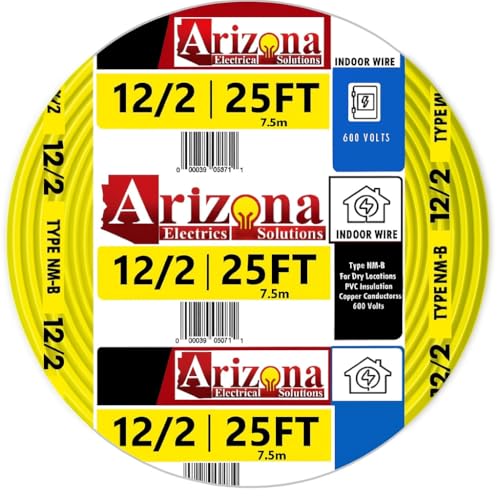
Arizona Electrical 25 ft. 12/2 NM-B Copper Cable
Why These Options Stand Out
The XMK 12/2 NM-B cable is the kind of no-fuss indoor wire that quietly handles the bulk of household branch-circuit work. Two solid 12 AWG copper conductors sit alongside a bare ground, all wrapped in the familiar yellow jacket that signals 12-gauge to anyone who has worked in a panel. With a 600-volt rating and a wide heat tolerance band, it covers the typical residential range from basement to attic.
Compared to the bundle option further down the list, this single-gauge cable is easier to deploy when the entire run is outlets, switches, or lighting on 15- or 20-amp breakers. For most room additions and remodel patches, it covers the everyday case without paying for gauges or lengths you won’t use.
Key Advantages
- Two 12 AWG solid copper conductors plus a bare ground handle 15A and 20A branch circuits in standard residential panels.
- 600-volt insulation rating and a broad operating-temperature range suit basements, garages, and attic runs alike.
- UL-listed construction for residential indoor wiring means easier inspection sign-off in most jurisdictions.
- Yellow jacket color-coding matches the industry convention, so future electricians recognize the gauge at a glance.
Things To Consider
- No third conductor means 3-way switches, split receptacles, and ceiling fan with light kits will require a different cable.
- Solid conductors are stiffer to route through tight bends than stranded wire, so plan for gentle sweeps rather than sharp corners.
Who It Suits Best
Homeowners and DIYers running standard 15- or 20-amp outlet, switch, and lighting circuits in dry indoor locations.
Consider Something Else When
The Southwire Romex SIMpull 12/3 W/G NMB 25ft is a better match for projects that need a third conductor for switched legs or split-wired receptacles.
Most residential projects don’t need two different gauges at once, but the ones that do tend to be the bigger ones: a sub-panel in the garage, a feeder to a detached workshop, or a mixed circuit that combines a 40- or 50-amp appliance run with regular outlet drops. This bundle pairs a 50-foot coil of 8/3 stranded copper with a 50-foot coil of 12/2 solid copper, both wrapped in the SIMpull jacket that slides more cleanly through conduit and bored holes.
The 8/3 stranded leg handles heavier loads like a sub-panel feeder or a large 240V tool, while the 12/2 leg picks up branch circuits. Where the XMK cable in the first slot only carries outlets and switches, this combo keeps both the feeder and the branch wiring in one purchase, which tends to reduce trips back to the supply counter.
Where It Excels
- Two-gauge pairing covers both a heavier feeder run and the standard 20-amp branch circuits in a single buy.
- SIMpull jacket coating reduces drag through studs, joists, and EMT conduit, a noticeable help on long pulls.
- UL-listed NM-B copper construction rated for 600V and 90°C in dry locations passes typical residential inspection.
Trade Offs
- Buying two gauges at once only pays off when both get used; smaller jobs end up with leftover inventory.
- Stranded 8/3 is more flexible than solid, but the heavier insulation adds bulk that takes up space in boxes.
Feature Snapshot
Made For
DIYers wiring a garage, basement, or small workshop that needs both a sub-panel feeder and standard branch circuits in the same project.
Look Elsewhere When
The Arizona Electrical 25 ft. 12/2 NM-B Copper Cable is a smarter grab for a quick patch or single-circuit repair where the heavier 8/3 leg would simply sit unused.
The 12/3 cable is the upgrade most homeowners hit once they outgrow simple outlet runs. Three 12 AWG solid copper conductors plus a ground give you a traveler wire for 3-way and 4-way switching, a hot and a separate switched leg for ceiling fans with light kits, or the two hots needed to split a receptacle. The SIMpull jacket continues the smoother-pulling theme, which matters on the longer runs that tend to come with this heavier cable.
Where the first pick covers only the simple cases and the second pick adds gauge variety, this one adds conductor count. For most rooms that just need power, the extra conductor is dead weight. For hallways, stairways, and rooms with ceiling fans, it’s the right call on the first trip rather than the second.
Positive Takeaways
- Three conductors plus ground cover 3-way switching, split-wired receptacles, and ceiling fan and light combinations.
- SIMpull jacket reduces pulling friction, which helps on longer runs through multiple studs and joists.
- UL-listed for dry, indoor residential locations and rated for 600V operation up to 90°C.
- Recognized Romex brand construction tends to be familiar to inspectors and electricians.
Points To Note
- The third conductor adds bulk, so deeper electrical boxes may be needed to keep box-fill within code.
- 25 feet is short for a whole-house run, so larger projects may need to combine coils or pick a longer option.
- Solid conductors, while common for residential work, are harder to maneuver in tight retrofit situations than stranded wire.
Best Suited To
Homeowners wiring 3-way switches, stairway circuits, split receptacles, or ceiling fans that need separate switched and always-hot conductors.
Skip It When
The XMK NM-B 12/2 Wire with Ground Indoor Cable is a better fit for plain outlet and switch runs where the third conductor would just sit capped in every box.
Small repair jobs don’t always justify a full 50- or 250-foot coil, and that’s where a short 12/2 NM-B cable earns its keep. This 25-foot coil delivers two 12 AWG solid copper conductors plus a bare ground inside the familiar yellow jacket, with compliance to ASTM, federal, and NEC specifications listed. It’s the kind of coil that’s easy to coil, easy to store, and easy to pull out for a single outlet replacement or a short switch leg.
Compared to the first pick, which comes in a longer bulk format, this one trades total length for handling ease. Most patch projects don’t need more than 25 feet, and carrying a heavy spool through a hallway gets old fast. For closets, bathrooms, and the small addition behind the laundry room, the size is just right.
A Strong Showing
- 25-foot coil is light enough to carry one-handed and store on a standard shelf.
- Solid 12 AWG copper with a bare ground handles both 15A and 20A branch circuits.
- Compliance with ASTM conductor construction and NEC standards keeps it acceptable for typical residential inspections.
Honest Caveats
- Short length rules out whole-room or multi-circuit projects without buying multiple coils.
- Solid conductors resist tight bends in finished walls, so old-work fishing may call for a different cable.
Who Should Grab It
Homeowners and renters tackling a single outlet swap, a short switch leg, or a small patch where a full bulk coil would be wasted.
Reach For A Different Pick When
The Woods 50 ft. 8/3 + 12/2 SIMpull NM-B Bundle makes more sense for any project that needs a heavier feeder run alongside the branch circuits.
What To Weigh Before Choosing 12 Gauge Romex Cable
Gauge and conductor count are the two attributes that drive almost every 12-gauge decision, and they matter more than jacket color or brand name. A 12/2 cable runs a hot, a neutral, and a ground, which covers standard outlets, switches, and lights. A 12/3 cable adds a third conductor for travelers, switched legs, and split-wired receptacles. Choosing wrong simply means a third wire capped in every box, or a return trip for a different coil.
Length is the other lever. Measure the run from the panel to the farthest device, add slack for bends and box loops, then round up. A coil that’s slightly too short turns a Saturday into a supply run, while a coil that’s slightly too long becomes shelf inventory. For most room additions, 50 feet covers it; for whole-home rewires, expect to stack multiple coils.
Indoor-rated NM-B cable (the standard residential building wire) is not meant for wet, outdoor, or underground runs, even in conduit. For garages that share walls with living space, indoor-rated cable is fine. For exterior outlets, buried feeders, or damp basements, the right cable type changes entirely, so it pays to confirm the location before the coil comes home.
Key Considerations Across These Picks
Where Shoppers Go Wrong
The most common mistake I see is buying 12/2 when the circuit actually needs 12/3, or grabbing a coil that’s shorter than the run once bends and box loops are factored in. A quick sketch of the route, including the device boxes and any planned bends, prevents both. Indoor NM-B cable also has no business outside or in damp locations, so the project’s environment should drive the cable type as much as the gauge does.
When Paying More Pays Off
Spending a bit more tends to matter most when the run is long, the route is full of bends, or the brand is one the local inspector already recognizes. SIMpull-style jackets earn their premium on those pulls because they reduce drag through studs and conduit. For a five-foot patch in a closet, that premium doesn’t pay back, and the basic yellow-jacketed cable is the right call.
Frequently Asked Questions
What does 12/2 with ground actually mean?
It means two 12 AWG insulated conductors (a hot and a neutral) plus an uninsulated bare copper ground wire, all wrapped in a single jacket. That count handles standard 15-amp and 20-amp household circuits like outlets, switches, and lighting.
Can 12-gauge Romex handle a 20-amp circuit?
Yes. 12 AWG copper is the right size for a 20-amp breaker in residential branch circuits, and using a smaller wire would overheat at that amperage. The breaker, the wire, and the device ratings should all line up.
Where can 12-gauge NM-B cable be installed?
Standard NM-B is rated for dry, indoor locations, both exposed and concealed, in walls, ceilings, and crawlspaces that stay dry. It should not go outdoors, underground, or in damp or wet environments, where a different cable type is required.
Is solid or stranded 12 AWG better for home wiring?
Solid is the standard for most residential branch circuits because it’s easy to terminate under screw terminals and stays put once secured. Stranded shows up on the heavier feeder side, like the 8/3 in the bundle above, where flexibility through conduit matters more.
Do I need a separate ground wire if the cable already has one?
No. The bare copper ground inside the jacket is the equipment grounding conductor, and it bonds to every box and device along the run. Adding an extra ground outside the jacket isn’t required and would just clutter the box.
Bottom Line
For a standard outlet or switch run, the XMK 12/2 NM-B Indoor Cable is the straightforward choice. For projects that need a heavier feeder alongside branch circuits, the Woods 8/3 plus 12/2 bundle keeps everything in one purchase. For 3-way switches and ceiling fans, the Southwire Romex SIMpull 12/3 earns its third wire. And for a quick patch, the Arizona Electrical 25-foot coil is the right size to grab and go.
