

A power outage used to mean candles and patience. With a transfer switch wired into a backup generator, the fridge keeps humming, the sump pump keeps working, and nobody has to fumble around a breaker panel in the dark. I put together this roundup for homeowners weighing 100 amp transfer switches, focusing on real specs, everyday installation realities, and the small differences that decide whether a switch feels right once it’s mounted.
A Quick View Of The Lineup

Pjerjzn Automatic Transfer Switch 110V/240V 63A 4P

Pjerjzn Automatic Transfer Switch ATS 2P 63A

Pjerjzn Automatic Transfer Switch ATS 4P 400V

Pjerjzn 100Amp ATS 2P 110V Automatic Transfer Switch
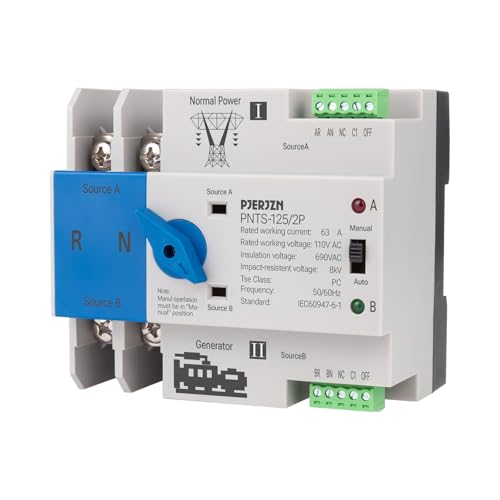
Pjerjzn 63Amp ATS 2P 110V Automatic Transfer Switch
Meet The Standout Selections
This Pjerjzn model stands out because it treats voltage problems as a real concern, not just an afterthought. Where many switches only worry about whether power is flowing, this unit watches how clean that power is and acts on overcurrent, overvoltage, and undervoltage before anything downstream gets stressed. For homes with sensitive electronics or rural feeders that sag during peak draw, that extra layer of judgment matters.
The 110V/240V dual rating makes it flexible for split-phase panels common in North American homes, and the 4-pole configuration handles both lines plus neutral and ground paths. Compared with the simpler 2-pole switches later in this list, this one trades a little extra wiring complexity for genuinely tunable thresholds.
Practical Pluses
- Adjustable overcurrent and overvoltage thresholds let owners dial in their own safety margin
- Undervoltage cutoff protects motors in well pumps and HVAC compressors from brown-out damage
- 4-pole design handles neutral switching properly, reducing ground-loop risk on longer generator runs
- Dual-voltage rating suits both 110V small-load subpanels and full 240V service feeds
- Manual override mode means you can still choose your source during scheduled generator testing
Honest Caveats
- More threshold settings mean more configuration upfront, which can intimidate first-time installers
- 4-pole wiring adds terminals that need careful labeling to avoid crossed conductors
Right Fit For
Homeowners on rural or storm-prone grids who want active voltage protection, not just a simple on-off switch.
Look Elsewhere When
The Pjerjzn 100Amp ATS is the better match for anyone who needs true 100A capacity rather than 63A.
Simplicity is the main draw here. The Pjerjzn 2P ATS is built around the most common home-backup scenario: a 220V feed with clear markings that say “Grid” and “Generator” right on the dial. For homeowners who don’t want to think about four-pole wiring or adjustable trip curves, this is the friendliest path in the lineup.
Where the 4P model earlier leans into configurability, this one aims for predictable behavior. Indicator lights on the front show which source is active, which removes a lot of guesswork when you’re standing at the panel during an actual outage.
Useful Touches
- Printed source labels reduce wiring mistakes during initial install
- Status indicator lights give instant visual feedback on active source
- 2-pole layout is easier to integrate into existing 220V subpanel setups
- Manual mode lets owners bypass the controller for scheduled generator exercise
Points To Keep In Mind
- 2-pole switching does not break neutral, which can matter on long generator cable runs
- Lacks the adjustable voltage thresholds of the Pjerjzn 110V/240V 63A 4P unit
Quick Facts
Built With In Mind
Homeowners running a 220V generator to a subpanel without needing advanced voltage protection.
Consider Something Else When
The Pjerjzn 100Amp ATS 2P 110V is the stronger option for whole-house loads at 110V service.
Most homes will never see 400V on their service entrance, but properties with three-phase utility feeds or imported equipment designed for European markets do exist. This Pjerjzn 4P 400V unit is built for that niche, and it earns its place on the list because it solves a problem the other switches simply cannot.
The 4-pole switching handles three phase conductors plus neutral cleanly, which matters when balanced loads and motor rotation direction depend on correct phase sequencing. Compared with the 2P 220V ATS covered above, this is a step into more industrial-grade territory.
Notable Upsides
- 400V rating supports three-phase residential and light-commercial service
- 4-pole switching ensures proper neutral isolation between sources
- Automatic and manual modes give installers flexibility during commissioning
- Source indicator lights simplify troubleshooting at the panel
Trade Offs
- Overkill for a standard 110/220V home, so the rating is mostly relevant to specific properties
- Three-phase wiring requires confidence with phase rotation that not every DIYer has
- Documentation is more involved than a basic 2P install
Who It Suits Best
Owners of properties with three-phase utility power or imported three-phase equipment needing automatic backup switching.
Reach For A Different Pick When
Standard North American homeowners should look at the Pjerjzn Automatic Transfer Switch ATS 2P 63A for simpler 220V setups.
This is the switch that earns the “100 amp” title most literally on the list. Where the earlier Pjerjzn units cap out at 63A, this one steps up to a true 100A rating, which opens the door to whole-home subpanel backup rather than just essential circuits. For homeowners tired of choosing which appliances survive an outage, that headroom feels meaningful.
The 2-pole, 110V configuration keeps the wiring approachable, and the auto-and-manual dual mode means it can run hands-off most of the year while still allowing a quick manual swap during generator maintenance. Where the Pjerjzn 4P 63A earlier wins on configurability, this one wins on raw capacity.
Why It Works Well
- 100A rating handles whole-subpanel backup, not just a handful of essential circuits
- Automatic detection and switching remove the need to dash to the panel during a storm
- Manual override keeps control available when servicing the generator
- 2-pole 110V layout matches common residential subpanel configurations
Small Caveats
- 110V rating means 240V appliances need a different switch path entirely
- 2-pole design does not switch neutral, so bonded-neutral generators may need an extra bonding check
At A Glance
Who Should Grab It
Homeowners who want a true 100A automatic switch and primarily feed 110V subpanels from their generator.
A Better Fit Elsewhere
The Pjerjzn Automatic Transfer Switch 110V/240V 63A 4P makes more sense if tunable voltage thresholds matter more than raw amperage.
Right at the end of the lineup is the most approachable pick: a 63A, 2-pole, 110V automatic transfer switch sized for modest subpanels and essential-circuit backup. It mirrors the 100A sibling above in shape and operation, just with a smaller appetite.
For cabins, small homes, or anyone running a generator that tops out under 50 amps continuous, paying for 100A capacity is wasted headroom. This unit matches the realistic output of common portable generators, which makes it a sensible fit rather than a compromise.
Reasons It Performs
- 63A capacity aligns well with portable generator output limits
- 110V 2-pole design installs cleanly into standard residential subpanels
- Automatic detection handles the switch without homeowner intervention
Things To Consider
- Will not support whole-home loads on larger service panels
- Single-voltage 110V rating means 240V circuits are out of reach
- Lacks adjustable voltage thresholds found on the Pjerjzn 110V/240V 63A 4P
Made For
Small-home and essential-circuit backup scenarios where the generator itself is the limiting factor.
Swap It Out When
The Pjerjzn 100Amp ATS 2P 110V is the right call for full-panel backup rather than essential circuits.
What Matters Most Before Choosing 100 Amp Transfer Switches
Match the Switch to Your Service Voltage
The single biggest decision is whether the home runs on 110V, 220V, or three-phase 400V. A 110V-only switch cannot carry a 240V dryer or range load, while a 400V three-phase switch is wasted on a standard split-phase panel. Checking the main breaker rating and asking the utility for confirmation is well worth the time before buying anything.
Think About Ampacity, Not Just the Number
A “100 amp transfer switch” rating describes what it can carry, not what it will deliver. The generator’s continuous output, the wire gauge feeding the switch, and the size of the downstream subpanel all need to be sized consistently. Undersized wire on a 100A circuit is a fire risk and a code violation in most jurisdictions.
Decide Between Auto and Manual Modes
Automatic transfer switches sense grid failure and switch over without anyone present, which matters during storms or for households with vulnerable medical-device users. Manual switches require someone to throw the lever, but they cost less and remain serviceable for many years. Auto/manual dual-mode units offer both, which is what every pick in this roundup provides.
Plan the Physical Install Location
Transfer switches need a flat, accessible mounting surface near the main panel, proper clearance for the enclosure depth, and routing space for the conduit run between the generator inlet and the switch. Picking a unit before scouting the install site is a common reason installs stall halfway through.
Key Considerations Across These Picks
Pitfalls Shoppers Hit
A frequent mistake is sizing the switch to the generator rather than to the home’s actual load. A 63A switch feeding a panel with a 100A main breaker creates a bottleneck that trips during high-draw events like HVAC startup. Another slip is ignoring neutral bonding: portable generators often float their neutral, while residential panels bond it, and a switch that does not break neutral can create parallel neutral paths if not handled correctly.
Where The Extra Money Goes
Higher-tier ATS units generally add three things: faster switchover times that keep clocks and electronics from resetting, adjustable protection thresholds that match sensitive equipment, and more robust contactors rated for far more cycles than budget alternatives. For households that rely on continuous refrigeration or sump pumps during long outages, that extra reliability tends to be worth the step up. For occasional-use cabins or vacation homes, a simpler switch often does the job without much compromise.
Frequently Asked Questions
What does a transfer switch actually do?
It safely shifts your home’s electrical load between utility power and a backup generator. Without one, backfeeding a panel through a dryer outlet risks electrocuting lineworkers and damaging your generator.
Can I install a 100 amp transfer switch myself?
Plenty of homeowners do, but local codes vary, and many jurisdictions require a licensed electrician and a permit for panel-adjacent work. Pulling the right permit also protects you during a future home sale.
How fast does an automatic transfer switch react?
Most ATS units in this category switch within a few seconds, fast enough that refrigerators and most electronics ride through without resetting. Anything with a delay of more than ten seconds may drop sensitive devices.
Do I still need a transfer switch with an interlock kit?
An interlock kit is a code-accepted mechanical alternative that prevents the main and generator breakers from being on at the same time. It costs less than an ATS but requires manual operation each time you switch sources.
What size generator pairs with a 100 amp transfer switch?
Generator output should equal or exceed the switch’s continuous rating, so aim for at least a 100A-capable generator if you choose a 100A switch. Smaller generators can run safely but will trip the breaker if total load exceeds their output.
Bottom Line
The right 100 amp transfer switch comes down to your service voltage, your generator’s real output, and how hands-off you want the outage response to be. For most homeowners, a dual-mode automatic switch sized to match both the panel and the generator removes a lot of stress on the day the grid goes dark. Pick the unit that fits your wiring rather than the one with the biggest rating on the box, and the rest of the decision usually falls into place.
