

A blown amp or a buzzing receiver almost always traces back to the wall outlet, not the gear itself. Stereo rigs pull clean, stable current to keep hum out of the signal and protect sensitive boards from the kind of spike a thunderstorm throws down the line. I put this list together for anyone running a turntable, integrated amp, DAC, and a couple of sources off one outlet, the person who wants enough outlets for the rack plus the laptop, or the home studio crowd tired of juggling power bricks. Every pick below handles real stereo loads, gives the surge protection that actually matters, and stays honest about the trade-offs.
The Picks In Brief

CCCEI 12 Gauge Extension Cord with Outlets, Yellow, 50FT

CCCEI 12 Gauge Extension Cord with Outlets, Yellow, 100FT

CCCEI Heavy Duty Surge Protector with USB Ports, Black, 6FT
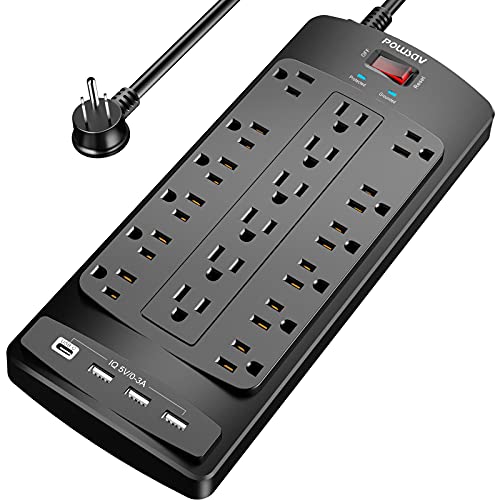
POWSAV 18 Outlets Surge Protector Power Strip with USB Ports
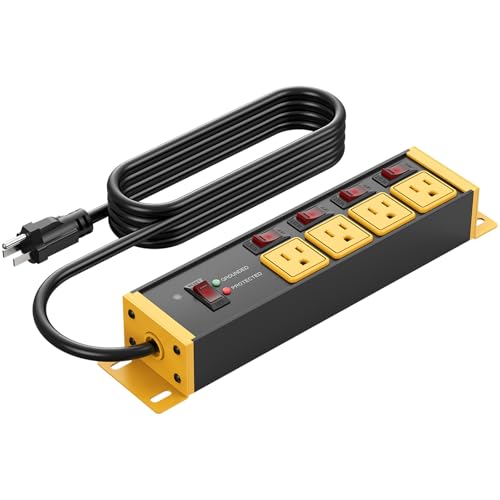
CCCEI 12 Gauge Heavy Duty Surge Protector, Yellow, 6FT

CCCEI Magnetic Heavy Duty Surge Protector, 12 Gauge, Orange, 6FT

CCCEI 12 Gauge Heavy Duty Power Strip, GFCI, 8 Ports, Grey

Anker Power Strip with 2100J Surge Protector, 12 AC

ALESTOR 6 Ft Surge Protector with 12 Outlets and 4 USB Ports
CCCEI Heavy Duty Surge Protector with 20A Switches, Yellow, 6FT
A Closer Look At Each Pick
Anyone whose listening chair sits halfway across the room from the nearest wall outlet knows the frustration of stretching a thin cord across a doorway. The CCCEI 50-foot extension fixes that problem by giving serious length without going thin on the conductor. Its 12-gauge wire keeps voltage drop manageable even when a power-hungry integrated amp and a sub pull from the far end of the run.
Eight outlets on the head unit give a full rack breathing room, and a dedicated circuit breaker lets you kill everything with one tap during a storm or when the system sits idle for days. Compared with a basic six-outlet strip, this one trades a smaller footprint for genuine headroom, and the bright yellow jacket stays visible if it ends up routed along a baseboard.
Notable Upsides
- 50-foot reach handles far-outlet rooms without chaining two strips together.
- 12-gauge wire limits voltage drop under stereo load, helping clean up bass response.
- Built-in circuit breaker trips before gear sees a sustained overload.
- High-visibility yellow jacket reduces trip hazards in dim listening rooms.
- Standard 5-15P plug fits the typical home wall outlet without an adapter.
Things To Consider
- Long cords coil up bulky behind a rack, so plan a storage spot.
- Head unit is sizable; tight shelves may not leave airflow room.
Made For
Listeners whose gear rack sits well away from any wall outlet and who want fewer adapters in the chain.
Look Elsewhere When
Anyone needing USB charging ports should step up to the CCCEI Heavy Duty Surge Protector with USB Ports, which adds two USB-C and one USB-A jack.
Basements, converted garages, and detached studios usually have one lonely outlet at the far end of the room, and that is exactly the scenario this 100-foot cord was built for. Doubling the length of the 50-foot version without thinning the conductor keeps the same voltage profile at the rack. A receiver and a pair of monitors run cleanly even at the end of that long run.
Eight outlets on the head plus a built-in breaker let the same strip power a mixer, a pair of nearfield monitors, a DAC, and a laptop charger at once. The yellow PVC jacket stays flexible enough to route along a baseboard or under a rug edge. It is overkill for a small desk setup, but for big rooms, the length is the feature.
The Case For It
- 100 feet covers detached buildings and long basement runs without splicing.
- 12-gauge wire maintains steady voltage for amps at the far end.
- Circuit breaker protects gear when a sub or power tool spikes the line.
- Eight outlets run a full studio chain from one wall tap.
Worth Noting
- The full 100-foot coil is heavy and takes effort to manage behind furniture.
- Costlier than the 50-foot version, so shorter rooms do not need the upgrade.
Right Fit For
Home studio owners and basement listeners who need a single cord to span a long distance and still feed a multi-piece rig.
Swap It Out When
A more compact setup near an existing outlet gets along fine with the shorter CCCEI 12 Gauge Heavy Duty Surge Protector, Yellow, 6FT, which adds 20A breakers and wall-mount holes.
Modern stereo rigs are rarely just amp-and-speakers anymore. A streaming node, a phone running the remote app, a tablet on the console, and a Bluetooth receiver all want juice, and the AC outlets run out fast. This CCCEI strip solves that by mixing four grounded outlets with two USB-C ports and one USB-A, all from one heavy 12-gauge feed.
Four individual switches let you kill components separately, while a master switch handles the whole strip at once. The 12-gauge cord keeps the AC side honest under amp load, and the overload plus grounding protection covers the kind of fault a wall wart can introduce. Compared with the long-cord CCCEI models earlier in this list, this one is sized for a normal rack and adds modern device support without a wall-wart octopus behind the cabinet.
Where It Helps
- Two USB-C and one USB-A port cut the wall-wart clutter behind a rack.
- Individual switches save wear on amp power supplies during long idle stretches.
- 12-gauge cord stays cool under continuous amp draw.
- Compact head fits shallow media-console shelves.
Trade Offs
- Only four AC outlets is tight for larger component stacks.
- No wall-mount holes, so it sits loose on a shelf or floor.
Best Suited To
Streaming-focused rigs running a phone, tablet, and streamer alongside a modest amp and source pair.
Reach For A Different Pick When
Rack rooms with more than four AC components should look at the POWSAV 18-Outlet Surge Protector Power Strip, which trades the USB ports for sheer outlet count.
Big audio racks run a phono stage, a preamp, a power amp, a DAC, a streamer, a turntable motor, and a tape deck, and a six-outlet strip collapses under that load. The POWSAV model doubles down on raw outlet count with eighteen AC sockets and four USB ports across one wide head, built for the kind of system that grew over a decade of upgrades. The 2100-joule surge rating handles routine grid noise and small spikes without flinching.
The flat plug hugs the wall so the unit can sit flush behind a credenza, and the six-foot cord reaches most wall outlets without strain. Spaced-out outlets accept chunky wall warts without blocking neighbors. Where earlier CCCEI picks emphasized long cord or 12-gauge toughness, this one focuses on packing as many AC jacks as possible into a single rack-friendly bar.
What Pays Off
- Eighteen outlets handle full home audio racks without daisy-chained strips.
- 2100-joule rating absorbs the kind of surge storms throw at suburban lines.
- Four USB ports keep phones and streamers topped off.
- Flat-plug head fits behind tight furniture without bending the cord.
Possible Compromises
- Wide head eats shelf space on narrow media cabinets.
- Single master switch means no per-outlet control for individual components.
Quick Facts
Whose Shelf It Belongs On
Home hi-fi owners running ten or more components off one rack and tired of stacking strips.
A Better Fit Elsewhere
Compact desktop setups should stay with the CCCEI Heavy Duty Surge Protector with USB Ports, which is shorter and easier to tuck behind a smaller amp.
Garage and workshop audio is a different beast from living-room hi-fi. Power tools cycling on and off send sharp spikes back down the line, and a flimsy plastic strip can melt under that punishment. This CCCEI unit leans into the industrial side with 20A-rated outlets, a heavy 12-gauge cord, and a wall-mountable head that sits flush on a pegboard or shop-wall stud.
Each outlet gets its own 20-amp circuit breaker, so a tripping tool does not kill the whole rig. The 5-15P plug fits standard home outlets, and the unit accepts both 5-20R and 6-20R plug styles, which helps if the shop runs heavier appliance plugs. The yellow body is easy to spot in a busy shop, and the metal-back design handles the heat that builds up behind a workbench.
Useful Strengths
- Per-outlet 20A breakers isolate trips to a single plug.
- Wall-mountable head keeps cords off the bench.
- Accepts both 5-20R and 6-20R plugs for flexible tool use.
- Heavy 12-gauge cord handles shop load without sagging voltage.
Points To Keep In Mind
- Industrial look may clash with living-room decor.
- Only four outlets is tight for full component racks.
Who Should Grab It
Shop owners and garage listeners running amps and tools off the same circuit and needing per-outlet control.
Where Another Pick Suits Better
Living-room hi-fi setups get cleaner looks and better outlet counts from the Anker Power Strip with 2100J Surge Protector, which keeps the same protection focus in a sleeker head.
Steel equipment racks, rolling carts, and the side of a metal tool cabinet are all places where a regular strip slides around the moment a heavy cable pulls against it. The CCCEI magnetic strip sticks to any ferrous surface, so it hangs vertically on the side of a rack or the back of a workbench without drilling holes. The built-in magnet is strong enough to hold the strip plus a few plugged-in wall warts without slipping.
Four 20A outlets each have their own switch, and a master switch kills everything at once for travel or storm prep. The 12-gauge cord and 1875W rating handle stereo gear or shop tools equally well. Compared with the wall-mount CCCEI 6FT model, this one trades mounting holes for a magnet that follows the strip wherever a metal surface is nearby.
The Helpful Details
- Magnetic back clings to steel racks, carts, and cabinets without hardware.
- Per-outlet 20A switches isolate individual components.
- Master switch kills the whole strip when leaving the space.
- Bright orange shell is easy to spot in dim workshop lighting.
Honest Caveats
- Magnet does not grip non-metal surfaces, so wood shelves need a different approach.
- Heavy magnets can affect older CRT gear placed very close by.
Built With In Mind
Audio fans who keep their gear on a steel rolling cart or rack and want clean cable routing without zip ties.
Not Your Match When
Wood-shelf stereo stands call for the CCCEI 12 Gauge Heavy Duty Power Strip, GFCI, 8 Ports, which offers GFCI protection instead of a magnetic mount.
Damp basements, unfinished rec rooms, and garage corners run the risk of moisture getting into an outlet, and a regular strip has no defense when that happens. GFCI, or ground fault circuit interrupter, monitors the current balance between hot and neutral and trips in milliseconds when it detects a leak to ground. This CCCEI unit builds that protection into the strip itself, so a stereo setup in a damp corner is far safer than running off a plain surge protector.
Eight grounded outlets give enough headroom for a modest rack, and the heavy 12-gauge cord keeps voltage steady under amp load. The grey shell blends into utility-room walls better than the bright yellow shop models. Compared with the magnetic CCCEI earlier, this one focuses on safety electronics rather than mounting convenience.
Everyday Advantages
- Built-in GFCI cuts power fast during a ground fault in damp areas.
- Eight outlets run a full mid-size stereo system with room to spare.
- Heavy 12-gauge cord stays cool under continuous amp draw.
- Neutral grey color fits unfinished rooms without looking industrial.
Soft Spots
- No per-outlet switches mean everything powers up at once.
- GFCI test cycle adds a small step to monthly safety checks.
Feature Snapshot
Perfect Match For
Listeners running stereo gear in a basement, garage, or any room where moisture is a realistic concern.
Consider Something Else When
Dry-room living spaces are better served by the Anker Power Strip with 2100J Surge Protector, which packs more outlets and USB charging into a similar form factor.
Anker built its name on clean power electronics, and that pedigree shows in this 12-outlet strip. Beyond the 2100-joule surge rating, the unit runs an eight-point safety system that includes fire resistance, overload cut-off, and active temperature control, which matters when a stereo system idles in standby for weeks at a time. The 20W USB-C port charges a phone or a streaming device at full speed, which trims one wall wart from the rack.
Twelve AC outlets handle a typical living-room rack without spilling over into a second strip, and the layout leaves room for chunky transformer plugs. The flat-profile head sits behind a credenza without sticking out into the room. Among the picks on this list, this is the one that feels designed for a finished space rather than a shop, and the safety stack is more thorough than most competitors at this size.
What Earns Its Place
- Eight-point safety system covers surge, heat, and overload in one unit.
- 20W USB-C port handles fast charging for phones and streamers.
- 2100-joule rating absorbs typical grid noise and storm spikes.
- Low-profile shell fits behind furniture without crowding the wall.
Small Caveats
- Twelve outlets crowd together; very large wall warts may block neighbors.
- Premium safety stack raises the cost versus basic strips.
Key Specs
Who Will Love This
Living-room hi-fi owners who want a polished-looking strip with serious safety electronics and fast USB charging.
Skip It When
Long-cord runs across a basement call for the CCCEI 12 Gauge Extension Cord with Outlets, Yellow, 100FT, which trades the USB ports for genuine reach.
Storm-prone neighborhoods and rural power lines throw harder spikes at home gear than city circuits typically do. The ALESTOR strip rates at 2700 joules, which is one of the higher figures on this list, and that headroom buys real protection for amps and DACs that have no business riding out a transformer surge unprotected. A protected-indicator light tells you at a glance that the surge side is still doing its job.
Twelve AC outlets pair with four USB ports, and the spaced-out layout reserves two wide gaps for bulky power bricks. The 6-foot cord reaches standard outlets without strain, and overload protection trips before the wall wiring sees stress. Compared with the Anker pick earlier, this one pushes more joules for the dollar while giving up some of the polished safety stack.
The Value In It
- 2700-joule rating absorbs bigger surges than typical strips.
- Indicator light confirms surge protection is still active.
- Twelve AC outlets plus four USB ports cover a wide rack.
- Spaced outlets accept large wall warts without blocking neighbors.
Areas To Watch
- No temperature-control safety circuit like the Anker model offers.
- Once the surge side is consumed by a major spike, the unit should be replaced.
The Right Fit
Listeners in storm-heavy areas who want the highest joule rating they can get at a reasonable cost.
Another Choice May Suit
City dwellers who care more about USB charging speed should consider the Anker Power Strip with 2100J Surge Protector, which trades joule count for a faster USB-C port.
Workshop audio setups often mix a small amp and a couple of speakers with a soldering station, a bench grinder, or a shop vac, and each tool wants its own switch. This CCCEI strip brings industrial-grade thinking to that mix with four individually switched 20A outlets, GFCI protection against ground faults, and a heavy 12-gauge cord that stays cool under continuous load. The yellow body is unmistakable in a busy shop.
Unlike the wall-mount CCCEI 6FT model earlier, this one focuses on per-outlet control rather than fixed mounting, so it sits on a workbench or hangs from a hook. Grounding and overload protection round out the safety picture, and the cord remains cool to the touch even when a heat gun or a heater pulls from the same strip.
Useful Touches
- Four individual 20A switches let each outlet shut down separately.
- Built-in GFCI protects against ground faults in damp shop floors.
- 12-gauge cord runs cool under continuous shop load.
- Standard 5-15P plug fits any home outlet.
Less Ideal Details
- Only four outlets is light for a full component rack.
- Yellow industrial look is out of place in a finished living room.
Who It Suits Best
Shop and garage listeners who run a small amp alongside power tools and want per-outlet control plus shock safety.
Where A Sibling Pick Shines
Living-room stereo fans get cleaner aesthetics and USB charging from the Anker Power Strip with 2100J Surge Protector, which fits a finished space better.
What Matters Most When Choosing A Surge Protector For Stereo Gear
Stereo components hate two things: voltage spikes that fry their power supplies, and ground loops that hum through the speakers. A good surge protector handles the first job, and clean wiring with proper grounding handles the second. Joule rating tells you how much spike energy the unit can absorb before it gives up, and for amp-and-DAC rigs, anything above 1000 joules is a sensible floor.
Outlet count matters more than people expect. A receiver, a phono preamp, a DAC, and a sub already use four outlets, and most modern rigs add a streamer and a laptop charger. Twelve outlets is a comfortable target for a full system, while four is fine for a desktop amp and speakers setup. Cord length comes down to room layout: a 6-foot cord covers most living-room racks, while detached studios need the 50 or 100-foot options.
Cord gauge, measured in AWG (American Wire Gauge), is one of the most overlooked specs on a surge strip. Lower numbers mean thicker wire, and a 12-gauge cord holds voltage steadier under load than a 16-gauge cord. For stereo gear, 12-gauge is the sweet spot. Thicker wire also runs cooler, which extends the life of the insulation over years of standby heat.
USB ports have quietly become essential for stereo rigs. A streaming node, a phone running the remote app, and a Bluetooth receiver all want a USB feed, and adding two USB-C ports and a USB-A port to a strip removes the wall-wart octopus behind the rack. For most listeners, two well-placed USB-C ports are enough.
GFCI protection matters most in damp basements, garages, and outdoor-adjacent setups. The shock protection cuts power in milliseconds when current leaks to ground, and that speed can save a turntable or a vinyl collection from a water-spill mishap. Dry living-room setups rarely need it, but the marginal cost is small insurance.
Key Considerations Across These Picks
Pitfalls Shoppers Hit
The biggest mistake is grabbing a basic six-outlet strip for a rack that already runs seven or eight components. Daisy-chaining two strips together looks tidy but multiplies the surge failure risk and can violate local electrical code in many jurisdictions. Plan outlet count honestly and pick one strip with headroom.
Another common trap is choosing a strip by joule rating alone and ignoring cord gauge. A 3000-joule strip on a 16-gauge cord still sags voltage under amp load, which dulls bass response and stresses power supplies. Match joule rating with a 12-gauge cord, and the system sounds cleaner and lasts longer.
What The Higher Tier Buys
Premium strips earn their keep with multi-layer safety rather than just bigger joule numbers. Eight-point systems like Anker’s cover surge, fire resistance, overload, and temperature control, which protects gear against slow faults that cheaper strips miss entirely. They also tend to use better internal MOVs (metal oxide varistors, the components that absorb surges), which respond faster and last longer.
Faster USB-C charging is another quiet upgrade. A 20W port hits fast-charge speeds for modern phones, while a basic 5W port crawls. For a rack running a streamer and a phone, that speed difference adds up across a year of daily use. Higher-tier models also typically include longer warranties and sturdier housings, which matter for a strip that sits behind a heavy amp for a decade.
Frequently Asked Questions
How many joules do I really need for a stereo system? Most home stereo setups do well with 1500 to 2700 joules. Anything below 1000 joules leaves amps and DACs exposed to common storm spikes, and anything above 3000 joules is overkill for typical city grid conditions.
Is a 12-gauge cord important for audio gear? Yes, especially for amps that draw heavy current. Thicker 12-gauge wire limits voltage drop and stays cooler under load, which keeps bass response tighter and protects insulation over years of standby use.
Do I need GFCI protection on my stereo strip? Only if the rack sits in a damp location like a basement, garage, or near a sink. Dry living-room setups are fine with standard surge protection and proper outlet grounding.
Can I plug a power amp into a regular surge protector? Yes, as long as the strip handles the amp’s wattage and uses a 12-gauge cord. Check the amp’s draw against the strip’s rated capacity and avoid chaining multiple strips together.
How long does a surge protector actually last? Most strips last three to five years in storm-prone areas and up to eight years in stable city grids. Once the protected-indicator light goes out, the unit has absorbed its rated spike capacity and should be replaced.
Closing Remarks
A clean, protected power feed is the unglamorous foundation of any stereo rig, and the right surge strip pays for itself the first time a storm rolls through. Match the cord length and outlet count to your actual room and rack, lean toward 12-gauge wire wherever the amp load is heavy, and add GFCI when the room is damp. Any of the ten picks above will serve a stereo system well, and the choice comes down to layout, mounting, and how many USB ports the rack needs.
