

A smart TV pulls more power than most people realize, and the streaming boxes, soundbars, and gaming consoles plugged in behind it double that load. One nearby lightning strike or a brownout from the utility company can cook the mainboard in seconds. The right surge protector for a smart TV setup guards against those spikes, filters out the smaller line noise that wears down electronics over time, and gives you enough outlets to handle the whole entertainment stack. I focused on options with proven surge ratings, the right outlet layout for a media console, and cords long enough to actually reach where you need them.
How The Shortlist Stacks Up

CCCEI 12 Gauge Extension Cord, Yellow, 50FT

CCCEI 12 Gauge Extension Cord, Yellow, 100FT

CCCEI Heavy Duty Surge Protector with USB Ports, 6FT

NANOLAKE Surge Protector, 4800J, 18 AC Outlets
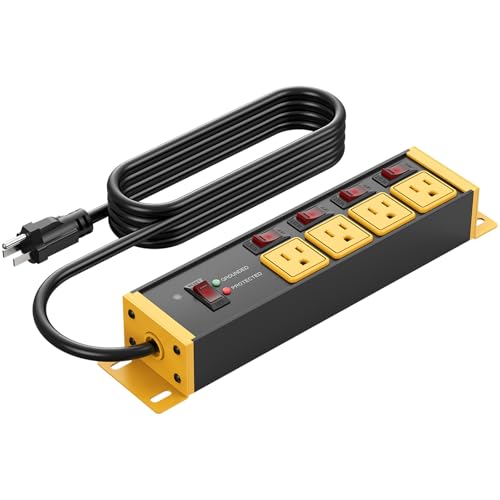
CCCEI 12 Gauge Heavy Duty Surge Protector, Yellow, 6FT

CCCEI Magnetic Heavy Duty Surge Protector, Orange, 6FT

CCCEI GFCI Heavy Duty Power Strip, 8 Ports, 6FT

Anker Power Strip, 900J Surge Protector, 35W

Anker Power Strip with 2100J Surge Protector, 12 AC
CCCEI Industrial GFCI Surge Protector, 4 Plugs, 6FT
More On The Choices That Made The List
If your living room outlet sits halfway across the room from the TV console, this CCCEI cord solves the reach problem before anything else matters. The 12-gauge wire (a thicker conductor that handles higher current with less voltage drop over distance) and 50-foot length give you a lot of flexibility for routing behind furniture without resorting to two chained extension cords.
Eight grounded outlets mean you can plug in the TV, soundbar, streaming box, gaming console, and a lamp all at once without a second strip. The built-in circuit breaker (a safety switch that trips automatically during an overload) and dedicated switch let you cut power to everything with one click, which is handy when storms roll through.
Notable Gains
- Twelve-gauge wire keeps voltage steady across the full 50 feet, which matters for sensitive electronics
- Eight outlets cover a typical TV-plus-accessories setup without crowding
- Bright yellow jacket stays visible in crawl spaces and behind furniture, reducing trip hazards
- One master switch lets you cut power to the whole strip during a storm
Things To Consider
- The 50-foot length is overkill for small rooms and creates excess cable to manage
- No USB ports, so phone and tablet charging still needs a separate brick
Quick Facts
Right Fit For
Homeowners with older living rooms where the nearest usable outlet sits several feet from the TV console.
Consider Something Else When
The NANOLAKE Surge Protector with 4800J protection makes more sense if your priority is maximum joule rating rather than cord length.
Few situations need a 100-foot cord, but the ones that do leave no room for compromise. Finishing a basement, powering an outdoor projector for movie night, or running a TV to a detached garage all run into the same wall: nowhere to plug in. CCCEI doubles down on the same 12-gauge heavy-duty design as the 50-foot version, just stretched further.
The flat three-prong plug helps in tight spaces behind furniture or baseboard trim. A dedicated circuit breaker switch gives you the same kill-everything option during a storm that you’d want on any sensitive setup.
What Stands Out
- Hundred-foot reach covers detached structures, basements, and yard setups
- Twelve-gauge wire holds up across the full length without sagging performance
- Eight grounded outlets plus a master switch keep things tidy and controllable
Trade Offs
- Cable management becomes a real chore at 100 feet
- Overkill for standard living rooms where a six-foot cord would do
Feature Snapshot
Whose Shelf It Belongs On
Anyone finishing a basement media room, setting up an outdoor TV, or running power to a detached workshop.
Skip It When
The CCCEI 50FT version is the better match for a standard living room where you simply need more reach than a basic strip offers.
This is the CCCEI design I keep coming back to for a tidy TV stand. The four AC outlets are joined by two USB-C ports and one USB-A port, which removes the wall-wart clutter behind the console. Each AC outlet has its own switch, plus a master switch on the end, so you can leave the streaming box in standby without powering the soundbar along with it.
The 12-gauge, six-foot cord is a practical middle ground: long enough to reach most wall outlets but short enough that you aren’t coiling excess cable behind the cabinet. Overload and grounding protection round out the safety side.
Positive Points
- USB-C and USB-A ports charge phones and tablets without separate adapters
- Individual outlet switches let you kill idle devices without unplugging
- Twelve-gauge cord stays cool even at full rated load
- Compact black housing disappears behind most TV stands
Room For Improvement
- Only four AC outlets limits expansion for big setups
- USB ports lack fast-charge certification, so phones charge at standard speeds
Best Suited To
Anyone running a smart TV plus a few streaming accessories who also wants to top off a phone or tablet nearby.
Another Choice May Suit
The NANOLAKE 4800J strip is the better call for a full entertainment center where outlet count matters more than USB convenience.
Eighteen AC outlets sounds excessive until you count everything behind a real entertainment center: TV, soundbar, subwoofer, two game consoles, a streaming stick, a Blu-ray player, a router, and somehow still a lamp. NANOLAKE built this strip for that exact situation. The wide spacing between outlets solves the constant frustration of one bulky adapter blocking the neighboring plug.
The 4800-joule rating (a joule is a unit of energy, and higher numbers mean the strip can absorb bigger surges before its protection wears out) is the highest on this list by a wide margin. Four USB ports, two of them USB-C with PD20W fast charging, handle the phone and tablet side. Mounting holes on the back let you screw it into the back of a media console for a clean install.
Bright Spots
- Eighteen wide-spaced AC outlets swallow every plug in a typical rig
- 4800-joule rating offers the strongest surge absorption on this list
- PD20W USB-C ports fast-charge phones and small laptops
- Mounting slots on the back keep the strip out of sight
Honest Caveats
- Long body makes it harder to hide behind narrow furniture
- Ten-foot cord is helpful but adds bulk to cable management
Perfect Match For
Power users running a full home theater or gaming setup who want maximum protection and zero outlet anxiety.
Reach For A Different Pick When
The CCCEI GFCI Power Strip suits homeowners who need ground-fault protection more than extra outlets.
For a TV that shares a console with a soundbar and a game console, this CCCEI model hits the sweet spot. Four outlets is enough for most setups, and each one carries its own 20-amp breaker switch, so you can power down just the console without disturbing the TV or the always-on streaming stick.
The wall-mountable housing is the underrated detail here. Owners commonly mount it to the back of a media console or the underside of a shelf, keeping the bright yellow strip visible only to the person plugging things in. That same yellow jacket acts as a visual reminder of which cord belongs to the entertainment stack.
Positive Takeaways
- Twenty-amp breakers on each outlet handle power-hungry gear without tripping
- Wall-mount design keeps cords off the floor
- Six-foot, 12-gauge cord balances reach and tidy cable runs
Points To Keep In Mind
- No USB ports, so phone charging still needs a wall adapter
- Four outlets limit expansion if the entertainment stack grows
Key Product Details
Made For
Anyone who likes the idea of switching off individual devices rather than unplugging them or using a smart plug.
Look Elsewhere When
The Anker 2100J strip fits better if you value a slimmer, more living-room-friendly design over the heavy-duty industrial look.
The magnetic back panel on this CCCEI strip is the feature that sets it apart. If your TV stand, media cabinet, or workbench is metal, the strip snaps right on and stays put. That’s a small thing until you try to plug something in and the whole strip slides around behind the console.
Four outlets, individual switches, and a master switch give you the same per-outlet control as the non-magnetic sibling above. The orange color leans industrial, so it works best in garages, shops, or behind closed cabinet doors.
Why It Works Well
- Built-in magnet clings to iron surfaces for tool-free mounting
- Independent outlet switches reduce phantom power draw
- Twelve-gauge, six-foot cord balances reach and cable neatness
Practical Considerations
- Magnet won’t grip wood or plastic furniture
- Orange color stands out in a refined living room setup
Who Should Grab It
Anyone mounting a TV on a metal frame or running a media setup in a garage with exposed steel shelving.
A Better Fit Elsewhere
The CCCEI 6FT yellow strip is the cleaner choice for a wood or laminate media console where the magnet won’t help.
GFCI stands for Ground Fault Circuit Interrupter, a safety feature that cuts power instantly when it detects current flowing where it shouldn’t, like through water or a person. That makes this CCCEI strip particularly smart for older homes where the wall outlet itself isn’t GFCI-protected, or for any setup near a kitchen, bathroom, or basement where moisture is a real concern.
Eight outlets, a 20-amp master switch, and the same heavy-duty 12-gauge cord round out the package. The grey housing blends into entertainment centers better than the bright yellow or orange models.
Everyday Wins
- Built-in GFCI protection for homes without GFCI outlets
- Neutral grey color blends with most media furniture
- Twelve-gauge cord stays cool under sustained load
Worth Bearing In Mind
- No USB ports means separate chargers for phones
- GFCI adds slightly to the cost over a basic surge strip
Built With In Mind
Homeowners in older properties where adding GFCI protection at the breaker panel isn’t practical or affordable.
Swap It Out When
The CCCEI USB-equipped strip suits a younger household where USB-C charging matters more than ground-fault protection.
Anker leans into the apartment-dweller angle here. The slim housing fits where a chunky industrial strip would stick out, and the 12-in-1 port layout, eight AC plus two USB-C plus two USB-A, covers everything a smaller setup needs. The 35-watt USB-C port is genuinely fast for phones and tablets.
The 900-joule rating is lower than the NANOLAKE or even the Anker 2100J option, but for indoor use in areas without frequent lightning strikes, it’s a reasonable level of protection for a modern smart TV.
Advantages To Know
- Slim profile suits apartment media consoles where space is tight
- 35-watt USB-C port charges phones and small laptops quickly
- Twelve total ports cover most compact entertainment setups
Where It May Fall Short
- Lower joule rating than other picks on this list
- Cord length isn’t specified in the source for tight outlet placement
Who Will Love This
Apartment dwellers or anyone with a small media console who wants clean design without sacrificing port count.
Not Your Match When
The NANOLAKE 4800J strip is the right call if you live somewhere with frequent storms and want the strongest protection available.
Anker’s 2100J model sits in the middle of the brand’s lineup and earns its place through an eight-point safety system rather than raw joule count. That system layers surge protection, fire-resistant housing, overload protection, and temperature monitoring together, which gives more coverage than the joule number alone suggests.
Twelve AC outlets plus one USB-C and two USB-A ports handle a mid-size entertainment setup. The 20-watt USB-C port fast-charges an iPhone from empty to about half in roughly 25 minutes, handy for the phone you keep next to the couch.
Features That Help
- Eight-point safety system layers multiple protections
- Twenty-watt USB-C port delivers fast phone charging
- Twelve AC outlets handle mid-size entertainment stacks
- Fire-resistant housing adds passive safety
Some Limits To Know
- Joule rating sits below the NANOLAKE 4800J option
- Twelve outlets use up shelf space behind narrower consoles
Spec Overview
The Right Fit
Anyone building a bedroom TV setup with a soundbar, a streaming stick, and a couple of phones on the nightstand.
Where Another Pick Suits Better
The NANOLAKE 4800J strip is the smarter choice for a living-room entertainment center where maximum joule rating is the priority.
This is the CCCEI pick I recommend for the garage TV, the workshop monitor, or any entertainment setup that has to live with dust, temperature swings, or the occasional splash. The GFCI protection matters more in those environments, and the industrial yellow housing telegraphs that this strip is built for rougher conditions than a living-room unit.
Four outlets with 20-amp individual switches keep control granular. The heavy 12-gauge cord is rated to stay cool even under full load, which matters during long gaming sessions or all-day workshop use.
The Value In It
- GFCI protection handles moisture-prone environments
- Heavy-duty build suits garage and shop conditions
- Individual switches reduce idle power draw
Less Ideal Details
- Yellow industrial styling looks out of place in a refined living room
- Four outlets limit expansion beyond basic setups
Perfect Match For
Anyone mounting a TV in a garage, workshop, or covered patio where moisture and dust are real concerns.
Reach For A Different Pick When
The Anker 2100J strip is the cleaner fit for a finished living room where appearance matters as much as function.
What Matters When Choosing A Surge Protector For A Smart TV
A smart TV setup doesn’t need the most heavy-duty strip on the shelf, but it does need the right one. Start with the joule rating, which tells you how much energy the surge protector can absorb before its internal components wear out. For a single TV with a soundbar and a streaming box, somewhere in the 1000 to 2500 joule range covers typical suburban conditions. If you live somewhere with frequent storms or an older electrical panel, pushing toward 4000 joules or higher is worth considering.
Outlet layout matters as much as raw count. Wide spacing between outlets prevents one bulky adapter from blocking the next socket, and a mix of AC plus USB ports cuts down on wall-wart clutter. For most living rooms, six to twelve AC outlets handle the full entertainment stack, and a single USB-C port takes care of the phone that lives on the couch.
Cord length and gauge are tied together. A longer cord needs a thicker wire (lower gauge number) to avoid voltage drop, which is the gradual loss of power that happens as electricity travels through a cable. Twelve-gauge wire is the standard for any run beyond about 15 feet, especially when powering anything beyond a lamp.
GFCI protection, which automatically cuts power when it detects a fault current traveling through an unintended path like water or a person, becomes important in older homes, basements, or anywhere moisture is in play. Magnetic mounting, individual switches, and flat plugs are quality-of-life features that show up once you start living with the strip rather than just installing it.
Shopping Smart For Surge Protectors In A TV Setup
Common Buying Traps
Many shoppers focus only on the outlet count and ignore the joule rating, then wonder why their TV acted strangely after a storm. Others pick the longest cord available without checking the wire gauge, which leads to dimmer screens and warm cables under load. A frequent misstep is choosing a power strip without surge protection at all, confusing the two products; a basic power strip offers no defense against voltage spikes.
Why Premium Models Cost More
Higher joule ratings use better internal metal-oxide varistors, the components that actually absorb surges, and that engineering shows up in the price. Multi-layer safety systems add temperature sensors, thermal fuses, and fire-resistant housings that basic strips skip. USB-C ports with PD (Power Delivery) fast-charging require their own certified circuitry. The upgrade pays off in longevity and in how well the strip protects gear during real surge events, which is the only time the protection actually matters.
